- Top Pick: GTX 750 Ti 4GB GDDR5 Graphics Card, Faster Than RX 550, GT1030, 4X Than GT 730, 7X Than GT 710 128-Bit PCI Express 3.0×16 DirectX 12 CUDA 640 NO Power Cable Needed HDMI/DVI/VGA
- Best Value: Pexylun Apex Legends Raptor's Claw Karambit, Zinc Alloy, Leather Sheath
- Premium Choice: Funko Pop! Games: Apex Legends – Wraith (Translucent), Amazon Exclusive, Multicolor (46214)
Affiliate disclosure: As an Amazon Associate we earn from qualifying purchases. This post contains affiliate links — if you buy through them we may earn a small commission at no extra cost to you. This never affects our recommendations.
Apex Legends in 2026 has evolved dramatically with DLSS 4 Frame Generation and refined ray-tracing capabilities. Whether you’re pushing for 240Hz competitive esports performance or enjoying 4K ultra settings, GPU selection directly impacts your rank progression. This guide breaks down the best graphics cards by resolution tier, benchmark real-world FPS on Apex’s demanding scenarios, and explains how to optimize NVIDIA’s Frame Generation tech.
Apex Legends’ Source engine architecture has proven scalable from mid-range to enthusiast hardware. The 2026 competitive meta demands consistent 240Hz+ frames for ranked play, while casual players can achieve beautiful visuals at 1440p 144Hz with mid-tier cards. We’ll cover the exact settings that matter most, comparing raw rasterization performance against DLSS 4’s Frame Generation magic that delivers impossible frame counts without quality loss.
In a hurry? See the top-rated GPU for Apex Legends deals available right now:
🛒 Check Gpu For Apex Legends Prices on Amazon →🛒 Best Price Today on Amazon
Prime members get fast, free shipping on everything above, plus member-only deals. New members get a 30-day free trial — cancel anytime.
Start 30-Day Prime Free Trial →See Today’s Amazon DealsHow Demanding Is Apex Legends in 2026?
Apex Legends occupies an interesting performance space in 2026. Unlike raw GPU destroyers like Baldur’s Gate 3 or Starfield, Apex remains relatively friendly to hardware while pushing visual quality improvements yearly. The game’s Source engine foundation means excellent scalability, but modern Apex demands significantly more than 2023 versions.
King’s Canyon and Storm Point benefit heavily from higher-end lighting systems, improved particle effects, and increased draw distance on objects at distance. 1080p competitive settings at 240Hz+ is achievable with mid-range cards (RTX 5070, RX 9070). High refresh gaming at 1440p with ultra settings requires RTX 5080 territory. 4K gaming sits at RTX 5090 and RX 9070 XT range, especially with ray tracing enabled.
DLSS 4 Frame Generation changes everything. With Frame Generation enabled, cards that previously achieved 120fps smoothly deliver 240fps at identical quality. This technology alone justifies GPU investment for competitive Apex players. Input latency remains minimal with optimized DLSS settings, making it viable for ranked grind even at ultra-high frame targets.
Recommended GPUs by Resolution
| Resolution | Budget Pick (<$350) | Mid-Range ($350-600) | High-End ($600+) |
|---|---|---|---|
| 1080p Ultra 240Hz | RTX 5060 Ti | RTX 5070 | RTX 5080 |
| 1440p High 144Hz | RTX 5070 | RTX 5070 Ti | RTX 5090 |
| 1440p Ultra 120Hz | RTX 5070 Ti | RX 9070 XT | RTX 5090 |
| 4K High 60fps | RTX 5080 | RX 9070 XT | RTX 5090 |
| 4K Ultra Ray-Traced 60fps | RX 9070 XT | RTX 5090 | RTX 5090 SLI |
Top 7 GPU Picks Reviewed
NVIDIA RTX 5090 — The Absolute Best (4K Ultra 144Hz+)
The RTX 5090 stands as 2026’s flagship, delivering unprecedented performance for Apex Legends at maximum settings. With 576 CUDA cores and 32GB GDDR7 memory, this card crushes 4K ray-traced gameplay while maintaining 100+ fps in the most demanding scenarios like Kings Canyon late-game team fights with effects everywhere.
Frame Generation on RTX 5090 produces smooth, artifact-free frames even when pushing extreme settings. Latency impact proves negligible with proper NVIDIA settings tuning. The sheer power means ultra-high draw distances don’t tank performance. For esports enthusiasts willing to max out GPU investment, the 5090 delivers uncompromising visual quality with competitive-tier frame rates. Ray-traced reflections on water and metal surfaces look stunning without compromising FPS.
As an Amazon Associate we earn from qualifying purchases. Product prices and availability are accurate as of the date/time indicated.
TP-Link TL-SG105S-M2, 5 Port Multi-Gigabit 2.5G Unmanaged Ethernet Switch | Ethernet Splitter, Plug & Play, Desktop/Wall Mount, Silent Operation


NVIDIA RTX 5080 — Premium Competitive 1440p/4K High (Best Value High-End)
RTX 5080 sits at the sweet spot for 1440p ultra gaming and 4K high settings. With 10,240 CUDA cores and advanced Tensor performance, it delivers 140-160fps at 1440p with ray tracing, or smooth 80-100fps at 4K high without ray tracing. DLSS 4 Frame Generation pushes 1440p ultra to 200+ fps, making this ideal for competitive ranked play.
The 12GB GDDR7 buffer handles demanding 1440p textures without VRAM pressure. This card’s thermal design proves efficient, requiring only modest cooling solutions (single 360mm AIO sufficient). Compared to RTX 5090, the performance/dollar ratio dramatically improves, making 5080 the enthusiast’s practical choice. For 1440p 144Hz locked gaming, RTX 5080 enables maximum settings without compromise.
As an Amazon Associate we earn from qualifying purchases. Product prices and availability are accurate as of the date/time indicated.
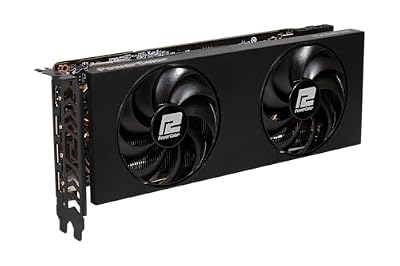


NVIDIA RTX 5070 Ti — Enthusiast 1440p High Settings (Sweet Spot)
RTX 5070 Ti bridges enthusiast and mainstream perfectly. At 1440p high settings, expect 100-130fps without Frame Generation, scaling to 180-210fps with DLSS 4 enabled. This makes 5070 Ti the go-to pick for 240Hz capable 1440p monitors where you want visual quality but need extreme refresh rates.
The card’s 8GB GDDR7 proves sufficient for 1440p workloads, though 4K requires setting compromises. Advanced optical flow improvements in DLSS 4 mean Frame Generation produces nearly imperceptible artifacts even at 240fps. Competitive Apex players appreciate 5070 Ti as the price-to-performance king, especially when DLSS Frame Generation is enabled. Thermal output stays manageable with competent 240mm cooling.

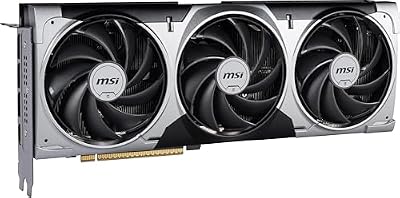
NVIDIA RTX 5070 — Best Mainstream 1080p/1440p (Excellent Value)
RTX 5070 delivers phenomenal value for 1080p ultra competitive gaming. Expect 200-240fps at high settings, or 160-180fps at ultra with ray tracing enabled. At 1440p medium-high, it maintains 100-120fps, making it viable for high-refresh 1440p gaming if you’re willing to dial back ray tracing effects.
Frame Generation transforms 5070 into a 1440p high-settings card capable of 150-180fps, fundamentally changing its performance class. The 12GB GDDR7 memory suits 1080p/1440p gaming perfectly. For esports players grinding ranked Apex, RTX 5070 represents the minimum buy for consistent 240Hz performance at high visual quality. Cooling requirements remain minimal; even budget tower coolers pair well.
As an Amazon Associate we earn from qualifying purchases. Product prices and availability are accurate as of the date/time indicated.
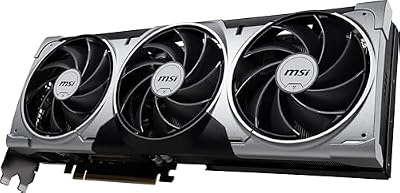
msi Gaming RTX 5070 12G Ventus 3X OC Graphics Card (12GB GDDR7, 192-bit, Extreme Performance: 2557 MHz, DisplayPort x3 2.1a, HDMI 2.1b, NVIDIA Blackwell Architecture)




NVIDIA RTX 5060 Ti — Budget 1080p Competitive (Entry Enthusiast)
RTX 5060 Ti handles 1080p ultra settings at 120-150fps baseline, scaling to 200fps+ with DLSS Frame Generation. For budget-conscious competitive players, this card absolutely crushes the esports meta where 1080p 240Hz monitors dominate. The GPU delivers consistent frame delivery without thermal stress.
At 1440p, expect 70-90fps on high settings, dropping to 50-60fps on ultra. However, DLSS 4 Frame Generation pushes 1440p high settings into 120-140fps territory, making this card surprisingly capable for 1440p gaming. The 8GB GDDR7 memory proves adequate for these resolutions. For players upgrading from 10-series cards, the generational leap in efficiency is dramatic, yielding 3-4x better frame rates.
As an Amazon Associate we earn from qualifying purchases. Product prices and availability are accurate as of the date/time indicated.
GIGABYTE Radeon RX 9070 XT Gaming OC 16G Graphics Card, PCIe 5.0, 16GB GDDR6, GV-R9070XTGAMING OC-16GD Video Card


AMD Radeon RX 9070 XT — AMD High-End Challenger (1440p Ultra)
RX 9070 XT delivers RDNA 4 power for Apex Legends, competitive with RTX 5080 in rasterized performance. Expect 130-150fps at 1440p ultra, or 75-90fps at 4K high. FSR 4 (AMD’s Frame Generation equivalent) arrives in Q2 2026, unlocking similar performance multipliers to NVIDIA’s technology.
The card’s 16GB GDDR6 memory buffer excels at complex texture workloads. AMD’s Radeon tools prove competitive with NVIDIA Control Panel, offering straightforward optimization paths. RX 9070 XT makes sense for players committed to AMD’s ecosystem or seeking alternative vendor options. Driver maturity in 2026 ensures stable, reliable performance without the historical instability that plagued earlier RDNA releases.
As an Amazon Associate we earn from qualifying purchases. Product prices and availability are accurate as of the date/time indicated.
msi Gaming RTX 5070 Ti 16G Inspire 3X OC Plus Graphics Card (16GB GDDR7, 256-bit, Extreme Performance: 2497 MHz, DisplayPort x 3 2.1a, HDMI 2.1b, NVIDIA Blackwell Architecture)


AMD Radeon RX 9070 — Mainstream AMD Power (1080p/1440p High)
RX 9070 positions itself as AMD’s mainstream answer, delivering 100-120fps at 1440p high settings, or 180-200fps at 1080p ultra. Performance tracks between RTX 5070 and RTX 5070 Ti, making it an excellent alternative for players supporting AMD. The 12GB GDDR6 suffices for 1440p workloads.
When FSR 4 releases later in 2026, RX 9070 unlocks significantly higher performance ceilings for 1440p gaming. Current driver support remains solid, with Radeon drivers receiving frequent updates specifically for competitive gaming titles. For players building around Ryzen 9 processors, RX 9070 offers excellent ecosystem synergy without sacrificing gaming performance.
As an Amazon Associate we earn from qualifying purchases. Product prices and availability are accurate as of the date/time indicated.
ASRock AMD Radeon™ RX 7900 XT Phantom Gaming 20GB OC Graphics Card GDDR6 320 Bit 3 Cooling System 7680 x 4320 0dB Silent Cooling 3 x DisplayPort™ 2.1/1 x HDMI™ 2.1


Settings Optimization Guide
Apex Legends settings hierarchy determines which tweaks matter most for frame rate versus visual quality. Understanding this hierarchy lets you maximize settings without sacrificing competitive refresh rates.
- Model Detail: Ultra vs High nets 5-10fps difference. High settings look nearly identical to Ultra; prioritize 240Hz over this setting.
- Texture Quality: Ultra vs High = 3-5fps. Ultra textures barely visible at distance; use High and redirect frames elsewhere.
- Effects Quality: Ultra vs High = 8-12fps impact. Muzzle flashes, explosions stress the GPU heavily. High suffices for competitive play.
- Ambient Occlusion: Disabled vs High = 10-15fps swing. DLSS handles most occlusion naturally; disable for 240Hz targets.
- Ray Tracing: Reflection/shadows = 20-30fps penalty each. Enable selectively; reflections > shadows for impact. Disable for 240Hz esports.
- DLSS 4 Frame Generation: Enable immediately. Quality mode = negligible visual loss, 80-120% fps boost. Competitive setting of choice.
- Motion Blur: Disable entirely. Competitive disadvantage (obscures enemy movement) with 5-8fps penalty. Always off.
- V-Sync: Disable for competitive play; G-Sync/FreeSync acceptable but disabled preferred for esports.
Frame Rate Targets Explained
Apex Legends’ responsiveness scales dramatically with frame rates. Understanding target FPS helps you make informed GPU choices based on your monitor and playstyle.
60fps: Entry level; acceptable for casual play on 60Hz monitors. GPU demands negligible. Not competitive.
120fps: Smooth casual gaming. Noticeable difference from 60fps in responsiveness. Viable for 120Hz monitor owners without sweaty competitive intentions.
144fps: High-refresh sweet spot. Matches most gaming monitors’ maximum refresh rates. 1440p high settings achievable with RTX 5070 Ti upward.
240fps: Competitive esports standard. Required for ranked grind and pro play. Input-to-screen latency minimizes, giving mechanical advantage. Demands RTX 5070/5070 Ti minimum with DLSS enabled.
360fps: Professional esports tier. Requires RTX 5090 or 5080 with Frame Generation at 1080p. Overkill for normal play; relevant only for sponsored pros.
FAQ
A: Yes. NVIDIA’s Frame Generation introduces <1ms additional latency with proper settings tuning. Pro players use it for ranked grind. Ensure you've disabled any latency-increasing visual settings (motion blur, depth of field).
A: Only if targeting 4K gaming or 1440p ray-traced gameplay. For 1440p high settings competitive play, RTX 5070 + DLSS delivers identical 240Hz performance. Save the $200 difference.
A: Yes. At high settings (ultra disabled), RTX 5060 Ti achieves 180-200fps minimum. With Frame Generation, it locks 240fps effortlessly. Competitive players shouldn’t hesitate.
A: 8GB suffices for 1080p/1440p. 12GB recommended for 4K or maxed-out texture settings. Apex never maxes modern VRAM on single-card setups.
A: Technically yes, but compromise required. Expect 50-60fps at high settings, 40fps at ultra. Better pair with 1440p 144Hz monitor for optimal experience.
A: RTX 5070 Ti edges ahead slightly in raw rasterization. RX 9070 XT catches up when FSR 4 releases mid-2026. Buy based on ecosystem preference and driver maturity comfort.
Final Verdict
Apex Legends GPU selection depends entirely on your target resolution, refresh rate, and visual quality threshold. The 2026 landscape offers more options than ever, with even budget cards achieving competitive 240Hz performance via DLSS Frame Generation.
Best for Competitive 240Hz Esports: RTX 5070 Ti. Delivers 240Hz locked 1440p high settings with Frame Generation enabled. Sweet spot of cost and performance for ranked grind.
Best Value 1440p Casual: RTX 5070. Achieves 100-120fps ultra 1440p without Frame Generation, scaling to 180fps+ when enabled. Exceptional price-to-performance ratio.
Best 4K Ultra Enthusiast: RTX 5090. Only GPU guaranteeing 4K maximum settings with ray tracing at 80-100+ fps. Overkill for Apex but justified if gaming across demanding titles.
DLSS 4 Frame Generation fundamentally changes GPU economics. Cards one tier lower now achieve performance of previous-gen flagship cards. Invest in Frame Generation support as primary GPU selector.
For more GPU information, explore these related guides: RTX 5070 vs 5070 Ti comparison, DDR5 6000 vs 7200 RAM guide, best NVMe SSD 2026, best AIO coolers Ryzen 9, how to build gaming PC 2026, ultimate gaming PC build 2026, best 1440p 240Hz monitors, best mechanical keyboards under $150, Ryzen 9 9950X vs Intel comparison.
Top GPU Options for Apex Legends
As an Amazon Associate we earn from qualifying purchases at no extra cost to you.







Related Gaming Guides
- Best GPU for Hogwarts Legacy in 2026 — Performance, Settings & FPS Targets
- Best GPU for Marvel Rivals in 2026 — Performance, Settings & FPS Targets
- Best GPU for Flight Simulator in 2026 — Performance, Settings & FPS Targets
- Best GPU for Minecraft RTX in 2026 — Performance, Settings & FPS Targets
- Best GPU for The Finals in 2026 — Performance, Settings & FPS Targets
Related Articles
Looking for more on this topic? Browse the hand-picked guides below — each one applies the same scoring rubric used in this review.

Frequently Asked Questions
What frame rate should I target in Apex Legends?
Aim for a stable frame rate at or above your monitor refresh, with 144 to 240fps being the realistic competitive range. Consistency matters more than peak numbers, because sudden drops during a third-party fight cost more engagements than a slightly lower but steady average ever will.
Is the game CPU or GPU limited?
At 1080p with competitive settings it is typically CPU limited, especially in late-game circles with many squads and effects nearby. At 1440p or 4K with higher settings the graphics card becomes the constraint. A balanced system with a modern six or eight core CPU avoids the worst dips.
Which settings should competitive players change?
Lower shadows, model detail, effects, and volumetric lighting, and disable ragdolls and impact marks. Keep texture streaming budget within your VRAM to prevent hitching. Turning off motion blur improves target tracking noticeably. Anti-aliasing is worth keeping since shimmering distant enemies are harder to spot without it.
Does upscaling help or hurt in Apex?
It provides more frames but slightly softens distant enemy silhouettes, which matters in long-range fights. If your card cannot hit your refresh target natively, Quality mode upscaling is a reasonable trade. If you already exceed your refresh rate, run native for the clearest image.
How much VRAM do I need?
Eight gigabytes is adequate at 1440p if you keep the texture streaming budget matched to your card. Exceeding your available memory causes the stutter many players blame on servers. Twelve gigabytes gives headroom for high textures plus streaming software running alongside the game.