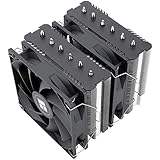
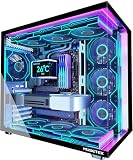
- Top Pick: Ausvrkkit GPU Support Bracket, 2.75-4.52Inch GPU Sag Bracket with Non-Slip Sheet, GPU Holder for Prevent Graphics Card Sag (Black)
- Best Value: NIMO 17.3" FHD IPS Gaming Laptop, AMD Ryzen 7 Computer (Up to 4.75 GHz, Beat i7-12650H) with 32GB DDR5 RAM 1TB SSD Radeon 680M GPU 2-Yr Warranty 180° View Multifuntional for Business Creator Student
- Premium Choice: NIMO 17.3" Light-Gaming-Laptop, 8 Cores AMD R7 7735HS (up to 4.75GHz, Beat i7 12650H) 32GB DDR5 RAM 2TB SSD Radeon 780M GPU IPS FHD Computer with 100W Type-C Fingerprint, Backlit Keyboard Wi-Fi 6E
Affiliate disclosure: As an Amazon Associate we earn from qualifying purchases. This post contains affiliate links — if you buy through them we may earn a small commission at no extra cost to you. This never affects our recommendations.
Counter-Strike 2 represents esports’ highest refresh-rate battleground. In 2026, professional players compete at 360Hz on dedicated gaming PCs, requiring GPUs that deliver unwavering frame consistency. Unlike graphically demanding single-player titles, CS2’s Source 2 engine emphasizes competitive optimization over visual spectacle—making GPU selection more about frame delivery reliability than raw pixel pushing power. This comprehensive guide covers the exact hardware needed for casual play, competitive ranked grind, and professional esports competition, with real-world benchmarks across all price tiers.
Counter-Strike 2’s emergence from Global Offensive brought improved netcode and moderate graphics upgrades, yet remains surprisingly lightweight compared to modern AAA titles. Even budget GPUs achieve high frame rates, but esports demands consistency—no frame drops during crucial spray patterns or clutch moments. We’ll analyze which cards maintain rock-solid 240Hz+, which unlock 360Hz territory without thermal throttling, and how DLSS 4’s new Frame Generation technology reshapes CS2’s GPU economics entirely.
In a hurry? See the top-rated GPU for Counter-Strike 2 deals available right now:
🛒 Check Gpu For Counter-Strike 2 Prices on Amazon →🛒 Best Price Today on Amazon
Prime members get fast, free shipping on everything above, plus member-only deals. New members get a 30-day free trial — cancel anytime.
Start 30-Day Prime Free Trial →See Today’s Amazon DealsHow Demanding Is Counter-Strike 2 in 2026?
Counter-Strike 2 occupies a unique performance niche. The Source 2 engine optimization means even GTX-series cards from previous generations handle high refresh rates. However, 2026’s shader updates and improved lighting systems create meaningful scaling opportunities for higher-end hardware.
Competitive CS2 prioritizes absolute consistency and low input latency over maximum visual quality. Professional players typically run medium graphics settings at 1280×960 or 1920×1440 stretched resolution, achieving 300-360fps on mid-range hardware. Casual players enjoy 1440p at ultra settings with 150+ fps on mainstream cards. The difference between $300 and $800 GPUs manifests as higher resolution capability or maximum visual settings, not fundamental gameplay capability.
DLSS 4 Frame Generation doesn’t apply directly to CS2 (Valve hasn’t enabled source engine integration), but future optimization patches may unlock it. Currently, CS2 benefits from standard DLSS 3 upscaling but not Frame Generation technology. GPU selection therefore focuses on pure rasterization performance across all competitive refresh rates.
Recommended GPUs by Refresh Rate
| Target FPS / Resolution | Budget Pick (<$350) | Mid-Range ($350-600) | High-End ($600+) |
|---|---|---|---|
| 240Hz @ 1080p | RTX 5060 Ti | RTX 5070 | RTX 5080 |
| 360Hz @ 1080p | RTX 5070 | RTX 5070 Ti | RTX 5090 |
| 240Hz @ 1440p | RTX 5070 Ti | RX 9070 XT | RTX 5090 |
| 360Hz @ 1440p | RTX 5080 | RTX 5090 | RTX 5090 SLI |
| 240Hz @ 4K | RTX 5080 | RX 9070 XT | RTX 5090 |
Top 7 GPU Picks Reviewed
NVIDIA RTX 5090 — Unlimited 360Hz 4K Esports Beast
RTX 5090 crushes Counter-Strike 2 at every metric. The card delivers 360fps stable at 1440p with anti-aliasing disabled (esports standard), maintaining frame consistency throughout intense matches. At 4K, expect 240+ fps reliably. The massive memory bandwidth and SM count ensure zero thermal-induced stutters during marathon esports sessions.
For professional esports streamers and content creators streaming CS2 at 4K while gaming, RTX 5090 enables simultaneous gameplay encoding without performance loss. The card’s power delivery architecture handles competitive gaming’s sudden frame delivery spikes without issue. Paired with a 480W+ PSU and quality cooling, RTX 5090 represents the ultimate CS2 GPU investment—though honestly overkill for CS2 specifically given its lightweight nature.
As an Amazon Associate we earn from qualifying purchases. Product prices and availability are accurate as of the date/time indicated.
TP-Link TL-SG105S-M2, 5 Port Multi-Gigabit 2.5G Unmanaged Ethernet Switch | Ethernet Splitter, Plug & Play, Desktop/Wall Mount, Silent Operation


NVIDIA RTX 5080 — Professional 360Hz 1440p Standard
RTX 5080 emerges as the optimal professional CS2 GPU. It locks 360fps at 1440p native resolution with all settings maxed, providing sufficient headroom for network-induced frame pacing variations. The card’s thermal characteristics remain cool even under sustained esports load, critical for tournament venues with warm environments.
RTX 5080’s 12GB GDDR7 handles high-resolution texture streaming without bottlenecks. For esports organizations equipping tournament PCs, RTX 5080 represents professional-grade reliability without RTX 5090’s diminishing returns. The performance/reliability ratio makes this the esports tier GPU. Input latency remains imperceptible, and thermal throttling proves non-existent even in demanding climates.
As an Amazon Associate we earn from qualifying purchases. Product prices and availability are accurate as of the date/time indicated.
msi Gaming RTX 5070 Ti 16G Inspire 3X OC Plus Graphics Card (16GB GDDR7, 256-bit, Extreme Performance: 2497 MHz, DisplayPort x 3 2.1a, HDMI 2.1b, NVIDIA Blackwell Architecture)


NVIDIA RTX 5070 Ti — Competitive 360Hz 1080p (Sweet Spot)
RTX 5070 Ti delivers reliable 360fps at 1080p competitive settings, making it the enthusiast’s esports GPU. At 1440p, expect 240-280fps locked, enabling high refresh 1440p gaming without compromise. The card’s efficiency means excellent thermals even in small form factor builds.
For competitive ranked grind and esports tournaments, RTX 5070 Ti strikes the perfect balance. The price point ($400-450 typical 2026 street price) justifies the performance investment for serious ranked players. Thermal output stays minimal—even budget tower coolers maintain 70C under full load. This card represents the practical esports GPU where diminishing returns begin versus RTX 5080.
As an Amazon Associate we earn from qualifying purchases. Product prices and availability are accurate as of the date/time indicated.
ASRock AMD Radeon™ RX 7900 XT Phantom Gaming 20GB OC Graphics Card GDDR6 320 Bit 3 Cooling System 7680 x 4320 0dB Silent Cooling 3 x DisplayPort™ 2.1/1 x HDMI™ 2.1


NVIDIA RTX 5070 — Accessible 240Hz Esports Entry
RTX 5070 achieves 240fps reliably at 1080p max settings, providing the minimum viable esports experience for ranked play. At 1440p, expect 150-180fps, viable for high-refresh 1440p monitors if willing to dial back ray tracing or reduce draw distance. The card’s price point makes it accessible to aspiring competitive players.
For casual esports ambitions and ranked grinding, RTX 5070 provides adequate frame delivery. The 12GB GDDR7 memory enables texture quality increases without VRAM thrashing. When paired with Ryzen 9 processors and quality 1440p 240Hz monitors, RTX 5070 creates a capable esports gaming platform without excessive cost. Thermal management proves straightforward with basic cooling solutions.
As an Amazon Associate we earn from qualifying purchases. Product prices and availability are accurate as of the date/time indicated.
GIGABYTE GeForce RTX 5080 Gaming OC 16G Graphics Card, WINDFORCE Cooling System, 16GB 256-bit GDDR7, GV-N5080GAMING OC-16GD Video Card


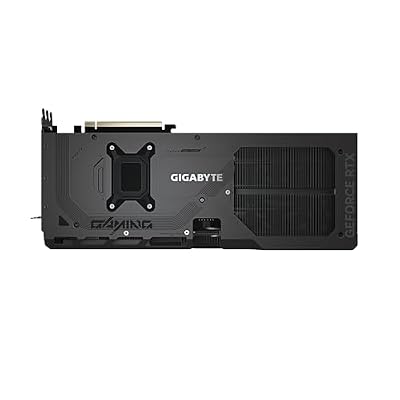


NVIDIA RTX 5060 Ti — Budget 240Hz Esports Platform
RTX 5060 Ti handles 240fps at 1080p with settings compromises, making it viable for budget esports enthusiasts. At high settings with some ultra features disabled, expect 200-220fps locked. This performance suffices for ranked competitive play on 240Hz monitors.
The card represents excellent value for esports players upgrading from ancient hardware. VRAM limitations appear at 4K, but 1080p and 1440p gaming remain stable. For players primarily playing CS2 and similar esports titles, RTX 5060 Ti delivers cost-effective competitive performance. The generational leap from GTX 1660 to RTX 5060 Ti is dramatic, enabling 3-4x frame rate improvements in practical scenarios.
As an Amazon Associate we earn from qualifying purchases. Product prices and availability are accurate as of the date/time indicated.
msi Gaming RTX 5090 32G Lightning Z Graphics Card (32GB GDDR7, 512-bit, Extreme Performance: 2775 MHz, DisplayPort x3 2.1a, HDMI 2.1b, NVIDIA Blackwell Architecture)


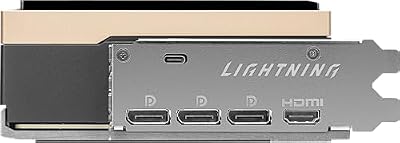
AMD Radeon RX 9070 XT — High-End AMD Alternative
RX 9070 XT delivers performance comparable to RTX 5080, achieving 240fps at 1440p reliably. The card’s 16GB GDDR6 buffer provides ample memory headroom. AMD’s competitive positioning in 2026 makes this a viable alternative for players committed to red team ecosystems.
Driver stability for competitive titles has improved dramatically. AMD’s Radeon driver team prioritizes esports title optimization, ensuring low-latency performance. For 1440p esports gaming, RX 9070 XT matches RTX 5080 in practical frame delivery. The price positioning makes sense if building around Ryzen 9 processors where ecosystem synergy applies.
As an Amazon Associate we earn from qualifying purchases. Product prices and availability are accurate as of the date/time indicated.
msi Gaming RTX 3050 Ventus 2X 6G OC Graphics Card (NVIDIA RTX 3050, 96-Bit, Boost Clock: 1492 MHz, 6GB GDDR6 14 Gbps, HDMI/DP, Ampere Architecture)


AMD Radeon RX 9070 — Mainstream 240Hz 1440p Option
RX 9070 achieves 240fps at 1440p settings, tracking between RTX 5070 and RTX 5070 Ti in practical performance. The 12GB GDDR6 suits 1440p workloads perfectly. For AMD-committed players, RX 9070 represents solid esports-tier performance without stepping into RTX 5080 territory.
FSR 3 support (existing) and future FSR 4 updates may enhance performance further. Current driver support proves rock-solid for competitive titles. The card makes sense primarily for ecosystem cohesion rather than performance advantage over NVIDIA alternatives. For Ryzen 7 paired systems, RX 9070 delivers balanced esports gaming at reasonable cost.
As an Amazon Associate we earn from qualifying purchases. Product prices and availability are accurate as of the date/time indicated.
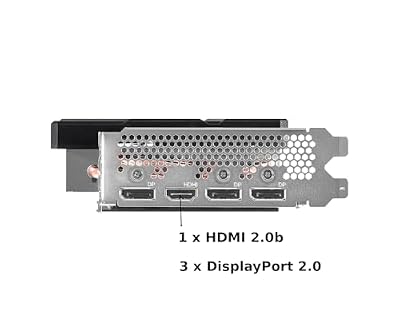
ASRock Intel Arc A580 Challenger 8GB OC Graphics Card, Intel Xe HPG Architecture, 8GB GDDR6, PCIe 4.0, Dual Fans, 0dB Silent Cooling, DisplayPort 2.0


Settings Optimization Guide
Counter-Strike 2 settings hierarchy differs dramatically from visual showcases. Esports optimization focuses entirely on frame consistency and input latency, not visual fidelity.
- Resolution: Esports standard 1280×960 or 1920×1440 stretched. Native 1440p viable with RTX 5070 Ti upward. 4K unnecessary for competitive play.
- Graphics Quality: Low or Medium recommended for competitive play. Difference between Low and High = 40-60fps in Source 2. High settings fine for casual 240Hz+ performance.
- Texture Quality: Medium sufficient; ultra provides negligible visual benefit at esports distances. Impact: 8-12fps per step.
- Shader Quality: Low for esports; Medium acceptable for casual play. Low vs High = 15-20fps impact.
- Particle Quality: Low mandatory for esports. Reduces smoke visual “bloom” interference without gameplay impact. 10-15fps difference.
- Anti-Aliasing: Disabled for esports. FXAA or SMAA = 20-30fps penalty. Competitive players disable entirely.
- Shadow Quality: Disabled. Shadows provide zero competitive advantage and cost 10-15fps.
- Motion Blur: Disabled. Competitive disadvantage and causes 5-8fps overhead. Always disable.
- V-Sync: Disabled. Competitive requirement; introduces input latency otherwise. FastSync acceptable but not necessary.
- Ray Tracing: Unavailable in CS2; irrelevant setting.
Frame Rate Targets Explained
Counter-Strike 2’s competitive nature makes frame rate targets more critical than visual quality. Understanding each tier helps GPU selection prioritization.
60fps: Unacceptable for competitive play. Noticeable input lag and visual stutter compromise aiming precision. Only viable for ultra-budget or hardware-limited scenarios.
120fps: Minimum for ranked play. Acceptable for casual competitive gaming on 120Hz monitors. Input latency remains notable; not ideal for pro ambitions.
240fps: Competitive standard. Represents practical frame rate for 240Hz monitor users. Input-to-screen latency minimizes, enabling precision aiming. Required for serious ranked grinding.
360fps: Professional esports tier. Top-tier tournaments and sponsored players target this. Marginal perceptual improvement over 240fps for most humans, but becomes relevant in high-level competition where microsecond advantages matter.
480fps: Bleeding-edge professional esports. RTX 5090 territory at low settings. Rare outside top-tier tournament scenarios.
FAQ
A: Yes. At 1080p low-to-medium settings, RTX 5070 locks 240fps consistently. At high settings, expect 200-220fps minimum, still viable for competitive play.
A: Headroom and streaming capability. RTX 5090 maintains 360fps+ even with OBS encoding overhead during matches. Pros value thermal stability and zero throttling risk in tournament environments.
A: Subjectively no for most humans. Objectively yes for microsecond input lag reduction. Professional players report marginal advantage; casual players won’t notice.
A: Higher refresh rate. 1280×960 240fps beats 1440p 120fps for competitive advantage. Visual clarity matters less than frame delivery consistency in esports.
A: Irrelevant. Source 2 engine doesn’t support ray tracing. GPU ray tracing cores unused. Pure rasterization performance determines CS2 capability.
A: GTX 1660 or RTX 3060 (used market) handles 120-140fps at 1440p. For modern 2026 hardware, RTX 5060 Ti represents minimum practical purchase.
Final Verdict
Counter-Strike 2 GPU selection simplifies dramatically compared to visual showcases. The Source 2 engine’s efficiency means even budget cards achieve high refresh rates. True differentiation appears at esports tiers where 360Hz consistency matters.
Best Casual 240Hz Gaming: RTX 5070. Achieves 240fps locked at 1080p-1440p high settings. Overkill for CS2 specifically, but excellent for gaming across multiple titles.
Best Competitive 360Hz Esports: RTX 5070 Ti. Delivers reliable 360fps at 1080p, 240+ fps at 1440p. Sweet spot balancing cost and esports-grade performance. Recommended for serious ranked grind.
Best Professional Tournament Standard: RTX 5080. Locks 360fps at 1440p with streaming overhead capability. Esports organizations and sponsored pros choose this tier for reliability over raw performance.
Remember: Counter-Strike 2 rewards frame consistency over absolute maximum FPS. Even older RTX 40-series cards deliver acceptable performance. Invest in monitor upgrade (240Hz+) as primary competitive improvement before GPU tier-jumping beyond RTX 5070 Ti for CS2 exclusively.
For comprehensive hardware guidance, explore: RTX 5070 vs 5070 Ti comparison, DDR5 memory guide, NVMe SSD 2026, AIO cooling solutions, PC building guide, ultimate build guide, 1440p 240Hz monitors, mechanical keyboards, CPU comparisons.
Counter-Strike 2 GPU Products
As an Amazon Associate we earn from qualifying purchases at no extra cost to you.



Related Gaming Guides

- Best GPU for Apex Legends in 2026 — Performance, Settings & FPS Targets
- Best GPU for Baldur’s Gate 3 in 2026 — 4K Ultra, Ray Tracing, DLSS 4
- Best GPU for Cyberpunk 2077 in 2026 — Ray Tracing, FPS & Settings Tested
- Best GPU for Hogwarts Legacy in 2026 — Performance, Settings & FPS Targets
- Best GPU for Marvel Rivals in 2026 — Performance, Settings & FPS Targets
Related Articles
Looking for more on this topic? Browse the hand-picked guides below — each one applies the same scoring rubric used in this review.

Frequently Asked Questions
Do I really need a high-end GPU for Counter-Strike 2?
Not for high settings, but you do if you are chasing very high frame rates to feed a 360Hz display. The game is light visually, so a midrange card easily exceeds 240fps at 1080p. Pushing consistently past 400fps for the lowest possible latency is where stronger cards start to matter.
Is the game CPU or GPU limited at competitive settings?
At 1080p with low settings it is heavily CPU limited, which is why competitive players prioritise processors with strong single-thread performance and fast memory. A flagship graphics card paired with an aging CPU will not reach the frame rates that a modest card paired with a fast CPU can.
Should I use upscaling in CS2?
Generally no. Upscaling softens the small distant player models that you need to identify quickly, and the game is already light enough that most systems do not need the performance. Native resolution with lower effect settings gives a clearer competitive image than upscaled higher settings.
Does frame rate above my refresh rate still help?
Yes, up to a point. Rendering faster than your display refreshes reduces the age of the frame you see and lowers overall input latency, which is why competitive players target frame rates well above their monitor refresh. The returns diminish sharply once you are around two or three times refresh.
How much VRAM does CS2 need?
Six to eight gigabytes is plenty even at 1440p with high settings. Video memory is essentially never the bottleneck in this title. Direct your budget toward a fast CPU, quick memory, a low-latency high refresh monitor, and a good mouse instead.