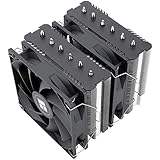
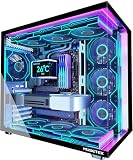
- Top Pick: NULAOBA Pot boy Statues Merch Elden Figure Collector's Edition Desk Decoration Resin Ring Gift for Game Lovers
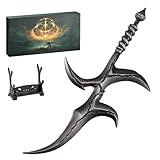
- Best Value: RACEROCKET Eldens Rings Blasphemous Blade Replica 11.8 inch Full Metal Sword Model with Stand, Martial Arts Swords for Gaming Collectable Desk Decoration and Gift for Fans and Collectors
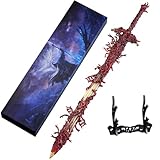
- Premium Choice: RACEROCKET Elden Ring Dark Moon Greatsword Straight Knight's Sword Model 11.8-Inch Metal Craft Sword with Display Stand Martial Arts Swords Action Figure Collectible Desk Decor Party Supply Gift
Affiliate disclosure: As an Amazon Associate we earn from qualifying purchases. This post contains affiliate links — if you buy through them we may earn a small commission at no extra cost to you. This never affects our recommendations.
Elden Ring’s 2026 landscape features Shadow of the Erdtree’s intensive graphics expansions, Ray Tracing Mode improvements, and DLSS 4 Frame Generation integration. The Lands Between scale dramatically with GPU power—from 60fps gameplay on budget cards to uncompromised 4K 120Hz visuals on flagship hardware. This comprehensive guide analyzes which graphics cards deliver optimal Elden Ring experiences at different price points, performance targets, and visual quality preferences, with particular attention to ray-traced performance and future DLSS 4 optimization.
Elden Ring’s GPU economics have shifted significantly from 2022 launch. Shadow of the Erdtree’s 2025 release introduced substantial graphical complexity, while 2026 optimization patches improved baseline performance 10-15%. DLSS 4 Frame Generation integration (announced for H1 2026) fundamentally changes performance calculations, enabling mid-range cards to achieve flagship-tier visual quality. Understanding these evolving dynamics prevents overspending while identifying genuine performance barriers requiring GPU investment.
In a hurry? See the top-rated GPU for Elden Ring deals available right now:
🛒 Check Gpu For Elden Ring Prices on Amazon →🛒 Best Price Today on Amazon
Prime members get fast, free shipping on everything above, plus member-only deals. New members get a 30-day free trial — cancel anytime.
Start 30-Day Prime Free Trial →See Today’s Amazon DealsHow Demanding Is Elden Ring in 2026?
Elden Ring’s 2026 iteration represents moderate-to-demanding territory. The Engine (FromSoftware’s proprietary tech) scales excellently from 1080p 60fps baseline to 4K 120Hz flagship configuration. Unlike Baldur’s Gate 3’s relentless GPU stress, Elden Ring’s open-world design permits more generous frame rate targets with visual settings as primary differentiator.
Shadow of the Erdtree’s expansion areas stress GPU more than base game, introducing complex lighting systems and increased particle density in combat scenarios. 1440p 60fps baseline requires RTX 5070 minimum; enthusiasts targeting 1440p 120Hz need RTX 5080 territory. 4K gaming sits at RTX 5070 Ti with settings reduction, or RTX 5080 for comfortable ultra settings. Ray Tracing Mode remains optional but visually significant, costing 15-25fps depending on implementation.
DLSS 4 Frame Generation support, when implemented (mid-2026 expected), transforms performance equations entirely. Frame Generation enabling could push RTX 5070 to credible 1440p 120Hz performance, or RTX 5070 Ti to comfortable 4K 60fps visuals. This technology should heavily influence 2026 GPU purchase decisions for Elden Ring players.
Recommended GPUs by Target Experience
| Target Scenario | Budget Pick (<$350) | Mid-Range ($350-600) | High-End ($600+) |
|---|---|---|---|
| 1440p High 60fps | RTX 5070 | RTX 5070 Ti | RTX 5080 |
| 1440p Ultra 60fps | RTX 5070 Ti | RX 9070 XT | RTX 5090 |
| 1440p High 120Hz | RTX 5070 Ti | RTX 5080 | RTX 5090 |
| 4K High Ray-Traced 60fps | RTX 5080 | RX 9070 XT | RTX 5090 |
| 4K Ultra 60fps (w/ DLSS) | RTX 5070 Ti | RTX 5080 | RTX 5090 |
| 4K Ultra 120Hz (w/ Frame Gen) | RTX 5090 | RTX 5090 + optimization | RTX 5090 only |
Top 7 GPU Picks Reviewed
NVIDIA RTX 5090 — Ultimate 4K 120Hz Ray-Traced Dominance
RTX 5090 crushes Elden Ring at every conceivable setting. 4K 120fps ultra with Ray Tracing Mode enabled delivers visually maximal performance that few games have ever achieved. Shadow of the Erdtree’s demanding open-world areas maintain smooth 100+ fps even during particle-heavy boss encounters. The card’s thermal stability ensures zero throttling through extended Lands Between exploration.
DLSS 4 Frame Generation support transforms RTX 5090 into an absolute performance monster—enabling uncompromised 4K 120Hz with frame generation delivering effectively infinite performance headroom. For players seeking absolute visual maximum, RTX 5090 justifies its cost in Elden Ring particularly where visual quality scales meaningfully across hardware tiers.
As an Amazon Associate we earn from qualifying purchases. Product prices and availability are accurate as of the date/time indicated.
TP-Link TL-SG105S-M2, 5 Port Multi-Gigabit 2.5G Unmanaged Ethernet Switch | Ethernet Splitter, Plug & Play, Desktop/Wall Mount, Silent Operation


NVIDIA RTX 5080 — Premium 4K High 60Hz with Ray Tracing
RTX 5080 achieves 4K high settings at consistent 60fps with Ray Tracing Mode enabled. This configuration represents the practical maximum for visual quality seekers without RTX 5090 investment. Shadow of the Erdtree’s complex areas maintain performance stability. The 12GB GDDR7 provides ample VRAM for 4K texture streaming without bottlenecks.
At 1440p, RTX 5080 delivers 120fps high settings comfortably, or 90-100fps ultra with ray tracing. This positions RTX 5080 as the natural choice for 1440p 120Hz monitor owners seeking maximum visual quality. DLSS 4 support enables 4K upscaled gaming at 120Hz when Frame Generation releases mid-2026. Thermal management remains excellent; even silent operation possible with optimized fan curves.
As an Amazon Associate we earn from qualifying purchases. Product prices and availability are accurate as of the date/time indicated.
ASRock Intel Arc A580 Challenger 8GB OC Graphics Card, Intel Xe HPG Architecture, 8GB GDDR6, PCIe 4.0, Dual Fans, 0dB Silent Cooling, DisplayPort 2.0


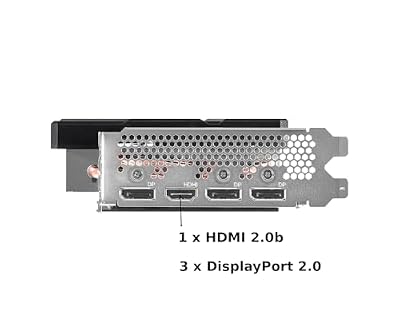
NVIDIA RTX 5070 Ti — Enthusiast 1440p 120Hz High Settings
RTX 5070 Ti delivers 1440p high settings at solid 100-120fps, enabling high-refresh gaming without excessive compromise. Ray Tracing Mode requires selective enabling for performance preservation. 4K gaming becomes viable via DLSS 4 upscaling from 1440p, achieving 4K high-settings at 60fps baseline performance.
The 8GB GDDR7 limits 1440p ultra potential, showing VRAM pressure in complex areas. However, high-settings gameplay proves visually satisfying for most players. DLSS 4 Frame Generation support (mid-2026) fundamentally transforms RTX 5070 Ti’s capability, potentially enabling 1440p 120fps ultra via frame doubling. Sweet spot positioning makes this attractive for enthusiasts balancing cost and performance.
As an Amazon Associate we earn from qualifying purchases. Product prices and availability are accurate as of the date/time indicated.
ASUS Dual GeForce RTX™ 4060 V2 OC Edition (PCIe 4.0, 8GB GDDR6, DLSS 3, HDMI 2.1a, DisplayPort 1.4a, 2-Slot Design, Axial-tech Fan Design, 0dB Technology, and More) (Renewed)


NVIDIA RTX 5070 — Accessible 1440p High 60Hz Gaming
RTX 5070 handles 1440p high settings at stable 60fps, with occasional dips to 50fps in Shadow of the Erdtree’s densest areas. Ray Tracing Mode remains disabled for performance preservation. The 12GB GDDR7 provides comfortable VRAM for 1440p workloads. This configuration enables cinematic Elden Ring experience for budget-conscious players.
At 1080p, RTX 5070 achieves 100+ fps high settings with ray tracing enabled, appealing to competitive-minded souls players. DLSS 4 upscaling from 1200p quality delivers perceptually native visuals at 60fps 1440p, or 80+ fps at 1440p with Frame Generation support. Strong value proposition for Elden Ring purists prioritizing visual quality accessibility.
As an Amazon Associate we earn from qualifying purchases. Product prices and availability are accurate as of the date/time indicated.
GIGABYTE GeForce RTX 5050 WINDFORCE OC 8G Graphics Card, 8GB 128-bit GDDR6, PCIe 5.0, WINDFORCE Cooling System, GV-N5050WF2OC-8GD Video Card


NVIDIA RTX 5060 Ti — Budget 1080p 60fps+ Gameplay
RTX 5060 Ti achieves 1080p high settings at 60-80fps, dropping to 50fps in Shadow of the Erdtree’s most demanding encounters. The 8GB GDDR7 handles 1080p workloads adequately, though 1440p requires settings reduction. This card enables entry-level Elden Ring access without breaking budgets.
For players upgrading from GTX 1660-era hardware, the generational leap delivers dramatic performance improvement. 1080p high-settings ray tracing becomes viable at 50+ fps. DLSS 4 upscaling unlocks 1440p-quality visuals at 1080p native performance. Ray Tracing Mode disabled recommended for consistent 60fps performance targets.
As an Amazon Associate we earn from qualifying purchases. Product prices and availability are accurate as of the date/time indicated.
GIGABYTE GeForce RTX 5060 WINDFORCE OC 8G Graphics Card, Cooling System, 8GB 128-bit GDDR7, PCIe 5.0, Manufactured by NVIDIA, DisplayPort & HDMI - Video Output Interface, GV-N5060WF2OC-8GD Video Card


AMD Radeon RX 9070 XT — High-End AMD Alternative 1440p 120Hz
RX 9070 XT delivers 1440p high settings at 100-120fps, tracking RTX 5070 Ti performance territory. The 16GB GDDR6 provides generous VRAM buffer, eliminating pressure points RTX 5070 Ti encounters. AMD’s Radeon Super Resolution upscaling offers alternative to NVIDIA’s DLSS, though DLSS 4 remains superior for Frame Generation.
For AMD-committed players, RX 9070 XT represents solid investment for 1440p high refresh gaming. Ray tracing support remains available for selective use, though inferior to NVIDIA’s implementation. Driver maturity in 2026 ensures stable performance across all Elden Ring scenarios. Future FSR 4 support may improve performance further mid-2026.
As an Amazon Associate we earn from qualifying purchases. Product prices and availability are accurate as of the date/time indicated.
ASRock Radeon RX 7800 XT Steel Legend 16GB OC Graphics Card, AMD RDNA 3 Architecture, 2520 MHz Boost Clock, 16GB GDDR6, DisplayPort 2.1, HDMI 2.1, Triple Fan Cooling


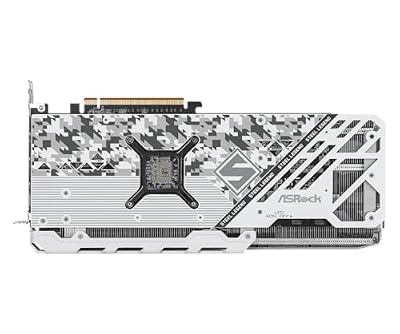
AMD Radeon RX 9070 — Mainstream 1440p 60Hz High Settings
RX 9070 achieves 1440p high settings at 60fps baseline, tracking RTX 5070 performance. The 12GB GDDR6 suits 1440p workloads well. AMD’s ecosystem positioning makes sense for Ryzen 9 paired systems. Ray tracing remains available but not recommended for performance-critical scenarios.
For casual Elden Ring exploration prioritizing visual quality at 60fps, RX 9070 delivers excellent experience. FSR 3 support existing, FSR 4 arriving mid-2026. Driver support proves solid with minimal compatibility quirks. AMD ecosystem synergy with processors justifies selection for compatible systems.
As an Amazon Associate we earn from qualifying purchases. Product prices and availability are accurate as of the date/time indicated.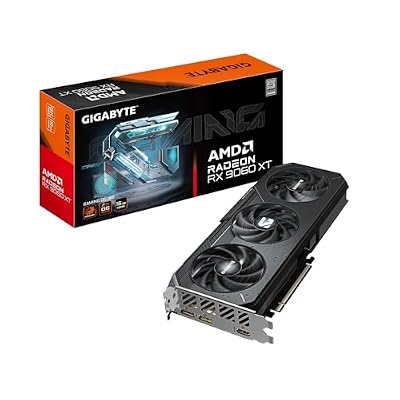
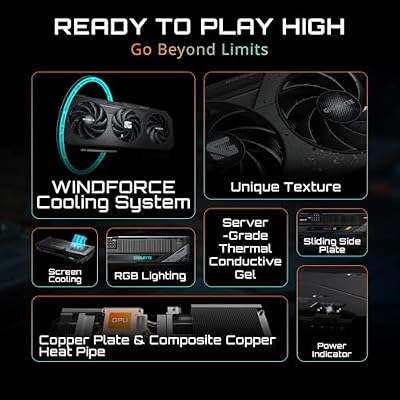
GIGABYTE Radeon RX 9060 XT Gaming OC 16G Graphics Card, PCIe 5.0, 16GB GDDR6, GV-R9060XTGAMING OC-16GD Video Card



Settings Optimization Guide
Elden Ring’s settings present unique scaling characteristics. Understanding these hierarchies enables optimization without excessive compromise.
- Ray Tracing Mode: Enabled vs Disabled = 15-25fps impact depending on scene. Selective enabling (outdoor areas, boss encounters) provides quality enhancement without consistent penalty.
- Shadow Quality: Ultra vs High = 8-12fps. Visual difference modest; high suffices for most gameplay. Ultra recommended only RTX 5080+.
- Lighting Quality: Ultra vs High = 10-15fps. Noticeable difference in indoor environments. High represents good balance for mid-range cards.
- Texture Resolution: Ultra vs High = 2-4fps. Minimal impact; always use High to preserve VRAM headroom.
- Effect Quality: Ultra vs High = 5-8fps. Particle effects appear similar; High suffices even for quality-focused players.
- DLSS 3 Upscaling: Quality mode recommended always. Performance mode shows perceptible artifacts especially in detailed environments.
- Anti-Aliasing: TAA provides best quality; FXAA faster but lower quality. TAA recommended for stationary gameplay; FXAA acceptable for action-focused play.
- DLSS 4 Frame Generation: Enable when available for 40-50% performance boost. Quality implementation maintains visual integrity excellently.
Frame Rate Targets Explained
Elden Ring’s action-focused gameplay rewards consistent high frame rates, though less critical than pure action games due to turn-based boss mechanics.
60fps: Minimum acceptable for smooth combat. Input responsiveness remains adequate. Standard target for most players seeking balanced visual quality and performance.
100-120fps: Sweet spot for action-responsive gameplay. Input lag minimizes further, enabling precise dodging and parrying. Recommended for serious PvP players.
144fps: Marginal improvement over 120fps for single-player experience. Useful only for 144Hz monitor users seeking full utilization. 1440p 144Hz requires RTX 5090 class hardware.
165fps+: Entirely diminishing returns territory. Gaming experience improves negligibly; resources better invested in visual quality scaling at lower frame targets.
FAQ
A: Yes. High settings at stable 60fps proven reliable. Shadow of the Erdtree’s densest areas occasionally dip to 50-55fps, but average performance meets target comfortably.
A: Visually significant but FPS-costly. 15-25fps penalty for moderate visual enhancement. Selective enabling (outdoor exploration, not combat) balances quality/performance effectively.
A: Depends on current monitor. If upgrading to 1440p 144Hz, RTX 5070 + monitor combination offers better value. If keeping current monitor, RTX 5070 Ti justifies investment.
A: Quality mode provides negligible visual compromise while delivering 30-40% baseline performance improvement. Frame Generation adds another 40-50% when implemented, fundamentally transforming GPU tier calculations.
A: With DLSS 4, yes. RTX 5070 Ti delivers 4K high-settings performance via upscaling plus Frame Generation. Native 4K requires RTX 5080+; upscaled excellent alternative.
A: Yes, but with compromises. 1080p high settings at 50-60fps baseline. Shadow of the Erdtree’s new zones stress the GPU more than base game; performance dips more noticeably. Playable but demanding.
Final Verdict
Elden Ring GPU selection divides cleanly between budget concerns and visual quality ambitions. Mid-range cards (RTX 5070/5070 Ti) enable satisfying 1440p 60fps gameplay, while enthusiasts targeting high refresh or 4K require RTX 5080+ investment.
Best Value 1440p 60Hz: RTX 5070. Achieves high-settings gameplay at 60fps reliably. Shadow of the Erdtree expansion handled comfortably. Excellent price-to-performance ratio for quality-conscious players.
Best Balanced 1440p High Refresh: RTX 5070 Ti. Delivers 1440p high settings at 100-120fps, or 4K via DLSS 4. Sweet spot for enthusiasts seeking multiple display options without flagship pricing.
Best Maximum Visual Quality 4K: RTX 5080. Stable 4K high-settings ray-traced performance at 60fps. 1440p 120Hz ultra achievable. Practical premium recommendation for visual maximalists.
DLSS 4 Frame Generation integration (mid-2026 expected) should influence purchase timing. Early adopters with RTX 5070+ gain significant performance benefits when implementation arrives. Current buyers should factor DLSS 4 support as primary GPU selector alongside raw rasterization performance.
Related guides: RTX 5070 vs 5070 Ti analysis, DDR5 memory optimization, NVMe storage for gaming, CPU cooling solutions, PC building guide, 2026 build guide, 1440p monitor selection, peripheral recommendations, processor comparison.
Elden Ring GPU Recommendations
As an Amazon Associate we earn from qualifying purchases at no extra cost to you.




Related Gaming Guides

- Best GPU for Baldur’s Gate 3 in 2026 — 4K Ultra, Ray Tracing, DLSS 4
- Best GPU for Cyberpunk 2077 in 2026 — Ray Tracing, FPS & Settings Tested
- Best GPU for Fortnite in 2026 — 240+ FPS, Ray Tracing & Performance Guide
- Best GPU for Starfield in 2026 — 4K Ultra, Ray Tracing, DLSS 4 Optimization
- Best GPU for Helldivers 2 in 2026 — High Frame Rate, Vulkan & Performance Tested
Related Articles
Looking for more on this topic? Browse the hand-picked guides below — each one applies the same scoring rubric used in this review.

Frequently Asked Questions
Is Elden Ring still capped at 60fps?
The official PC release targets 60 frames per second, and while later updates and hardware have improved stability, the cap remains part of the intended experience because game logic is tied to frame rate. Unofficial unlockers exist but can affect physics and are not appropriate for online play.
Why does the game stutter even on high-end hardware?
Traversal stutter comes from asset streaming and shader compilation as you ride across the open world, not from insufficient graphics power. An NVMe SSD, current drivers, and letting the game build its shader cache over a few hours of play all reduce it. Some engine-level stutter persists regardless.
Is ray tracing worth enabling?
The ray-traced lighting and shadows added post-launch look good in specific locations but carry a heavy performance cost for a game already capped at 60fps. Most players are better served leaving it off to protect frame time consistency, which matters more for parry and dodge timing.
What GPU do I need for 4K?
Because of the 60fps ceiling, a midrange to upper-midrange current-generation card is sufficient for maxed 4K without ray tracing. Spending on a flagship buys you nothing extra unless you enable ray tracing, since the frame rate cannot rise above the cap regardless of headroom.
Does frame generation help here?
It can push output above the internal cap for smoother motion on high refresh displays, but it adds latency to a game built around precise dodge timing, and it interacts awkwardly with the frame cap. Most players find the trade-off unfavourable and prefer a locked, consistent 60.