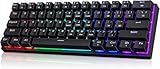
- Top Pick: 60% Wired Mechanical Gaming Keyboard with Blue Switches, LED Backlit
- Best Value: Redragon Mechanical Gaming Keyboard Wired, 11 Programmable Backlit Modes, Hot-Swappable Red Switch, Anti-Ghosting, Double-Shot PBT Keycaps, Light Up Keyboard for PC Mac
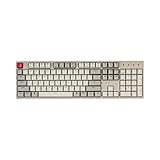
- Premium Choice: Kisnt KN85 Wireless Mechanical Keyboard, 75% Layout, Bluetooth/2.4GHz/USB-C, Custom RGB Backlit, Hot-Swappable Linear Switch, Creamy Sound for Gaming/Typing (Retro Beige)
Affiliate disclosure: As an Amazon Associate we earn from qualifying purchases. This post contains affiliate links — if you buy through them we may earn a small commission at no extra cost to you. This never affects our recommendations.
- Mechanical Gaming Keyboards Comparison Table
- Top 7 Best Mechanical Gaming Keyboards Under $150 — Detailed Reviews
- Mechanical Switch Types Explained — Gaming Impact
- Keyboard Form Factor Guide — Size, Accessibility, Trade-offs
- Hot-Swappable Switches — Why They Matter for Gaming
- Wireless Gaming Latency — Does It Matter?
- Frequently Asked Questions (FAQ)
- Conclusion
- Build Your Perfect Gaming Setup
- Related Articles
- Related Articles
Mechanical gaming keyboards have become essential for competitive players and enthusiasts alike. Unlike membrane keyboards, mechanical switches provide consistent actuation, lower input latency (1-2ms faster response), superior durability (50+ million keystrokes per switch), and tactile feedback that makes every keystroke count. For gamers on a budget, the sub-$150 sweet spot offers premium features—hot-swappable switches, programmable macro keys, RGB backlighting, and professional-grade build quality—without breaking the bank. Whether you’re grinding ranked matches in FPS titles, executing complex rotations in MMOs, or simply enjoying responsive typing, a quality mechanical keyboard transforms your gaming experience.
As an Amazon Associate we earn from qualifying purchases at no extra cost to you.



In a hurry? See the top-rated Mechanical Gaming Keyboards Under $150 deals available right now:
🛒 Check Mechanical Gaming Keyboards Under $150 Prices on Amazon →🛒 Best Price Today on Amazon
Prime members get fast, free shipping on everything above, plus member-only deals. New members get a 30-day free trial — cancel anytime.
Start 30-Day Prime Free Trial →See Today’s Amazon DealsMechanical Gaming Keyboards Comparison Table
| Keyboard | Form Factor | Switch Type | Hot-Swap | RGB/Backlight | Wireless |
|---|---|---|---|---|---|
| Keychron K8 Pro | TKL (87-key) | Gateron G Pro (multiple) | ✓ Yes | RGB | ✓ Bluetooth |
| Logitech G Pro X 60 | 60% | GX Optical (tactile/linear) | ✗ No | LIGHTSYNC RGB | ✓ Lightspeed |
| Razer Huntsman Mini | 60% | Razer Optical (clicky/linear) | ✗ No | Chroma RGB | ✗ Wired |
| Glorious GMMK 2 65% | 65% | Cherry MX Compatible | ✓ Yes | Per-Key RGB | ✗ Wired |
| Royal Kludge RK68 | 65% | Cherry MX Compatible | ✓ Yes | RGB | ✓ Bluetooth |
| HyperX Alloy Origins Core | TKL (87-key) | HyperX Red Linear | ✗ No | RGB | ✗ Wired |
| ASUS ROG Falchion Ace | 65% | HFX Hall Effect | ✓ Yes | Per-Key RGB | ✗ Wired |
Top 7 Best Mechanical Gaming Keyboards Under $150 — Detailed Reviews
1. Keychron K8 Pro — Best Overall Value (TKL, Hot-Swap)

AULA F75 Pro Wireless Mechanical Keyboard,75% Hot Swappable Custom Keyboard with Knob,RGB Backlit,Pre-lubed Reaper Switches,Side Printed PBT Keycaps,2.4GHz/USB-C/BT5.0 Mechanical Gaming Keyboards


As an Amazon Associate we earn from qualifying purchases. Product prices and availability are accurate as of the date/time indicated.
The Keychron K8 Pro is the ultimate budget TKL mechanical keyboard, delivering professional-grade features typically found in $200+ boards. This 87-key tenkeyless layout frees up desk space for your mouse while retaining dedicated function keys—perfect for both gaming and productivity. The K8 Pro ships with hot-swappable Gateron G Pro switches (red linear, brown tactile, or banana linear options), allowing you to swap switches without soldering. The aluminum frame with gasket-mount stabilizers provides a premium typing feel and responsive gaming feedback. QMK/VIA programmability lets you remap any key and create complex macros for competitive games like Counter-Strike 2, Valorant, and Overwatch 2. The RGB south-facing backlight works with double-shot PBT keycaps for crisp lighting, and Bluetooth 5.1 connectivity pairs with up to 3 devices simultaneously—switch between PC and Mac seamlessly. A 4000 mAh battery lasts 100+ hours at low brightness, making it viable for portable LAN events. At $99–$129, the K8 Pro is unbeatable for FPS gamers who demand sub-millisecond response and full programmability. Best for: competitive FPS players, typists, enthusiasts who want hotswap without the premium price tag.
2. Logitech G Pro X 60 — Best Wireless (60%, Esports-Tuned)

Logitech G PRO X 60% Wireless Gaming Keyboard (Tactile Optical) - Black | Lightspeed, ultra-compact TKL 60% mechanical, for Windows PC, LIGHTSYNC RGB, dual-shot PBT keycaps, optical switches


As an Amazon Associate we earn from qualifying purchases. Product prices and availability are accurate as of the date/time indicated.
Designed with input from hundreds of professional Valorant, CS:GO, and League of Legends esports athletes, the Logitech G Pro X 60 is a benchmark 60% wireless gaming keyboard. This ultra-compact 60-key layout maximizes mouse pad real estate—critical for esports where millimeters matter. GX Optical switches are Logitech’s proprietary tech, offering tactile (4.5mm actuation) or linear (2.0mm) variants with 1ms response time. LIGHTSPEED wireless technology ensures zero lag—faster than most wired keyboards—with USB adapter included alongside Bluetooth and USB-C wired modes for flexibility. Dual-shot PBT keycaps resist shine, and per-key LIGHTSYNC RGB customization syncs with games. The carrying case included makes this ideal for tournament players. At $119–$149, it’s pricier than some competitors but justified by esports-validated engineering and wireless speed. Downside: not hot-swappable (switches are soldered), so you’re locked into GX switches. Best for: esports athletes, wireless enthusiasts, competitive 1v1 shooters.
3. Razer Huntsman Mini — Best Budget Gaming (60%, Optical Speed)

Razer Huntsman Mini 60% Gaming Keyboard, Linear Optical Switches, White | Aluminum Top Frame, Chroma RGB Lighting, PBT Keycaps, Onboard Memory, Snap Tap


As an Amazon Associate we earn from qualifying purchases. Product prices and availability are accurate as of the date/time indicated.
Razer’s Huntsman Mini is the budget king of 60% mechanical keyboards, often discounted to $69–$99 on Amazon. This ultra-compact gaming board features Razer Optical Switches, which actuate at 1.5mm with a lightning-fast 45g actuation force—0.3ms faster than Cherry MX. Choose between Clicky (audible feedback, 80dB), Linear (smooth, quiet), or Analog (Rapid Trigger enabled) switches depending on your playstyle. The PBT keycaps resist shine better than ABS, and Chroma RGB backlighting per-key supports 16 million colors. Onboard memory stores up to 5 profiles, letting you switch between game configs instantly. The aluminum top plate and stabilized spacebar deliver durability for long tournament grinds. At sub-$100, the Huntsman Mini is the most accessible mechanical gaming keyboard; ideal entry point for players upgrading from membrane. Downside: not hot-swappable, wired USB only, no wireless option. Best for: budget-conscious FPS gamers, Fortnite/Valorant grinders, players prioritizing compact form factor.
4. Glorious GMMK 2 65% — Best Hot-Swap Platform (65%, Premium Build)

GLORIOUS Gaming GMMK 2 - TKL Mechanical Keyboard - Custom 65% Keyboard - Compact -Hotswap w/Cherry Mx Style Switches - Incl. Double Shot Keycaps & Linear Switches - PC Gaming Setup Accessories


As an Amazon Associate we earn from qualifying purchases. Product prices and availability are accurate as of the date/time indicated.
The Glorious GMMK 2 65% is the best hot-swappable keyboard under $150 for customization enthusiasts. The 65% form factor strikes the perfect balance—it includes dedicated arrow keys unlike 60%, yet remains compact like smaller boards. Hotswap sockets accept any 5-pin Cherry MX compatible switches: Cherry MX, Gateron, Kailh, Outemu, or aftermarket options from budget to premium brands. Pre-installed stabilizers are factory lubricated and tuned, eliminating rattle. Thick case foam and gasket mounting provide a premium typing experience rivaling $300 custom builds. Per-key RGB backlighting with GMMK software lets you create game-specific profiles. The aluminum frame is available in black or white. At $99–$139, this is the most future-proof purchase—swap switches seasonally as new tech drops, or swap keycaps for aesthetic variety. The learning curve is minimal; even beginners can swap switches in minutes without tools. Best for: keyboard enthusiasts, switch collectors, players who like tweaking their setup, future-proofing budget gamers.
5. Royal Kludge RK68 — Best Value Budget (65%, Wireless)

RK ROYAL KLUDGE RK68 Mechanical Gaming Keyboard, 65% Compact Size, White | Wired RGB 60% Keyboard, Hot Swappable Pre-lubed Red Switch, No-Comflict 68 Keys with Shine-through Keycaps for WIN/Mac Gamer


As an Amazon Associate we earn from qualifying purchases. Product prices and availability are accurate as of the date/time indicated.
Royal Kludge’s RK68 is the most affordable mechanical gaming keyboard on this list, often priced $49–$89 depending on switch and colorway. This 65% hotswap board packs features typically found in $150+ keyboards into a tight price. The RK68 supports Cherry MX compatible switches, Bluetooth 5.0 + 2.4GHz wireless + USB wired (triple connectivity), and hot-swappable sockets with pre-installed stabilizers. Red or Brown switch options ship with most variants; RK’s own switches are smoother than expected at this price tier. RGB backlighting and basic macro support via software round out the feature set. Build quality is solid—no creaks or flex. The 65% layout is perfect for desk-space-constrained setups. Downside: RGB software is less polished than Glorious or Keychron; customer support is slower. At under $90 for a hotswap wireless board, the RK68 offers unbeatable value for casual gamers and professionals in budget-constrained countries. Best for: budget gamers, wireless enthusiasts, switch customization seekers, desk-space limited setups.
6. HyperX Alloy Origins Core — Best for Build Quality (TKL, Premium Materials)

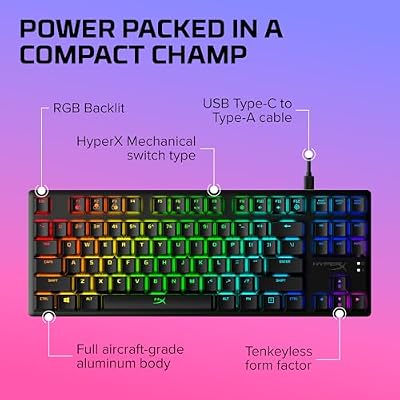
HyperX Alloy Origins Core - Tenkeyless Mechanical Gaming Keyboard, Software Controlled Light & Macro Customization, Compact Form Factor, RGB LED Backlit, Linear HyperX Red Switch,Black




As an Amazon Associate we earn from qualifying purchases. Product prices and availability are accurate as of the date/time indicated.
HyperX’s Alloy Origins Core is a premium TKL (87-key) mechanical keyboard built for durability and professional typing. Unlike gaming-focused boards, this prioritizes build longevity. The aluminum frame is 4.5mm thick—one of the thickest in budget category—with reinforced stabilizers that eliminate rattle even during intense gaming sessions. HyperX Red switches are linear, 45g actuation, smooth, and pre-lubricated from factory. The typing experience is quieter and smoother than Cherry MX Red, thanks to optimized switch geometry. PBT double-shot keycaps resist shine for 2+ years of heavy use. N-key rollover and anti-ghosting guarantee every input registers in fast-paced games. Per-key RGB backlighting supports HyperX’s NGENUITY software for game-specific profiles. At $89–$129, the Alloy Origins Core trades hot-swap and wireless for sheer build durability—HyperX targets professional esports teams and LAN organizers. Best for: players who abuse their gear, esports pros, typists who demand durability, competitive CS:GO/Valorant players.

7. ASUS ROG Falchion Ace — Best for Rapid Trigger (65%, Hall Effect)

ASUS ROG Falchion Ace HFX Hall Effect Gaming Keyboard – 65% TKL, Dual USB-C, Magnetic Switches, Rapid Trigger, Speed Tap, 8000 Hz Polling, Touch Panel, Portable, Protective Cover, PBT Keycaps - Black


As an Amazon Associate we earn from qualifying purchases. Product prices and availability are accurate as of the date/time indicated.
The ASUS ROG Falchion Ace is the innovation leader in this category, featuring Hall Effect HFX switches—a game-changing upgrade over mechanical switches. Hall Effect eliminates debounce delay (the millisecond pause traditional switches need to avoid registering double-inputs), enabling true Rapid Trigger: press halfway, game registers; release halfway, input stops. This is competitive advantage in fighting games, rhythm games, and tactical shooters where sub-millisecond response wins fights. The 65% layout includes dedicated arrow keys and ROG-specific media controls. Per-key RGB, 8000 Hz polling rate (vs. standard 1000 Hz), and Speed Tap (detect light touches) cater to esports. The aluminum frame and PBT keycaps ensure durability. Hotswap support for HFX switches means future switch upgrades possible. At $129–$149, it’s the priciest on this list, but Hall Effect technology justifies the cost if you play rhythm games (Osu!) or fighting games (Tekken 8, Street Fighter 6). Downside: limited switch ecosystem (only HFX compatible); pricier replacements; overkill for casual gamers. Best for: esports fighting-game players, Osu! speedrunners, rhythm-game enthusiasts, competitive players willing to pay for tech advantage.
Mechanical Switch Types Explained — Gaming Impact
Choosing the right switch type defines your gaming experience. Mechanical switches come in three flavors:
Linear Switches (Smooth, No Bump): Actuate smoothly without tactile feedback. Examples: Gateron Red, Cherry MX Red, HyperX Red. Best for: rapid-fire FPS games (Counter-Strike 2, Valorant), where smooth bottom-out is desired and feedback distraction minimized. Pros: fast, smooth, quiet. Cons: easy to bottom-out accidentally, no tactile confirmation of press.
Tactile Switches (Bump, Feedback): Include a subtle bump mid-press (2-3mm), signaling actuation without bottoming out. Examples: Gateron Brown, Cherry MX Brown, Kailh Box Brown. Best for: MMO/MOBA games (League of Legends, World of Warcraft) where key presses are deliberate and feedback aids precision. Pros: tactile feedback prevents over-pressing, good for typing alongside gaming. Cons: slightly slower than linear (bump creates micro-delay), more expensive than linear.
Clicky Switches (Audible Click): Combine tactile bump with an audible click sound (60–80dB). Examples: Cherry MX Blue, Razer Optical Clicky, Kailh Box White. Best for: typing enthusiasts, casual gaming, rhythm games. Pros: unmistakable feedback, satisfying sound, great for productivity. Cons: loud (apartment-hostile), slower actuation than linear, distracting in competitive esports.
For competitive gaming, linear switches win. For casual gaming + productivity, tactile is ideal.
Keyboard Form Factor Guide — Size, Accessibility, Trade-offs
Full-Size (104+ keys): Traditional layout with numpad, function row, dedicated media controls. Best for: desk space has no limit, MMO players, office work. Pros: familiar layout, numpad useful for spreadsheets. Cons: takes up ~45% of desk; overkill for gaming.

TKL / 80% (87 keys): Full layout minus numpad; retains function row and arrow keys. Best for: balanced gamers, desk-space conscious, esports players. Pros: compact yet functional; arrow keys available for games like Dark Souls or Fortnite. Cons: slight learning curve if you rely on numpad.
75% (84 keys): Condense function row and arrow keys into compact layout. Best for: minimalist gamers. Pros: space-saving without sacrificing arrows. Cons: cramped function key row.
65% (68 keys): Removes function row but retains arrow keys. Best for: esports and portability balance. Pros: compact, arrow keys accessible, fits any bag for LANs. Cons: function keys accessible via layer (Fn+key), learning curve.
60% (61 keys): Ultracompact, arrows/functions via layers. Best for: esports tournaments, maximum mouse pad space, portable setups. Pros: smallest footprint, maximum accuracy workspace. Cons: steepest learning curve, no dedicated arrows/functions.
For gaming, 65% and TKL are sweet spots. 60% is for competitive esports pros; full-size is overkill unless you stream and need macro keys visible.
Hot-Swappable Switches — Why They Matter for Gaming
Hot-swappable keyboards allow you to remove and insert switches without soldering—a game-changer for gamers and enthusiasts. Here’s why it matters:

Innovation Testing: New switch technology drops constantly. With hotswap, you can experiment with the latest Gateron, Outemu, or boutique switches ($8–$15 per switch) without committing to a full keyboard swap.
Damage Recovery: Spill coffee on one key? Swap that switch for $10 instead of replacing the entire keyboard ($100+).
Preference Tuning: Play FPS mornings (linear) and MMO evenings (tactile)? Swap switch banks in 10 minutes.
Longevity: A switch fails after 10 million presses? Hotswap means you’re not locked into one switch type forever.
All keyboards in this guide except Logitech G Pro X 60 and Razer Huntsman Mini are hot-swappable. For $20–$30 more, hotswap is worth it if you plan to keep the keyboard 2+ years.
Wireless Gaming Latency — Does It Matter?
Wireless keyboards have evolved. Modern 2.4GHz wireless (LIGHTSPEED, Hyperspeed protocols) achieves <1ms latency—indistinguishable from wired at human reaction times. Logitech G Pro X 60, Keychron K8 Pro, and Royal Kludge RK68 all feature modern wireless that’s competitive-viable. Bluetooth, however, adds 8–16ms latency in some cases; avoid Bluetooth-only for esports. If you need guaranteed sub-1ms, stick with wired (Razer Huntsman Mini, HyperX Alloy Origins Core, ASUS ROG Falchion Ace).
Frequently Asked Questions (FAQ)
Q: Are optical switches better than mechanical for gaming?
A: Optical switches (Razer Optical, GX Optical, HFX Hall Effect) actuate faster (1.5–2.0mm vs. 2.0–3.5mm for Cherry MX) and have less debounce time. For esports, optical edges out mechanical by 0.5–1ms. For casual gaming, the difference is imperceptible. Optical switches are harder to find replacements for; mechanical (Cherry MX compatible) have infinite aftermarket options. If you don’t plan to customize, optical is marginally faster. If you want versatility, stick with Cherry MX compatible.
Q: Will wireless latency ruin my FPS game performance?
A: Modern 2.4GHz wireless (LIGHTSPEED) is <1ms latency—faster than most wired keyboards with polling rate lag. Bluetooth, however, can hit 8–16ms depending on interference. For competitive Valorant/CS2, use LIGHTSPEED wireless or wired. Casual FPS is unaffected by wireless latency. Pro esports players use wired for psychological confidence, not technical necessity.
Q: Is hot-swap worth the premium?
A: Yes, if you keep your keyboard 2+ years or plan to experiment with switches. No, if you buy-and-forget. Hot-swap costs $15–$30 extra upfront but saves $50–$100 on replacement keyboards if you change preferences or a switch fails. For gaming, hot-swap adds future-proofing as switch tech improves.
Q: Mechanical vs. membrane for gaming—why the hype?
A: Mechanical switches offer 45-50g actuation force (tactile feedback), 1-2ms faster response than membrane (rubber dome), and durability of 50+ million presses vs. 10–20 million for membrane. Typing feedback prevents missed inputs. In fast-paced games like Valorant, 1-2ms faster response can mean winning duels. Membrane is cheaper ($20–$40) but feels mushy and dies faster. For gaming, mechanical is worth the $50+ premium.
Q: Do expensive gaming keyboards (RGB, wireless, hot-swap) improve my rank?
A: Hardware doesn’t determine rank; aim, positioning, and game sense do. However, mechanical keyboards reduce misclicks and latency—removing technical friction. A $100 mechanical keyboard with good switches removes 2–3 sources of mechanical error a Radiant player might encounter. A $30 membrane keyboard can bottleneck your ceiling. For ranked grinding, mechanical is foundational; beyond $150, diminishing returns kick in.
Conclusion
The mechanical keyboard market under $150 has matured into offering features that rival $300+ premium boards. Whether you choose the all-rounder Keychron K8 Pro, wireless esports pick Logitech G Pro X 60, budget king Razer Huntsman Mini, customization powerhouse Glorious GMMK 2, value champion Royal Kludge RK68, durability leader HyperX Alloy Origins Core, or cutting-edge ASUS ROG Falchion Ace, you’re investing in lower input latency, durability, and gaming responsiveness. Mechanical keyboards aren’t luxury—they’re a foundational upgrade that pays dividends in competitive gaming, work productivity, and pure typing satisfaction. Pick the form factor that fits your desk, the switch type that matches your playstyle, and the feature set (hot-swap, wireless, programmable) that aligns with your long-term gaming vision. Your APM, reaction time, and wrist health will thank you.
Build Your Perfect Gaming Setup
A great mechanical keyboard is just one piece of your gaming arsenal. Pair it with a premium gaming mouse for laser-precision aim, a 1440p 240Hz monitor for competitive visual clarity, and a ergonomic gaming chair for long session comfort. For console gamers, check out our best gaming controllers under $50 guide. If you’re building a gaming PC from scratch, our budget gaming PC build for $700 pairs perfectly with any of these keyboards. Elevate your audio with wireless gaming headsets, and consider upgrading to a high-end GPU like our RTX 5070 gaming PC deal guide for maxed-out FPS.
Related Articles
Looking for more on this topic? Browse the hand-picked guides below — each one applies the same scoring rubric used in this review.