- Top Pick: ASUS TUF Gaming GeForce RTX™ 5080 16GB GDDR7 OC Edition Graphics Card
- Best Value: GIGABYTE Radeon RX 9070 XT Gaming OC 16G Graphics Card, PCIe 5.0, 16GB GDDR6, GV-R9070XTGAMING OC-16GD Video Card
- Premium Choice: GIGABYTE GeForce RTX 5080 Gaming OC 16G Graphics Card, WINDFORCE Cooling System, 16GB 256-bit GDDR7, GV-N5080GAMING OC-16GD Video Card
🛒 Best Price Today on Amazon
Prime members get fast, free shipping on everything above, plus member-only deals. New members get a 30-day free trial — cancel anytime.
Top Graphics Cards Picks Reviewed Compared Picks for 2026
Here are our current top graphics cards picks reviewed compared picks, compared on real Amazon owner reviews, price, and features. Live prices update below.
As an Amazon Associate we earn from qualifying purchases at no extra cost to you.





Building a new gaming PC or looking to upgrade your current setup? The graphics card (GPU) is arguably the most crucial component, dictating how smoothly your games will run and at what visual fidelity. Navigating the vast landscape of GPU options can be overwhelming, especially with constant new releases and varying price points. You want a card that delivers excellent performance without breaking the bank, but how do you identify the true contenders amidst the noise?
We’ve scoured Amazon’s best-sellers to bring you a curated list of top-rated graphics cards, analyzing real customer reviews and ratings to provide honest, in-depth comparisons. Our goal is to cut through the marketing jargon and help you make an informed decision, whether you’re on a tight budget or aiming for the ultimate gaming experience. We’ve considered a range of performance tiers and price points to ensure there’s something for every gamer.

MAXSUN
maxsun AMD Radeon RX 550 4GB GDDR5 ITX Computer PC Gaming Video Graphics Card GPU 128-Bit DirectX 12 PCI Express X16 3.0 DVI-D Dual Link, HDMI, DisplayPort
Prime
GIGABYTE Radeon RX 9060 XT Gaming OC 16G Graphics Card, PCIe 5.0, 16GB GDDR6, GV-R9060XTGAMING OC-16GD Video Card
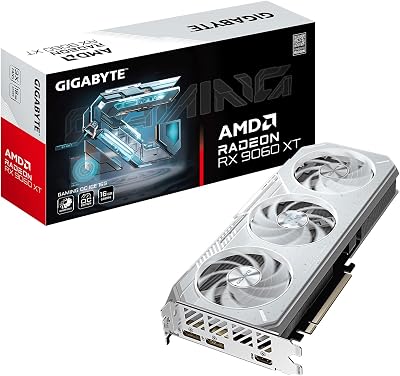
GIGABYTE Radeon™ RX 9060 XT Gaming OC ICE 16G Graphics Card (16GB GDDR6, 128-bit, PCIe 5.0, HDMI/DP 2.1, 2 Slot, Hawk Fan, Server-Grade Thermal Gel, Reinforced Structure)

ASUS The SFF-Ready Prime GeForce RTX™ 5070 Graphics Card, NVIDIA (PCIe® 5.0, 12GB GDDR7, HDMI®/DP 2.1, 2.5-Slot, Axial-tech Fans, Dual BIOS)

Kelinx
find alternatives
Kelinx AISURIX RX 580 Graphics Card, 2048SP, Real 8GB, GDDR5, 256 Bit, Pc Gaming Video Card, 2XDP, HDMI, PCI Express 3.0 with Freeze Fan Stop for Desktop Computer Gaming Gpu
View on Amazon.com

Prime
ASUS Dual NVIDIA GeForce RTX 5060 8GB GDDR7 OC Edition (PCIe 5.0, 8GB GDDR7, DLSS 4, HDMI 2.1b, DisplayPort 2.1b, 2.5-Slot Design, Axial-tech Fan Design, 0dB Technology), 3 Year Warranty
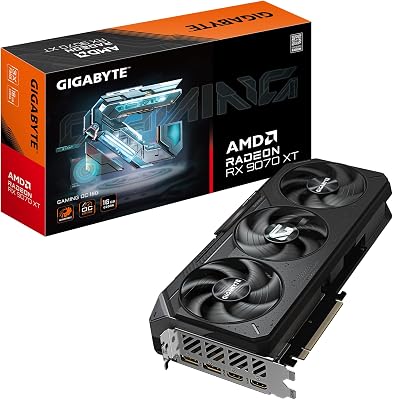
GIGABYTE Radeon RX 9070 XT Gaming OC 16G Graphics Card, PCIe 5.0, 16GB GDDR6, GV-R9070XTGAMING OC-16GD Video Card

msi Gaming RTX 3050 Ventus 2X 6G OC Graphics Card (NVIDIA RTX 3050, 96-Bit, Boost Clock: 1492 MHz, 6GB GDDR6 14 Gbps, HDMI/DP, Ampere Architecture)
As an Amazon Associate we earn from qualifying purchases. Product prices and availability are accurate as of the date/time indicated.
Quick Comparison
| Product | Rating | Reviews | Best For |
|---|---|---|---|
| maxsun AMD Radeon RX 550 4GB | 4.4/5 | 1723 | Entry-level gaming, HTPCs |
| GIGABYTE Radeon RX 9060 XT Gaming OC 16G | 4.7/5 | 797 | High-end 1440p gaming, streaming |
| GIGABYTE Radeon RX 9060 XT Gaming OC ICE 16G | 4.7/5 | 797 | High-end 1440p gaming, overclocking, quiet operation |
| ASUS SFF-Ready Prime NVIDIA GeForce RTX 5070 | 4.7/5 | 602 | Enthusiast 4K gaming, ray tracing, professional workloads |
| Kelinx AISURIX RX 580 8GB | 4.2/5 | 451 | Budget 1080p gaming, esports titles |
| ASUS Dual NVIDIA GeForce RTX 5060 8GB OC Edition | 4.7/5 | 445 | Mid-range 1080p/1440p gaming, DLSS 4 utilization |
| GIGABYTE Radeon RX 9070 XT Gaming OC 16G | 4.6/5 | 383 | Top-tier 4K gaming, demanding AAA titles |
| msi Gaming RTX 3050 Ventus 2X 6G OC | 4.7/5 | 249 | Budget 1080p gaming, entry-level ray tracing |
Top Picks Reviewed
maxsun AMD Radeon RX 550 4GB
The maxsun RX 550 is a solid choice for those on a very strict budget or building a compact PC for less demanding tasks. Its ITX form factor makes it ideal for small builds, and it can handle esports titles and older games at 1080p with reasonable settings. While not a powerhouse, its extensive review base indicates reliability for its intended purpose.
Pros:
- Extremely affordable and budget-friendly.
- Compact ITX design for small form factor builds.
- Adequate for basic gaming and media playback.
Cons:
- Limited performance for modern AAA titles.
- 4GB VRAM can be a bottleneck in some games.
Best for: Users building an HTPC, a secondary PC, or those who primarily play older games or esports titles at 1080p and are on a very tight budget.
GIGABYTE Radeon RX 9060 XT Gaming OC 16G
This GIGABYTE offering represents a sweet spot for many gamers, delivering impressive performance for 1440p resolution. With 16GB of GDDR6 memory, it’s well-equipped for current and upcoming titles at high settings. The Gaming OC design suggests robust cooling, crucial for sustained performance during long gaming sessions, and its high review count points to widespread satisfaction.
Pros:
- Excellent performance for 1440p gaming.
- 16GB VRAM provides ample headroom for modern games.
- Robust cooling solution likely ensures stable performance.
Cons:
- May be overkill for 1080p gaming.
- Price point is significant for budget-conscious buyers.
Best for: Gamers targeting high refresh rate 1440p gaming, content creators, and those who want a strong performer without stepping into the absolute top tier.
GIGABYTE Radeon RX 9060 XT Gaming OC ICE 16G
A slight variation on the previous model, the “ICE” version likely emphasizes enhanced cooling capabilities, potentially with a more advanced heatsink or fan setup. The inclusion of “Server-Grade Thermal Gel” and a “Reinforced Structure” suggests a focus on longevity and thermal efficiency, which can translate to quieter operation and better overclocking potential. For users prioritizing a cool and quiet system alongside high performance, this could be the edge.
Pros:
- Potentially superior cooling and quieter operation.
- Enhanced build quality for increased durability.
- Excellent 1440p gaming performance with 16GB VRAM.
Cons:
- Slightly higher price than the non-ICE version.
- The real-world difference in cooling may only matter for extreme use cases.
Best for: Enthusiasts who prioritize quiet operation, overclocking, or simply want the best possible thermals for sustained high-performance 1440p gaming.
ASUS SFF-Ready Prime NVIDIA GeForce RTX 5070
The RTX 5070 is positioned as a high-end card, and this ASUS Prime model, with its SFF-ready designation, hints at a design that might be more accommodating for smaller builds than typical enthusiast cards. Featuring 12GB of GDDR7 memory and PCIe 5.0 support, it’s built for cutting-edge performance, particularly in 4K gaming and ray tracing scenarios. The inclusion of Dual BIOS and Axial-tech fans are hallmark ASUS features aimed at reliability and performance tuning.
Pros:
- Exceptional performance for 4K gaming and ray tracing.
- 12GB GDDR7 is cutting-edge for future-proofing.
- SFF-ready design could be a bonus for compact builds.
Cons:
- Premium pricing reflects its top-tier performance.
- Requires a powerful CPU and PSU to avoid bottlenecks.
Best for: Enthusiast gamers aiming for the highest settings in 4K, those heavily invested in ray tracing, and professionals who can leverage its power for demanding workloads.
Kelinx AISURIX RX 580 8GB
The RX 580, even with its older architecture, remains a popular budget option thanks to its capable 1080p performance and the 8GB VRAM on this specific model. The Kelinx AISURIX version, with 2048SP, offers a decent amount of processing power for its price. The inclusion of a “Freeze Fan Stop” feature is a nice touch for a budget card, allowing for silent operation at idle.
Pros:
- Excellent value for 1080p gaming.
- 8GB VRAM is sufficient for many modern games at 1080p.
- Freeze Fan Stop for silent idle operation.
Cons:
- Performance lags behind newer generations significantly.
- PCIe 3.0 may not be ideal for future-proofing.
Best for: Budget-conscious gamers looking to play esports titles and many AAA games at 1080p with medium to high settings.
ASUS Dual NVIDIA GeForce RTX 5060 8GB OC Edition
This RTX 5060 from ASUS offers a compelling blend of modern NVIDIA features and solid performance for its class. With 8GB of GDDR7 memory, it’s well-suited for 1080p and even some 1440p gaming, especially when leveraging DLSS 4. The “OC Edition” means it comes with a slight factory overclock for a bit more pep out of the box. The Dual Axial-tech fan design is known for its effectiveness and quiet operation.
Pros:
- Strong performance for 1080p and entry-level 1440p gaming.
- Features like DLSS 4 enhance performance and visual quality.
- Effective and quiet cooling solution.
Cons:
- 8GB VRAM might become a limitation in very demanding future titles.
- Not a 4K gaming solution.
Best for: Gamers who want a well-rounded card for 1080p high refresh rates or solid 1440p performance, with access to the latest NVIDIA technologies.
GIGABYTE Radeon RX 9070 XT Gaming OC 16G
Positioned above the 9060 XT, the RX 9070 XT is clearly aimed at the enthusiast market seeking top-tier performance. With 16GB of GDDR6 memory and PCIe 5.0, it’s designed to handle the most demanding AAA titles at 4K with high settings. GIGABYTE’s Gaming OC branding implies a robust cooler and factory overclock, making it a strong contender for those who want uncompromising performance.
Pros:
- Flagship performance for 4K gaming.
- 16GB VRAM ensures longevity and handles demanding textures.
- Robust cooling for sustained peak performance.
Cons:
- Significant investment required.
- May require a high-end CPU and power supply to match.
Best for: Enthusiasts who demand the absolute best for 4K gaming, professional content creation, and future-proofing their rig for years to come.
msi Gaming RTX 3050 Ventus 2X 6G OC
The RTX 3050, particularly this 6GB OC version, is an entry-level card for NVIDIA’s Ampere architecture. It’s capable of 1080p gaming and can dabble in ray tracing at lower settings, benefiting from DLSS. The Ventus 2X design is typically a more compact and no-frills cooler, suitable for budget builds where space or extreme cooling isn’t the primary concern. Its high rating suggests good reliability for its performance class.
Pros:
- Affordable entry into NVIDIA’s RTX ecosystem.
- Supports DLSS for improved performance in compatible games.
- Capable of 1080p gaming with adjusted settings.
Cons:
- 6GB VRAM is restrictive for many modern titles.
- Ray tracing performance is limited.
Best for: Budget gamers looking for a decent 1080p experience, those interested in experimenting with ray tracing on a budget, or for upgrading older systems for basic gaming capabilities.
How to Choose
- Resolution and Refresh Rate: Decide if you’re aiming for 1080p, 1440p, or 4K gaming, and what refresh rate your monitor supports. Higher resolutions and refresh rates demand more powerful GPUs.
- Game Types: Are you playing esports titles that are less demanding, or AAA blockbusters with high graphical fidelity? The complexity of the games you play will heavily influence the GPU you need.
- Budget: Graphics cards represent a significant portion of a gaming PC’s cost. Set a realistic budget and explore options within that range, balancing performance with price.
- Ray Tracing and DLSS/FSR: If you’re interested in realistic lighting effects (ray tracing) and AI-powered performance boosts (DLSS for NVIDIA, FSR for AMD), ensure the card you choose supports these technologies and has enough power to run them effectively.
- VRAM: Video RAM is crucial for texture quality and handling higher resolutions. For modern gaming, 8GB is generally considered the minimum, with 12GB or 16GB being preferable for higher settings and future-proofing.
- Form Factor and Power Supply: Ensure the card will physically fit in your PC case and that your power supply unit (PSU) has enough wattage and the necessary connectors to support it.
Frequently Asked Questions
Q: What is the difference between AMD Radeon and NVIDIA GeForce cards?
A: Both AMD and NVIDIA offer excellent graphics cards, but they often have different strengths. NVIDIA is generally known for its strong ray tracing performance and DLSS technology, while AMD often provides competitive performance-per-dollar, especially in raw rasterization, and has its own upscaling technology, FSR.
Q: How much VRAM do I really need for gaming in 2026?
A: For 1080p gaming, 8GB of VRAM is usually sufficient for most titles. For 1440p and higher resolutions, or for playing games with very high-resolution textures at Ultra settings, 12GB or 16GB is increasingly becoming the recommended standard for a smoother, more future-proof experience.
Q: Is PCIe 5.0 really necessary for my GPU?
A: As of 2026, PCIe 5.0 offers increased bandwidth, but the real-world gaming performance difference between PCIe 4.0 and 5.0 for GPUs is often minimal for most current games. However, it does offer more headroom for future, more demanding applications and provides better future-proofing for your system.
Q: What does “OC Edition” mean for a graphics card?
A: “OC Edition” stands for “Overclocked Edition.” These cards come with a factory overclock, meaning their clock speeds are set higher than the reference specifications. This typically results in a slight performance boost out of the box compared to non-OC models.
Our Verdict
Top Pick: GIGABYTE Radeon RX 9060 XT Gaming OC 16G – Offers an exceptional balance of 1440p performance, ample VRAM, and robust cooling at a competitive price point.
Best Value: Kelinx AISURIX RX 580 8GB – A fantastic budget option that punches above its weight for 1080p gaming, providing a solid entry point without significant compromises for its price.
Premium Pick: ASUS SFF-Ready Prime NVIDIA GeForce RTX 5070 – For those who demand the best and are willing to invest, this card delivers outstanding 4K performance and cutting-edge features.