

- Top Pick: HOW GRAPHICS CARDS WORK: The COMPLETE Beginner-to-Pro Guide to GPUs, VRAM, Rendering, Shaders, and Choosing the Perfect Card for Any Task
- Best Value: HOW TO CHOOSE THE RIGHT GRAPHICS CARD TO BUILD YOUR OWN GAMING PC : The Simple Guide to Achieving Your Own Gaming Computer
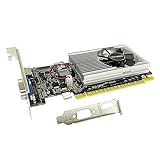
- Premium Choice: SOYO GeForce GT 740 4GB DDR3 Low Profile Graphics Card, 128-Bit 384SP HDMI/VGA/DVI-D Port Triple Output, SFF Half-Height Video Card for Slim Desktop PCs, Supports Windows 11/10/8/7
🛒 Best Price Today on Amazon
Prime members get fast, free shipping on everything above, plus member-only deals. New members get a 30-day free trial — cancel anytime.
Top Choose Graphics Card Complete Picks for 2026
Here are our current top choose graphics card complete picks, compared on real Amazon owner reviews, price, and features. Live prices update below.
As an Amazon Associate we earn from qualifying purchases at no extra cost to you.





Best Seller
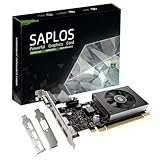
Kelinx AISURIX RX 580 Graphics Card, 2048SP, Real 8GB, GDDR5, 256 Bit, Pc Gaming Video Card, 2XDP, HDMI, PCI Express 3.0 with Freeze Fan Stop for Desktop Computer Gaming Gpu
View on Amazon.com


How to Choose a Graphics Card: Complete Buying Guide (2026)
For any PC gamer, the graphics card (GPU) is arguably the single most important component. It’s the engine that drives your visual experience, dictating everything from the frame rates you’ll achieve in the latest AAA titles to the visual fidelity and detail you can enjoy. A powerful GPU can transform a stuttering mess into a smooth, immersive adventure, allowing you to appreciate the artistry and technical prowess of modern game development. Conversely, an underpowered or mismatched GPU can lead to frustration, forcing you to compromise on settings, resolution, or even the games you can play. This guide is designed to demystify the complex world of graphics cards, empowering you to make an informed decision that aligns with your gaming needs and budget.
In this comprehensive buying guide, we’ll break down the essential aspects of choosing a graphics card in 2026. We’ll explore the different types of GPUs available, delve into the key technical features that truly matter, and provide a realistic breakdown of what you can expect at various price points. Furthermore, we’ll highlight common pitfalls to avoid and answer your most pressing questions. By the end of this guide, you’ll have the knowledge to confidently select a graphics card that will elevate your gaming experience for years to come.
Types of Graphics Cards
Dedicated Graphics Cards
Dedicated graphics cards, also known as discrete GPUs, are separate components that slot into your motherboard via a PCI Express slot. They possess their own dedicated video memory (VRAM) and cooling solutions, allowing them to handle the heavy lifting of rendering complex 3D graphics. These are the GPUs of choice for serious gamers and professionals who require the highest levels of performance and visual quality. They offer the most flexibility and upgradeability, as you can swap them out for a newer model when you desire more power.
Integrated Graphics
Integrated graphics, often referred to as “iGPUs,” are built directly into the CPU. They share system RAM with the processor and are significantly less powerful than dedicated GPUs. While they are sufficient for basic computing tasks, web browsing, video playback, and very light gaming (think older titles or indie games with minimal graphical demands), they are not suitable for modern, demanding video games. Their primary advantage is cost savings, as they eliminate the need for a separate graphics card, making them ideal for budget-conscious users or those who don’t game at all.
Key Features to Look For
Graphics Processing Unit (GPU) Chip
The GPU chip is the heart of the graphics card, responsible for performing all the calculations required for rendering images. Different generations and architectures of GPU chips offer varying levels of performance and efficiency. Newer architectures generally provide significant improvements in raw power, ray tracing capabilities, and power management.
Video Random Access Memory (VRAM)
VRAM is the dedicated memory on the graphics card that stores textures, frame buffers, and other graphical data. More VRAM is crucial for higher resolutions, complex textures, and demanding games. For 1080p gaming, 8GB is often a good starting point, while 1440p and 4K gaming benefit greatly from 12GB or more.
Clock Speed
Clock speed, measured in MHz or GHz, indicates how fast the GPU chip can process data. Higher clock speeds generally translate to better performance, though the overall architecture and number of processing cores are equally, if not more, important.
CUDA Cores / Stream Processors
These are the fundamental processing units within the GPU. More cores mean more parallel processing power, which is essential for rendering complex scenes quickly. The specific naming convention (CUDA Cores for NVIDIA, Stream Processors for AMD) differs, but the concept of parallel processing power remains the same.
Ray Tracing Capabilities
Ray tracing is a rendering technique that simulates the physical behavior of light, producing incredibly realistic lighting, shadows, and reflections. Graphics cards with dedicated ray tracing cores (RT Cores for NVIDIA, Ray Accelerators for AMD) can handle this computationally intensive task, significantly enhancing visual fidelity in supported games.
Tensor Cores / AI Acceleration
These specialized cores are designed for artificial intelligence and machine learning tasks, most notably powering upscaling technologies like NVIDIA’s Deep Learning Super Sampling (DLSS) and AMD’s FidelityFX Super Resolution (FSR). These technologies can boost frame rates by rendering games at a lower resolution and then intelligently upscaling them to your native display resolution, offering a significant performance uplift with minimal visual compromise.
Cooling Solution
Graphics cards generate a lot of heat. A robust cooling solution, typically involving heatsinks and fans, is vital for maintaining optimal performance and preventing thermal throttling. Higher-end cards often feature more elaborate cooling designs with multiple fans and larger heatsinks.
Power Connectors and Wattage
Graphics cards can be power-hungry. Ensure your power supply unit (PSU) has the necessary PCIe power connectors (e.g., 6-pin, 8-pin) and sufficient wattage to support the chosen GPU. Manufacturers will list recommended PSU wattages for each card.
Form Factor and Size
Consider the physical dimensions of the graphics card and whether it will fit inside your PC case. Some high-end cards are quite long and thick, potentially interfering with other components or case limitations.
How Much Should You Spend?
Budget (Under $300)
At this price point, you’re typically looking at entry-level dedicated graphics cards. These are suitable for 1080p gaming at medium to high settings in less demanding titles, esports, and older games. You’ll likely get around 6GB-8GB of VRAM and performance that’s a significant step up from integrated graphics. Don’t expect to run the latest AAA games at ultra settings or high resolutions, but it’s a great starting point for casual gamers or those building their first gaming PC on a tight budget.
Mid-Range ($300
This is often the sweet spot for many gamers, offering a fantastic balance of performance and price. In this range, you can expect graphics cards capable of excellent 1080p gaming at high to ultra settings, and even solid 1440p performance in many titles. You’ll likely find cards with 8GB-12GB of VRAM, better cooling, and the ability to leverage ray tracing and AI upscaling technologies more effectively. This tier is ideal for gamers who want to enjoy modern titles with good visual quality and smooth frame rates without breaking the bank.
Premium
When you enter the premium tier, you’re investing in top-of-the-line performance. These graphics cards are designed for enthusiasts who demand the best. They excel at 1440p gaming at ultra settings with high refresh rates, and are fully capable of high-fidelity 4K gaming. You’ll find cards with 12GB, 16GB, or even more VRAM, advanced cooling solutions, and the most powerful ray tracing and AI acceleration features. This is the tier for those who want to push graphical boundaries, experience games at their absolute best, and future-proof their rig for upcoming demanding titles.
Common Mistakes to Avoid
- Overspending on a GPU for your CPU: Pairing a top-tier graphics card with an outdated or underpowered CPU can lead to a “bottleneck,” where the CPU can’t keep up with the GPU, limiting your overall performance. Ensure your CPU and GPU are well-balanced.
- Ignoring VRAM requirements: While raw processing power is important, insufficient VRAM can severely limit performance, especially at higher resolutions and with detailed textures. Always check the VRAM recommendations for the games you intend to play.
- Not checking PSU compatibility: A graphics card can draw significant power. Failing to ensure your power supply unit has enough wattage and the correct PCIe power connectors can lead to system instability or prevent the card from working altogether.
- Buying based solely on benchmarks: Benchmarks are useful, but they don’t tell the whole story. Consider the specific features you need (like ray tracing or DLSS/FSR support) and how they align with the games you play. Real-world performance in your favorite titles is what ultimately matters.
- Forgetting about case compatibility: High-end graphics cards are often large. Ensure the card will physically fit in your PC case, considering length, height, and width, and that there’s adequate airflow.
Frequently Asked Questions
Q: How do I know if a graphics card is compatible with my motherboard?
A: Most modern graphics cards use the PCI Express (PCIe) x16 slot, which is a standard on virtually all motherboards from the last decade. As long as your motherboard has a PCIe x16 slot (which is almost a certainty for a gaming PC), physical compatibility is generally assured. The main considerations are ensuring your power supply can handle the card’s power draw and that the card physically fits in your case.
Q: What’s the difference between NVIDIA and AMD graphics cards?
A: NVIDIA and AMD are the two primary manufacturers of dedicated graphics cards. They offer competing architectures and technologies. NVIDIA is known for its strong ray tracing performance and DLSS upscaling technology, while AMD offers competitive performance, often at a slightly lower price point, and its FidelityFX Super Resolution (FSR) is a strong open-source alternative to DLSS.
Q: Is it worth buying a graphics card with more VRAM than I currently need?
A: Generally, yes. While you might not utilize all the VRAM in current games, having extra VRAM provides more headroom for future titles, which are increasingly demanding. It also allows for higher texture settings without performance penalties and better performance at higher resolutions like 1440p and 4K.
Q: How important is the cooling solution on a graphics card?
A: The cooling solution is critically important. A good cooler ensures the GPU can maintain its boost clock speeds for longer periods, preventing thermal throttling and maintaining consistent performance. Better cooling also leads to a quieter gaming experience, as the fans won’t have to spin as fast.
Q: Should I buy a graphics card now or wait for new models?
A: This is a perennial question. New generations of graphics cards are typically released every 1-2 years. If your current GPU is significantly hindering your gaming experience, buying now will provide immediate benefits. However, if you can wait, new releases often bring performance improvements and sometimes better pricing on older models. Researching upcoming releases and current market trends can help you make the best decision for your situation.
Final Thoughts
Choosing the right graphics card is a significant investment that will profoundly impact your gaming experience. By understanding the different types of GPUs, the key technical features, your budget, and common pitfalls, you can make an informed decision that ensures smooth gameplay, stunning visuals, and long-term satisfaction. Take your time, do your research, and select a graphics card that empowers you to explore the virtual worlds you love with the fidelity they deserve.
Recommended Graphics Card Guides
- Best Graphics Card For Desktop Gaming 2026
- Best Video Card For Gaming Desktop 2026
- Best Pre Built Desktop Gaming Pc 2026
- Best Motherboard and Cpu Combo for Gaming (2026)
- Best 27-inch Monitor for Gaming (2026)


