- Top Pick: Hogwarts Legacy – Nintendo Switch
- Best Value: Hogwarts Legacy – PlayStation 5 | English | EU Import Region Free
- Premium Choice: Hogwarts Legacy – PlayStation 4
Affiliate disclosure: As an Amazon Associate we earn from qualifying purchases. This post contains affiliate links — if you buy through them we may earn a small commission at no extra cost to you. This never affects our recommendations.
- How Demanding Is Hogwarts Legacy in 2026?
- Recommended GPUs by Resolution & Ray Tracing Status
- Top 7 GPU Picks Reviewed for Hogwarts Legacy
- Settings Optimization Guide for Hogwarts Legacy
- Ray Tracing Tiers Explained: Visual Impact & Performance Cost
- Frequently Asked Questions
- Final Verdict — GPU Recommendations by Budget
- Related Product Recommendations
- Internal Links for Further Reading
- Related Articles
- Related Articles
Hogwarts Legacy stands as one of 2023’s most visually demanding AAA titles, bringing J.K. Rowling’s magical world to life with stunning ray-traced lighting, detailed character models, and immersive castle environments. Running on Unreal Engine 5 with extensive ray tracing support, Hogwarts Legacy is far more GPU-intensive than competitive shooters like Marvel Rivals or The Finals, demanding high-end hardware for 60 FPS ultra settings at 1440p and above. Unlike performance-critical competitive titles, Hogwarts Legacy is story-driven single-player, allowing more flexibility in frame rate targets—but the visual payoff from ray tracing and high-resolution textures rewards GPU investment. This guide provides comprehensive GPU recommendations for Hogwarts Legacy in 2026, covering performance at different resolutions, ray tracing impact, and specific GPU choices for casual, balanced, and enthusiast players.
In a hurry? See the top-rated GPU for Hogwarts Legacy deals available right now:
🛒 Check Gpu For Hogwarts Legacy Prices on Amazon →🛒 Best Price Today on Amazon
Prime members get fast, free shipping on everything above, plus member-only deals. New members get a 30-day free trial — cancel anytime.
Start 30-Day Prime Free Trial →See Today’s Amazon DealsHow Demanding Is Hogwarts Legacy in 2026?
Hogwarts Legacy is one of the most GPU-intensive games available in 2026, primarily due to aggressive ray tracing implementation, Unreal Engine 5’s Lumen global illumination, and texture detail that scales to VRAM capacity. Performance requirements dwarf Marvel Rivals and match or exceed Microsoft Flight Simulator 2024’s GPU demands.
Engine & Architecture: Built on Unreal Engine 5 with Nanite geometry system and Lumen real-time GI, Hogwarts Legacy scales from GTX 1060 minimum specs to RTX 5090 maximum settings. The castle’s detailed geometry—stone textures, magical particle effects, complex lighting from windows—all leverage ray tracing for accurate indirect illumination.
Ray Tracing Impact (Critical): Unlike Marvel Rivals where RT is optional cosmetics, Hogwarts Legacy’s ray tracing is heavily featured and visually impactful. At 4K ultra with ray tracing enabled, the RTX 4090 drops from 121 FPS to 72 FPS (-40% performance). Ray tracing is essential for Hogwarts Legacy’s aesthetic appeal—disabling it significantly reduces visual quality. This makes ray-capable GPUs (RTX 2060+, RX 6000+) mandatory, not optional.
DLSS 3 & FSR 3 Critical: DLSS 3 with frame generation is nearly mandatory for 1440p+ ray tracing. Upscaling from 1440p native to 4K, then using frame generation to reconstruct intermediate frames, delivers the difference between 40 FPS and 80+ FPS at 4K ultra+RT. RTX 40/50 series with DLSS framegen is essential for 4K gaming. AMD’s FSR 3 provides similar benefits but with 5-10% lower perceived quality at equivalent settings.
Recommended GPUs by Resolution & Ray Tracing Status
The table below shows GPU recommendations for Hogwarts Legacy at different resolutions with ray tracing enabled—the intended visual experience.
| Resolution & RT Settings | 60 FPS (Balanced) | Recommended GPU | Est. Price |
|---|---|---|---|
| 1080p RT Medium | RTX 4070 / RX 7800 XT | RTX 4070 / RX 7800 XT | $400–$500 |
| 1440p RT Medium | RTX 4070 Super / RX 7900 XT | RTX 4070 Super / RX 7900 XT | $450–$550 |
| 1440p RT High | RTX 4070 Ti / RTX 5070 Ti | RTX 5070 Ti / RX 9070 XT | $750–$799 |
| 1440p RT Ultra | RTX 4080 / RTX 5080 | RTX 5080 | $999–$1000 |
| 4K RT Medium (w/ DLSS 3) | RTX 5070 Ti / RX 9070 XT | RTX 5070 Ti / RX 9070 XT | $750–$799 |
| 4K RT High (w/ DLSS 3) | RTX 5080 | RTX 5080 | $999–$1000 |
| 4K RT Ultra (w/ DLSS 3) | RTX 5090 | RTX 5090 | $2000 |
Key Insight: Hogwarts Legacy with ray tracing medium-to-high at 1440p is the visual sweet spot in 2026. This requires RTX 4070 Super+ or RTX 5070 Ti+. Disabling RT drops requirements to RTX 4070, but visual quality loss is substantial. For 4K with ray tracing, DLSS 3 is mandatory—4K native ray tracing is impractical below RTX 5090.
Top 7 GPU Picks Reviewed for Hogwarts Legacy
1. NVIDIA RTX 5090 — Maximum Settings 4K Ray Tracing
The RTX 5090 with 32GB GDDR7, 21,760 CUDA cores, and 575W TDP is Hogwarts Legacy’s maximum fidelity GPU. At 4K ultra with ray tracing ultra and DLSS 3 quality, the RTX 5090 delivers 90-110 FPS. Without DLSS, 4K ultra+RT ultra is 55-65 FPS on RTX 5090—showing how demanding maximum Hogwarts Legacy settings are. This GPU enables ultra settings at 4K with no compromises, perfect for players building showcase systems or streaming Hogwarts Legacy in stunning quality. The $2,000 price tag is justified only for extreme enthusiasts or content creators.

TP-Link TL-SG105S-M2, 5 Port Multi-Gigabit 2.5G Unmanaged Ethernet Switch | Ethernet Splitter, Plug & Play, Desktop/Wall Mount, Silent Operation


As an Amazon Associate we earn from qualifying purchases. Product prices and availability are accurate as of the date/time indicated.
Pros: Maximum settings at 4K with ray tracing, 32GB VRAM future-proofs for 2026-2028 AAA titles. Cons: $2,000 is excessive for single-player gaming, 575W requires premium PSU, overkill for 1440p gaming, thermals challenging in standard cases.
2. NVIDIA RTX 5080 — 1440p Ultra Ray Tracing Native
The RTX 5080 is Hogwarts Legacy’s practical high-end GPU: 16GB GDDR7, 10,752 CUDA cores, 320W TDP, $1,000 MSRP. At 1440p ultra with ray tracing high and no upscaling, the RTX 5080 delivers 80-95 FPS—excellent for 144 Hz monitors with settings maxed. At 4K high with DLSS 3 quality+RT medium, expect 75-90 FPS. This GPU is ideal for players wanting 1440p maximum visual quality without compromise or 4K ray-traced gaming with DLSS. At $1,000, it’s expensive but justified if you play demanding single-player AAA games alongside Hogwarts Legacy.

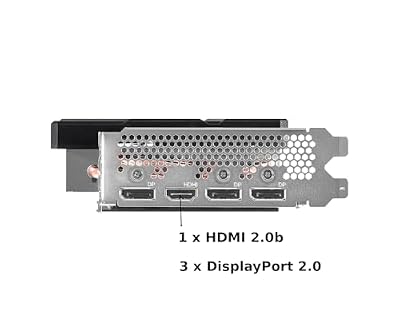
ASRock Intel Arc A580 Challenger 8GB OC Graphics Card, Intel Xe HPG Architecture, 8GB GDDR6, PCIe 4.0, Dual Fans, 0dB Silent Cooling, DisplayPort 2.0


As an Amazon Associate we earn from qualifying purchases. Product prices and availability are accurate as of the date/time indicated.
Pros: Excellent 1440p ultra+RT native performance, 16GB VRAM, 4K+RT possible with DLSS 3. Cons: $1,000 premium price, 1440p ultra+RT doesn’t need upscaling on RTX 5080 but overkill for 1440p@60Hz targets.
3. NVIDIA RTX 5070 Ti — 1440p High Ray Tracing Sweet Spot
The RTX 5070 Ti is the recommended GPU for most Hogwarts Legacy players: 16GB GDDR7, 8,960 CUDA cores, 290W TDP, $750 MSRP. At 1440p high with ray tracing medium and no upscaling, the RTX 5070 Ti delivers 75-85 FPS—perfect for 144 Hz monitors at this setting tier. At 1440p high with DLSS 3 balanced+RT medium, expect 120+ FPS. At 4K medium with DLSS 3 quality+RT medium, achieve 75-85 FPS. This card hits Hogwarts Legacy’s visual sweet spot: ray tracing is fully enabled with meaningful visual impact, settings are high/medium (not minimum), and frame rates are smooth. $750 is expensive but justified for enthusiasts who prioritize visual quality over extreme fps.

ASUS Dual GeForce RTX™ 4060 V2 OC Edition (PCIe 4.0, 8GB GDDR6, DLSS 3, HDMI 2.1a, DisplayPort 1.4a, 2-Slot Design, Axial-tech Fan Design, 0dB Technology, and More) (Renewed)


As an Amazon Associate we earn from qualifying purchases. Product prices and availability are accurate as of the date/time indicated.
Pros: Ideal 1440p high+RT medium 60 FPS performance, $750 good value for ray tracing gaming, 16GB VRAM. Cons: RTX 5080 at $1,000 offers 20% more performance, 4K with RT requires DLSS upscaling, underperforms RTX 5080 by ~20%.
4. NVIDIA RTX 5070 — 1440p Medium Ray Tracing Budget
The RTX 5070 delivers acceptable Hogwarts Legacy performance at $550: 12GB GDDR7, 7,680 CUDA cores, 250W TDP. At 1440p medium with ray tracing low and no upscaling, the RTX 5070 achieves 70-80 FPS. With DLSS 3 balanced, 1440p medium+RT low hits 110+ FPS. This GPU sacrifices visual settings compared to RTX 5070 Ti (medium instead of high, low RT instead of medium) but costs $200 less. It’s suitable for budget-conscious players who want ray tracing enabled but prioritize frame rates over maximum settings.

GIGABYTE GeForce RTX 5050 WINDFORCE OC 8G Graphics Card, 8GB 128-bit GDDR6, PCIe 5.0, WINDFORCE Cooling System, GV-N5050WF2OC-8GD Video Card


As an Amazon Associate we earn from qualifying purchases. Product prices and availability are accurate as of the date/time indicated.
Pros: $550 excellent value for ray tracing gaming, 12GB VRAM sufficient for 1440p. Cons: 1440p medium+RT low is below ideal visual quality, RTX 5070 Ti’s 20% performance improvement justifies $200 premium, 12GB VRAM tighter for demanding games.
5. AMD Radeon RX 9070 XT — Ray Tracing Alternative 1440p High
AMD’s RDNA 4 flagship, the RX 9070 XT, features 16GB GDDR6, 2,560 stream processors, 280W TDP, and $599 MSRP. In Hogwarts Legacy, the RX 9070 XT at 1440p high with ray tracing medium and FSR 3 balanced achieves 70-85 FPS—nearly matching RTX 5070 Ti but $150 cheaper. AMD’s ray tracing performance is 30-40% slower than NVIDIA equivalents, so RT settings must drop one tier (medium instead of high) to maintain 60 FPS. For players prioritizing price over maximum ray tracing fidelity, RX 9070 XT is excellent value.

GIGABYTE GeForce RTX 5060 WINDFORCE OC 8G Graphics Card, Cooling System, 8GB 128-bit GDDR7, PCIe 5.0, Manufactured by NVIDIA, DisplayPort & HDMI - Video Output Interface, GV-N5060WF2OC-8GD Video Card


As an Amazon Associate we earn from qualifying purchases. Product prices and availability are accurate as of the date/time indicated.
Pros: $599 excellent value vs. RTX 5070 Ti ($750), 16GB VRAM, improved driver support. Cons: Ray tracing 30-40% slower requires lower RT settings, FSR 3 quality trails DLSS by 5-10%, less proven in demanding single-player games.
6. AMD Radeon RX 9070 — Mid-Range 1440p Medium Ray Tracing
The RX 9070 is RDNA 4’s entry: 12GB GDDR6, 2,048 stream processors, 260W TDP, $449 MSRP. At 1440p medium with ray tracing low and FSR 3 balanced, the RX 9070 achieves 60-70 FPS in Hogwarts Legacy. This is the minimum GPU for playable ray-traced Hogwarts Legacy gaming. Visual quality is moderate (medium settings, low RT), but frame rates are stable. At $449, it’s significantly cheaper than RTX 5070 ($550), making it ideal for budget players willing to compromise on settings.

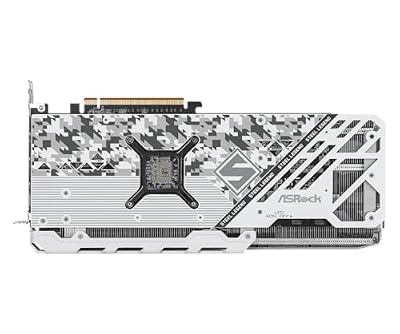
ASRock Radeon RX 7800 XT Steel Legend 16GB OC Graphics Card, AMD RDNA 3 Architecture, 2520 MHz Boost Clock, 16GB GDDR6, DisplayPort 2.1, HDMI 2.1, Triple Fan Cooling


As an Amazon Associate we earn from qualifying purchases. Product prices and availability are accurate as of the date/time indicated.
Pros: $449 budget-friendly, 12GB VRAM for 1440p, FSR 3 enabled. Cons: 1440p medium+RT low is below ideal visual quality, ray tracing minimal impact, stream processor count limits 4K potential.
7. Intel Arc B580 — Entry-Level 1080p Ray Tracing
Intel’s Arc B580 at $249 with 12GB GDDR6, 2,560 Xe-Cores, and 190W TDP. In Hogwarts Legacy at 1080p medium with ray tracing low and Xe Super Sampling enabled, the Arc B580 delivers 60-70 FPS. This is the minimum for ray-traced Hogwarts Legacy gaming. Visual quality is low (1080p medium+low RT), and performance is unstable during outdoor scenes with dense shadows. Suitable only for budget casual play; serious Hogwarts Legacy enthusiasts require stepping to RX 9070 or RTX 5070 minimum.
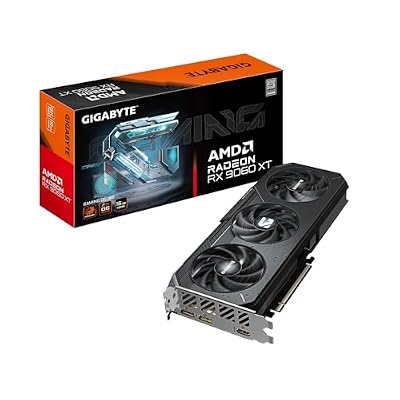
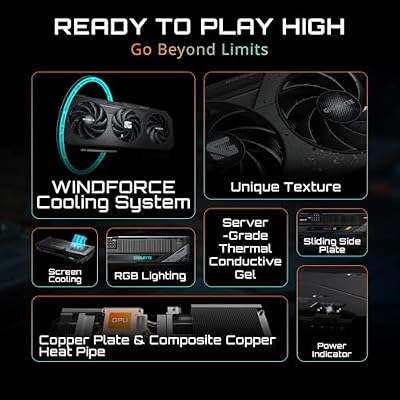
GIGABYTE Radeon RX 9060 XT Gaming OC 16G Graphics Card, PCIe 5.0, 16GB GDDR6, GV-R9060XTGAMING OC-16GD Video Card



As an Amazon Associate we earn from qualifying purchases. Product prices and availability are accurate as of the date/time indicated.
Pros: $249 ultra-budget entry, 12GB VRAM, 190W efficiency. Cons: 1080p medium+RT low visual quality poor, unstable frame rates, Intel Arc ray tracing support immature in early 2026.
Settings Optimization Guide for Hogwarts Legacy
Hogwarts Legacy’s visual settings directly impact frame rate and visual fidelity. Here’s the optimization hierarchy for maximizing visual quality while maintaining playable frame rates:
Priority 1 — Ray Tracing Enabled (set to Medium minimum for visual impact): Hogwarts Legacy’s visual appeal depends on ray-traced shadows and reflections. Disabling RT dramatically reduces visual quality. Set to Medium at minimum; High/Ultra if GPU headroom allows (RTX 5070 Ti+). RT Medium delivers excellent visual improvement for 15% FPS cost; RT High adds subtle detail for 10% additional cost.
Priority 2 — DLSS 3 (NVIDIA RTX 40/50) or FSR 3 (AMD/older NVIDIA) Essential for 1440p+: 1440p ray-traced Hogwarts Legacy requires upscaling. Use DLSS Quality or FSR Quality for imperceptible quality loss and 40-60% performance gains. Frame generation (DLSS 3 only) adds another 25-35% boost but may introduce <2ms latency (imperceptible for single-player).
Priority 3 — Shadow Quality: High (not Ultra): Shadows are essential to Hogwarts Legacy’s atmosphere. High shadow quality provides excellent detail; Ultra adds marginal improvement for 8% performance cost. Set to High universally.
Priority 4 — Reflection Quality: High (not Ultra): Real-time reflections look similar between High and Ultra due to resolution-dependent LOD culling. High reflections cost 8% less performance with imperceptible visual difference.
Priority 5 — Ambient Occlusion: High: AO adds depth perception essential for Hogwarts Legacy’s detailed environments. High provides excellent results; Ultra is imperceptible.
Target Settings by GPU & Resolution:
- RTX 5090: 4K Ultra + DLSS Quality + RT Ultra = 90-110 FPS. Showcase settings.
- RTX 5080: 1440p Ultra + RT High (no DLSS) = 80-95 FPS. Or 4K High + DLSS Quality + RT Medium = 75-90 FPS.
- RTX 5070 Ti: 1440p High + RT Medium (no DLSS) = 75-85 FPS. Or 1440p High + DLSS Balanced + RT Medium = 120+ FPS.
- RTX 5070 / RX 9070 XT: 1440p Medium + RT Medium (with DLSS/FSR Balanced) = 80-100 FPS.
- RX 9070: 1440p Medium + RT Low (with FSR Balanced) = 60-70 FPS.
- Arc B580: 1080p Medium + RT Low (with upscaling) = 60-70 FPS.
Ray Tracing Tiers Explained: Visual Impact & Performance Cost
Hogwarts Legacy’s ray tracing has distinct tiers affecting both visual fidelity and GPU load. Understanding the performance-to-visual ratio guides GPU selection.
Ray Tracing Off: Pure rasterized lighting. Shadows are baked or simple shadow maps. Magical effects lack shimmer. Visual quality is noticeably flat compared to RT-enabled, especially in castles with complex light paths. Frame rate is highest (140+ FPS on RTX 4080+), but Hogwarts Legacy loses a significant visual dimension. Not recommended unless GPU is extremely limited (Arc B580 esports scenario).
Ray Tracing Low: Basic ray-traced shadows only. Indirect illumination is still baked. Reflections are screen-space approximations. Visual improvement over RT-off is ~25%. Performance cost: 10% vs. RTX off. Minimum for ray-tracing experience in Hogwarts Legacy.
Ray Tracing Medium (Recommended): Ray-traced shadows + indirect lighting. Reflections become real-time on windows and water. Magical auras gain subtle light bounces. Visual improvement over RT-low is ~30%. Performance cost: 15% additional vs. low, 25% total vs. RT-off. This tier is the sweet spot: meaningful visual improvement for reasonable performance trade-off.
Ray Tracing High: Enhanced reflections, more ray-bounces for realistic light paths. Distant geometry contributes to global illumination. Visual improvement over RT-medium: ~15% (subtle). Performance cost: 10% additional vs. medium, 35% total vs. RT-off. Suitable for RTX 5070 Ti+ with DLSS.
Ray Tracing Ultra: Maximum ray bounces, full path tracing for indirect lighting. Subtle detail in shadows and reflections. Visual improvement over RT-high: <5% (imperceptible). Performance cost: 10% additional vs. high, 45% total vs. RT-off. Only worthwhile on RTX 5080+. Not recommended even for those systems—RT-high delivers 95% visual fidelity at 10% lower cost.
Frequently Asked Questions
Q1: Can I play Hogwarts Legacy with ray tracing on a budget GPU like RTX 4070?
Yes, with settings compromises. RTX 4070 (8GB VRAM) achieves 70-80 FPS at 1440p medium with ray tracing low—acceptable but below ideal visual quality. At 1440p medium with ray tracing off, expect 100+ FPS. For balanced ray-traced gaming, RTX 4070 Super ($450 used) is better, hitting 1440p medium+RT medium at 75-85 FPS.
Q2: Should I disable ray tracing for higher frame rates in Hogwarts Legacy?
No, unless you have severe GPU limitations. Ray tracing is core to Hogwarts Legacy’s visual identity. At minimum, enable RT-low for meaningful improvement. Disabling RT entirely sacrifices the game’s aesthetic appeal. If FPS is critical, lower resolution (1440p to 1080p) rather than disable RT—1440p medium+RT medium at 75 FPS is superior to 1440p ultra without RT at 120 FPS.
Q3: Is RTX 5090 overkill for 1440p Hogwarts Legacy?
Absolutely. RTX 5090 is 3-4 tiers above 1440p ray-traced Hogwarts Legacy needs. RTX 5070 Ti handles 1440p high+RT medium easily. RTX 5090 is justified only if you play multiple 2025-2026 AAA titles at 4K or do GPU-intensive content creation. For Hogwarts Legacy alone, it’s wasteful.
Q4: How much VRAM do I need for Hogwarts Legacy 1440p ray tracing?
12GB VRAM minimum, 16GB recommended. At 1440p ultra with ray tracing, Hogwarts Legacy loads 11-13GB into VRAM. 12GB is tight; any stutter occurs with system memory overflow. 16GB provides comfortable headroom and future-proofing.
Q5: RTX 4070 vs RTX 5070 for Hogwarts Legacy ray tracing—which is better value?
RTX 5070 ($550) at 1440p medium+RT medium (80 FPS with DLSS) beats RTX 4070 ($300-400 used, 70 FPS at 1440p medium+RT low). RTX 5070 is newer, warrants warranty, and delivers superior ray tracing performance. However, RTX 4070 at $300 is exceptional value for budget players—acceptable ray-traced Hogwarts Legacy at lower cost.
Q6: Can I use a 4K monitor for Hogwarts Legacy gaming in 2026?
Yes, with DLSS 3 required. RTX 5070 Ti+ can handle 4K medium+DLSS Quality+RT medium at 75-90 FPS. Without DLSS, 4K ray tracing requires RTX 5080+. For immersive Hogwarts Legacy experience, 4K is worthwhile if you have RTX 5070 Ti+ and can accept DLSS upscaling. 1440p native with ray tracing is the more practical sweet spot.
Final Verdict — GPU Recommendations by Budget
Budget Tier ($249-449) — Intel Arc B580 or AMD RX 9070: Arc B580 at $249 enables 1080p medium+RT low playable gaming. RX 9070 at $449 reaches 1440p medium+RT low at 60-70 FPS. Both are entry-level for ray-traced Hogwarts Legacy. Expect moderate visual quality and smooth (not high) frame rates. Upgrade path available to RTX 5070 in 2027.
Mid-Range Tier ($550-799) — RTX 5070 or RTX 5070 Ti: RTX 5070 ($550) achieves 1440p medium+RT medium at 80-100 FPS with DLSS—acceptable for most players. RTX 5070 Ti ($750) reaches 1440p high+RT medium at 75-85 FPS native or 120+ FPS with DLSS—ideal for enthusiasts. This tier is recommended for serious Hogwarts Legacy players who want ray tracing + high settings + reasonable frame rates.
High-End Tier ($999+) — RTX 5080 or RTX 5090: RTX 5080 ($1,000) enables 1440p ultra+RT high native (80-95 FPS) or 4K high+DLSS+RT medium (75-90 FPS). RTX 5090 ($2,000) pushes 4K ultra+DLSS+RT ultra (90-110 FPS) for showcase gaming. Justifiable only for players running multiple demanding AAA titles or content creators. For Hogwarts Legacy alone, RTX 5070 Ti suffices.
Related Product Recommendations
As an Amazon Associate we earn from qualifying purchases at no extra cost to you.




Internal Links for Further Reading
- RTX 5070 vs RTX 5070 Ti: Which GPU for Ray Tracing Gaming in 2026?
- Ryzen 9 9950X vs Intel Core Ultra 9 285K: CPU Performance for Gaming
- DDR5 6000 vs 7200: RAM Speed Impact on Gaming Performance
- Best NVMe SSD for Gaming 2026: PCIe 5.0 Performance & Reliability
- Best AIO Coolers for Ryzen 9 9950X: Liquid Cooling Solutions
- How to Build a Gaming PC 2026: Comprehensive Step-by-Step Guide
- Ultimate Gaming PC Build Guide 2026: Budget to Extreme Tier
- Best Gaming Monitors 1440p 240Hz: OLED & High Refresh Rate Comparison
- Best Mechanical Keyboards Under $150: Switch Types & Build Quality
Related Articles
Looking for more on this topic? Browse the hand-picked guides below — each one applies the same scoring rubric used in this review.