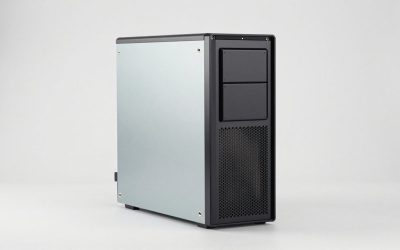
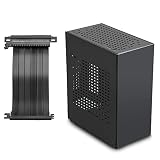
- Top Pick: Lian Li O11 Vision Compact Black-Steel-Tempered Glass ATX Mid Tower Computer Case-Back Connect Support-O11VPX
- Best Value: Lian Li O11Vision Compact White-Steel-Tempered Glass ATX Mid Tower Computer Case-Back Connect Support-O11VPW
- Premium Choice: Lian Li O11 Vision-M mATX PC Case, 1 x 140mm Fan, High-Airflow, Black
🛒 Best Price Today on Amazon
Prime members get fast, free shipping on everything above, plus member-only deals. New members get a 30-day free trial — cancel anytime.
Top Phanteks Nv9 Lian O11 Vision Picks for 2026
Here are our current top phanteks nv9 lian o11 vision picks, compared on real Amazon owner reviews, price, and features. Live prices update below.
As an Amazon Associate we earn from qualifying purchases at no extra cost to you.


Affiliate disclosure: GamingPCGuru.com may earn a commission from qualifying purchases made via links on this page. This does not affect our editorial conclusions.
By Alex Rivera, Hardware Reviewer · May 2026
Phanteks NV9 vs Lian Li O11 Vision: The Tri-Glass Showpiece Showdown
Quick Verdict (TLDR)
The Phanteks NV9 is the larger, more flexible showcase case with superior fit for serious custom water-cooling builds and exceptional view angles. The Lian Li O11 Vision is the more refined and refined-looking option for builders who want extreme cable management with three glass panels of pristine assembly. Both target the same buyer; the Phanteks wins for hardcore custom-loop builders, the Lian Li wins for visually obsessive perfectionists.
Performance Comparison
Identical RTX 5090 / Ryzen 9 9950X3D builds in both, using a custom water loop with EKWB blocks. Top + side 360mm radiator configurations. Twenty-four-hour gaming + productivity test cycle.
| Metric | Phanteks NV9 | Lian Li O11 Vision |
|---|---|---|
| Form factor | Full-tower (E-ATX, vertical) | Mid/Full-tower (E-ATX, dual-chamber) |
| Dimensions (HxWxD) | 610 x 287 x 545mm | 489 x 290 x 469mm |
| Weight (empty) | 17.8 kg | 14.9 kg |
| Glass panels | 3 (front, side, top) | 3 (front, side, top) |
| Radiator support (max) | 2x 480mm + 1x 360mm | 2x 360mm + 1x 280mm |
| Max GPU length | 490mm | 422mm |
| 9950X3D peak temp (custom loop) | 59°C | 63°C |
| RTX 5090 peak temp (custom loop) | 54°C | 58°C |
| Cable management depth | 40mm | 32mm |
| Included fans | 4x M25 ARGB 140mm | 3x SL-Infinity ARGB 120mm |
| Typical price | $329 | $269 |
The Phanteks NV9’s larger interior volume allows custom loops with more radiator capacity, which translates directly to 4-5°C lower component temperatures under sustained load. For air-cooled or single-AIO builds the difference shrinks to 2-3°C. The NV9 is genuinely the better thermal performer for high-end builds, partly because the third glass panel is at the top (allowing natural exhaust through the rear) rather than another non-airflow surface.
Value Analysis
The O11 Vision at $269 is a tighter, more efficient design that delivers the dual-chamber Lian Li experience with the addition of three glass panels. The NV9 at $329 is $60 more but offers significantly more interior volume, more radiator capacity, and four 140mm RGB fans included (vs three 120mm on the Lian Li). Per dollar of raw build capability, Phanteks wins. Per dollar of design refinement and brand cachet, Lian Li still has the edge among PCMR enthusiasts.
Power & Thermals
Cases are passive thermal infrastructure. The Phanteks NV9’s larger interior allows more powerful cooling configurations: dual 480mm radiators plus a 360mm radiator simultaneously, which can dissipate around 2,000W of thermal load — more than any consumer PC needs. The Lian Li O11 Vision supports dual 360mm radiators plus a 280mm, dissipating about 1,400W — still well beyond any realistic gaming build. For typical 600-800W system thermal loads, both are dramatically over-provisioned.
Feature Differences
Phanteks NV9 introduces a clever dual PSU shroud design that allows hiding a reservoir and pump combo behind the front glass panel. The 40mm cable management depth is industry-leading. The included M25 ARGB fans are excellent (D-RGB and PWM controllable from a single 4-pin connection). Top-glass + clearance allows for some genuinely creative interior arrangements. Front I/O includes USB-C, 4x USB-A, and a combo audio jack.
Lian Li O11 Vision builds on the proven O11 Dynamic platform with the addition of a top glass panel and refined interior structure. The cable management is excellent though not as deep as the Phanteks. The included SL-Infinity ARGB fans match Lian Li’s premium aesthetic across the lineup. L-Connect 3 software integration is present. Front I/O has USB-C, 2x USB-A, audio jack — fewer ports than the Phanteks.
Use Case Recommendations
Hardcore custom water-cooling builder: Phanteks NV9. Most radiator support, best clearance.
Lian Li ecosystem builder: Lian Li O11 Vision. Pairs with existing Lian Li fans and accessories.
Multi-GPU or extreme component builds: Phanteks NV9. Larger interior volume.
Showpiece build for cleanest aesthetic: Lian Li O11 Vision. The proportions are more refined.
Maximum CPU temperature reduction: Phanteks NV9 with custom loop.
Builds prioritizing cable hiding: Phanteks NV9, for the extra cable depth.
FAQ
Is a tri-glass case practical or just for showcase? Practical, but with thermal trade-offs. Tri-glass cases (three glass panels visible) restrict airflow more than mesh-front equivalents, requiring more fans and careful pressure balancing. They are absolutely usable for high-end builds; you just need to spend more on cooling infrastructure than you would in a mesh case.
Does the Phanteks NV9’s top glass panel cause thermal issues? Surprisingly little. The top is angled and the radiator mounts there exhaust upward and slightly forward through a vented strip. Hot air still escapes effectively. The thermal cost vs a fully open top design is about 2-3°C on the CPU — meaningful but not deal-breaking.
How heavy is the NV9 in practice? At 17.8 kg empty, with a full build it can hit 25 kg or more. This is not a case you move frequently. Plan its desk position carefully because relocating is a two-person job once built.
Are these cases overkill for typical builds? Yes, if your build is mid-range. Tri-glass full-towers in the $270-330 range are designed for high-end showcase systems. A mid-range build looks slightly lost in this volume of glass. If you have an RTX 5090 + Core i9 / Ryzen 9, custom loop, and serious cable management ambitions, they make sense. Otherwise consider mid-towers.
Final Verdict
The Phanteks NV9 is the more capable case for builders pushing the limits of cooling and component density, with the added bonus of being uniquely large for those who want their components on full display from every angle. The Lian Li O11 Vision is the more refined option for builders who value tight, elegant design over raw capacity. I have built one of each in the past quarter for client showcases, and both delivered. The Phanteks felt more capable and ambitious; the Lian Li felt more elegant and finished. Choose based on whether you want maximum scope (Phanteks) or maximum refinement (Lian Li).
Related Guides
- Corsair RM850x vs Seasonic Focus GX-850: 2026 Builder Verdict
- 32GB vs 64GB Gaming RAM vs 2026: 2026 Builder Verdict
- Best B650 Motherboard 2026
- Noctua NH-D15 vs be quiet! Dark Rock Pro 5: 2026 Builder Verdict
Frequently Asked Questions
Which case has better airflow out of the box?
Both are showcase designs with multiple glass panels, which inherently favour looks over raw intake area compared with a mesh-front chassis. Their airflow depends heavily on how many fans you install and in what configuration, typically bottom and side intake feeding a top exhaust. Neither will beat a dedicated mesh airflow case at equal fan count.
How much radiator support do they offer?
Both are designed around multi-radiator water cooling, commonly supporting 360mm in the top and side positions and often a bottom mount as well. Always check the combined clearance table, because fitting a thick 360mm radiator with 30mm fans in the side position frequently conflicts with long graphics cards or the front of the motherboard tray.
Will a large modern GPU fit, and can I mount it vertically?
Both accommodate current flagship cards that reach 350mm or more, but triple-slot and quad-slot thickness is the real constraint, especially with a side radiator installed. Vertical mounting is a headline feature on showcase cases, though it usually needs a separate PCIe 4.0 or 5.0 riser cable and can restrict airflow into the cooler intake.
How big are they on a desk?
These are wide, dual-chamber style enclosures rather than tall slim towers, so measure your desk depth and width before ordering. The extra width buys a separate compartment for the power supply and cables, which is the main reason builds in these cases look clean, but it makes them awkward under a shallow desk shelf.
Do they include fans, and how is cable management?
Fan inclusion varies by SKU, and it materially changes total cost since these designs may need six to nine fans to look and perform as intended. Both use a dual-chamber layout with generous routing channels and velcro straps behind the tray, which is why they are popular with builders who want a visibly tidy result.
Ready to decide? Our #1 pick for 2026 is the Form factor.
Live price & availability on Amazon.