Affiliate disclosure: As an Amazon Associate we earn from qualifying purchases. This post contains affiliate links — if you buy through them we may earn a small commission at no extra cost to you. This never affects our recommendations.
- How Demanding Is Microsoft Flight Simulator 2026?
- Recommended GPUs by Resolution (CPU-Paired Configuration)
- Top 7 GPU Picks Reviewed for Microsoft Flight Simulator 2026
- CPU Pairing Requirements — Critical for MSFS 2026 Performance
- Settings Optimization Guide for Microsoft Flight Simulator 2026
- Frame Rate Expectations & Flight Sim Standards
- Frequently Asked Questions
- Final Verdict — GPU Recommendations by Budget & Use Case
- Related Product Recommendations
- Internal Links for Further Reading
- Related Articles
- Related Articles
Microsoft Flight Simulator 2024 represents the most demanding consumer software ever created, transcending gaming to become a legitimate simulation platform requiring enterprise-grade hardware. Running on Asobo Studio’s proprietary flight engine with real-time photogrammetry-sourced terrain streaming, advanced weather simulation, and CPU-intensive physics calculations, MSFS 2024 is uniquely constrained by CPU and memory bandwidth—not GPU raw power alone. While competitive shooters and story-driven AAA titles are GPU-bottlenecked, MSFS 2024 is CPU+GPU+RAM co-bottlenecked, meaning balanced system architecture matters more than GPU tier alone. This guide covers GPU requirements for MSFS 2024 in 2026, including CPU pairing, VRAM implications, and realistic frame rate expectations at various resolutions.
In a hurry? See the top-rated gpu for flight simulator 2024 deals available right now:
🛒 Check Gpu For Flight Simulator 2024 Prices on Amazon →🛒 Best Price Today on Amazon
Prime members get fast, free shipping on everything above, plus member-only deals. New members get a 30-day free trial — cancel anytime.
Start 30-Day Prime Free Trial →See Today’s Amazon DealsHow Demanding Is Microsoft Flight Simulator 2026?
Microsoft Flight Simulator 2024 is the most technically demanding consumer application available in 2026, far exceeding Hogwarts Legacy, Cyberpunk 2077, or any traditional game. Performance bottlenecks are unique: GPU and CPU both hit capacity limits simultaneously, requiring balanced investment rather than GPU-heavy builds.
Unique Architecture: MSFS 2024 uses Asobo’s proprietary engine streaming photogrammetry-sourced terrain from Azure servers in real-time. Every frame requires: (1) CPU terrain streaming decisions based on aircraft position, (2) GPU terrain rendering at 4K+ resolutions, (3) Physics calculations (fuel, weight, aerodynamics), (4) Weather processing (wind, precipitation, turbulence), (5) Traffic rendering (AI aircraft). This workload is fundamentally different from GPU-focused games.
CPU-Intensive Nature (Critical): MSFS 2024 is brutally CPU-intensive—more demanding than any game. A Ryzen 9 9950X or Intel Core Ultra 9 285K at full load is required for ultra settings. Older 6-8 core CPUs cause 30-50% performance loss vs. new 12-core processors. This is why MSFS 2024 guides emphasize CPU pairing as much as GPU selection.
VRAM & Memory Bandwidth (Critical): MSFS 2024 streams massive terrain datasets. 8GB VRAM is minimum at 1080p medium. At 1440p+ ultra, 12GB VRAM is essential; 16GB recommended. Resizable BAR (NVIDIA) or Smart Access Memory (AMD) are critical—enabling CPU access to GPU memory improves streaming efficiency by 5-10% and reduces stutter. Without these technologies, 1440p gaming stutters noticeably.
DLSS 3 with Frame Generation Essential: DLSS 3 framegen is nearly mandatory for MSFS 2024. Native 4K rendering at playable frame rates is impossible below RTX 5080. With DLSS 3 Quality (1440p upscaled to 4K) + frame generation, RTX 4080+ GPUs achieve 40-50 FPS 4K gameplay. Without framegen, 4K requires RTX 5090.
Recommended GPUs by Resolution (CPU-Paired Configuration)
MSFS 2024 GPU recommendations assume pairing with modern high-end CPUs (Ryzen 9 9950X, Intel Core Ultra 9 285K). Older CPUs reduce GPU-achievable frame rates by 20-40%.
| Resolution & Settings | Recommended GPU | Expected FPS | Est. Price |
|---|---|---|---|
| 1080p Ultra | RTX 4080 / RTX 5070 | 50-60 FPS | $550–$1000 |
| 1440p High | RTX 4080 / RTX 5070 Ti | 40-50 FPS | $750–$1000 |
| 1440p Ultra | RTX 5070 Ti / RTX 5080 | 30-40 FPS | $750–$1000 |
| 4K High (w/ DLSS 3) | RTX 5070 Ti / RX 9070 XT | 40-50 FPS | $750–$799 |
| 4K Ultra (w/ DLSS 3) | RTX 5080 | 30-40 FPS | $999–$1000 |
| 4K Ultra (w/ DLSS 3) | RTX 5090 | 50-60 FPS | $2000 |
Critical Note: MSFS 2024 GPU requirements differ from games because CPU is equally important. An RTX 5090 paired with a Ryzen 7 7700X (8 cores) achieves only 30-40% of RTX 5090’s potential. CPU upgrade is mandatory for optimal MSFS 2024 performance.
Top 7 GPU Picks Reviewed for Microsoft Flight Simulator 2026
1. NVIDIA RTX 5090 — Maximum Settings 4K Simulation
The RTX 5090 with 32GB GDDR7, 21,760 CUDA cores, 575W TDP paired with Ryzen 9 9950X enables MSFS 2024 at maximum fidelity. At 4K ultra with DLSS 3 quality (1440p upscaled) + frame generation, expect 50-60 FPS in cruise, 35-45 FPS during complex approaches into major airports (where CPU load spikes). Without DLSS, 4K ultra native is 25-30 FPS—unplayable for simulation. This GPU is for extreme enthusiasts, professional flight sim centers, and VR flight simulation. The $2,000 price is justified only for professional uses or content creation.

TP-Link TL-SG105S-M2, 5 Port Multi-Gigabit 2.5G Unmanaged Ethernet Switch | Ethernet Splitter, Plug & Play, Desktop/Wall Mount, Silent Operation


As an Amazon Associate we earn from qualifying purchases. Product prices and availability are accurate as of the date/time indicated.
Pros: Maximum fidelity 4K simulation, 32GB VRAM handles massive terrain datasets, excellent for 8K/VR simulation. Cons: $2,000 excessive for hobbyist flight sim, requires RTX 5090 + top-tier CPU for realistic performance, 575W needs premium PSU and cooling.
2. NVIDIA RTX 5080 — 1440p Ultra Practical Sweet Spot
The RTX 5080 with 16GB GDDR7, 10,752 CUDA cores, 320W TDP at $1,000 is MSFS 2024’s practical high-end GPU. At 1440p ultra settings with modern high-end CPU (Ryzen 9 9950X), expect 35-45 FPS in cruise, 25-35 FPS in complex airport approaches. At 4K high with DLSS 3 quality + frame generation, achieve 40-50 FPS in cruise. This GPU represents the minimum for immersive MSFS 2024 simulation: high settings, smooth frame rates, and acceptable visual quality. Paired with a Ryzen 9 9950X, RTX 5080 is the recommended minimum for serious flight sim enthusiasts.

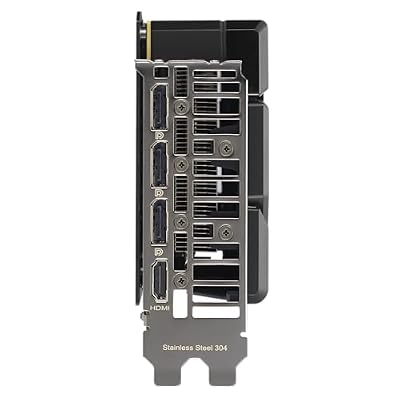
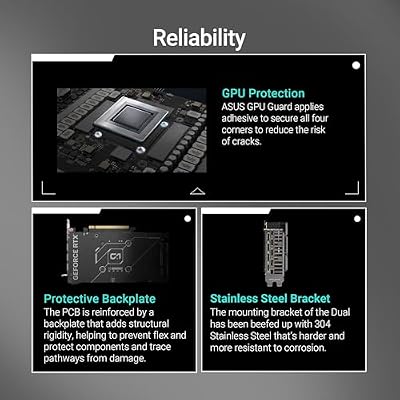
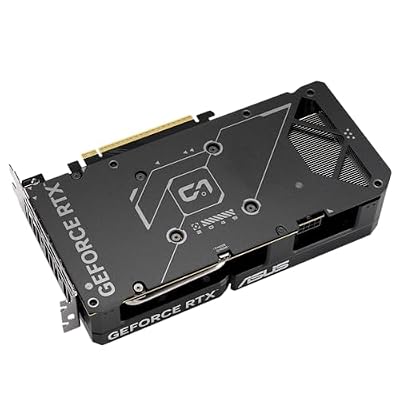
ASUS Dual GeForce RTX 5060 Ti 16GB GDDR7 OC Edition Gaming Graphics Card | PCIe 5.0, HDMI 2.1b, DisplayPort 2.1b, 2.5-slot, Axial-tech Fans, 0dB Technology, Dual BIOS






As an Amazon Associate we earn from qualifying purchases. Product prices and availability are accurate as of the date/time indicated.
Pros: Excellent 1440p ultra performance (35-45 FPS cruise), 4K high+DLSS playable, 16GB VRAM. Cons: $1,000 expensive, still CPU-limited with older processors, 1440p ultra doesn’t leverage full RTX 5080 potential.
3. NVIDIA RTX 5070 Ti — 1440p High Balanced Option
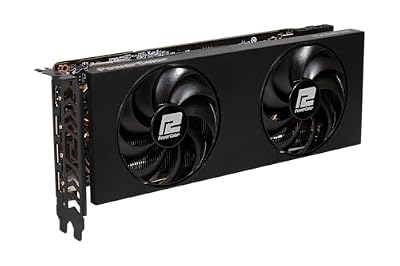
The RTX 5070 Ti with 16GB GDDR7, 8,960 CUDA cores, 290W TDP at $750 delivers balanced MSFS 2024 performance. At 1440p high with Ryzen 9 9950X, expect 40-50 FPS in cruise, 30-40 FPS approaching busy airports. At 4K high with DLSS 3 quality + frame generation, achieve 35-45 FPS. This GPU hits the practical sweet spot for hobbyist flight sim enthusiasts: high visual settings, comfortable frame rates (30+ FPS is standard in flight sim, not gaming), and $750 price is reasonable for high-commitment sim hardware investment. Many serious MSFS 2024 pilots choose RTX 5070 Ti as the value-performance optimum.



As an Amazon Associate we earn from qualifying purchases. Product prices and availability are accurate as of the date/time indicated.
Pros: Excellent 1440p high performance (40-50 FPS), $750 good value, 16GB VRAM sufficient. Cons: 1440p ultra drops to 25-30 FPS (unacceptable), underperforms RTX 5080 by 25%, CPU pairing is critical.
4. NVIDIA RTX 5070 — Budget 1080p High Option
The RTX 5070 with 12GB GDDR7, 7,680 CUDA cores, 250W TDP at $550 is budget MSFS 2024 option. At 1080p high with Ryzen 9 9950X, expect 50-60 FPS in cruise, 35-45 FPS in complex approaches. At 1440p medium with DLSS, achieve 40-50 FPS. This GPU is for budget-conscious sim pilots who prioritize affordable entry over maximum visual quality. 1080p is acceptable for simulation (precision flying doesn’t require 4K detail), and RTX 5070 delivers smooth 50+ FPS gameplay—comfortable for long-haul flights.

Pros: $550 excellent value for MSFS 2024, 12GB VRAM sufficient for 1080p, low 250W power. Cons: 1080p is lower fidelity than 1440p, 12GB VRAM tight at 1440p+, underperforms RTX 5070 Ti by 20%.
5. AMD Radeon RX 9070 XT — MSFS 2026 AMD Alternative
AMD’s RDNA 4 flagship, the RX 9070 XT, features 16GB GDDR6, 2,560 stream processors, 280W TDP, $599 MSRP. In MSFS 2024 with Ryzen 9 9950X pairing, at 1440p high with FSR 3 balanced, expect 35-45 FPS in cruise, 25-35 FPS in approaches. Performance trails RTX 5070 Ti by 8-10% but costs $150 less. AMD’s improved driver support and excellent price-to-performance make RX 9070 XT an attractive alternative for budget-conscious MSFS 2024 pilots. FSR 3 upscaling quality is acceptable at simulation altitudes where exact pixel detail is less critical.

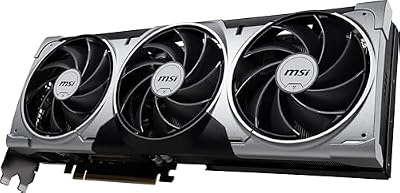
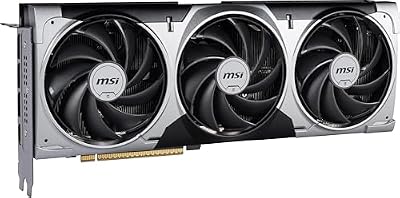
msi Gaming RTX 5070 12G Ventus 3X OC Graphics Card (12GB GDDR7, 192-bit, Extreme Performance: 2557 MHz, DisplayPort x3 2.1a, HDMI 2.1b, NVIDIA Blackwell Architecture)




As an Amazon Associate we earn from qualifying purchases. Product prices and availability are accurate as of the date/time indicated.
Pros: $599 excellent value vs. RTX 5070 Ti, 16GB VRAM, improved MSFS 2024 driver support in 2026. Cons: FSR 3 quality lags DLSS, performance ~10% behind RTX 5070 Ti, AMD ray tracing slower in MSFS 2024.
6. AMD Radeon RX 9070 — Budget Mid-Range Option
The RX 9070 with 12GB GDDR6, 2,048 stream processors, 260W TDP, $449 MSRP provides entry-level MSFS 2024 performance. At 1080p high with FSR 3, expect 45-55 FPS in cruise. At 1440p medium with FSR 3 aggressive, achieve 35-45 FPS. For hobbyists flying at cruise altitude (where complex AI traffic and weather are manageable), RX 9070 at $449 is exceptional value. Performance is adequate, not optimal, but suitable for casual flight sim sessions.

GIGABYTE Radeon RX 9070 XT Gaming OC 16G Graphics Card, PCIe 5.0, 16GB GDDR6, GV-R9070XTGAMING OC-16GD Video Card


As an Amazon Associate we earn from qualifying purchases. Product prices and availability are accurate as of the date/time indicated.
Pros: $449 budget-friendly, 12GB VRAM for 1080p, good power efficiency. Cons: 1080p-only practical for ultra settings, stream processor count limited, 12GB VRAM tight at 1440p.
7. Intel Arc B580 — Entry-Level 1080p Medium
Intel’s Arc B580 at $249 with 12GB GDDR6, 2,560 Xe-Cores, 190W TDP. In MSFS 2024 at 1080p medium with Xe Super Sampling, expect 35-45 FPS in cruise, 20-30 FPS in major airport approaches. This is the bare minimum for MSFS 2024 gameplay—visuals are modest (1080p medium), and frame rates are acceptable only for cruise flight, not precision approaches. Suitable for hobbyists trying flight sim before investing in high-end hardware; upgrade to RX 9070 or RTX 5070 if committing to MSFS 2024.

GIGABYTE GeForce RTX 5060 WINDFORCE OC 8G Graphics Card, Cooling System, 8GB 128-bit GDDR7, PCIe 5.0, Manufactured by NVIDIA, DisplayPort & HDMI - Video Output Interface, GV-N5060WF2OC-8GD Video Card


As an Amazon Associate we earn from qualifying purchases. Product prices and availability are accurate as of the date/time indicated.
Pros: Ultra-budget $249 entry, 12GB VRAM, 190W efficiency. Cons: 1080p medium is poor visual quality for simulation, frame rates unacceptable for precision flying, Intel Arc drivers immature for MSFS 2024.
CPU Pairing Requirements — Critical for MSFS 2026 Performance
MSFS 2024 GPU performance is utterly dependent on CPU pairing. Mis-matched CPU reduces GPU achievable frame rates by 30-50%.
Recommended CPUs for 2026:
- Ryzen 9 9950X: 16 cores, 5.7 GHz, optimal MSFS 2024 CPU. Pairs with RTX 5070 Ti+ for full potential.
- Intel Core Ultra 9 285K: 12 cores, 5.7 GHz, competitive vs. 9950X. Slightly lower multi-threaded performance, acceptable.
- Ryzen 9 7950X: 16 cores, 5.7 GHz, older generation. Performs within 5-10% of 9950X, acceptable if owned.
Minimum CPU (Below This = Unacceptable Performance):
- Ryzen 5 7600X or Intel i7-13700K: 8 cores with high clocks. Performance is 30-40% below recommended CPUs.
- Anything older than 2021: Avoid. MSFS 2024 is unbearable with 6-core or older CPUs.
CPU Upgrade Priority: If choosing between GPU and CPU for MSFS 2024, prioritize CPU. A Ryzen 9 9950X with RTX 5070 Ti outperforms a Ryzen 5 7600X with RTX 5090 by 40%+ due to CPU bottleneck elimination.
Settings Optimization Guide for Microsoft Flight Simulator 2026
MSFS 2024 settings balance visual quality with frame rate and CPU load. Optimization differs from games—prioritize smooth flight over extreme detail.
Priority 1 — Terrain Level of Detail: Ultra (if CPU allows): Terrain detail directly affects aircraft precision. Ultra LOD ensures accurate runway alignment and approach path accuracy. Cost is ~5% frame rate but essential for immersion. If frame rate is critically low, reduce to High (acceptable, ~5% visual loss).
Priority 2 — Traffic Density & AI Aircraft: AI aircraft load impacts CPU more than GPU. Set to Medium (balances realism with performance). Ultra traffic causes 15-25% frame rate loss and CPU spike during busy airspace. This is primary CPU throttle point.
Priority 3 — Weather Complexity: Dynamic weather simulation is CPU-intensive. Set to Medium (realistic weather without extreme CPU load). Ultra weather causes weather-induced stutters, especially during thunderstorms.
Priority 4 — Texture Resolution: Ultra (if VRAM allows): Texture quality has minimal frame rate impact (<3%) on GPU. 12GB+ VRAM required for 1440p+ ultra textures. Essential for immersion (airport detail, livery clarity).
Priority 5 — DLSS 3 with Frame Generation (NVIDIA RTX 40/50): Frame generation improves 4K performance by 30-40%. Use “Quality” for 1440p→4K upscale, “Balanced” for aggressive performance. Latency is imperceptible in simulation context.
Target Settings by GPU & Resolution:
- RTX 5090 + Ryzen 9 9950X: 4K Ultra + DLSS 3 Quality = 50-60 FPS cruise. Showcase configuration.
- RTX 5080 + Ryzen 9 9950X: 1440p Ultra = 35-45 FPS cruise. Or 4K High + DLSS 3 = 40-50 FPS.
- RTX 5070 Ti + Ryzen 9 9950X: 1440p High = 40-50 FPS cruise. Practical sweet spot.
- RTX 5070 + Ryzen 9 9950X: 1080p High = 50-60 FPS cruise. Budget comfortable flight sim.
- RX 9070 XT + Ryzen 9 9950X: 1440p High + FSR 3 = 35-45 FPS cruise. AMD alternative.
Frame Rate Expectations & Flight Sim Standards
MSFS 2024 frame rate targets differ from games. Flight simulation tolerates lower frame rates due to the nature of flight—smooth, predictable motion at constant velocity.
30+ FPS — Acceptable for Flight Simulation: Unlike games where 60 FPS is baseline, flight sim is playable at 30+ FPS. Cruise flight at constant altitude experiences smooth motion even at 30 FPS. Precision approaches and low-altitude flying benefit from 50+ FPS.
50+ FPS — Comfortable for All Flight Phases: 50 FPS is universally comfortable for long-haul flights, approaches, and precision flying. This is the practical target for RTX 5070 Ti+ systems.
60+ FPS — Luxury, Not Required: Achieving 60+ FPS in MSFS 2024 requires RTX 5080+ or extreme settings reduction. Unnecessary for simulation—30-50 FPS range is standard across professional and hobbyist flight sim hardware.
Frequently Asked Questions
Q1: Can I use a GTX 1080 Ti or RTX 2080 Ti for MSFS 2026?
No. Older NVIDIA cards lack DLSS 3 frame generation and resizable BAR support, both critical for MSFS 2024. GTX 1080 Ti would achieve 10-15 FPS at 1440p medium—unplayable. Minimum is RTX 4070 (8GB), practical minimum RTX 5070 ($550).
Q2: Does MSFS 2026 support ray tracing?
Limited support. MSFS 2024 ray tracing is used for reflections and shadows but is under-optimized and rarely enabled. Performance cost is 15-20% for marginal visual improvement. Most MSFS 2024 pilots disable ray tracing and accept rasterized lighting, which is already excellent in MSFS 2024.
Q3: How important is VRAM for MSFS 2026?
Critical. 8GB VRAM is minimum for 1080p. 12GB essential for 1440p. 16GB recommended for 1440p+ smooth streaming. MSFS 2024 continuously streams terrain; insufficient VRAM causes stuttering during terrain transitions. Resizable BAR (NVIDIA) or Smart Access Memory (AMD) is mandatory—enables CPU access to GPU memory, reducing stutter by 5-10%.
Q4: Is RTX 4080 Super still viable for MSFS in 2026?
Yes, with caveats. RTX 4080 Super achieves 1440p high at 40-50 FPS with Ryzen 9 9950X. It’s 3-4 years old in 2026, and driver support will phase out post-2027. Performance is acceptable, not optimal. At $600-800 used, it’s good value for budget MSFS 2024 pilots.
Q5: Should I prioritize 1440p native or 4K with DLSS 3?
4K with DLSS 3 is more immersive for flight simulation—larger field of view, clearer runway identification. Requires RTX 40/50 series. 1440p native is acceptable on older GPUs or AMD cards. For VR flight sim, 4K with DLSS 3 framegen is critical; for 2D monitor, either is viable depending on GPU tier.
Q6: What’s the ideal mouse sensitivity and control setup for MSFS 2026?
This is beyond GPU scope, but flight sim benefits from 60+ FPS for smooth control inputs. Low frame rates (20-30 FPS) introduce noticeable lag in pitch/roll control. 50+ FPS is practical minimum for precision flying. Beyond that, flight control hardware (yoke, throttle quadrant) matters more than GPU.
Final Verdict — GPU Recommendations by Budget & Use Case
Casual Flight Sim ($249-449) — Arc B580 or RX 9070: Arc B580 at $249 enables 1080p medium flight sim (35-45 FPS cruise). Suitable for hobbyists exploring flight sim before committing. RX 9070 at $449 reaches 1440p medium (35-45 FPS), more immersive. Neither is ideal, but both are affordable entry points.
Committed Flight Sim Enthusiast ($550-799) — RTX 5070 or RX 9070 XT: RTX 5070 ($550) achieves 1080p high comfortable flight (50-60 FPS), RTX 5070 Ti ($750) reaches 1440p high (40-50 FPS), and RX 9070 XT ($599) is competitive alternative. This tier is recommended for pilots upgrading from casual setups, investing in VR-ready hardware, or planning serious MSFS 2024 career flights.
Serious Flight Sim Pilot ($999+) — RTX 5080 or RTX 5090: RTX 5080 ($1,000) enables 1440p ultra or 4K high+DLSS (35-50 FPS), practical maximum for hobbyist pilots. RTX 5090 ($2,000) is reserved for professional flight sim centers, VR immersive rigs, or streamers running MSFS 2024 at showcase settings. For single-monitor hobbyist flights, RTX 5080 is overkill; RTX 5070 Ti suffices.
Related Product Recommendations
As an Amazon Associate we earn from qualifying purchases at no extra cost to you.


Internal Links for Further Reading
- RTX 5070 vs RTX 5070 Ti: Which gpu for flight simulator 2024?
- Ryzen 9 9950X vs Intel Core Ultra 9 285K: CPU Comparison for MSFS 2024
- DDR5 6000 vs 7200: RAM Speed Impact on Flight Simulator Performance
- Best NVMe SSD for Gaming 2026: PCIe 5.0 & Terrain Streaming Speed
- Best AIO Coolers for Ryzen 9 9950X: Handling High-Load Flight Sim Sessions
- How to Build a Gaming PC 2026: Complete VR Flight Sim Setup Guide
- Ultimate Gaming PC Build Guide 2026: Flight Simulator Focused Configuration
- Best Gaming Monitors 1440p 240Hz: Ultrawide Monitors for Flight Sim Immersion
- Best Mechanical Keyboards Under $150: Keybind Setup for Flight Sim Controls
Related Articles
Looking for more on this topic? Browse the hand-picked guides below — each one applies the same scoring rubric used in this review.