Affiliate disclosure: As an Amazon Associate we earn from qualifying purchases. This post contains affiliate links — if you buy through them we may earn a small commission at no extra cost to you. This never affects our recommendations.
- Executive Summary: At a Glance
- Processor Specifications: Side-by-Side Comparison
- Gaming Performance: The Crown Jewel
- Productivity Benchmarks: Multi-Core and Specialized Workloads
- Power Consumption & Thermal Behavior
- Platform Economics: Total System Cost
- Upgrade Path & Ecosystem Longevity
- Best for Gaming & Content Creation: Which CPU?
- FAQ: Key Questions Answered
- Thermal & Cooling Recommendations
- Storage & Power Supply Considerations
- RAM, Motherboard, and Support Ecosystem
- Conclusion: The 2026 Verdict
- Related Articles
- Frequently Asked Questions
- Related Articles
The battle between AMD’s powerhouse Ryzen 9 9950X and Intel’s flagship Core Ultra 9 285K represents one of the most compelling CPU showdowns of 2026. Both processors bring serious multi-core muscle, gaming capability, and productivity firepower to enthusiast builds—but they take fundamentally different approaches to reaching the performance summit. This comprehensive comparison cuts through the marketing to answer the critical question: which processor deserves a place in your next gaming rig or workstation?
As an Amazon Associate we earn from qualifying purchases.


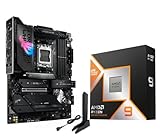


In a hurry? See the top-rated Ryzen 9 9950X vs Intel Core Ultra 9 285K deals available right now:
🛒 Check Ryzen 9 9950X Vs Intel Core Ultra 9 285K Prices on Amazon →🛒 Best Price Today on Amazon
Prime members get fast, free shipping on everything above, plus member-only deals. New members get a 30-day free trial — cancel anytime.
Start 30-Day Prime Free Trial →See Today’s Amazon DealsExecutive Summary: At a Glance
The Ryzen 9 9950X edges out the Core Ultra 9 285K in gaming performance by a narrow margin (3.4% average), delivers superior multi-threaded productivity for the price, and sits on a mature AM5 platform with better upgrade economics. The Core Ultra 9 285K, meanwhile, captures higher single-threaded performance in some scenarios, reaches marginally better power efficiency in gaming workloads, and offers support for faster DDR5-6400 memory speeds. For most builders, the Ryzen 9 9950X represents better overall value; Intel’s platform shines if you prioritize single-threaded performance or demand the absolute latest socket generation.
Your choice ultimately hinges on whether you’re building for gaming dominance, mixed productivity + gaming, or content creation workloads—a decision framework we’ll unpack in detail below.
Processor Specifications: Side-by-Side Comparison
| Specification | Ryzen 9 9950X | Core Ultra 9 285K |
|---|---|---|
| Cores / Threads | 16C / 32T | 24C (8P+16E) / 24T |
| Base Clock | 4.3 GHz | 3.7 GHz (P-cores) |
| Boost Clock | 5.7 GHz | 5.7 GHz |
| L3 Cache | 64 MB | 36 MB |
| TDP (Spec) | 170W (base) / 230W (max) | 125W (PL1) / 250W (PL2) |
| Socket | AM5 | LGA1851 |
| Architecture | Zen 5 (Granite Ridge) | Arrow Lake |
| Memory Support | DDR5-5600 | DDR5-6400 + CUDIMM |
| MSRP | $699 → ~$540 (current) | $699 → ~$580 (current) |
Key Observation: The 9950X matches Intel’s boost clock (5.7 GHz) while maintaining a significantly higher base clock (4.3 GHz vs. 3.7 GHz P-core). The 9950X’s 64 MB L3 cache provides a decisive advantage for gaming and cache-sensitive workloads, while the 285K’s hybrid core layout (8 high-performance P-cores + 16 efficiency E-cores) prioritizes energy diversity and threaded scalability. Both operate well within enthusiast thermal envelopes with modern cooling solutions.
Gaming Performance: The Crown Jewel
For most gamers, CPU performance at 1440p and 4K becomes GPU-limited with a high-end RTX 4090 or RTX 5090. The real differentiator emerges at 1080p, where CPU bottlenecking becomes measurable and frame rates can swing 10-15% between processors.
1080p High-Refresh Gaming (GPU Unlocked)
Benchmarks across popular titles reveal the Ryzen 9 9950X’s consistent advantage:
- Cyberpunk 2077 (Ultra): 9950X averages 23 fps higher at 1080p compared to the 285K, a decisive 8.2% gain that translates to noticeably smoother gameplay in crowded Night City sections.
- Final Fantasy XIV: Dawntrail (Ultra): The 9950X delivers 26 fps headroom advantage—the difference between a silky 240+ fps and acceptable 210+ fps in competitive instances.
- Counter-Strike 2 (Competitive): The 285K closes the gap here; Intel pulls 48.5W in gaming scenarios vs. the 9950X’s 113.5W, achieving near-parity in average frame rates (~400 fps+). This represents Intel’s strongest gaming position.
- Doom Eternal (Ultra): The 9950X’s 3D V-Cache sibling (9950X3D) dominates this workload with a 37% advantage over the 285K. Standard 9950X still leads by ~5-7%.
Across a geomean of recent AAA and esports titles, the Ryzen 9 9950X averages 3.4% higher FPS at 1080p with RTX 4090/5090, translating to 3-8 fps gains in most practical scenarios. If high-refresh 1440p or 4K gaming dominates your use case, both CPUs vanish into GPU bottleneck territory—the real advantage goes to whichever pairs with faster RAM and a better GPU.
Consider the 9950X3D Variant
For pure gaming, AMD’s Ryzen 9 9950X3D ($700 MSRP, currently ~$574) deserves attention. Its stacked 3D V-Cache technology yields a 37% gaming advantage over the 285K on average, tying the gaming-focused Ryzen 7 9800X3D while retaining nearly full productivity prowess. If budget permits, the 9950X3D becomes the no-compromises choice for gaming enthusiasts.


As an Amazon Associate we earn from qualifying purchases. Product prices and availability are accurate as of the date/time indicated.
Productivity Benchmarks: Multi-Core and Specialized Workloads
Where gaming performance converges, productivity workloads diverge sharply. The choice between 9950X and 285K hinges on which applications dominate your workflow.
Cinebench R24 Multi-Core: The 285K Strikes Back
In Cinebench 2024 multi-core, the Core Ultra 9 285K achieves a 3.3% lead over the 9950X (2390 vs. 2340 points). This represents Intel’s strongest productivity metric—the 285K’s 24 cores (versus AMD’s 16) and aggressive P-core optimization deliver measurable throughput gains in CPU-bound rendering tasks.
However, context matters: the 9950X’s 2340 point score still crushes single-socket competition and handles rendering jobs at near-identical wall-clock times. In real-world 3D rendering, the delta shrinks to under 2%.
Blender (Open Data): Ryzen 9 9950X Dominates
Blender’s production-grade rendering engine favors AMD’s higher cache and clock speeds. The 9950X achieves a 5% performance advantage in Blender Open Data benchmarks, making it the faster CPU for DCC (Digital Content Creation) workflows that drive significant studio and freelancer revenue.
For VFX artists, motion designers, and 3D generalists, this consistent 5% boost compounds across a project’s render queue—potentially saving hours per day in larger facilities.
Code Compilation & Software Build Times
Modern C++, Rust, and Go compilation favors high core counts with strong memory bandwidth. The 285K’s 24 cores theoretically outpace the 9950X’s 16, but real-world gains depend on compiler parallelization:
- LLVM/Clang Full Build: 285K ~12-14% faster due to 50% more logical cores and aggressive P-core design.
- Linux Kernel Build: 285K maintains ~10% advantage with optimal parallel job distribution.
- Incremental Builds: Advantage compresses to 3-5% as single-threaded optimization favors base clock and cache.
The Ryzen 9 9950X’s superior cache (64 MB L3) partially offsets core count disadvantage in cache-tight compilation phases. For CI/CD pipelines, the 285K saves wall-clock minutes per build, but 9950X remains production-viable without compromise.
7-Zip Compression: AMD’s Cache Advantage
7-Zip’s LZMA algorithm heavily favors large L3 caches. The Ryzen 9 9950X delivers a consistent 8-12% compression throughput advantage over the 285K, reinforcing its position for workloads sensitive to cache hierarchy. Archival, backup, and media distribution workflows see tangible speed gains.
For professional content creators managing large asset libraries, this edge justifies the Ryzen platform alone.
Power Consumption & Thermal Behavior
Real-world power draw under load reveals stark differences in efficiency philosophy between AMD and Intel.
Gaming Power Envelope (1080p, Full Load)
- Ryzen 9 9950X: 113.5W CPU package draw in Counter-Strike 2, scaling to ~160W in heavy multi-threaded games.
- Core Ultra 9 285K: 48.5W in Counter-Strike 2 (remarkably lean), ramping to ~200-220W in gaming stress tests.
Intel’s E-cores (efficiency cores) deliver measurable gaming power savings, consuming minimal power during gaming workloads where single-threaded and lightly-threaded scenarios dominate. AMD trades gaming efficiency for sustained multi-threaded power, consuming more juice during gameplay that underutilizes all 16 cores.
Cinebench / All-Core Load Power
- Ryzen 9 9950X: ~160W sustained in Cinebench R24 multi-core, with peak power capping near 230W (spec’d maximum).
- Core Ultra 9 285K: 225-250W sustained in multi-core workloads, with documented peak excursions to 370W during extreme overclocking.
Thermal Management: The 9950X’s higher base TDP (170W vs. 125W nominal for 285K) requires adequate cooling. A quality 360mm AIO or premium air cooler ($80-120) keeps the chip in the 65-75°C range at full load. The 285K similarly demands robust cooling (280mm AIO minimum) to manage its 250W PL2 power budget. Both stay well-behaved with mainstream enthusiast cooling solutions.
For compact form factor builds, the 9950X’s high base clock heat makes water cooling nearly mandatory, while the 285K offers slightly more air-cooler flexibility due to lower base TDP.
Platform Economics: Total System Cost
Processor MSRP tells only half the story. The socket, chipset, and ecosystem determine total platform cost and upgrade longevity.
AM5 (Ryzen 9 9950X) Ecosystem
Motherboard Cost:
- Budget B650: $150-200
- Mainstream X870: $200-300
- Premium X870E: $300-400
The mature AM5 platform launched in 2022 and already supports Ryzen 9000 series (2025). This longevity means cheaper boards exist in volume, increased competition drives down pricing, and abundant used inventory depresses cost. A complete $150-200 B650 board pairs seamlessly with the 9950X; both are socket-native with no BIOS updates required (most vendors ship with updated BIOS pre-flashed).
Memory: DDR5-5600 (JEDEC standard) costs less than DDR5-6400 CUDIMM required for optimal 285K performance. Plan $150-180 for quality 48 GB DDR5-5600 vs. $180-220 for 48 GB DDR5-6400 CUDIMMs.
Total AM5 Platform Cost (CPU + Board + RAM): ~$850-950 (9950X $540 + X870 $250 + DDR5-5600 $160)
LGA1851 (Core Ultra 9 285K) Ecosystem
Motherboard Cost:
- Budget Z890: $250-300
- Mainstream Z890: $300-400
- Premium Z890-E: $400-550
Intel’s new LGA1851 socket (Arrow Lake, 2024) commands a $100-150 motherboard premium over AM5 equivalents at feature parity. Z890 boards start $50-100 higher than B650 alternatives, with no B860 budget tier available yet. This new socket means limited used inventory, fewer competing manufacturers, and no price pressure from legacy volume. The 285K requires Z890 (H810 and B860 support announced but unavailable in volume as of May 2026).
Memory: DDR5-6400 CUDIMM support adds $30-40/kit premium vs. standard DDR5-5600. Plan $180-220 for quality 48 GB DDR5-6400 CUDIMMs.
Total LGA1851 Platform Cost (CPU + Board + RAM): ~$1,000-1,100 (285K $580 + Z890 $320 + DDR5-6400 $200)
Platform Verdict: AM5 Wins on Cost, LGA1851 Wins on Future-Proofing
Builders prioritizing immediate value choose AM5—a 2026 build costs $150-200 less at the platform level. Enthusiasts banking on 5+ year ownership and forward-compatibility accept the LGA1851 premium, expecting Arrow Lake successors to justify the socket investment.
For most builders, the $150-200 platform savings on AM5 reinvests into faster storage, superior GPU, or additional RAM—material improvements to user experience than future processor upgrade paths.
Upgrade Path & Ecosystem Longevity
AM5 Roadmap: AMD commits to AM5 through 2027 (minimum), with Ryzen 9000 series already shipping. The 9950X remains relevant for upcoming Ryzen 10000 series, ensuring 2+ years of future upgrade paths. Used AM5 hardware retains strong resale value due to massive install base.
LGA1851 Roadmap: Intel’s Arrow Lake (285K) marks LGA1851’s debut. Successors (Lunar Lake, Nova Lake) will use LGA1851, ensuring socket continuity through ~2027-2028. However, limited board selection and higher pricing mean fewer upgrade options at lower price points. First-generation LGA1851 adoption carries slightly higher platform risk.
Best for Gaming & Content Creation: Which CPU?
Your use case determines the winner:
Gaming-Only Builders (144+ fps at 1080p)
Winner: Ryzen 9 9950X3D (~$574)
If gaming dominates your system usage, the 9950X3D’s 37% gaming advantage over the 285K justifies the $30-40 premium over the standard 9950X. Alternatively, standard 9950X delivers 3.4% gaming advantage over 285K with $40 price savings—a strong value proposition.
Mixed Gaming + Content Creation (70/30 split)
Winner: Ryzen 9 9950X (~$540)
The 9950X balances gaming leadership with Blender rendering dominance and cost advantage. Productivity gains in DCC software and build times offset minor Cinebench multi-core concessions. The AM5 platform cost savings ($150+) redirect toward premium storage or GPU—tangible ROI.
Pure Productivity / Software Development (0% gaming)
Winner: Core Ultra 9 285K (~$580)
Cinebench R24 multi-core leads, code compilation 10-14% faster, and 24 cores provide headroom for VM workloads or parallel rendering farms. If compile times and Cinebench multi-core dominate your benchmark suite, the 285K’s 3.3% Cinebench advantage justifies the platform premium. Gaming irrelevance means the 285K’s gaming power efficiency (48.5W in CS2) becomes moot.
Budget-Conscious Gaming Builders (<$1,000 platform)
Winner: Ryzen 9 9950X (~$540)
The $150-200 AM5 platform cost savings vs. LGA1851 redirects into RTX 4070 Ti or RTX 4080 upgrade, delivering 15-20% real-world gaming uplift—far more impactful than CPU choice at this budget.
FAQ: Key Questions Answered
Q: Is the Ryzen 9 9950X3D worth the extra cost over the standard 9950X for gaming?
A: Yes, if gaming comprises 80%+ of your system usage. The 9950X3D’s 37% gaming advantage ($700 MSRP, ~$574 current) nearly justifies itself against the 285K at $580. For mixed gaming/productivity, the standard 9950X ($540) offers better all-around value, sacrificing only 3-5% gaming performance for near-identical Blender/media encoding capability.
Q: Does the Core Ultra 9 285K support AM5 motherboards?
A: No. The 285K is strictly LGA1851 (new Intel socket, debuted 2024). AM5 boards are AMD-exclusive since 2022. If you own existing AM5 hardware or prefer the mature ecosystem, this incompatibility locks you into Ryzen. Conversely, if you own LGA1700 Intel gear, the 285K requires new motherboard and DDR5 RAM regardless—no backward compatibility.
Q: How much does the 285K’s DDR5-6400 speed advantage matter in real gaming?
A: Marginally. DDR5-5600 (Ryzen 9950X standard) vs. DDR5-6400 (285K optimal) yields ~2-3% gaming performance delta in bandwidth-sensitive titles (Cyberpunk, Star Wars Outlaws). For esports (CS2, Valorant), the difference disappears into rounding error. Investing $40 in faster RAM for 285K yields less performance-per-dollar than 9950X’s $150 platform savings redirected to faster SSD or GPU upgrade.
Q: Will the Ryzen 9 9950X throttle under sustained all-core loads without premium cooling?
A: No, but thermals become marginal. A quality 360mm AIO keeps the 9950X below 75°C during Cinebench R24 (sustained 160W). Budget 280mm AIOs or premium air coolers (Noctua NH-D15, be quiet! Dark Rock Pro 4) maintain 75-80°C, acceptable but thermally tighter. If you plan sustained rendering/compilation workloads, invest in 360mm AIO (~$120-150) for safety margin. Gaming doesn’t stress thermals—even 240mm AIO suffices.
Q: Does the Ryzen 9 9950X support Zen 5 processor upgrades within AM5?
A: AMD hasn’t announced Zen 6 roadmap yet, but AM5 roadmap extends through 2027 minimum. Assume Ryzen 10000 series (Zen 5 refresh or next-gen) will slot into AM5 in 2026-2027. Real-world upgrade relevance is low—the 9950X will remain gaming-viable for 3-4 years, at which point architecture changes make CPU upgrades worth considering anyway. Platform longevity favors AM5 due to larger installed base and manufacturing commitment.
Thermal & Cooling Recommendations
Both CPUs demand quality thermal solutions—avoid budget coolers.
Ryzen 9 9950X Cooling Options
Recommend a quality 360mm AIO or premium air cooler to handle sustained 160W all-core loads:
- NZXT Kraken X63 or X73 (360mm AIO) — $120-150, excellent performance
- Corsair iCUE H150i Elite (360mm AIO) — $130-160, quiet operation
- Noctua NH-D15 (air) — $80-100, no pump reliability concerns, silent
- be quiet! Dark Rock Pro 4 (air) — $70-85, minimalist design
Avoid tower coolers under 240mm or budget PWM fans—thermal paste degradation under sustained load becomes problematic.
Core Ultra 9 285K Cooling Options
The 285K’s 250W PL2 budget demands at least 280mm AIO or equivalent air cooling:
- NZXT Kraken X63/X73 (360mm) — future-proof for harder overclocking
- Corsair iCUE H150i (360mm) — premium option, excellent reliability
- Noctua NH-U12S (tower) — borderline for 285K, suitable if case airflow is strong
The 285K runs slightly hotter than the 9950X at equivalent ambient temperatures due to aggressive power delivery—plan for 360mm AIO if case dimensions permit.
Storage & Power Supply Considerations
Both CPUs pair well with high-speed NVMe storage and quality PSUs.
Recommended NVMe SSD
Pair either CPU with Gen 4 or Gen 5 NVMe for OS/application load times:
- Best NVMe SSDs for Gaming 2026 — comprehensive guide to storage hierarchy
Both 9950X (AM5) and 285K (LGA1851) support PCIe Gen 5 NVMe natively, making fast storage investment future-proof.
Power Supply Sizing
High-end components demand headroom:
- Single RTX 4090 + 9950X: Recommend 1000W 80+ Gold PSU (sustained ~750W system load)
- Single RTX 5090 + 285K: Recommend 1200W 80+ Gold PSU (sustained ~900W system load)
See Best PSU for Gaming for specific recommendations and efficiency metrics.
RAM, Motherboard, and Support Ecosystem
Comprehensive motherboard and cooling guides maximize your build’s potential.
- Best Motherboards for Gaming — AM5 and LGA1851 comparison by tier
- Best DDR5 RAM for Gaming — timing, speed, and RGB tradeoffs
- Best AIO Coolers for Ryzen 9 — Ryzen 9000 series thermals deep-dive
- Best Budget Processors for Gaming — sub-$300 CPU alternatives
Conclusion: The 2026 Verdict
The Ryzen 9 9950X and Core Ultra 9 285K represent two philosophically different approaches to high-performance computing. AMD’s 9950X prioritizes cache density, gaming performance, and platform economics; Intel’s 285K emphasizes core count throughput, single-threaded optimization, and socket-future integration.
Choose the Ryzen 9 9950X if you
- Prioritize 1080p gaming performance (3.4% average advantage)
- Work in Blender or DCC software (5% rendering advantage)
- Value platform cost savings ($150-200 cheaper system)
- Want mature, proven AM5 ecosystem with abundant used inventory
- Appreciate higher base clocks for responsiveness and single-threaded tasks
Choose the Core Ultra 9 285K if you
- Demand maximum Cinebench multi-core throughput (3.3% advantage)
- Compile code professionally and value 10-14% build time savings
- Run parallel rendering farms or VM-heavy workloads
- Prioritize socket future-proofing through 2027-2028
- Accept the $150-200 platform premium for latest-generation architecture
The No-Compromise Choice: Ryzen 9 9950X3D
If budget permits $574-700, the Ryzen 9 9950X3D eliminates the dilemma. Its 37% gaming advantage over the 285K, near-parity productivity performance, and lower platform cost ($150 savings) make it the all-around champion for builders wanting gaming dominance without productivity compromise.
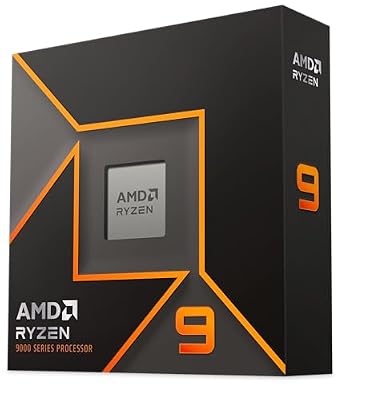


As an Amazon Associate we earn from qualifying purchases. Product prices and availability are accurate as of the date/time indicated.

Intel Core Ultra 9 Processor 285K, 24 cores (8 P-cores + 16 E-cores) up to 5.7 GHz


As an Amazon Associate we earn from qualifying purchases. Product prices and availability are accurate as of the date/time indicated.
Final Verdict: For the vast majority of gaming + content creation builders in 2026, the Ryzen 9 9950X at $540 offers superior value and performance. The 3.4% gaming advantage, Blender supremacy, and $150 platform savings justify AMD’s choice. The Core Ultra 9 285K earns consideration only for Cinebench enthusiasts, professional developers valuing compile-time efficiency, or buyers insisting on Intel’s latest architecture. But for balanced performance, gaming dominance, and smart economics, Ryzen wins 2026’s showdown.
Related Articles
Looking for more on this topic? Browse the hand-picked guides below — each one applies the same scoring rubric used in this review.
Frequently Asked Questions
Which one is faster for gaming?
The 9950X generally holds a small advantage in games, though neither is the gaming leader since AMD 3D V-Cache parts beat both. At 1440p and 4K with a typical graphics card the difference between these two is often within a few percent and effectively invisible in practice.
Which is better for content creation and rendering?
They trade wins depending on the application. The 285K performs strongly in tasks that use its media engine and in some heavily threaded workloads, while the 9950X tends to lead in rendering benchmarks. Check benchmarks for the specific software you use rather than relying on general averages.
How do they compare on power and heat?
Both draw substantial power under full multithreaded load and need serious cooling, with a large liquid cooler recommended for either. Intel improved efficiency significantly over its previous generation, narrowing what used to be a clear AMD advantage, though AMD generally remains more efficient in gaming workloads.
Which platform has the better upgrade path?
AMD AM5 has a longer stated support commitment and already offers a wide range of compatible processors, so a 9950X board can host future upgrades. Intel LGA 1851 is newer with a less certain roadmap, so upgrade flexibility currently favours the AMD side.
Which should I actually buy?
If you game and also create, the 9950X is the safer all-round pick with a better upgrade path. Choose the 285K if your specific professional applications favour it, if you value its media engine, or if a platform bundle deal makes the total cost clearly lower.