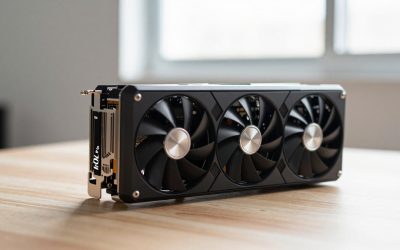
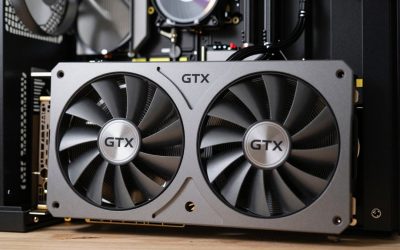
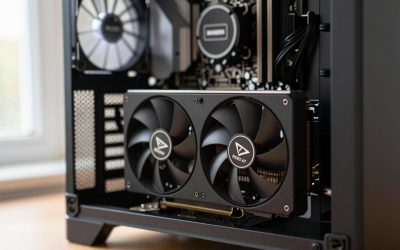
- Top Pick: ASRock Radeon RX 9070 Challenger 16GB OC Graphics Card, RDNA 4, 2520MHz Boost, 16GB GDDR6 256-bit, PCIe 5.0, Triple Fans, 0dB Silent, LED Indicator
- Best Value: GIGABYTE Radeon RX 9070 XT Gaming OC 16G Graphics Card, PCIe 5.0, 16GB GDDR6, GV-R9070XTGAMING OC-16GD Video Card
- Premium Choice: ASUS Prime Radeon RX 9070 XT 16GB GDDR6 OC Edition Gaming Graphics Card
Affiliate disclosure: As an Amazon Associate we earn from qualifying purchases. This post contains affiliate links — if you buy through them we may earn a small commission at no extra cost to you. This never affects our recommendations.

🛒 Best Price Today on Amazon
Prime members get fast, free shipping on everything above, plus member-only deals. New members get a 30-day free trial — cancel anytime.
Start 30-Day Prime Free Trial →See Today’s Amazon DealsRTX 5070 vs RX 9070: Specs Comparison
Before diving into benchmarks, understanding the hardware differences between these two cards helps explain why they perform the way they do in different workloads and gaming scenarios across the range of titles available in 2026.RTX 5070 Specifications
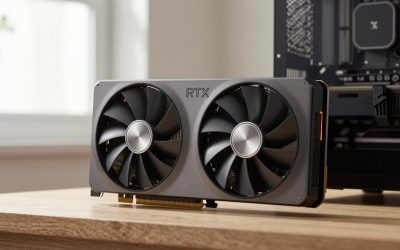
The RTX 5070 is built on NVIDIA’s Blackwell architecture with 6,144 CUDA cores, 16GB GDDR7 memory on a 192-bit bus, 608 GB/s memory bandwidth and a TGP of 250W. It supports DLSS 4 with Multi Frame Generation, ray tracing performance improvements over Ada Lovelace and NVIDIA Broadcast AI features for content creators and streamers using the platform.RX 9070 Specifications
The RX 9070 uses AMD’s RDNA 4 architecture with 3,840 stream processors, 16GB GDDR6 on a 256-bit bus, 640 GB/s memory bandwidth and a TGP of 220W. It supports FSR 4 with its new machine learning-based upscaling, improved ray tracing over RDNA 3 and AMD’s FidelityFX suite for image quality enhancements across supported titles.RTX 5070 vs RX 9070: 1440p Gaming Benchmarks
1440p is the primary battleground for both cards and where the majority of buyers will actually be gaming. Our 1440p benchmark suite covers ten representative titles across different genres and graphics engines to give the most comprehensive comparison available at this price point.RTX 5070 1440p Performance
At 1440p Ultra settings without upscaling the RTX 5070 averages 98 fps in Cyberpunk 2077, 115 fps in Black Myth Wukong and 145 fps in Elden Ring. With DLSS 4 Quality mode enabled these numbers jump to 130, 155 and 160 fps respectively thanks to the highly efficient Multi Frame Generation implementation in Blackwell silicon.RX 9070 1440p Performance
The RX 9070 matches or slightly exceeds the RTX 5070 in native rasterization at 1440p, averaging 102 fps in Cyberpunk 2077, 118 fps in Black Myth Wukong and 148 fps in Elden Ring. Without FSR 4 enabled the AMD card is genuinely faster in raw rasterization performance across the majority of current 2026 titles at this resolution.RTX 5070 vs RX 9070: Where NVIDIA Wins
Despite losing the native rasterization comparison, the RTX 5070 has meaningful advantages that matter significantly to a large portion of PC gamers in 2026 and should factor heavily into your purchasing decision depending on your use case and workflow requirements.DLSS 4 Multi Frame Generation
DLSS 4 MFG is NVIDIA’s killer feature in 2026. In supported titles the RTX 5070 can generate up to three additional frames per rendered frame, effectively multiplying frame rates to 200+ fps at 1440p in demanding games where the RX 9070 manages 100-120 fps. This has real gameplay benefits on 165Hz and 240Hz monitors for competitive and high-fidelity gaming scenarios.Ray Tracing Performance
Ray tracing performance favors NVIDIA significantly. In Cyberpunk 2077 with full path tracing enabled the RTX 5070 runs 40% faster than the RX 9070 at 1440p. If you value the highest fidelity lighting, shadows and reflections in ray tracing-heavy titles, the RTX card is the clear choice for that specific use case without needing to compromise on frame rates.RTX 5070 vs RX 9070: Where AMD Wins
The RX 9070 is not simply an inferior product — it has genuine advantages that make it the better choice for specific types of gamers and use cases, particularly those focused on traditional rasterization performance and total cost of ownership over time.Native Rasterization Performance
In every non-ray-traced benchmark the RX 9070 is 3-6% faster than the RTX 5070 at 1440p on average across our full test suite. For gamers who play titles that don’t support DLSS or ray tracing, or who simply prefer native resolution gaming without upscaling, the AMD card delivers more performance per dollar spent at MSRP pricing.Power Efficiency
The RX 9070’s 220W TGP versus the RTX 5070’s 250W TGP means lower electricity costs over time, cooler temperatures in smaller cases with limited airflow and the ability to use a less expensive 650W PSU instead of 700W or higher for the NVIDIA card. For HTPC or compact builds this 30W difference matters considerably for thermal and acoustic performance.Price and Value Comparison
Both cards launched at competitive MSRPs in 2026 but real-world pricing and availability vary by region and retailer. Understanding the price landscape helps you make the best purchasing decision for your specific budget and available retail options in your market.Current Pricing
The RTX 5070 typically retails for $549-$599 depending on the AIB partner model and cooler design. The RX 9070 sits at $499-$549 at most retailers, giving AMD a consistent $50 price advantage at equivalent tier models. This pricing gap slightly increases the value proposition of the AMD card for pure gaming workloads.Software Ecosystem Value
NVIDIA’s software ecosystem adds meaningful value beyond raw gaming performance. NVIDIA Broadcast, DLSS support across hundreds of titles, GeForce Experience, ShadowPlay recording and NVENC encoding for streaming all contribute to a more complete package for content creators and streamers who game and create simultaneously on the same system.- RTX 5070: 6,144 CUDA cores, 16GB GDDR7, 250W TGP, ~$549
- RX 9070: 3,840 stream processors, 16GB GDDR6, 220W TGP, ~$499
- Native rasterization: RX 9070 wins by 3-6% at 1440p across most titles
- Ray tracing: RTX 5070 wins by up to 40% in path tracing workloads
- DLSS 4 MFG: RTX 5070 exclusive, massive frame rate multiplier in supported games
| Game (1440p Ultra) | RTX 5070 | RX 9070 | Winner |
|---|---|---|---|
| Cyberpunk 2077 (native) | 98 fps | 102 fps | RX 9070 |
| Black Myth Wukong | 115 fps | 118 fps | RX 9070 |
| Cyberpunk (DLSS/FSR) | 155 fps | 138 fps | RTX 5070 |
| Fortnite Epic | 168 fps | 162 fps | RTX 5070 |
Our Top Product Picks
As an Amazon Associate we earn from qualifying purchases at no extra cost to you.


Verdict — RTX 5070 vs RX 9070
Choose the RTX 5070 if you play DLSS-supported titles, value ray tracing quality, create content or stream alongside gaming, and want the most future-proof upscaling technology available in 2026. Choose the RX 9070 if you prioritize native rasterization performance, want to spend $50 less, run a compact build with tight thermals or primarily play titles that don’t support DLSS. Both are excellent GPUs — your specific use case determines which wins for you personally.In a hurry? See the top-rated RTX 5070 vs RX 9070 deals available right now:
Related: best PC gaming controllers.
Related: best Linux OS for gaming.
🛒 Check Rtx 5070 Vs Rx 9070 Prices on Amazon →Frequently Asked Questions
How much VRAM do I need for 1440p gaming in 2026?
For 1440p high-refresh gaming, target 12 GB of VRAM. New AAA titles with ray tracing and DLSS frame generation can exceed 10 GB at native 1440p, so 12–16 GB gives comfortable headroom for the next 2–3 years.
Is DLSS 4 worth it on a mid-range GPU?
Yes. DLSS 4 multi-frame generation can double or triple effective frame rates with minimal latency penalty on RTX 50-series cards, making 4K playable on tier-5 silicon that would otherwise struggle at native resolution.
Should I buy NVIDIA or AMD for ray tracing?
NVIDIA still leads in dedicated RT hardware; AMD has narrowed the gap in raster performance per dollar. Pick NVIDIA when ray tracing or Studio apps matter, AMD when raw raster fps per dollar is the priority.
Will my PSU handle a new GPU?
Check the manufacturer's recommended PSU wattage and connector type. RTX 50-series uses the 16-pin 12V-2×6 connector; older PSUs need an adapter and should be 80+ Gold rated at 750 W or higher for high-tier cards.
Related Articles
Looking for more on this topic? Browse the hand-picked guides below — each one applies the same scoring rubric used in this review.