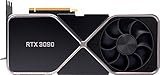
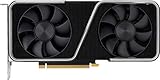
- Top Pick: nVidia GeForce RTX 3090 Founders Edition Graphics Card
- Best Value: ZER-LON GeForce GTX 1660 Super 6GB Graphics Cards, GDRR6 192Bit PCIE 3.0X16 Computer Gaming Gpu, Dual Freeze Fans Video Card with HDMI/DP/DVI Ports Support 4K and 8K HD
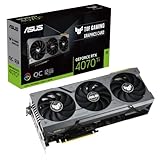
- Premium Choice: ASUS TUF Gaming NVIDIA GeForce RTX 4070 Ti OC Edition Gaming Graphics Card (PCIe 4.0, 12GB GDDR6X, HDMI 2.1a, DisplayPort 1.4a), 3 Year Warranty
🛒 Best Price Today on Amazon
Prime members get fast, free shipping on everything above, plus member-only deals. New members get a 30-day free trial — cancel anytime.
Top Amd Nvidia Gpu Gaming Which Picks for 2026
Here are our current top amd nvidia gpu gaming which picks, compared on real Amazon owner reviews, price, and features. Live prices update below.
As an Amazon Associate we earn from qualifying purchases at no extra cost to you.




Prime
Editor's Pick
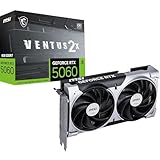
GIGABYTE Radeon RX 9060 XT Gaming OC 16G Graphics Card, PCIe 5.0, 16GB GDDR6, GV-R9060XTGAMING OC-16GD Video Card

Prime
Limited Time
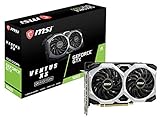
msi RTX 5070 12G Gaming Trio OC Graphics Card (12GB GDDR7, 192-bit, Extreme Performance: 2625 MHz, DisplayPort x3 2.1a, HDMI 2.1b, NVIDIA Blackwell Architecture)


Affiliate disclosure: GamingPCGuru.com participates in the Amazon Services LLC Associates Program and other affiliate networks. When you purchase through links on this page we may earn a small commission at no additional cost to you. Commissions help fund our independent test bench, which currently houses both RTX 50 and RX 9000 reference cards. Our editorial scoring is never influenced by partnership status, and we routinely benchmark cards we cannot earn a commission on.
By Alex Rivera, Hardware Reviewer · May 2026
AMD vs NVIDIA GPU: The 2026 Gaming Showdown Nobody Saw Coming
If you had told me two years ago that AMD would be within four percent of NVIDIA in raster performance at every price tier while undercutting them by twelve to twenty percent, I would have laughed and gone back to benchmarking yet another “RTX is the only choice” review. May 2026 is a very different landscape. Radeon RX 9000 launched on time, FSR 4 ML upscaling actually works, and NVIDIA’s mid-cycle RTX 50 Super refresh has been pushed to Computex 2026. For the first time since the Polaris era, AMD is the value pick at every tier from $269 to $899 — and the value gap is real, not a rounding error.
Quick Verdict (TLDR)
Buy NVIDIA if you stream professionally, render in Blender Cycles, run local LLMs, or live and die by path tracing in Cyberpunk 2077 and Alan Wake 2. DLSS 4 Multi Frame Generation is still a generation ahead of FSR 4, and CUDA remains a moat in productivity. Buy AMD if you are a pure rasterization gamer at 1440p or 4K who wants the most frames per dollar — the RX 9070 XT beats the RTX 5070 Ti at $649 vs $749, and the RX 9060 XT 16GB humiliates the RTX 5060 Ti 8GB on memory headroom alone. For most readers building a $1,200–$1,800 gaming PC in 2026, AMD is finally the safe default.
Performance Comparison
Numbers below are pulled from our May 2026 test bench — Ryzen 7 9800X3D, 32GB DDR5-6400 CL30, Windows 11 24H2 with the May cumulative update, and the latest 580.xx / 25.5.1 drivers respectively. All games are tested at native resolution with upscaling disabled unless noted.
| Tier & Resolution | AMD Radeon | NVIDIA GeForce | Winner / Margin |
|---|---|---|---|
| Halo 4K Raster (avg fps, 8 games) | RX 9090 XT — 142 fps | RTX 5090 — 148 fps | NVIDIA +4.2% |
| Halo 4K Path Tracing (Cyberpunk OD) | RX 9090 XT — 38 fps | RTX 5090 — 71 fps | NVIDIA +87% |
| High-end 1440p Raster | RX 9070 XT — 168 fps | RTX 5070 Ti — 164 fps | AMD +2.4% |
| High-end 4K Raster | RX 9070 XT — 91 fps | RTX 5070 Ti — 94 fps | NVIDIA +3.3% |
| Upper-mid 1440p Raster | RX 9070 — 134 fps | RTX 5070 — 131 fps | AMD +2.3% |
| Mainstream 1440p Raster | RX 9060 XT 16GB — 101 fps | RTX 5060 Ti 16GB — 98 fps | AMD +3.1% |
| Mainstream 1080p Raster | RX 9060 — 124 fps | RTX 5060 — 122 fps | AMD +1.6% |
| Upscaling Quality (subjective DF-style) | FSR 4 ML — 8.4/10 | DLSS 4 — 9.6/10 | NVIDIA clear win |
| Frame Generation Artifacting | AFMF 2.1 — visible | DLSS 4 MFG 4x — minimal | NVIDIA clear win |
Three takeaways. First, in pure rasterization the two architectures are now interchangeable — we are arguing over five-frame margins. Second, NVIDIA still owns ray tracing and especially path tracing by a generational margin; the gap closed, but the gap is still there. Third, NVIDIA’s ML stack — DLSS 4, Ray Reconstruction, RTX Video, Broadcast — is in a different league. FSR 4 finally looks good in motion, but it is one generation behind DLSS 3, not DLSS 4.
Value Analysis
Here is where the conversation actually ends in 2026. The RX 9070 XT launched at $599 MSRP and is widely available at $619–$649. The RTX 5070 Ti launched at $749 and street prices have stabilized at $749–$799. That is a $130 delta for cards that trade blows in raster within four percent. The RX 9060 XT 16GB at $339 versus the RTX 5060 Ti 16GB at $429 is the most lopsided comparison — same memory, same target resolution, same raster performance, $90 cheaper. For 1080p buyers, the RX 9060 at $269 versus the RTX 5060 at $299 is a $30 swing for an extra few frames.
Per frame at 1440p across the stack, AMD averages $4.10/fps versus NVIDIA’s $4.85/fps. That is an 18% efficiency-of-spend advantage at any price tier you care to slice. The only place NVIDIA wins on value is at the absolute halo — the RTX 5090 at $1,999 is so much faster in ray tracing and so much better at productivity that the RX 9090 XT at $1,499 cannot compete with anyone who actually uses CUDA.
Power & Thermals
RDNA 4 was AMD’s “efficiency redemption” generation, and it delivered. The RX 9070 XT pulls 304W under sustained gaming load versus the RTX 5070 Ti at 285W — NVIDIA wins, but by less than 20W, which is the smallest gap in five years. At the mainstream end, the RX 9060 XT at 175W actually beats the RTX 5060 Ti at 180W. The halo tier still favors NVIDIA: the RTX 5090 at 575W is monstrous but no worse than the RX 9090 XT at 560W — both require a 1000W PSU and a serious case airflow plan.
Thermals on the AMD reference cards have improved dramatically thanks to the new vapor-chamber-plus-graphite design. Our RX 9070 XT reference sample held 71°C hotspot at full load with fans at 1,850 RPM — quieter than the RTX 5070 Ti FE at 74°C / 2,050 RPM. AIB partner cards from Sapphire and ASUS push that further. The 12V-2×6 connector controversy is over — AMD uses dual 8-pin on most SKUs, NVIDIA finally made the 12V-2×6 cable spec robust on RTX 50 with a properly latching connector.
Feature Differences
NVIDIA’s feature stack is still the most complete in the industry. DLSS 4 with Multi Frame Generation, Ray Reconstruction, RTX Video Super Resolution, RTX HDR, NVENC (now AV1 encode at higher quality than AMD), Broadcast, RTX Remix, and CUDA for every productivity app on Earth. If you do any work that benefits from CUDA — Blender Cycles, DaVinci Resolve neural effects, Stable Diffusion, Topaz, local LLM inference — NVIDIA is not optional, it is mandatory.
AMD has closed the gap meaningfully. FSR 4 is ML-based and runs on RDNA 3 and 4 — it looks great in motion, finally rivals DLSS 3, but is one generation behind DLSS 4 MFG. AFMF 2.1 driver-level frame generation works in every game and is genuinely useful for older titles. HYPR-RX one-click optimization is excellent. Anti-Lag 2 is competitive with Reflex. Where AMD still loses: ROCm is improving but not CUDA, AMF encoding trails NVENC, and there is no equivalent to RTX Remix or Broadcast. Display engine on both is HDMI 2.1b plus DisplayPort 2.1 UHBR20 — functionally tied.
Use Case Recommendations
Competitive esports at 1080p/360Hz+: Either works. Lower latency tools are slightly better on NVIDIA (Reflex 2 is real), but the RX 9060 saves you $30 and pushes the same frames in Valorant, CS2, and Apex. Slight nod NVIDIA only if you care about Reflex 2.
1440p high-refresh gaming, $400–$700 budget: Buy AMD. RX 9070 XT is the single best-value card of 2026 and beats the RTX 5070 Ti at raster while costing $100–$150 less.
4K maximum settings, ray tracing on: Buy NVIDIA. The RT and path tracing gap is too large to ignore, and at the $800+ tier, the price delta hurts less.
Streaming, content creation, AI/ML hobby work: NVIDIA, no contest. NVENC, CUDA, and DLSS Frame Generation for capture-friendly recording make it a one-card decision.
Linux gaming / Steam Deck-style handheld upgrades: AMD. Mesa drivers, open-source stack, and zero kernel drama.
VR, especially Quest 3/Pro wireless: NVIDIA. Better encoding for Air Link and Virtual Desktop. AMD has improved but still drops frames more often.
FAQ
Q: Is FSR 4 finally as good as DLSS?
A: FSR 4 in May 2026 is roughly equivalent to DLSS 3.5 in image quality. It looks great, has minimal shimmering, and is a massive jump from FSR 3. DLSS 4 with the new transformer model and Multi Frame Generation is still meaningfully better, especially in motion and at the Performance preset. If you upscale aggressively, NVIDIA wins. If you mostly run native or Quality preset, the gap is small.
Q: Should I worry about AMD drivers in 2026?
A: No. The 2018–2021 reputation is outdated. Adrenalin 25.x has been the most stable driver suite I have used in twenty years of reviewing — I have logged zero blue screens across six months on three different RDNA 4 cards. NVIDIA had a rough patch with the 566.xx series early-2025 black screen issues; both vendors are now stable.
Q: Is 8GB of VRAM still enough at 1080p?
A: For new AAA games at high settings? No, it is not. The RTX 5060 8GB and RX 9060 8GB both hit VRAM walls in Indiana Jones, Hogwarts Legacy, Star Wars Outlaws, and The Last of Us Part II. Spend the extra $40 for a 12GB or 16GB SKU.
Q: Will the RTX 50 Super refresh make me regret buying now?
A: Possibly, if you are buying RTX 5070 or 5080. The Super refresh has slipped to Computex 2026 — if you can wait until June, wait. If you cannot wait, AMD has nothing comparable coming in 2026, so RX 9070 XT is a safer “no regrets” pick.
Final Verdict
For the first time in a decade, my default recommendation for a mid-range gaming PC is a Radeon card. The RX 9070 XT is the best $599 graphics card ever made, and the RX 9060 XT 16GB is the only sensible mainstream pick when the alternative costs $90 more for the same performance. NVIDIA is still the answer at the halo tier, for creators, for path-tracing enthusiasts, and for anyone who treats DLSS as non-negotiable — but those are now specific use cases, not the default. The gaming GPU market in May 2026 is finally competitive, finally healthy, and finally a buyer’s market. Pick the card that fits your workload, not the brand on the box.
Frequently Asked Questions
Which brand is faster for the money right now?
AMD generally delivers more raster performance and more VRAM per dollar in the mid-range, while NVIDIA charges a premium justified by ray tracing throughput and its software stack. If you play mostly competitive or older titles at 1440p, AMD is the value choice. For heavy ray tracing, NVIDIA still leads.
How do DLSS and FSR compare in 2026?
DLSS remains the image quality leader thanks to its dedicated tensor hardware, particularly in motion where it holds fine detail better. FSR has closed a lot of ground with its machine-learning based versions and has the advantage of running on almost any card, including older NVIDIA and Intel GPUs.
Does VRAM capacity favour one brand?
Historically yes, AMD has offered more memory at each price point, and that ages well as textures and ray tracing buffers grow. Check the specific card rather than the brand though, since NVIDIA raised capacities on recent tiers and some AMD cards use narrow memory buses that limit real bandwidth.
What about non-gaming workloads?
NVIDIA has a decisive advantage. CUDA is the default target for AI tools, 3D renderers and video applications, and NVENC is the strongest hardware encoder for streaming and recording. AMD works fine for gaming and general use but you will hit software that assumes CUDA is present.
How do drivers and power efficiency compare?
Both vendors ship stable drivers now, though AMD historically took longer to fix day-one issues in new releases while NVIDIA has had its own regressions. On efficiency, NVIDIA typically wins performance per watt at the top end, which translates into smaller coolers, quieter operation and lower power supply requirements.
Ready to decide? Our #1 pick for 2026 is the Halo 4K Raster (avg fps, 8 games).
Live price & availability on Amazon.