- Top Pick: NVIDIA GeForce RTX 3090 Founders Edition Graphics Card (Renewed)
- Best Value: GIGABYTE AERO X16; Copilot+ PC – 165Hz 2560×1600 WQXGA – NVIDIA GeForce RTX 5050 – AMD Ryzen AI 7 350-1TB SSD with 16GB DDR5 RAM – Windows 11 Home – Space Gray AERO X16 1TH93USC94AH
- Premium Choice: GPU Showdown Nvidia v.s. AMD [Explicit]
Affiliate disclosure: As an Amazon Associate we earn from qualifying purchases. This post contains affiliate links — if you buy through them we may earn a small commission at no extra cost to you. This never affects our recommendations.
The NVIDIA vs AMD GPU debate in 2025 has clear strengths on both sides — NVIDIA leads in AI-powered features, ray tracing, and upscaling quality while AMD competes on price-to-performance rasterization and open-source driver ecosystems. Neither brand is universally superior; the right choice depends on your gaming priorities, software ecosystem, and budget. This comparison covers every factor that matters for gaming GPU selection in 2025.
As an Amazon Associate we earn from qualifying purchases at no extra cost to you.


![GPU Showdown Nvidia v.s. AMD [Explicit]](https://m.media-amazon.com/images/I/41qbvfKxM5L._SL160_.jpg)
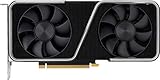
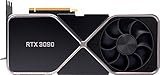


In a hurry? See the top-rated NVIDIA vs AMD GPU deals available right now:
🛒 Check Nvidia Vs Amd Gpu Prices on Amazon →🛒 Best Price Today on Amazon
Prime members get fast, free shipping on everything above, plus member-only deals. New members get a 30-day free trial — cancel anytime.
Start 30-Day Prime Free Trial →See Today’s Amazon DealsPerformance Comparison: Rasterization
In traditional rasterized rendering (how most games render graphics), AMD and NVIDIA trade blows tier-for-tier. AMD’s RX 7900 XTX matches NVIDIA’s RTX 4080 Super in many rasterization benchmarks at lower cost — a genuine competitive edge. At the mid-range ($250–400), AMD’s RX 7700 XT and RX 7800 XT frequently match or beat equivalent-priced NVIDIA options in games without upscaling. In pure rasterization, AMD offers the better value at most price points.
NVIDIA Advantages: DLSS 3 vs FSR 3
NVIDIA’s DLSS (Deep Learning Super Sampling) uses dedicated Tensor Cores for AI-accelerated upscaling — producing sharper, more temporally stable images than AMD’s FSR (FidelityFX Super Resolution) at equivalent upscaling ratios. DLSS 3 Frame Generation (exclusive to RTX 40 series) creates additional frames using AI, effectively multiplying frame rates in 300+ supported games. FSR 3 Frame Generation is available on any GPU (including NVIDIA) but produces slightly lower quality. For DLSS 3 games, NVIDIA’s effective frame rate advantage over AMD can reach 40–60%.
AMD Advantages: Price, VRAM, Open Ecosystem
AMD consistently offers more VRAM per dollar — the RX 7600 XT provides 16GB GDDR6 for less than NVIDIA’s 8GB RTX 4060 Ti. More VRAM future-proofs against increasing game VRAM demands. AMD’s drivers are fully open-source (ROCm for compute, AMDGPU for Linux), enabling superior Linux gaming support and community modifications. AMD FSR works across all GPU brands — FSR-enabled games benefit AMD and NVIDIA cards equally, while DLSS only benefits NVIDIA.
Ray Tracing Comparison
NVIDIA leads significantly in ray tracing performance — RTX 40 series GPUs include third-generation RT Cores that accelerate ray tracing calculations more efficiently than AMD’s equivalent hardware. In ray-tracing-heavy titles (Cyberpunk 2077 full ray tracing, Portal RTX), NVIDIA GPUs at equivalent price deliver 30–50% higher frame rates than AMD alternatives. For players who prioritize ray tracing visual fidelity, NVIDIA is the clear choice.
Driver Quality and Software
NVIDIA GeForce drivers are widely regarded as more stable and game-optimized on release day — Game Ready drivers launch alongside major titles with performance optimizations. AMD Adrenalin software has improved significantly in stability but historically shows more day-one driver issues. NVIDIA’s NVIDIA App (successor to GeForce Experience) provides automatic driver updates, game optimization, and overlay features. AMD’s Adrenalin suite offers Radeon Anti-Lag, frame rate targeting, and enhanced sync features.
Which Should You Choose?
Choose NVIDIA If
Your game library heavily features DLSS-supported titles. You prioritize ray tracing performance. You play on Windows and want maximum driver stability. You want Frame Generation for competitive frame rate targets. You use AI-accelerated creative applications (Stable Diffusion, video upscaling) alongside gaming.
Choose AMD If
You game primarily on Linux or use an AMD CPU (SAM/ResizableBAR provides additional AMD GPU performance). You want maximum VRAM per dollar. You play games without DLSS support where pure rasterization matters. You want the best price-to-performance without upscaling dependency. You support open-source ecosystems.
Frequently Asked Questions
Does AMD work well with Intel CPUs?
Yes — AMD GPUs perform identically with Intel and AMD CPUs in gaming. Smart Access Memory (SAM/Resizable BAR) provides 2–8% performance boost on AMD GPU + AMD CPU combinations — Intel CPUs also support Resizable BAR with compatible motherboards, providing similar benefits. GPU brand and CPU brand are independent decisions.
Which brand has better longevity?
Both brands provide driver support for current-generation GPUs for 5–7 years. AMD’s historical driver support for older GCN architecture GPUs extended longer than NVIDIA’s Kepler-era equivalents. In practice, gaming performance degrades before driver support ends — hardware generational improvements make 5-year-old GPUs obsolete for new titles regardless of driver availability.
Will AMD or NVIDIA win in 2026?
AMD’s RDNA 4 (RX 9000 series) launched in early 2025 with significantly improved ray tracing performance and hardware DLSS-equivalent neural upscaling (AFMF 2, FSR 4). NVIDIA’s RTX 50 series (Blackwell) raises the performance ceiling. Competition benefits consumers — both brands will continue providing compelling options. Buy based on current value and feature alignment with your gaming habits rather than speculative future positioning.
Related Articles
Looking for more on this topic? Browse the hand-picked guides below — each one applies the same scoring rubric used in this review.