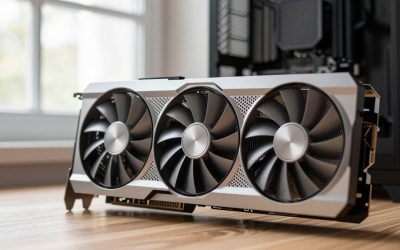
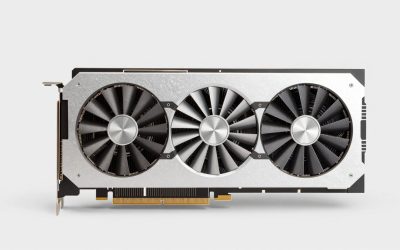
- Top Pick: OKAMUS Pre-Built PC, i5 CPU Up to 3.6GHz, Integrated Graphics Only, 256 GB M.2, 8 GB RAM Cheap Budget Gaming PC, RGB Fans x 3, Win 11 Home,WiFi 6 + BT 5.3, 400W PSU (i5+No GPU+8GB+256GB)
- Best Value: MONTECH AIR 903 MAX High Airflow E-ATX PC Case, 4x140mm PWM Fans, Black
- Premium Choice: MONTECH Sky Two Panoramic ATX Mid-Tower PC Case, 4 ARGB Fans, Black
Affiliate disclosure: As an Amazon Associate we earn from qualifying purchases. This post contains affiliate links — if you buy through them we may earn a small commission at no extra cost to you. This never affects our recommendations.
The $300–$400 GPU range has always been the sweet spot for PC gaming, and 2025 is no exception. This bracket gives you genuine 1440p performance without spending flagship money. Whether you’re targeting 60fps at max settings or chasing 144Hz at medium-high, there’s a card here that fits your build and your budget.
NVIDIA dominates this tier with the RTX 4060 carrying forward-gen features like DLSS 3 and hardware AV1 encoding, while the new RTX 5060 series brings DLSS 4 Multi Frame Generation and improved efficiency. The RTX 3070 remains a compelling option if you can find it at the right price — its 8GB GDDR6 and 256-bit bus still handle 1440p with ease.
We compared and researched each card below for cooling performance, noise levels, power draw, and real-world gaming benchmarks at 1440p. Here’s what we recommend in 2025.
In a hurry? See the top-rated Graphics Cards Under $400 deals available right now:
🛒 Check Graphics Cards Under $400 Prices on Amazon →🛒 Best Price Today on Amazon
Prime members get fast, free shipping on everything above, plus member-only deals. New members get a 30-day free trial — cancel anytime.
Start 30-Day Prime Free Trial →See Today’s Amazon DealsTop Picks at a Glance
| Product | Best For |
|---|---|
| GIGABYTE RTX 4060 WINDFORCE OC | Best overall 1440p value |
| ASUS TUF RTX 3070 OC | Best for high-res texture work |
| ASUS TUF RTX 3060 OC | Best for 1080p/light 1440p |
| GIGABYTE RTX 5060 WINDFORCE OC | Best next-gen features |
| ASUS Dual RTX 5060 OC | Best DLSS 4 + AV1 value |
As an Amazon Associate we earn from qualifying purchases at no extra cost to you.


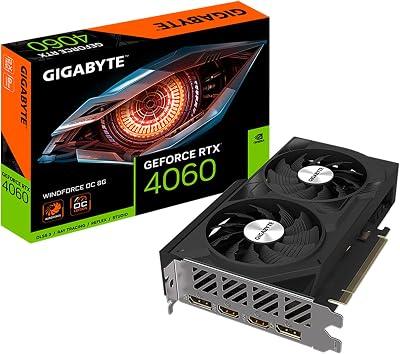
GIGABYTE RTX 4060 WINDFORCE OC — Best Overall Under $400
The GIGABYTE RTX 4060 WINDFORCE OC hits the sweet spot of price and performance at around $320. It delivers smooth 1440p gaming in most titles at high settings, with DLSS 3 Frame Generation pushing frame rates significantly higher in supported games. The WINDFORCE 2X cooling system keeps temperatures in check with two 80mm fans, and the card sips power at just 115W TDP — ideal for systems without a 16-pin connector. A compact dual-slot design fits most mid-tower and ITX cases.
- Pros: Efficient 115W TDP, DLSS 3 support, compact size, quiet cooling
- Cons: 8GB VRAM may limit future titles, narrow 128-bit bus
ASUS TUF RTX 3070 OC — Best Previous-Gen Powerhouse
The ASUS TUF RTX 3070 OC at around $320 remains a strong 1440p card in 2025. Its 8GB GDDR6 on a 256-bit memory bus gives it real bandwidth headroom for high-resolution textures. The TUF triple-fan cooler is exceptionally quiet under load, and build quality is military-grade. While it lacks DLSS 3 and hardware AV1 encoding found in newer Ampere+ cards, raw raster performance at 1440p is still competitive. Great pick for those who prioritize raw GPU horsepower.
- Pros: 256-bit bus, excellent build quality, quiet triple-fan cooler
- Cons: No DLSS 3, higher power draw (~220W), older architecture
ASUS TUF RTX 3060 OC — Best Budget 1440p Entry
At $326, the ASUS TUF RTX 3060 OC is a capable 1440p card for gamers who play less demanding titles or are happy targeting 60fps at high settings. Its 12GB VRAM is a standout — more than most cards in this range — giving it texture longevity that the RTX 3070 and RTX 4060 can’t match. The TUF triple-fan cooler keeps it cool and quiet. Best suited for 1080p esports at ultra-high frame rates or casual 1440p gaming without breaking the bank.
- Pros: 12GB VRAM, excellent cooling, strong 1080p performance
- Cons: Slower than RTX 3070 at 1440p, 192-bit bus limits bandwidth
GIGABYTE RTX 5060 WINDFORCE OC — Best Next-Gen Features
The GIGABYTE RTX 5060 WINDFORCE OC at around $330 brings Blackwell architecture to the sub-$350 market. DLSS 4 Multi Frame Generation is the headline feature — it can multiply frame rates dramatically in supported titles. The card also includes dual NVENC encoders for streaming and hardware AV1 decode. Performance at 1440p medium-high is strong, and the 8GB GDDR7 provides excellent bandwidth despite the 128-bit bus. If you plan to use DLSS 4 heavily, this is the card to get.
- Pros: DLSS 4 MFG, GDDR7 memory, dual NVENC, AV1 encode/decode
- Cons: 8GB VRAM ceiling, 128-bit bus, new architecture with limited reviews
ASUS Dual RTX 5060 OC — Best Blackwell Value Under $360
The ASUS Dual RTX 5060 OC at around $350 pairs the Blackwell GB206 chip with ASUS’s reliable dual-fan cooler and solid factory overclock. It edges out the GIGABYTE RTX 5060 in performance while sharing identical DLSS 4 and encoder features. The Dual cooling solution is quieter than many budget alternatives, and ASUS’s GPU Tweak III software makes overclocking accessible. A strong choice for streamers and content creators who want next-gen features at a mid-range price.
- Pros: DLSS 4 MFG, quality dual-fan cooler, solid OC headroom
- Cons: $35 more than GIGABYTE RTX 5060, still 8GB VRAM
Buying Guide
How Much VRAM Do You Need Under $400?
VRAM is one of the most debated topics in this price range in 2025. At 1440p, most games run fine on 8GB at high settings — but some titles like Alan Wake 2, Hogwarts Legacy, and The Last of Us Part I can exceed 8GB at max settings. If you play VRAM-hungry titles, the RTX 3060’s 12GB is genuinely useful. For DLSS 4-supported games, the RTX 5060 series stretches its 8GB further because upscaling reduces internal render resolution.

DLSS 4 vs. No DLSS — Does It Matter?
DLSS 4 Multi Frame Generation (exclusive to Blackwell / RTX 5000 series) can generate 3 additional frames for every real frame rendered. In practice, this means a card that renders 60fps natively can display 240fps in supported titles. The catch: frame generation adds latency, and game support is still growing. For competitive gaming where latency matters most, native frame rates from the RTX 3070 may feel better. For cinematic single-player games, DLSS 4 on the RTX 5060 is transformative.
Power and Cooling Considerations
Power budgets matter in this tier. The RTX 4060 and RTX 5060 series are remarkably efficient at around 115–150W — you can run them on a 550W PSU with a mid-range CPU without worry. The RTX 3070 draws around 220W and benefits from a quality 650W+ PSU. All cards reviewed here use dual- or triple-fan coolers that keep temps below 80°C under sustained load. Noise levels are generally low across the board, with the ASUS TUF lineup being among the quietest.

1440p vs. 1080p Gaming
Every card in this list can handle 1080p at ultra settings with high frame rates. At 1440p, the RTX 3070 and RTX 5060 series offer the smoothest experience. If you’re gaming on a 1080p 144Hz monitor today but plan to upgrade to 1440p within a year, buying an RTX 4060 or RTX 5060 now is smart — you’ll have headroom for the upgrade. For native 4K, you’ll want to look at the $500+ bracket.
Which Card Should You Buy?
For pure value at 1440p today, the RTX 4060 WINDFORCE OC is the easiest recommendation — proven performance, low power draw, and DLSS 3 support. If you want next-gen technology that will stay relevant longer, the RTX 5060 WINDFORCE OC at just $10 more is the better long-term investment. Streamers and content creators should prioritize the Blackwell cards for dual NVENC and AV1 encoding. Budget buyers who need the most VRAM should consider the RTX 3060’s 12GB.
Frequently Asked Questions
Is 8GB VRAM enough for 1440p gaming in 2026?
For most games at 1440p high settings, yes — 8GB handles the majority of titles well. However, a handful of demanding games like Hogwarts Legacy and Alan Wake 2 can exceed 8GB at max settings. If you regularly play ultra-settings on AAA titles, consider the RTX 3060’s 12GB or look at the $500 bracket for more VRAM headroom.
Is the RTX 3070 still worth buying in 2026?
The RTX 3070 is still a solid 1440p card in 2025, especially if you can find it at or below $330. Its 256-bit memory bus gives it better bandwidth than the RTX 4060 or RTX 5060, which helps at 1440p. However, it lacks DLSS 3/4, has higher power draw, and is on an aging architecture. For new builds, the RTX 5060 series offers better long-term value at similar prices.
Can these GPUs handle competitive esports at 1080p 240Hz?
Yes — every card in this list exceeds 240fps in popular esports titles like Valorant, CS2, and Apex Legends at 1080p low/medium settings. The RTX 4060 and RTX 5060 are particularly efficient here given their low power draw. With DLSS 4 Frame Generation on RTX 5060 cards, competitive frame rates are achievable even in more demanding titles.
What PSU do I need for these GPUs?
The RTX 4060 and RTX 5060 series need just 550W for a typical gaming system. The RTX 3070 draws more power — plan for a 650W PSU minimum, 750W recommended with a high-end CPU. All cards reviewed here use standard 8-pin or 16-pin power connectors. Avoid ultra-cheap PSUs regardless of wattage — a quality unit from Corsair, EVGA, or Seasonic protects your investment.
Verdict
The sub-$400 GPU market in 2025 is surprisingly competitive. The GIGABYTE RTX 4060 WINDFORCE OC remains the safe recommendation for most buyers — proven, efficient, and priced right. For future-proofing with DLSS 4, the RTX 5060 series from GIGABYTE or ASUS offers compelling next-gen features at nearly the same price. The RTX 3070 still holds its own on raw raster performance, while the RTX 3060 wins on VRAM capacity. Any of these cards will serve you well through 2026 and beyond at 1440p.
Related Articles
Looking for more on this topic? Browse the hand-picked guides below — each one applies the same scoring rubric used in this review.
Ready to decide? Our #1 pick for 2026 is the GIGABYTE RTX 4060 WINDFORCE OC.
Live price & availability on Amazon.