Affiliate disclosure: As an Amazon Associate we earn from qualifying purchases. This post contains affiliate links — if you buy through them we may earn a small commission at no extra cost to you. This never affects our recommendations.
Minecraft is deceptively demanding. Vanilla gameplay runs on nearly any modern GPU, but add shaders to Java Edition or enable full RTX ray tracing in Bedrock Edition and the requirements scale dramatically. The good news is that Minecraft’s art style means even mid-range cards deliver stunning results — you don’t need an RTX 4090 to get beautiful ray-traced Minecraft.
In 2025, Minecraft remains one of the most-played games on PC, and GPU recommendations span from $68 GT 730s for elderly machines to RTX 3060s for full RTX Bedrock Edition at high frame rates. Whether you’re building a budget PC for a child’s first gaming system or upgrading for the full ray-traced experience, there’s a card in this list for you.
We cover five GPUs across the price spectrum — from the around $100 ASUS GT 730 for basic Minecraft to the $326 ASUS TUF RTX 3060 OC for maxed-out ray tracing. Here’s what each delivers in Minecraft in 2025.
In a hurry? See the top-rated Graphics Cards for Minecraft deals available right now:
🛒 Check Graphics Cards For Minecraft Prices on Amazon →🛒 Best Price Today on Amazon
Prime members get fast, free shipping on everything above, plus member-only deals. New members get a 30-day free trial — cancel anytime.
Start 30-Day Prime Free Trial →See Today’s Amazon DealsTop Picks at a Glance
| Product | Best For |
|---|---|
| ASUS GT 730 2GB GDDR5 LP | Budget PCs, vanilla Minecraft |
| ASUS GT 1030 2GB GDDR5 | Better budget, light shaders |
| maxsun RX 580 8GB | Best budget for shaders |
| MSI RTX 3050 Ventus 2X 6G OC | Best mid-range + RTX Bedrock |
| ASUS TUF RTX 3060 OC | Best for max RTX ray tracing |
As an Amazon Associate we earn from qualifying purchases at no extra cost to you.

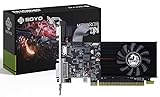


ASUS GT 730 2GB GDDR5 LP — Best for Basic Minecraft on Budget PCs
The ASUS GT 730 2GB GDDR5 Low Profile at around $100 is for PCs that have no dedicated GPU — office machines, older laptops docked to desktops, or entry-level family computers. It runs vanilla Minecraft Java and Bedrock at 60fps+ on standard render distances with no problem. Shaders are not practical on this card. The low-profile form factor fits slim desktops. Perfect for a child’s first Minecraft PC where you just need the game to run smoothly.
- Pros: Low profile, silent operation, dramatically better than integrated graphics
- Cons: No shader support, no ray tracing, entry-level only
ASUS GT 1030 2GB GDDR5 — Better Budget with Light Shader Support
The ASUS GT 1030 at around $130 is a meaningful step up from the GT 730 for Minecraft players who want modest shader support. Vanilla Minecraft runs at 200fps+ and BSL Shaders on Low settings run at 60fps at 1080p. It won’t handle heavy shader packs, but light-to-medium shaders like Complementary Reimagined on low settings work acceptably. No RTX ray tracing — that requires GeForce RTX 2060 or newer. Best for players who want more than vanilla Minecraft but have a tight budget.
- Pros: Better shader performance than GT 730, affordable, quiet
- Cons: No RTX, heavy shaders require lowering render distance significantly
maxsun RX 580 8GB — Best Budget Card for Heavy Shaders
The maxsun RX 580 8GB at around $140 is the best budget pick for shader-heavy Minecraft Java Edition. Its 8GB VRAM comfortably loads demanding shader packs like BSL, Complementary, and Sildur’s Vibrant at medium settings at 1080p. Expect 60–90fps with popular mid-tier shaders. The RX 580 is an RDNA predecessor (Polaris architecture), so no FSR or ray tracing — but for pure shader performance per dollar, it’s exceptional. Great pick for players upgrading from integrated graphics who want the full shaded Minecraft experience.

- Pros: 8GB VRAM, excellent shader performance for the price, handles all popular shader packs
- Cons: No RTX ray tracing, no FSR, older architecture with higher power draw
MSI RTX 3050 Ventus 2X 6G OC — Best Mid-Range Minecraft Card
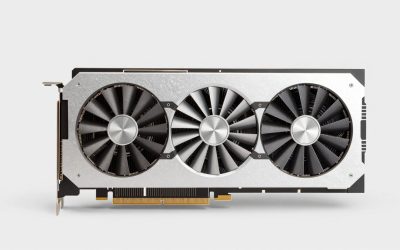
The MSI RTX 3050 Ventus 2X 6G OC at around $280 is the sweet spot for Minecraft in 2025. It runs Java Edition with demanding shaders (Complementary, BSL) at 100fps+ at 1080p and handles RTX ray tracing in Bedrock Edition at 1080p medium settings with playable frame rates. The dual Ventus fans keep it cool and quiet, and the compact design fits any case. For players who want both Java shaders AND Bedrock RTX ray tracing without spending $300+, this is the card.
- Pros: RTX ray tracing support, excellent Java shader performance, quiet cooling
- Cons: 6GB VRAM limits shader packs at 1440p, Bedrock RTX requires medium settings for 60fps
ASUS TUF RTX 3060 OC — Best for Maximum RTX Ray Tracing
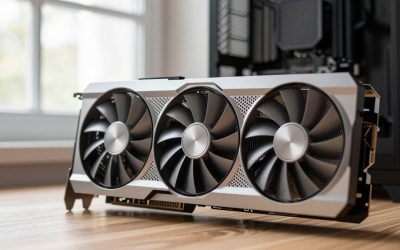
The ASUS TUF RTX 3060 OC at $326 is the top Minecraft GPU in this guide. Its 12GB VRAM and RT cores enable full RTX ray tracing in Minecraft Bedrock Edition at 1080p 60fps+ even with demanding RTX resource packs like Kelly’s RTX or Kellog’s Classic. Java Edition with Continuum RT shaders runs beautifully. The TUF triple-fan cooler runs whisper-quiet. For the ultimate Minecraft visual experience — whether ray tracing in Bedrock or photorealistic Java shaders — the RTX 3060 OC is the go-to card in 2025.
- Pros: 12GB VRAM, best RTX Bedrock performance, handles all Java shader packs, quiet TUF cooling
- Cons: Significant price jump over RTX 3050, overkill for vanilla Minecraft
Buying Guide
Java Edition vs. Bedrock Edition — Different GPU Requirements
Minecraft Java Edition and Bedrock Edition have different GPU demands. Java Edition’s rendering pipeline is heavily CPU-dependent but becomes GPU-limited when shader packs are added. OptiFine and Iris Shaders can transform Java Edition visually — and a mid-range GPU like the RX 580 handles most shader packs well. Bedrock Edition’s RTX path tracing (exclusive to Windows 10/11 with GeForce RTX) is GPU-intensive and requires at minimum an RTX 2060. The RTX 3060 with 12GB VRAM is the recommended minimum for a smooth Bedrock RTX experience at 1080p.

How Much VRAM Do Shaders Need?
Shader packs load large texture maps and lighting data into VRAM. Light shaders (Sildur’s Enhanced Default) use 2–3GB. Medium shaders (BSL, Complementary) use 3–5GB. Heavy shaders (Continuum RT, Seus PTGI) can use 6–8GB at 1080p. Minecraft Bedrock RTX at 1080p high settings uses 4–6GB. The RX 580’s 8GB handles most shader scenarios. The RTX 3060’s 12GB is future-proof for any current or upcoming shader pack.
Frame Rate Targets for Minecraft
Vanilla Minecraft runs at 200–500fps on any modern GPU — frame rate limiter (in Minecraft settings) or VSync is recommended. With shaders, targets shift dramatically. Budget GPUs (GT 1030, RX 580) target 60fps at 1080p with medium shaders. Mid-range (RTX 3050) targets 100fps at 1080p high shaders. High-end (RTX 3060) targets 60fps with RTX ray tracing or 144fps with quality shaders at 1080p. For 1440p shader gaming, the RTX 3060 is the minimum recommendation.

Does Minecraft Benefit from DLSS or FSR?
Yes — Minecraft Bedrock Edition supports DLSS and FSR, which are particularly effective when ray tracing is enabled. DLSS Quality mode on an RTX 3060 can boost Bedrock RTX frame rates from 45fps native to 85fps, making the ray-traced experience much smoother. Java Edition with Iris Shaders supports FSR through mods. These upscaling options are a key reason to choose RTX 3050/3060 over older NVIDIA or AMD cards for the best Minecraft visual experience.
Budget Recommendations by Play Style
Here’s a quick breakdown: Vanilla Minecraft players — the GT 1030 is plenty. Shader enthusiasts on Java — the RX 580 8GB is the best dollar-for-dollar value. Players who want both shaders and occasional Bedrock RTX — the RTX 3050 covers both. Players who want the absolute best Minecraft visuals (full RTX Bedrock, Continuum RT Java shaders, 1440p) — the RTX 3060 12GB is the only recommendation. Don’t overbuy if you only play vanilla — any GPU in this list handles it.
Frequently Asked Questions
Can integrated graphics run Minecraft in 2026?
Intel integrated graphics (12th gen and newer) and AMD Radeon integrated graphics can run vanilla Minecraft Java or Bedrock at 1080p 60fps. However, shaders are barely playable on low settings, and Bedrock RTX ray tracing is not available on integrated graphics. For any shader use, a dedicated GPU starting with the GT 1030 or RX 580 is strongly recommended. Modern Intel Arc integrated (in 13th/14th gen processors) can handle light shaders surprisingly well.
Is the RTX 3060 overkill for Minecraft?
For vanilla Minecraft, yes — it’s significant overkill. For heavily shaded Java Edition at 1440p or Bedrock RTX ray tracing at 1080p 60fps, the RTX 3060 is exactly right. The 12GB VRAM provides headroom for resource packs and shaders that other cards choke on. If you also play other games beyond Minecraft, the RTX 3060 serves as a capable 1080p/1440p GPU for those titles too, making it a smart all-around buy even if Minecraft is your primary game.
What shader packs work best with these GPUs?
For the GT 730/GT 1030, stick to vanilla or use Sildur’s Enhanced Default (minimal performance impact). For the RX 580, BSL Shaders on medium and Complementary Reimagined on medium settings run well. For the RTX 3050, BSL on high and Complementary on high are smooth at 1080p. For the RTX 3060, Seus PTGI, Continuum RT, and Complementary Unbound at high settings are the best-looking options. All NVIDIA RTX cards also support Bedrock RTX with official NVIDIA RTX resource packs.
Does Minecraft use the GPU much?
Vanilla Minecraft is more CPU-bound than GPU-bound — world generation, chunk loading, and entity processing all stress the CPU. However, at high render distances with shaders enabled, the GPU becomes the bottleneck. Bedrock Edition with RTX ray tracing is heavily GPU-bound. The good news is that Minecraft’s relatively simple geometry means GPUs spend less time on polygon rendering — most shader overhead comes from lighting, shadow, and reflection calculations rather than model complexity.
Verdict
Minecraft GPU needs vary dramatically by play style. For vanilla play, a $130 GT 1030 or even integrated graphics handles it fine. For shader-heavy Java Edition, the around $140 maxsun RX 580 8GB is the best budget pick. For the full Minecraft RTX Bedrock experience with smooth frame rates, the MSI RTX 3050 at around $280 is the sweet spot. For maximum visual fidelity — full RTX Bedrock at 1080p 60fps+ and any shader pack on Java — the ASUS TUF RTX 3060 OC at $326 is the definitive choice in 2025.
Related Articles
Looking for more on this topic? Browse the hand-picked guides below — each one applies the same scoring rubric used in this review.
Ready to decide? Our #1 pick for 2026 is the ASUS GT 730 2GB GDDR5 LP.
Live price & availability on Amazon.