- Top Pick: ASUS Prime GeForce RTX 5070 12GB GDDR7 OC Edition Gaming Graphics Card find alternatives
- Best Value: ASUS SFF-Ready Prime NVIDIA GeForce RTX 5070 Graphics Card (PCIe 5.0, 12GB GDDR7, HDMI/DP 2.1, 2.5-Slot, Axial-tech Fans, Dual BIOS), 3 Year Warranty find alternatives
- Premium Choice: ASUS TUF Gaming GeForce RTX 5070 12GB GDDR7 OC EditionGaming Graphics Card
Affiliate disclosure: As an Amazon Associate we earn from qualifying purchases. This post contains affiliate links — if you buy through them we may earn a small commission at no extra cost to you. This never affects our recommendations.
NVIDIA’s RTX 5070 represents the mainstream tier of the Blackwell architecture, and it’s a significant leap over the RTX 4070 it replaces. GDDR7 memory delivers dramatically higher bandwidth than the GDDR6X of last generation, while DLSS 4 Multi-Frame Generation allows the card to multiply frame output in supported titles. For 1440p gaming — and increasingly 4K with DLSS assistance — the RTX 5070 is the card to own in 2025’s mid-to-high-end segment.
What makes this GPU category interesting is the variety among AIB partners. GIGABYTE, PNY, ASUS, and MSI have each taken distinct approaches to cooling, power delivery, and form factor with their RTX 5070 designs. Some prioritize compact builds, others maximize overclocking potential, and the premium tier reaches toward RTX 5070 Ti performance through aggressive factory overclocks. We’ve analyzed every major variant to find the best RTX 5070 graphics cards for different use cases and budgets in 2025.
In a hurry? See the top-rated RTX 5070 Graphics Cards deals available right now:
🛒 Check Rtx 5070 Graphics Cards Prices on Amazon →🛒 Best Price Today on Amazon
Prime members get fast, free shipping on everything above, plus member-only deals. New members get a 30-day free trial — cancel anytime.
Start 30-Day Prime Free Trial →See Today’s Amazon DealsTop Picks at a Glance
| GPU | Clock Boost | Best For |
|---|---|---|
| GIGABYTE RTX 5070 WINDFORCE OC SFF | 2565 MHz | Compact Builds / Best Value |
| PNY RTX 5070 Epic-X ARGB OC | 2610 MHz | RGB Enthusiasts |
| ASUS TUF RTX 5070 OC | 2625 MHz | Best Cooling / Overclocking |
| GIGABYTE RTX 5070 AERO OC | 2590 MHz | Quiet Operation |
| GIGABYTE RTX 5070 Ti Gaming OC | 2812 MHz | Near-5070 Ti Performance |
As an Amazon Associate we earn from qualifying purchases at no extra cost to you. Product prices and availability are accurate as of the date shown and are subject to change.


GIGABYTE RTX 5070 WINDFORCE OC SFF — Best Value RTX 5070
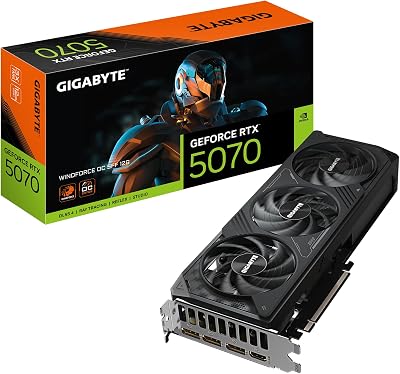
GIGABYTE’s WINDFORCE OC SFF variant is a standout in the RTX 5070 lineup for one key reason: it brings full RTX 5070 performance to a compact, short form-factor design without thermal compromise. Priced at $635.99 — the lowest in this roundup — it uses GIGABYTE’s dual-fan WINDFORCE 2X cooler in an abbreviated PCB that fits mATX and compact ATX cases where longer cards won’t. Boost clock of 2565 MHz is respectable, and real-world 1440p gaming performance is excellent across all Blackwell-optimized titles.
- Pros: Compact SFF design; lowest price in segment; solid factory OC; great for small builds
- Cons: Dual-fan runs warmer than triple-fan alternatives under sustained load
PNY RTX 5070 Epic-X ARGB OC — Best for RGB Builders
The PNY RTX 5070 Epic-X ARGB OC at $639.62 is essentially tied with the GIGABYTE SFF on price while offering a full triple-fan configuration and extensive ARGB lighting. PNY’s Epic-X cooler uses three 90mm fans and a large vapor chamber for excellent thermal headroom, keeping GPU temps in the low 60s Celsius under load. The ARGB implementation is genuinely impressive — addressable across the fan shroud and backplate with full sync support for major motherboard RGB ecosystems. A strong choice for windowed builds.
- Pros: Excellent ARGB implementation; triple-fan cooling; near-identical price to GIGABYTE SFF
- Cons: Longer card length; PNY software ecosystem less refined than ASUS/GIGABYTE
ASUS TUF RTX 5070 OC — Best Cooling and Overclocking
The ASUS TUF RTX 5070 OC at $754.99 commands a premium, and it earns it. TUF Gaming’s triple-fan Axial-tech cooler and military-grade capacitors deliver the most thermally stable RTX 5070 experience available. Boost clock reaches 2625 MHz out of the box, and there’s meaningful headroom beyond that for manual tuning. The card runs whisper-quiet under normal gaming loads thanks to a zero-RPM fan mode that activates below 50°C. Build quality is exceptional, with a robust metal backplate and reinforced PCIe connector.
- Pros: Best cooler in category; highest OC headroom; zero-RPM fan mode; premium build quality
- Cons: $115 premium over base RTX 5070 cards; larger triple-slot footprint
GIGABYTE RTX 5070 AERO OC — Best for Quiet Operation
GIGABYTE’s AERO OC at $689.99 targets users who prioritize silence over maximum performance. The AERO cooling system uses an open-air design optimized for airflow efficiency rather than raw cooling capacity, resulting in notably lower noise levels than competing triple-fan cards. Visual design is clean and professional — white and silver aesthetic suits premium builds. Performance is within 2-3% of the TUF at normal power limits, making it the right call for living-room builds or workstation-adjacent setups where acoustics matter.
- Pros: Quietest RTX 5070 in this roundup; clean aesthetic; solid performance-per-watt
- Cons: Slightly higher temps than TUF; premium over base-tier cards without raw performance gains
GIGABYTE RTX 5070 Ti Gaming OC — Best Near-Ti Performance
At $1099.99, the GIGABYTE RTX 5070 Ti Gaming OC crosses into RTX 5070 Ti territory on price — because it is one. This card features the full RTX 5070 Ti die with GIGABYTE’s Gaming OC treatment: a 2812 MHz boost clock, triple-fan Gaming cooler, and an RGB-accented design. At this price it competes directly with reference RTX 5070 Ti cards, often undercutting ASUS and MSI Ti variants while matching their performance. Buyers choosing between a premium RTX 5070 and this card should simply buy this card.
- Pros: RTX 5070 Ti silicon at near-MSRP pricing; excellent Gaming OC cooler; strong 4K credentials
- Cons: Expensive; effectively a different product tier; some may prefer AIB Ti-branded alternatives
Buying Guide
Why Choose an RTX 5070 in 2026?
The RTX 5070 slots into NVIDIA’s 2025 lineup as the high-performance mainstream card — powerful enough for maxed-out 1440p and capable 4K gaming with DLSS 4 assistance, but priced below the enthusiast RTX 5080 and RTX 5090 tier. GDDR7 memory provides 896 GB/s of bandwidth, a generational jump that benefits shader-heavy workloads and texture streaming. DLSS 4 Multi-Frame Generation can triple effective frame rates in supported titles, which fundamentally changes what “playable” means at 4K.

GDDR7 vs GDDR6X — What Changes?
The move from GDDR6X (RTX 4070) to GDDR7 (RTX 5070) delivers roughly 40% more memory bandwidth at similar capacity. In practice, this eliminates memory bottlenecks in texture-heavy 4K scenes, improves ray tracing performance where bandwidth was the limiter, and enables more aggressive DLSS quality modes. The RTX 5070’s 12GB of GDDR7 outperforms the RTX 4070’s 12GB of GDDR6X in nearly every real-world scenario.
DLSS 4 Multi-Frame Generation Explained
DLSS 4 introduces Multi-Frame Generation, which generates up to three AI-synthesized frames for every natively rendered frame. Combined with DLSS Super Resolution, a game running at 60fps natively can appear to run at 240fps with full DLSS 4 enabled. This is transformative for 4K gaming on the RTX 5070, making titles that previously required RTX 5080+ hardware feel fluid and responsive. The caveat: input latency increases with frame generation, partially offset by NVIDIA Reflex integration in supported titles.
SFF vs Full-Size Variants
RTX 5070 AIB cards come in dramatically different sizes. The GIGABYTE WINDFORCE OC SFF measures roughly 200mm — fitting in virtually any case. Standard triple-fan cards run 300-340mm, fitting most mid-tower cases but requiring measurement for compact ATX builds. Check your case’s GPU clearance spec before purchasing. SFF cards sacrifice some thermal headroom but perform identically at normal power limits in well-ventilated cases.
Power Requirements
The RTX 5070 carries a 250W TDP. NVIDIA recommends a 650W PSU minimum; we suggest 750W for comfortable headroom. All RTX 5070 cards use a 16-pin (12V-2×6) power connector — ensure your PSU includes this cable or purchase a quality adapter. Avoid cheap adapters, which have caused cable melt issues with high-wattage RTX cards.
AIB Partner Differences
All RTX 5070 AIB cards use identical NVIDIA silicon — the differences are cooling, clock speeds, and build quality. ASUS TUF commands a premium for justified reasons: better thermals, more overclocking headroom, and exceptional build quality. GIGABYTE’s variants offer strong value. PNY targets the RGB-focused market. MSI Ventus cards (not covered here) are typically the budget-friendly AIB option. For most buyers, any reputable AIB partner card performs within 3-5% of the best option.
Frequently Asked Questions
Is the RTX 5070 worth buying over the RTX 4070 Super in 2026?
Yes — the RTX 5070 is worth the upgrade over the RTX 4070 Super in 2025. GDDR7 bandwidth, DLSS 4 Multi-Frame Generation, and improved ray tracing performance represent genuine generational gains. The RTX 4070 Super remains a capable card, but as more titles optimize for Blackwell features, the performance gap will widen. If you’re buying new, the RTX 5070 is the right choice.
Can the RTX 5070 handle 4K gaming?
The RTX 5070 handles 4K gaming very well with DLSS 4 Quality mode enabled. Native 4K in demanding titles may hover around 60fps, but DLSS 4 Super Resolution paired with Multi-Frame Generation delivers 4K visuals at 120fps+ in supported games. For competitive titles and less demanding games, native 4K at high frame rates is entirely achievable without upscaling.
What’s the difference between RTX 5070 and RTX 5070 Ti?
The RTX 5070 Ti uses a larger GPU die with more CUDA cores, higher VRAM (16GB vs 12GB), and significantly more memory bandwidth. The performance gap is roughly 25-30% in favor of the Ti. The RTX 5070 Ti also carries a notably higher price — typically $300-400 more. For 1440p gaming, the RTX 5070 is sufficient. For maxed-out 4K or content creation, the Ti justifies its premium.
Which RTX 5070 AIB partner card should I buy?
For most buyers, the GIGABYTE RTX 5070 WINDFORCE OC SFF at $635.99 offers the best value. If you want maximum cooling and overclocking potential, the ASUS TUF RTX 5070 OC at $754.99 is worth the premium. RGB-focused builders should consider the PNY Epic-X ARGB OC. Quiet-build enthusiasts will appreciate the GIGABYTE AERO OC. All perform similarly — choose based on your case size, budget, and aesthetic priorities.
Verdict
The RTX 5070 generation delivers on NVIDIA’s promise of mainstream Blackwell performance. For most buyers, the GIGABYTE RTX 5070 WINDFORCE OC SFF at $635.99 delivers everything the GPU has to offer at the lowest price in the segment — an easy recommendation. Enthusiasts who want the absolute best RTX 5070 experience should invest in the ASUS TUF OC at $754.99. DLSS 4 and GDDR7 make the RTX 5070 the most future-proof mid-to-high-end GPU purchase of 2025.
Related Articles
Looking for more on this topic? Browse the hand-picked guides below — each one applies the same scoring rubric used in this review.
Ready to decide? Our #1 pick for 2026 is the GIGABYTE RTX 5070 WINDFORCE OC SFF.
Live price & availability on Amazon.