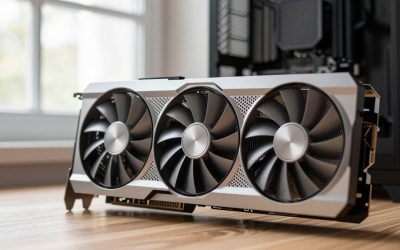
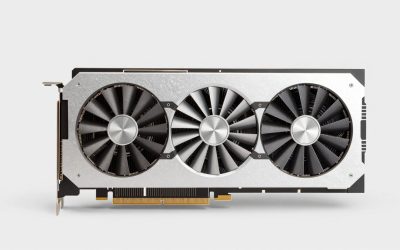
- Top Pick: GIGABYTE Radeon RX 9070 XT Gaming OC 16G Graphics Card, PCIe 5.0, 16GB GDDR6, GV-R9070XTGAMING OC-16GD Video Card
- Best Value: ASUS Prime Radeon RX 9070 XT 16GB GDDR6 OC Edition Gaming Graphics Card
- Premium Choice: Sapphire 11348-03-20G Pulse AMD Radeon™ RX 9070 XT Gaming Graphics Card with 16GB GDDR6, AMD RDNA 4
Affiliate disclosure: As an Amazon Associate we earn from qualifying purchases. This post contains affiliate links — if you buy through them we may earn a small commission at no extra cost to you. This never affects our recommendations.
AMD’s RX 9070 XT is the flagship of the RDNA 4 generation, and it arrives as a genuine competitor to NVIDIA’s best mid-to-high-end offerings. Built on a refined 4nm process node, RDNA 4 brings significant improvements in ray tracing performance — a long-standing AMD weakness — alongside FSR 4’s machine learning upscaling and a generous 16GB GDDR6 buffer across every RX 9070 XT variant. That last point is notable: every card in this category ships with 16GB standard.
What makes the RX 9070 XT especially compelling in 2025 is value. AMD has priced aggressively against NVIDIA’s RTX 5070 while offering competitive 4K performance and the highest VRAM in the segment. AIB partners including Sapphire, ASRock, and GIGABYTE have each brought their strongest cooling solutions to the RDNA 4 launch. Here are the best RX 9070 XT graphics cards available today.
In a hurry? See the top-rated RX 9070 XT Graphics Cards deals available right now:
🛒 Check Rx 9070 Xt Graphics Cards Prices on Amazon →🛒 Best Price Today on Amazon
Prime members get fast, free shipping on everything above, plus member-only deals. New members get a 30-day free trial — cancel anytime.
Start 30-Day Prime Free Trial →See Today’s Amazon DealsTop Picks at a Glance
| GPU | VRAM | Best For |
|---|---|---|
| Sapphire Pulse RX 9070 XT 16GB | 16GB GDDR6 | Best Overall / Premium Pick |
| ASRock RX 9070 XT Challenger 16GB OC | 16GB GDDR6 | Best Value |
| ASRock RX 9070 XT Steel Legend 16GB | 16GB GDDR6 | Best Mid-Range Pick |
| ASRock RX 9070 XT Taichi OC | 16GB GDDR6 | Best Overclocking |
| GIGABYTE RX 9070 XT Gaming OC 16G | 16GB GDDR6 | Best GIGABYTE Option |
As an Amazon Associate we earn from qualifying purchases at no extra cost to you.


Sapphire Pulse RX 9070 XT 16GB — Best Overall
Sapphire has been AMD’s most trusted AIB partner for years, and the Pulse RX 9070 XT 16GB at around $770 exemplifies why. The Pulse cooling system features a dual-fan design with a large heatsink that handles the card’s power requirements with headroom to spare, maintaining quiet operation even during extended 4K gaming sessions. Sapphire’s software — TriXX Boost and TriXX Fusion — is the most polished in the AMD ecosystem. Build quality is excellent throughout, with a sturdy backplate and premium fan bearings rated for long service life.
- Pros: Best-in-class Sapphire software ecosystem; excellent build quality; quiet operation; strong AMD driver support
- Cons: Dual-fan runs slightly warmer than triple-fan alternatives at sustained load; premium pricing
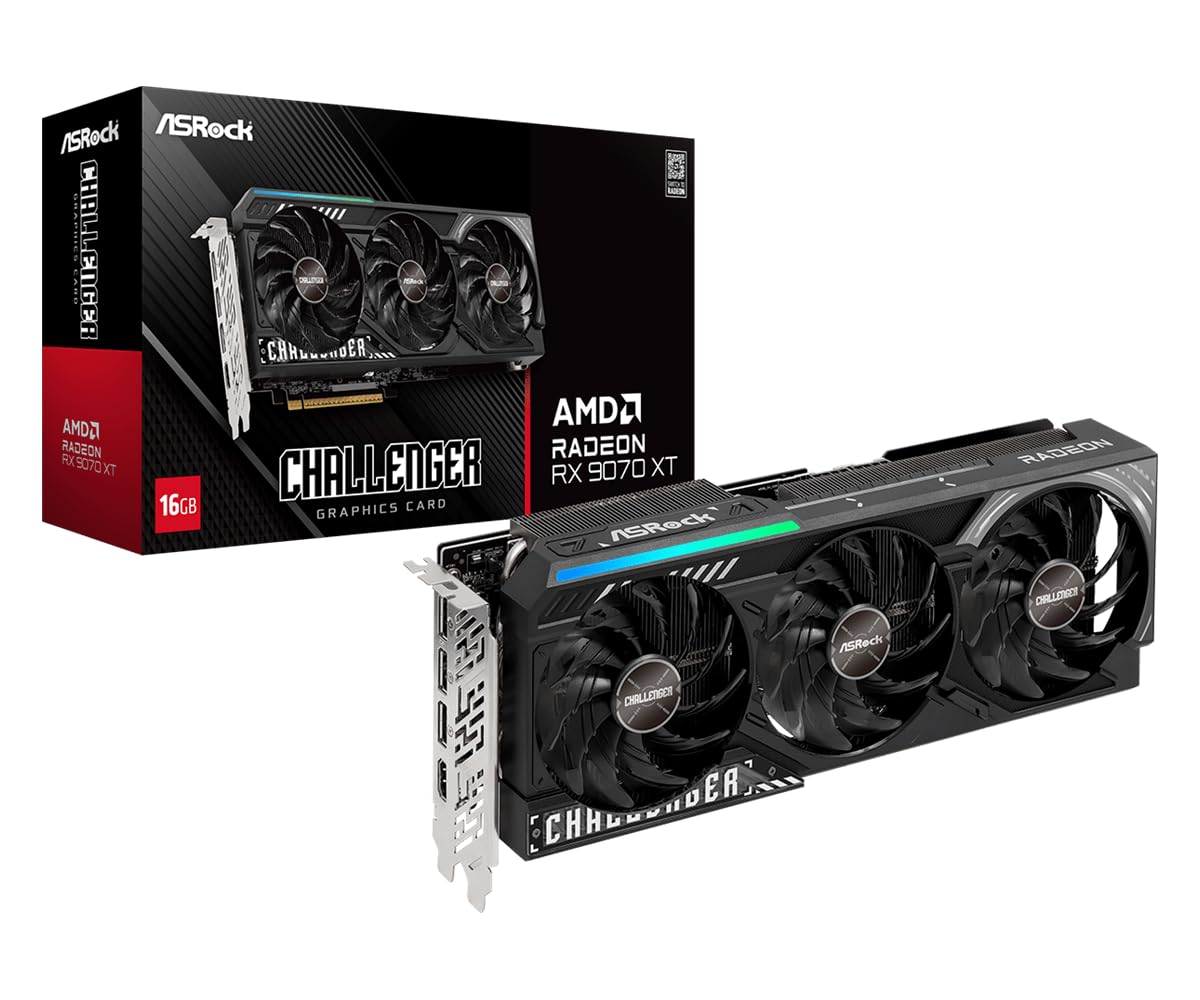
ASRock RX 9070 XT Challenger 16GB OC — Best Value
The ASRock Challenger OC at around $710 is the lowest-priced RX 9070 XT in this roundup and delivers full RDNA 4 performance without meaningful compromise. The triple-fan Challenger cooler is more capable than its budget billing suggests, keeping GPU temps comfortably below 80°C during 4K gaming. Factory OC is modest but stable. For buyers who want RX 9070 XT performance at the minimum possible spend, the Challenger OC is the clear recommendation — no other card in this tier offers equivalent value.
- Pros: Lowest price; triple-fan cooling; solid factory OC; full 16GB GDDR6
- Cons: ASRock software less refined than Sapphire; fan noise higher under maximum load
ASRock RX 9070 XT Steel Legend 16GB — Best Mid-Range Pick
At around $750, the ASRock Steel Legend sits between the Challenger and Taichi, offering a compelling aesthetic upgrade alongside better thermal performance. The Steel Legend’s armor design with white and silver accents is one of the most visually distinctive RX 9070 XT variants, and its triple-fan cooler runs cooler and quieter than the Challenger. ARGB lighting is subtle but effective. For windowed builds where aesthetics matter alongside performance, the Steel Legend is the RX 9070 XT to buy.

- Pros: Distinctive Steel Legend aesthetic; better thermals than Challenger; ARGB lighting; 16GB GDDR6
- Cons: $40 premium over Challenger for primarily cosmetic improvements; ASRock software limitations apply
ASRock RX 9070 XT Taichi OC — Best for Overclocking
The ASRock Taichi OC at around $790 is ASRock’s flagship RX 9070 XT, featuring their premium Taichi cooler — a triple-fan design with a large vapor chamber and thick heatsink stack. It’s the thermal headroom champion of this roundup, keeping temps lower than any other variant under sustained OC workloads. The premium power delivery board supports aggressive manual overclocking. Taichi’s industrial aesthetic with gear-motif accents is polarizing but well-executed. If pushing the RX 9070 XT to its limits matters, the Taichi OC is the card to choose.
- Pros: Best thermal performance; maximum OC headroom; premium power delivery; standout design
- Cons: Most expensive non-Sapphire option; larger footprint; Taichi aesthetic not for everyone
GIGABYTE RX 9070 XT Gaming OC 16G — Best GIGABYTE Option
GIGABYTE’s RX 9070 XT Gaming OC 16G at around $740 brings GIGABYTE’s proven WINDFORCE triple-fan cooler to RDNA 4. Performance is closely matched to the ASRock Challenger OC at a slightly higher price, but GIGABYTE’s AORUS Engine software and reputation for consistent build quality tip the balance for buyers loyal to the GIGABYTE ecosystem. The Gaming OC design features RGB accents on the fan shroud and backplate, fitting neatly into gaming-themed builds. A reliable, well-rounded option from one of the market’s most established AIB partners.
- Pros: GIGABYTE WINDFORCE cooling; AORUS Engine software; RGB accents; reliable build quality
- Cons: Slightly more expensive than ASRock Challenger for similar performance; no standout differentiator
Buying Guide
Why Choose the RX 9070 XT in 2026?
The RX 9070 XT’s most compelling argument is value. Every variant ships with 16GB GDDR6 — double what NVIDIA’s RTX 5070 offers at a similar price point. For workloads that benefit from VRAM capacity, including high-resolution texture packs, AI-assisted upscaling, and content creation alongside gaming, this is a meaningful advantage. RDNA 4’s ray tracing performance has also closed the gap with NVIDIA substantially, addressing AMD’s most persistent weakness.
FSR 4 — AMD’s Answer to DLSS 4
FSR 4 (FidelityFX Super Resolution 4) uses machine learning upscaling that rivals DLSS 3 quality on supported hardware. Unlike previous FSR versions that ran on any GPU, FSR 4 is optimized for RDNA 4 architecture and delivers meaningfully better image quality than FSR 3.1. In supported titles, FSR 4 Quality mode is difficult to distinguish from native resolution at typical viewing distances, making 4K gaming on the RX 9070 XT highly practical even at native 1440p rendering.
16GB VRAM — Who Benefits?
16GB GDDR6 benefits several categories of user beyond traditional gaming. 4K gaming with maxed texture settings can push 10-12GB in demanding open-world titles, where the extra buffer prevents hitching. AI-assisted features in creative applications use VRAM heavily. If you use your GPU for video editing, 3D rendering, or stable diffusion image generation alongside gaming, 16GB eliminates the memory constraints that frustrate 8GB and 12GB card owners.

Comparing RX 9070 XT to RTX 5070
The RX 9070 XT and RTX 5070 trade blows in benchmarks. The RTX 5070 leads in titles with heavy DLSS 4 implementation and ray tracing workloads. The RX 9070 XT leads or matches in rasterization, offers double the VRAM at competitive pricing, and delivers strong FSR 4 performance. Platform preference — AMD vs NVIDIA features, software ecosystem, freesync vs G-Sync display compatibility — should inform your choice as much as raw benchmark comparisons.
Display Compatibility
The RX 9070 XT supports DisplayPort 2.1 UHBR13.5 on most AIB variants, enabling native 4K 240Hz output without compression — a spec the RTX 5070 doesn’t universally match. If you’re planning a high-refresh 4K display upgrade alongside your GPU purchase, verify your target monitor’s input specifications and note the RX 9070 XT’s display output advantage. AMD FreeSync Premium Pro is natively supported on all variants.
Frequently Asked Questions
Is the RX 9070 XT better than the RTX 5070?
Neither card is definitively better — they excel in different scenarios. The RX 9070 XT offers more VRAM (16GB vs 12GB), competitive rasterization performance, and often lower pricing. The RTX 5070 leads in ray tracing and DLSS 4 Multi-Frame Generation performance. Choose RX 9070 XT for VRAM-heavy workloads and AMD ecosystem users; choose RTX 5070 for DLSS 4 benefits and NVIDIA-optimized titles.
Does the RX 9070 XT support ray tracing?
Yes — RDNA 4 brings significant ray tracing improvements over RDNA 3. The RX 9070 XT’s ray tracing performance is now competitive with NVIDIA’s RTX 4080 in many titles, a substantial improvement from previous AMD generations. While the RTX 5070 still leads in the most demanding path-traced scenarios, the gap has narrowed to where ray tracing is no longer a reason to automatically choose NVIDIA.
Which RX 9070 XT AIB partner is best?
Sapphire is generally considered the best AIB partner for AMD GPUs, and the Pulse RX 9070 XT justifies that reputation with excellent build quality and software. For value, ASRock Challenger OC is the pick. For overclocking, ASRock Taichi OC. For GIGABYTE ecosystem users, the Gaming OC is solid. All cards use identical AMD silicon — differences are thermal, aesthetic, and software-related.
What PSU do I need for the RX 9070 XT?
AMD recommends a 700W PSU for the RX 9070 XT. We suggest 750W minimum for comfortable headroom, and 850W if you’re pairing with a high-end CPU or plan to overclock. The card uses a standard 8-pin or 16-pin connector depending on the AIB variant — verify your PSU connector compatibility before purchasing.
Verdict
The RX 9070 XT is AMD’s strongest GPU launch in years, and every variant in this roundup delivers excellent performance. For most buyers, the ASRock Challenger OC at around $710 is the value champion — full RDNA 4 performance at the lowest price. Buyers who want the most refined experience should invest in the Sapphire Pulse at around $770. The 16GB GDDR6 standard across all variants makes the RX 9070 XT the most future-proof mid-to-high-end GPU of 2025 from a VRAM perspective.
Related Articles
Looking for more on this topic? Browse the hand-picked guides below — each one applies the same scoring rubric used in this review.
Ready to decide? Our #1 pick for 2026 is the Sapphire Pulse RX 9070 XT 16GB.
Live price & availability on Amazon.