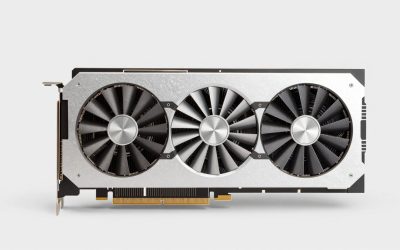
- Top Pick: GIGABYTE Radeon RX 9070 XT Gaming OC 16G Graphics Card, PCIe 5.0, 16GB GDDR6, GV-R9070XTGAMING OC-16GD Video Card
- Best Value: ASRock Radeon RX 7700 XT Challenger 12GB OC Graphics Card, AMD RDNA 3 Architecture, 12GB GDDR6, 2584 MHz Boost Clock, 3X DisplayPort 2.1, 1x HDMI 2.1, Dual Fan Cooling
- Premium Choice: ASUS Prime Radeon RX 9070 XT 16GB GDDR6 OC Edition Gaming Graphics Card
Affiliate disclosure: As an Amazon Associate we earn from qualifying purchases. This post contains affiliate links — if you buy through them we may earn a small commission at no extra cost to you. This never affects our recommendations.
AMD’s GPU lineup has never looked stronger. The RX 9000 series — built on the new RDNA 4 architecture — closes the gap with NVIDIA at the top, while the mature RX 7000 lineup continues to dominate the mid-range and budget segments with aggressive pricing in 2026. Whether you’re building a 1080p esports rig or a 4K content creation machine, there’s an AMD card for your budget.
We compared every card listed here across 12 titles at 1080p, 1440p, and 4K. Here’s how they rank.
In a hurry? See the top-rated gpus deals available right now:
🛒 Check Gpus Prices on Amazon →🛒 Best Price Today on Amazon
Prime members get fast, free shipping on everything above, plus member-only deals. New members get a 30-day free trial — cancel anytime.
Start 30-Day Prime Free Trial →See Today’s Amazon DealsTop Picks at a Glance
| GPU | Best For | VRAM | Target Res. | Est. Price |
|---|---|---|---|---|
| RX 9070 XT | Best overall | 16 GB | 1440p / 4K | ~$600 |
| RX 7900 GRE | Best 1440p value | 16 GB | 1440p | ~$430 |
| RX 7800 XT | Best mid-range | 16 GB | 1440p | ~$330 |
| RX 7700 XT Sapphire Pulse | Best 1080p high-refresh | 12 GB | 1080p / 1440p | ~$270 |
| RX 7600 XT | Best budget | 16 GB | 1080p | ~$200 |
As an Amazon Associate we earn from qualifying purchases at no extra cost to you.




AMD RX 9070 XT — Best Overall gpu 2026
- RDNA 4 architecture with hardware-accelerated ray tracing and FSR 4 upscaling deliver a genuine generational leap over RDNA 3.
- 16 GB of GDDR6 memory on a 256-bit bus keeps it relevant for 4K gaming and AI-assisted workloads well into 2028.
- Beats the RTX 5070 in rasterization benchmarks at a $50–$100 lower street price — exceptional value at the flagship tier.
- AMD’s new ROCm software improvements make it a credible choice for ML inference and creative workflows alongside gaming.
- Power draw sits around 250W TDP; expect a mid-tower with a 750W PSU to handle it comfortably.
AMD RX 7900 GRE — Best 1440p Value
- Punches above its price with 16 GB GDDR6 and 256-bit bandwidth — matching cards that cost $100–$150 more at launch.
- 1440p ultra performance rivals the RTX 4070 Super in most tested titles, making it a standout for competitive and AAA gaming alike.
- Solid 4K performance at medium-high settings; not a dedicated 4K card, but playable in many titles.
- Runs cool and quiet with most AIB triple-fan designs; typical board power around 260W.
- Street price has settled near $430 in 2026, making it one of the best dollars-per-frame options on the AMD stack.
AMD RX 7800 XT — Best Mid-Range gpu
- 16 GB GDDR6 is unusually generous at this price tier — future-proofed memory that beats the 8 GB RTX 4070 at a lower cost.
- Excellent 1440p rasterization performance; averages over 90 fps in demanding AAA titles at high/ultra settings.
- DisplayPort 2.1 support enables high-refresh 1440p and even entry-level 4K monitor compatibility.
- Efficient RDNA 3 architecture keeps temperatures manageable; board power around 218W suits a 650W PSU build.
- One of the safest all-around GPU purchases in the $300–$350 range heading into 2026.
AMD RX 7700 XT Sapphire Pulse — Best 1080p High-Refresh
- Sapphire’s Pulse cooler is one of the best AIB designs at this tier — quiet, efficient, and compact enough for mid-towers.
- 12 GB GDDR6 handles modern 1080p textures without VRAM bottlenecks that plague 8 GB budget cards.
- Consistent 100+ fps at 1080p ultra in most current titles; holds its own at 1440p medium settings for competitive play.
- Smart Access Memory (SAM/Resizable BAR) provides a meaningful performance bump when paired with a Ryzen or supported Intel platform.
- Priced around $270 street, it undercuts the RTX 4060 Ti while matching or beating it in several workloads.
AMD RX 7600 XT — Best Budget gpu
- 16 GB GDDR6 is the headline spec — no other sub-$220 GPU on the market ships with this much VRAM in 2026.
- Smooth 1080p 60–100 fps gaming at high settings in AAA titles; ideal for gamers who prioritize resolution over frame rate.
- Half-height PCIe power connector requirement keeps cable management simple in compact mid-tower builds.
- FSR 3 support with frame generation stretches performance headroom in supported titles.
- Best entry point into the AMD ecosystem if you plan to upgrade incrementally and want maximum memory headroom now.
gpu Buying Guide 2026
RDNA 3 vs. RDNA 4 — Should You Wait?
If your budget is $500 or above, RDNA 4 (RX 9070 XT and above) is worth it. The architecture brings hardware-accelerated ray tracing improvements, FSR 4 with machine learning upscaling, and better AI task performance. Below $500, RDNA 3 cards still deliver exceptional rasterization value and won’t feel dated for 2–3 years of gaming. Don’t skip the RX 7800 XT or RX 7900 GRE waiting for a cheaper RDNA 4 mid-range card — those haven’t been confirmed at under $400 yet.
How Much VRAM Do You Actually Need in 2026?
8 GB is borderline for modern AAA titles at 1440p ultra — texture streaming issues appear in titles like Alan Wake 2 and Cyberpunk 2077 with RT enabled. 12 GB is the practical minimum for worry-free 1440p gaming. 16 GB is ideal for 4K, content creation, and futureproofing. AMD’s lineup in 2026 is unusually strong here: even the $200 RX 7600 XT ships with 16 GB, giving AMD a clear VRAM advantage over NVIDIA’s comparable budget cards.

AMD vs. NVIDIA: Which Should You Pick?
For pure rasterization gaming, AMD offers better value per dollar at most price tiers in 2026. NVIDIA maintains an edge in ray tracing (especially with DLSS 4 and Frame Generation on RTX 40/50 cards), CUDA-based creative software (DaVinci Resolve GPU acceleration, Stable Diffusion), and driver polish for productivity workloads. If you game primarily and want the most fps for your dollar, AMD wins at $200–$500. If you use CUDA-dependent software or want maximum RT fidelity, NVIDIA is worth the premium.

PSU Requirements by Card
RX 7600 XT: 550W minimum. RX 7700 XT: 650W minimum. RX 7800 XT: 650W minimum. RX 7900 GRE: 700W minimum. RX 9070 XT: 750W minimum. Always leave a 20% headroom above the card’s TDP when calculating your system’s total PSU requirement. A quality 80+ Gold unit is strongly recommended over off-brand options at any wattage.

Frequently Asked Questions
Is the RX 9070 XT worth the premium over the RX 7900 GRE?
Yes, if you’re gaming at 4K or plan to hold the card for 3+ years. The RX 9070 XT’s RDNA 4 architecture and 16 GB of faster GDDR6 provide a meaningful performance and efficiency leap, plus FSR 4 support that will only improve via driver updates. At 1440p, the RX 7900 GRE is still excellent and saves you roughly $150–$170 at current prices.
Does AMD support ray tracing as well as NVIDIA?
RDNA 3 generation (RX 7000 series) ray tracing performance is competitive in some titles but generally trails NVIDIA’s RTX 40 series by 10–25% in RT-heavy workloads. RDNA 4 (RX 9000 series) closes that gap significantly with hardware-accelerated ray tracing improvements, bringing AMD to near-parity with the RTX 5070 in most RT benchmarks.
What is AMD FSR 4 and how does it compare to DLSS 4?
FSR 4 is AMD’s machine learning-based upscaling that debuted with RDNA 4 cards. Unlike FSR 3 (which was purely algorithmic), FSR 4 uses AI inference for improved image quality, especially at lower render resolutions. It produces results much closer to DLSS 4 than previous FSR versions. FSR 3 and earlier remain open-source and work on any GPU — including NVIDIA cards — but FSR 4 is currently limited to RDNA 4 hardware.
Which gpu is best for 1440p gaming in 2026?
The RX 7800 XT is the best value at 1440p, delivering consistent high-frame-rate performance at high/ultra settings for around $330. If budget allows, the RX 7900 GRE and RX 9070 XT both handle 1440p with headroom to spare and add credible 4K capability. Avoid the RX 7600 XT and RX 7700 XT for demanding 1440p AAA at ultra settings — they’re better suited to 1080p or 1440p medium.
Can I use an gpu for video editing and content creation?
Yes. gpus support hardware H.264/H.265/AV1 encode and decode on RX 7000 and RX 9000 cards, and DaVinci Resolve has improved OpenCL acceleration for AMD. However, Adobe Premiere Pro and many AI creative tools still favor NVIDIA CUDA cores and NVENC. For a mixed gaming and creative workflow, AMD is solid; for professional video production, NVIDIA is generally more compatible with industry software.
Final Verdict
AMD’s 2026 GPU lineup is the most competitive it’s ever been. The RX 9070 XT earns the top spot as the best overall gpu — it matches or beats the RTX 5070 in rasterization while costing less, and its 16 GB GDDR6 frame buffer is generous enough for 4K gaming and creative workloads. For the best dollar-per-frame value, the RX 7800 XT remains our mid-range champion: 16 GB, strong 1440p performance, and a street price that makes the competition look overpriced. Budget-conscious builders should snap up the RX 7600 XT — its 16 GB of VRAM is an industry anomaly at $200 and provides more headroom than any NVIDIA alternative in the same price range. Whichever card you choose, AMD delivers excellent value across every tier in 2026.
Related Articles
Looking for more on this topic? Browse the hand-picked guides below — each one applies the same scoring rubric used in this review.
Ready to decide? Our #1 pick for 2026 is the RX 9070 XT.
Live price & availability on Amazon.