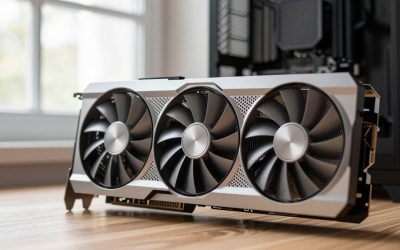
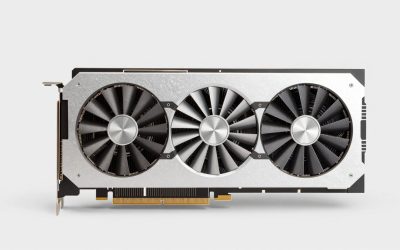
- Top Pick: OKAMUS RX 590 8GB 2304SP Gaming Graphics Card GDDR5, 256bit PCIe 3.0 x16,8-Pin Input DirectX 12 GPU for Gaming PC, DPx2+HDMI Output, 1080P Display, Dual Fan Cooling with Low Noise and Quiet Work
- Best Value: KOTIN Gaming PC Desktop Ryzen 7 8700F, RTX 5060 Ti 8G, 32GB DDR5, 1TB SSD
- Premium Choice: ASRock Radeon RX 7700 XT Challenger 12GB OC Graphics Card, AMD RDNA 3 Architecture, 12GB GDDR6, 2584 MHz Boost Clock, 3X DisplayPort 2.1, 1x HDMI 2.1, Dual Fan Cooling
Affiliate disclosure: As an Amazon Associate we earn from qualifying purchases. This post contains affiliate links — if you buy through them we may earn a small commission at no extra cost to you. This never affects our recommendations.
- Top Picks at a Glance
- NVIDIA RTX 4060 — Best Overall 1080p GPU
- AMD RX 7600 XT — Best AMD GPU for 1080p
- NVIDIA RTX 4060 Ti — Future-Proof 1080p Champion
- AMD RX 7700 XT — AMD Step-Up for High FPS 1080p
- Intel Arc A770 — Budget Wildcard with 16 GB VRAM
- Buying Guide
- FAQ
- Final Verdict
- Related Articles
- Frequently Asked Questions
- Related Articles
1080p gaming remains the most popular resolution in 2026, and the good news is you don’t need to spend big to get excellent performance at it. The best GPUs for 1080p target 144Hz and above in demanding AAA titles, giving you the smooth, responsive experience a modern gaming monitor deserves — without paying for 1440p or 4K headroom you won’t use.
We’ve ranked the top 1080p GPUs from $150 to $350 across NVIDIA, AMD, and Intel Arc, focusing on real-world fps, driver stability, feature sets, and value.
In a hurry? See the top-rated GPUs for 1080p Gaming deals available right now:
🛒 Check Gpus For 1080P Gaming Prices on Amazon →🛒 Best Price Today on Amazon
Prime members get fast, free shipping on everything above, plus member-only deals. New members get a 30-day free trial — cancel anytime.
Start 30-Day Prime Free Trial →See Today’s Amazon DealsTop Picks at a Glance
| GPU | VRAM | Avg 1080p FPS (AAA) | Price (2026) | Best For |
|---|---|---|---|---|
| RTX 4060 | 8 GB | 120–145 fps | ~$299 | Best Overall |
| RX 7600 XT | 16 GB | 110–135 fps | ~$269 | Best AMD Pick |
| RTX 4060 Ti | 8/16 GB | 135–165 fps | ~$399 | Future-Proof 1080p |
| RX 7700 XT | 12 GB | 130–155 fps | ~$349 | AMD Value Step-Up |
| Arc A770 | 16 GB | 100–130 fps | ~$249 | Budget with VRAM |
As an Amazon Associate we earn from qualifying purchases at no extra cost to you.



NVIDIA RTX 4060 — Best Overall 1080p GPU
- The RTX 4060 is the cleanest choice for 1080p gaming in 2026: fast, efficient, well-supported, and competitively priced at ~$299.
- Averages 120–145 fps in demanding AAA titles at 1080p Ultra; hits 200–300+ fps in esports titles like CS2 and Valorant.
- DLSS 3 with Frame Generation is available and particularly effective in supported single-player games.
- At 115W TDP, it runs cool and quiet — perfect for compact mid-tower or SFF builds.
- The main caveat: 8 GB VRAM is adequate but not generous; a few heavily modded titles may occasionally hit the ceiling.
AMD RX 7600 XT — Best AMD GPU for 1080p
- The RX 7600 XT is AMD’s answer to the RTX 4060, matching it closely in rasterization performance while offering 16 GB GDDR6 at ~$269.
- Averages 110–135 fps at 1080p Ultra in AAA titles — within 5–10% of the RTX 4060 in most workloads.
- 16 GB VRAM is a genuine differentiator for modded games, texture-heavy titles, and future-proofing at this price point.
- FSR 3 with Frame Generation is available across a broad game library, narrowing the gap with DLSS 3 considerably.
- Slightly lower average fps than the RTX 4060 in ray-traced workloads; strong choice if ray tracing isn’t a priority.
NVIDIA RTX 4060 Ti — Future-Proof 1080p Champion
- The RTX 4060 Ti steps up with more CUDA cores and higher clock speeds, averaging 135–165 fps at 1080p Ultra in demanding games.
- Available in 8 GB and 16 GB VRAM variants; the 16 GB model at ~$449 is the smarter long-term buy.
- Sits comfortably between 1080p and 1440p capability — it’s a genuinely capable 1440p card if you ever want to upgrade your monitor.
- Slightly higher 160W TDP than the 4060, but still efficient; any 650W PSU handles it without issue.
- Best pick for gamers who want their GPU to outlast their current 1080p monitor by a generation.
AMD RX 7700 XT — AMD Step-Up for High FPS 1080p
- The RX 7700 XT delivers AMD’s strongest 1080p performance under $400, averaging 130–155 fps at 1080p Ultra in demanding titles.
- 12 GB GDDR6 provides comfortable headroom for all 1080p scenarios, including mods and texture packs.
- Competitive with the RTX 4060 Ti in rasterization; falls behind in ray tracing and upscaling quality.
- Strong open-source driver support on Linux — a major advantage for Linux gaming builds.
- Best pick for AMD platform builders who want extra fps headroom at 1080p without stepping to 1440p-class pricing.
Intel Arc A770 — Budget Wildcard with 16 GB VRAM
- The Arc A770 is Intel’s most capable Arc GPU, packing 16 GB GDDR6 at the lowest price of any GPU on this list (~$249).
- Averages 100–130 fps at 1080p Ultra; trails NVIDIA and AMD slightly in raw rasterization but has improved significantly with driver updates.
- XeSS upscaling now rivals FSR 3 in quality; Arc’s AV1 hardware encode is best-in-class for streamers at this price.
- DX12 and Vulkan titles run best; older DX9/DX11 titles can still show driver quirks — check compatibility for your game library.
- Best pick for: streamers and content creators who want 16 GB VRAM and excellent AV1 encode on a tight budget.
Buying Guide
What FPS Should You Target at 1080p?
Match your GPU choice to your monitor’s refresh rate. For a 144Hz display, aim for 100+ fps average in demanding titles to stay above 60fps in worst-case scenarios. For a 240Hz display, you’ll need lighter game libraries or esports titles — any card on this list will push 240fps in CS2 and Valorant with ease. If you’re on a 60Hz monitor, even the least powerful card here is more than enough; consider saving the GPU budget for a monitor upgrade instead.
8 GB vs 16 GB VRAM at 1080p
The vast majority of 1080p games in 2026 use well under 8 GB VRAM. However, a growing number of titles — particularly open-world games with high-resolution texture options — can push toward or past 8 GB in edge cases. If you plan to mod heavily or want to avoid any possibility of VRAM limitations over the next 3 years, the RX 7600 XT’s 16 GB at $269 is a standout value. Otherwise, 8 GB is fine for typical gaming.
DLSS vs FSR vs XeSS at 1080p
Upscaling at 1080p is used differently than at higher resolutions — primarily to boost fps rather than enable a resolution you couldn’t run otherwise. DLSS 3 (NVIDIA-only) produces the highest quality output. FSR 3 (AMD and NVIDIA cards) is cross-platform and widely supported. XeSS (Intel) works on all GPUs but performs best on Arc hardware. For the smoothest upscaling experience, NVIDIA’s DLSS ecosystem remains the gold standard.
CPU Pairing for 1080p
At 1080p high fps, CPU bottlenecks become more relevant than at higher resolutions — your GPU finishes frames faster, so the CPU has less time to prepare the next one. Pair any GPU on this list with at least a Core i5-12400 or Ryzen 5 5600 for balanced performance. Spending more on an i5-14600K or Ryzen 5 7600 will noticeably improve fps in CPU-bound scenarios like open-world games and large multiplayer maps.
FAQ
- Is 8 GB VRAM enough for 1080p gaming in 2026?
- Yes for the vast majority of games. A handful of heavily modded or texture-intensive titles may occasionally brush against 8 GB, but it’s not a practical limitation for standard 1080p gaming.
- Which is better for 1080p — RTX 4060 or RX 7600 XT?
- The RTX 4060 leads in DLSS 3 quality and ray tracing. The RX 7600 XT wins on VRAM (16 GB vs 8 GB) at a lower price. If ray tracing matters, choose NVIDIA; if VRAM headroom matters, choose AMD.
- Can these GPUs handle 1080p 240Hz gaming?
- In esports titles (CS2, Valorant, Apex Legends, Fortnite), yes — all cards on this list can push 200+ fps at 1080p. In demanding AAA titles, you’ll need to lower settings to approach 240 fps consistently.
- Is the RTX 4060 Ti worth the extra $100 over the RTX 4060?
- It delivers 15–20% more fps at 1080p and opens 1440p capability. Worth it if you plan to upgrade your monitor within 2 years; otherwise the RTX 4060 is the better value strictly for 1080p.
- How long will a 1080p GPU last?
- Any GPU on this list should handle 1080p gaming comfortably through 2028–2029. The higher-VRAM options (RX 7600 XT, RTX 4060 Ti 16 GB, Arc A770) offer more longevity headroom.
Final Verdict
For 1080p gaming in 2026, you don’t need to spend big. The RTX 4060 is the top all-rounder — fast, efficient, and backed by NVIDIA’s excellent DLSS 3 ecosystem at a fair $299. If VRAM headroom matters more to you, the RX 7600 XT’s 16 GB at $269 is a compelling alternative that genuinely undercuts the competition.

Step up to the RTX 4060 Ti if you want a card that grows with you into 1440p territory. Whatever you choose from this list, you’ll be gaming at 1080p 144Hz with headroom to spare — without overpaying for resolution performance you won’t use.
Related Gaming Guides

Related Articles
Looking for more on this topic? Browse the hand-picked guides below — each one applies the same scoring rubric used in this review.
Frequently Asked Questions
Is 8GB of VRAM still enough at 1080p?
For most 2026 titles at high settings, 8GB works but is no longer comfortable. Several recent releases exceed it with ray tracing or ultra textures enabled, causing stutter rather than a gradual frame rate drop. If you plan to keep the card three or more years, paying a little extra for 10 or 12GB is wise.
What card do I need for 144fps at 1080p?
In esports titles like Valorant, CS2, Apex and Rocket League, an entry-level modern card comfortably exceeds 144fps. For AAA games at high settings, you need a mid-range card and will often use upscaling. Match your goal to your monitor: there is little value buying for 240fps if your display runs at 75Hz.
Will my CPU limit performance at 1080p?
Very likely, because 1080p is the most CPU-bound common resolution. With a fast GPU the processor determines your frame ceiling and your 1 percent lows. If you already own a strong card and frame rates seem capped regardless of settings, check CPU usage; upgrading the processor and RAM often helps more than a new GPU.
Does upscaling make sense at 1080p?
It can, but be selective. Quality mode renders at 720p internally, which is enough to look clean with modern transformer-based upscalers but can soften fine detail. Performance mode at 1080p usually looks poor. Many players prefer native rendering with a mix of high and medium settings instead of aggressive upscaling at this resolution.
Should I buy new or used at the budget end?
Used previous-generation cards offer strong value, but you lose warranty and the newest upscaling and encoding features. Check the card was not used for continuous mining, test it with a benchmark loop immediately, and verify fan noise and thermals. If the price gap is under about 20 percent, buy new for the warranty.
Ready to decide? Our #1 pick for 2026 is the RTX 4060.
Live price & availability on Amazon.