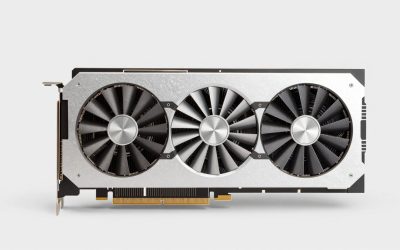
- Top Pick: Gigabyte GeForce RTX 4080 Super WINDFORCE V2 Graphics Card – 2550MHz Core, 16GB GDDR6X 23000MHz 256-bit Memory, PCI-E 4.0, 3X DP 1.4, 1x HDMI 2.1a, NVIDIA DLSS 3.5, GV-N408SWF3V2-16GD
- Best Value: ASUS TUF Gaming NVIDIA GeForce RTX 4080 Super OC Edition Gaming Graphics Card (PCIe 4.0, 16GB GDDR6X, HDMI 2.1a, DisplayPort 1.4a), 3 Year Warranty
- Premium Choice: NVIDIA – GeForce RTX 4080 16GB GDDR6X Graphics Card
Affiliate disclosure: As an Amazon Associate we earn from qualifying purchases. This post contains affiliate links — if you buy through them we may earn a small commission at no extra cost to you. This never affects our recommendations.
NVIDIA’s RTX 40-series lineup remains highly competitive in 2026, and the gap between the RTX 4070 and RTX 4080 tiers is one of the most debated in PC gaming. Both cards offer excellent DLSS 3 support, Ada Lovelace architecture, and ray tracing capability — but they target very different budgets and use cases. This head-to-head breaks down benchmarks by resolution, value, and who each card is actually built for.
Whether you’re upgrading from a GTX or RTX 30-series card, or building a new rig from scratch, this comparison will help you make the right call without buyer’s remorse.
In a hurry? See the top-rated RTX 4070 vs RTX 4080 deals available right now:
🛒 Check Rtx 4070 Vs Rtx 4080 Prices on Amazon →🛒 Best Price Today on Amazon
Prime members get fast, free shipping on everything above, plus member-only deals. New members get a 30-day free trial — cancel anytime.
Start 30-Day Prime Free Trial →See Today’s Amazon DealsHead-to-Head Specs
| Spec | RTX 4070 Super | RTX 4080 Super |
|---|---|---|
| CUDA Cores | 7168 | 10240 |
| VRAM | 12 GB GDDR6X | 16 GB GDDR6X |
| Memory Bandwidth | 504 GB/s | 736 GB/s |
| TDP | 220W | 320W |
| MSRP (2026) | ~$599 | ~$999 |
| Target Resolution | 1080p–1440p | 1440p–4K |
Benchmark Breakdown by Resolution
1080p Performance
- Both cards are overkill for standard 1080p gaming — you’ll hit 144fps+ in most AAA titles on either card.
- The RTX 4070 Super averages ~140–160 fps in demanding titles like Cyberpunk 2077 and Alan Wake 2 at 1080p Ultra.
- The RTX 4080 Super pushes ~180–200 fps in the same titles — impressive, but the margin doesn’t justify the cost at this resolution.
- For competitive 1080p (CS2, Valorant, Apex), even a 4060 Ti is sufficient; either card here is GPU budget you won’t fully use.
1440p Performance
- This is where the RTX 4070 Super shines brightest — averaging 90–120 fps in demanding AAA games at 1440p Ultra settings.
- The RTX 4080 Super jumps to 130–155 fps at the same settings, a real but not transformative difference for most monitors.
- If you own a 165Hz or 240Hz 1440p display, the 4080 Super can help approach those ceilings in lighter games.
- With DLSS 3 Frame Generation enabled, both cards can comfortably push beyond their native fps ceilings.
4K Performance
- At 4K Ultra, the RTX 4070 Super averages 55–70 fps in heavy titles — playable with DLSS Quality mode boosting that to 80–100 fps.
- The RTX 4080 Super averages 80–95 fps native at 4K Ultra, comfortably above 60fps without any upscaling needed.
- For a 4K 144Hz display, only the RTX 4080 Super (or RTX 5000-series) gets you consistently close to that target.
- Ray tracing at 4K is where the 4080 Super’s 16 GB VRAM and higher bandwidth make the biggest difference.
Price-to-Performance Analysis
- At ~$599, the RTX 4070 Super delivers roughly 80% of the 4080 Super’s performance at 60% of the price.
- The 4080 Super commands a ~$400 premium for gains that are most meaningful only at 4K — a resolution minority of gamers use.
- In pure value terms, the 4070 Super consistently ranks as one of the best GPUs per dollar in NVIDIA’s entire lineup for 2026.
- Used/refurbished RTX 4080 (non-Super) units often undercut the 4080 Super at around $750–800 and perform within 5% of it.
Platform Cost Considerations
- The RTX 4080 Super’s 320W TDP requires a quality 750W–850W PSU; factor in ~$50–100 extra if upgrading from a smaller unit.
- Both cards fit in standard ATX cases; neither requires exotic cooling, but the 4080 Super runs warmer under sustained load.
- Pairing either GPU with a mid-range CPU like the i7-14700K ensures no CPU bottleneck at 1440p or 4K.
- If you’re building new, total system cost for a 4080 Super build is typically $400–500 more than an equivalent 4070 Super build.
Products Featured
As an Amazon Associate we earn from qualifying purchases at no extra cost to you.


Who Should Buy Which?
Buy the RTX 4070 Super If
- You game primarily at 1080p or 1440p and want the best fps-per-dollar ratio.
- Your monitor is 144Hz or 165Hz at 1440p — the 4070 Super easily feeds it.
- You’re on a budget of $500–700 for your GPU and want no compromise at your target resolution.
- You plan to use DLSS 3 to push fps further without paying the 4080 Super tax.
Buy the RTX 4080 Super If
- You own or plan to buy a 4K monitor and want smooth native performance without relying on upscaling.
- You run ray tracing at max settings and want headroom beyond what the 4070 Super provides.
- You’re a content creator who benefits from 16 GB VRAM for rendering, AI workloads, or video editing.
- You want a GPU that will stay relevant for 4–5 years without needing to upgrade mid-gen.
Buying Guide
DLSS 3 and Frame Generation
Both the RTX 4070 Super and RTX 4080 Super support DLSS 3 with Frame Generation, which doubles effective frame output in supported titles. This narrows the real-world gap between them considerably at 1440p — a 4070 Super running DLSS Performance mode can match the 4080 Super’s native fps in many games. Always check DLSS support for your most-played titles before deciding the native performance gap matters to you.
VRAM: Does 12 GB vs 16 GB Matter?
In 2026, 12 GB is sufficient for nearly all games at 1440p. A handful of heavily modded titles or 4K texture packs can brush against 12 GB, but it’s rarely a hard limit at 1440p and below. At 4K Ultra with ray tracing in the most demanding titles, the 4080 Super’s 16 GB provides genuine headroom. If you’re purely gaming (not content creation), VRAM alone isn’t a reason to pay the 4080 Super premium unless you’re at 4K.
When to Wait for RTX 5000 Series
NVIDIA’s RTX 5000 series has begun rolling out in 2026. If you can wait 3–6 months, the RTX 5070 and 5070 Ti offer a meaningful generational jump in efficiency and performance at competitive price points. However, if you need a GPU now, current 40-series pricing has dropped to solid value levels — especially the 4070 Super, which remains one of the best value GPUs available.
FAQ
- Is the RTX 4080 Super worth $400 more than the RTX 4070 Super?
- Only if you game at 4K or need 16 GB VRAM for professional workloads. For 1440p gaming, the 4070 Super is the better value by a significant margin.
- Can the RTX 4070 Super handle 4K gaming?
- Yes, with DLSS Quality mode enabled, the RTX 4070 Super delivers smooth 60–80 fps at 4K in most AAA titles. Native 4K without upscaling will dip below 60 fps in demanding games.
- Which card runs cooler and quieter?
- The RTX 4070 Super, thanks to its lower 220W TDP. Most RTX 4070 Super AIB cards run well under 80°C under sustained load, while 4080 Super cards typically operate 5–8°C warmer.
- Do both cards support the same features?
- Yes — both support DLSS 3, Frame Generation, AV1 encoding, HDMI 2.1, and DisplayPort 1.4a. The 4080 Super has more CUDA cores and higher clock speeds, but the feature set is identical.
- What CPU should I pair with each GPU?
- For the RTX 4070 Super, a Core i5-14600K or Ryzen 5 7600X is an excellent pairing. The RTX 4080 Super benefits from a Core i7-14700K or Ryzen 7 7800X3D to avoid CPU bottlenecks at high fps.
Final Verdict
For the majority of PC gamers in 2026, the RTX 4070 Super is the smarter buy. It delivers outstanding 1440p performance, solid 4K performance with DLSS, and saves you $400 over the 4080 Super. That saving can fund a better monitor, CPU, or simply stay in your pocket.
The RTX 4080 Super earns its price only in specific scenarios: native 4K gaming at high refresh rates, heavy ray tracing workloads, or professional content creation requiring 16 GB VRAM. If that’s you, it’s an excellent card that will last years. Everyone else should grab the 4070 Super and enjoy the money saved.
Related Articles
Looking for more on this topic? Browse the hand-picked guides below — each one applies the same scoring rubric used in this review.
Frequently Asked Questions
How much faster is the RTX 4080 than the RTX 4070?
Across a broad benchmark suite the 4080 is roughly 45 to 55 percent faster in rasterised games and the gap widens with heavy ray tracing, where it can approach 60 percent. The advantage grows with resolution, so the difference is smallest at 1080p where both cards are often CPU limited and largest at 4K.
Does the VRAM difference matter?
Yes. The 4070 has 12GB while the 4080 has 16GB, and that matters most at 4K with ultra textures, ray tracing and frame generation, all of which consume additional memory. At 1440p, 12GB is generally sufficient today but leaves less headroom for future titles and for heavy modded games with 4K texture packs.
Which resolution suits each card?
The 4070 is a strong 1440p card that can reach 4K with quality upscaling and slightly reduced settings. The 4080 is a genuine 4K high-settings card and comfortably drives high-refresh 1440p panels above 144fps in most titles. Buy according to the monitor you actually own rather than one you might buy later.
What power supply does each need?
The 4070 draws around 200 watts and is happy on a quality 650 watt unit, often needing only a single 8-pin or a light adapter. The 4080 draws about 320 watts and NVIDIA recommends 750 watts minimum, with 850 preferred for headroom on high-core-count CPUs. The 4080 is also longer and thicker, so check case clearance.
Which is the better value?
Value depends on the price gap where you live. If the 4080 costs more than about 55 percent extra, the 4070 gives better performance per dollar, especially at 1440p. If you play at 4K, run ray tracing heavily, or plan to keep the card for four or more years, the 4080 extra VRAM and headroom justify the premium.
Ready to decide? Our #1 pick for 2026 is the CUDA Cores.
Live price & availability on Amazon.