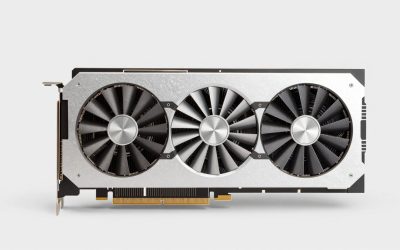
- Top Pick: ASUS TUF Gaming GeForce RTX™ 5080 16GB GDDR7 OC Edition Graphics Card
- Best Value: GIGABYTE GeForce RTX 5080 Gaming OC 16G Graphics Card, WINDFORCE Cooling System, 16GB 256-bit GDDR7, GV-N5080GAMING OC-16GD Video Card
- Premium Choice: ASUS Prime GeForce RTX 5070 12GB GDDR7 OC Edition Gaming Graphics Card find alternatives
Affiliate disclosure: As an Amazon Associate we earn from qualifying purchases. This post contains affiliate links — if you buy through them we may earn a small commission at no extra cost to you. This never affects our recommendations.
NVIDIA’s GPU lineup in 2026 spans two generations: the mature RTX 40-series (Ada Lovelace) and the newly launched RTX 50-series (Blackwell). With both generations available simultaneously, picking the right card has never been more nuanced — or more rewarding for savvy buyers who know where value peaks.
We’ve compared and ranked every major gpu tier from the budget RTX 4060 to the flagship RTX 5090, factoring in price, gaming performance, VRAM, efficiency, and longevity. Here’s every tier you need to know about.
In a hurry? See the top-rated gpus deals available right now:
🛒 Check Gpus Prices on Amazon →🛒 Best Price Today on Amazon
Prime members get fast, free shipping on everything above, plus member-only deals. New members get a 30-day free trial — cancel anytime.
Start 30-Day Prime Free Trial →See Today’s Amazon DealsTop Picks at a Glance
| GPU | Best For | VRAM | MSRP (2026) | Rating |
|---|---|---|---|---|
| RTX 4060 | Budget 1080p | 8 GB | ~$299 | ★★★★☆ |
| RTX 4070 Super | Best Value 1440p | 12 GB | ~$599 | ★★★★★ |
| RTX 4080 Super | High-End 1440p/4K | 16 GB | ~$999 | ★★★★☆ |
| RTX 5070 Ti | Next-Gen 1440p–4K | 16 GB | ~$749 | ★★★★★ |
| RTX 5090 | Ultimate 4K Flagship | 32 GB | ~$1999 | ★★★★★ |
As an Amazon Associate we earn from qualifying purchases at no extra cost to you.


RTX 4060 — Best Budget gpu
- The RTX 4060 is the entry point for Ada Lovelace architecture, delivering strong 1080p performance at ~$299.
- Averages 80–100 fps at 1080p Ultra in demanding AAA titles; 144 fps+ in esports and lighter games.
- 8 GB GDDR6 VRAM is adequate for 1080p in 2026, though it can be limiting in a few heavily modded titles.
- DLSS 3 with Frame Generation is available and pushes fps well above native in supported games.
- Best pick for: budget builders, casual gamers, anyone coming from GTX 1060/1660 era cards.
RTX 4070 Super — Best Overall Value gpu
- The RTX 4070 Super is NVIDIA’s sweet-spot GPU in 2026, pairing 12 GB GDDR6X with Ada’s best efficiency at ~$599.
- Consistently delivers 90–120 fps at 1440p Ultra in demanding titles without DLSS needed.
- DLSS 3 pushes performance to 4K-viable levels, hitting smooth 60–80 fps at 4K with Quality upscaling.
- Quiet, cool, and power-efficient at 220W TDP — pairs well with a 650W PSU.
- Best pick for: 1440p 144Hz builds, anyone wanting a single card that handles anything thrown at it through 2028.
RTX 4080 Super — Best High-End 40-Series GPU
- The RTX 4080 Super is NVIDIA’s premium Ada offering, delivering 25–30% more performance than the 4070 Super at ~$999.
- Handles 4K Ultra natively above 60 fps in most titles; excels with ray tracing maxed out.
- 16 GB GDDR6X VRAM is future-proof for gaming through the decade and supports professional workflows.
- The 320W TDP requires a quality 850W PSU; runs warm but stays within safe thermal limits on most AIB coolers.
- Best pick for: 4K monitor owners, content creators, users who want maximum longevity from a 40-series card.
RTX 5070 Ti — Best Next-Gen Mid-High GPU
- NVIDIA’s Blackwell architecture brings significant efficiency improvements — the RTX 5070 Ti matches or beats the RTX 4080 Super at lower power consumption.
- Priced around $749, it slots between the 4080 Super and 5080, offering exceptional value for next-gen performance.
- DLSS 4 with Multi Frame Generation (up to 4x frame multiplication) dramatically boosts effective fps in supported titles.
- 16 GB GDDR7 delivers higher bandwidth than the 4080 Super’s GDDR6X, benefiting 4K and ray tracing workloads.
- Best pick for: buyers who want to invest in Blackwell’s longevity, 4K 144Hz aspirants, creators needing GDDR7 bandwidth.
RTX 5090 — Best Flagship gpu
- The RTX 5090 is the fastest consumer GPU NVIDIA has ever produced, with 32 GB GDDR7 and a monstrous compute profile.
- Averages 100+ fps at 4K Ultra with ray tracing enabled natively — the first GPU to make 4K 120Hz feel effortless.
- DLSS 4 Multi Frame Generation pushes effective frame rates to extraordinary levels in supported titles.
- At ~$1999+, it’s strictly for enthusiasts — professionals using it for AI, 3D rendering, or video production will extract the most value.
- Best pick for: 4K 144Hz+ display owners, no-compromise enthusiasts, AI/ML developers who want GPU compute power.
Buying Guide
RTX 40-Series vs RTX 50-Series: Should You Wait?
In 2026, both generations coexist on shelves. The RTX 50-series (Blackwell) brings DLSS 4, GDDR7 memory, and better power efficiency. If you’re buying new, RTX 50-series cards offer better long-term value — especially the RTX 5070 Ti which undercuts the 4080 Super in price while beating it in performance. The RTX 40-series remains compelling at clearance or sale prices; the RTX 4070 Super in particular hits excellent value when discounted below $550.
VRAM Requirements by Resolution
In 2026, 8 GB is the practical minimum for 1080p gaming. At 1440p, 12 GB handles nearly everything; a small number of titles with 4K texture packs benefit from more. At 4K with maxed settings and ray tracing, 16 GB is the comfortable standard. The RTX 5090’s 32 GB is overkill for gaming but invaluable for AI workloads and professional rendering.
Power Supply Planning
Match your PSU to your GPU tier: RTX 4060/4070 Super works fine with a 650W 80+ Gold unit. The RTX 4080 Super needs a 750W–850W PSU. RTX 5070 Ti targets 300W TDP — a quality 750W is sufficient. The RTX 5090 has a 575W TDP and needs at minimum a 1000W PSU, with 1200W recommended for margin.

AIB Partner Recommendations
For any gpu, top AIB partners include ASUS ROG/TUF, MSI Gaming X Trio, and Gigabyte AORUS. ASUS TUF cards offer an excellent balance of cooling, noise, and price. MSI Gaming X Trio cards typically run 2–4°C cooler than reference at slight cost premium. Avoid no-name or single-fan variants on 200W+ cards — thermal throttling will impact sustained performance.
FAQ
- Which gpu offers the best price-to-performance ratio in 2026?
- The RTX 4070 Super consistently leads in value metrics for 1440p gaming. The RTX 5070 Ti is the value leader for those buying into the RTX 50-series.
- Is DLSS 4 worth upgrading from RTX 40-series for?
- If you already own an RTX 40-series card, DLSS 4 with Multi Frame Generation is compelling but not a must-upgrade reason alone. It matters most for 4K 144Hz targets where native fps falls short.
- How long will an RTX 4070 Super last?
- Realistically, the RTX 4070 Super should remain a capable 1440p card through 2028 and a viable 4K card (with upscaling) through at least 2027. It’s a 3–4 year purchase at current pricing.
- Is the RTX 5090 worth $2000?
- Only if you use it for AI/ML workloads, professional rendering, or you demand the absolute highest 4K frame rates. For gaming alone, the RTX 5070 Ti or 4080 Super provides 80–85% the experience at half the cost.
- Do gpus work better than AMD on NVIDIA-brand systems?
- No — gpus work equally well on AMD Ryzen platforms. Platform choice has no bearing on GPU performance. NVIDIA’s advantage is its DLSS ecosystem, which AMD cannot access.
Final Verdict
NVIDIA’s 2026 GPU lineup covers every need from budget 1080p gaming to no-compromise 4K. For most buyers, the RTX 4070 Super remains the undisputed value champion — exceptional 1440p performance, DLSS 3, and a price that leaves room in the budget for the rest of your build.

If you’re investing in Blackwell’s future, the RTX 5070 Ti is the smartest next-gen buy — beating the 4080 Super at a lower price point. And if only the best will do, the RTX 5090 is in a class of its own. Choose your tier, pair it with a capable CPU, and you’ll be set for years to come.
Related Gaming Guides

Related Articles
Looking for more on this topic? Browse the hand-picked guides below — each one applies the same scoring rubric used in this review.
Frequently Asked Questions
How do I read NVIDIA model numbers?
The first digits indicate the generation, so 40 series and 50 series are successive families, and the last two digits show the tier within that family. A 60-class card targets 1080p, 70-class targets 1440p, and 80 or 90-class targets 4K. A Ti or Super suffix marks a mid-cycle refresh that usually sits between two tiers.
Is a newer generation always faster than an older higher tier?
Not reliably. A new 60-class card typically matches or slightly beats the previous generation 70-class, but a previous-generation 80-class often still outperforms a new 70-class in raw rasterisation. Compare independent benchmarks at your target resolution rather than assuming the newer number wins, and factor in VRAM capacity differences.
What do DLSS and frame generation actually do?
DLSS super resolution renders at a lower internal resolution and reconstructs a sharper image, raising frame rate genuinely. Frame generation inserts interpolated frames between rendered ones, which increases visual smoothness but does not reduce input latency and can add artefacts. Use frame generation only when your base frame rate already exceeds about 60fps.
Should I worry about the 12V-2×6 power connector?
The revised 12V-2×6 connector addressed most of the earlier 12VHPWR melting reports, but good practice still applies. Push the plug fully home until it clicks, avoid tight bends within about 35mm of the connector, and prefer a native ATX 3.1 power supply cable over a multi-headed adapter. Check the connector after moving the PC.
Is it worth upgrading from an RTX 30 series card?
If you own a 3080 or better and play at 1440p, the gain from a mid-tier new card is modest and probably not worth the money. Owners of 3060 and 3070 class cards see a meaningful jump, particularly in ray tracing, VRAM capacity and access to the newest DLSS features. Judge by your actual frame rates.
Ready to decide? Our #1 pick for 2026 is the RTX 4060.
Live price & availability on Amazon.