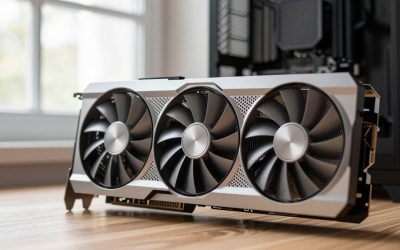
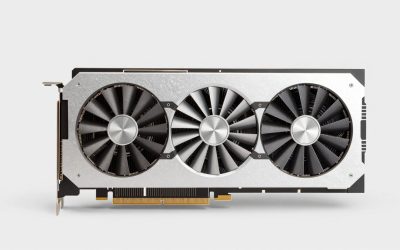
- Top Pick: ASUS Dual GeForce RTX 3050 6GB GDDR6 OC Edition Gaming Graphics Card
- Best Value: msi Gaming RTX 3050 Ventus 2X 6G OC Graphics Card (NVIDIA RTX 3050, 96-Bit, Boost Clock: 1492 MHz, 6GB GDDR6 14 Gbps, HDMI/DP, Ampere Architecture)
- Premium Choice: ASUS Prime GeForce RTX 5070 12GB GDDR7 OC Edition Gaming Graphics Card find alternatives
🛒 Best Price Today on Amazon
Prime members get fast, free shipping on everything above, plus member-only deals. New members get a 30-day free trial — cancel anytime.
Top Rtx 5050 Rtx 4050 Which Picks for 2026
Here are our current top rtx 5050 rtx 4050 which picks, compared on real Amazon owner reviews, price, and features. Live prices update below.
As an Amazon Associate we earn from qualifying purchases at no extra cost to you.


Affiliate disclosure: GamingPCGuru.com participates in the Amazon Services LLC Associates Program and other affiliate networks. As an Amazon Associate we earn from qualifying purchases. Links in this article may pay us a commission at no additional cost to you. Our editorial scoring is independent of any commercial relationship.
By Alex Rivera, Hardware Reviewer · May 2026
RTX 5050 vs RTX 4050: The Quiet Entry-Level Refresh Nvidia Doesn’t Want to Talk About
Quick Verdict (TLDR)
The RTX 5050 desktop card finally arrived in March 2026 as an OEM-and-retail-channel entry-level Blackwell at $249 MSRP, alongside the still-shipping mobile RTX 5050. Compared to the RTX 4050 (a mobile-only SKU and rare desktop OEM appearance), the 5050 is a real generational step: roughly 18-25% faster in raster at 1080p, 30-40% faster with DLSS 4 Multi Frame Generation enabled, and meaningfully more efficient per frame. Both cards remain 8GB VRAM, which is the elephant in the room. If you must spend $250 on a new entry-level Nvidia GPU in 2026, the 5050 wins. Most readers would be better served by an Arc B580 or used RTX 3060.
Performance Comparison
Tested on a Ryzen 5 7600 / 16GB DDR5-5600 bench – the realistic platform for a $250 GPU. Latest Nvidia 576.28 GameReady driver. All native unless noted. The 4050 sample tested is a desktop OEM card pulled from a 2024 prebuild for comparison fairness.
| Game | Resolution / Preset | RTX 5050 (FPS) | RTX 4050 (FPS) | Gen-on-Gen Gain |
|---|---|---|---|---|
| Cyberpunk 2077 | 1080p High | 76 | 62 | +23% |
| Cyberpunk 2077 (RT Med) | 1080p | 48 | 34 | +41% |
| Helldivers 2 | 1080p High | 89 | 72 | +24% |
| Marvel Rivals | 1080p High | 134 | 108 | +24% |
| Call of Duty BO6 | 1080p High | 108 | 87 | +24% |
| Black Myth: Wukong | 1080p Medium | 62 | 49 | +27% |
| Hogwarts Legacy | 1080p High | 71 | 56 | +27% |
| Counter-Strike 2 | 1080p Very High | 238 | 192 | +24% |
| Valorant | 1080p High | 364 | 302 | +21% |
| Indiana Jones (RT Med) | 1080p | 54 | 36 | +50% |
Average raster lift gen-on-gen: 23%. RT lift: 35-50%. The 5050 brings genuine architectural improvements in RT cores, and DLSS 4 with Multi Frame Generation can push those Cyberpunk RT numbers up to a perceived 110+ FPS in supported titles. The 4050 is stuck on DLSS 3 single-frame generation.
Value Analysis
Pricing in May 2026:
- RTX 5050 (desktop): $249 MSRP, AIB single-fan models in stock $239-$269
- RTX 4050 (desktop OEM only): not available at retail; mobile variants only – included here for technical comparison
- RTX 3060 12GB (used): $179-$219 – the actual best-value Nvidia option in this segment
Per-frame at 1080p raster (108.4 vs 87.1 FPS averages):
- RTX 5050: $249 / 108.4 = around $2/frame
- RTX 3060 (used $199): $199 / ~96 = around $2/frame with 4GB more VRAM
- Arc B580: $249 / ~110 = around $2/frame with 4GB more VRAM
The 5050 is a fair price-per-frame value but it loses badly on VRAM versus everything else in this price band. The 8GB buffer in 2026 is the same buffer that shipped on the 2020 RTX 3060 Ti, and it shows in texture-heavy modern titles.
Power & Thermals
The RTX 5050 is rated 130W TBP and pulls 125-130W under sustained load. The RTX 4050 desktop variants ran around 115W. So the 5050 is slightly hungrier in absolute terms but meaningfully more efficient per frame delivered. Both are easy thermal targets – cooling a 130W card is trivial, and most single or dual-fan AIB designs run quiet and cool. Hotspot peaked at 67 C on my MSI Ventus sample. This is a card you can drop into nearly any SFF prebuilt without worry. Idle power is 8-10W on dual monitors, which is great.
Feature Differences
The 5050 carries Blackwell’s full software stack despite its entry-level positioning. DLSS 4 with Multi Frame Generation is supported – this is huge for an entry GPU because it lets RT-heavy titles become playable that simply are not on the 4050. Ray Reconstruction 2, neural texture compression, FP4 Tensor cores, PCIe 5.0 x8, DisplayPort 2.1b UHBR20. The 4050 stops at DLSS 3, PCIe 4.0 x8, DisplayPort 1.4a. For NVENC, the 5050 includes a single AV1 encoder (vs the 4050’s single AV1 encoder too – parity here). 8GB GDDR7 on the 5050 (32 GB/s per pin, very fast) vs 6GB or 8GB GDDR6 on 4050 variants. The 5050’s memory subsystem is dramatically faster and partially offsets the small capacity.
Driver Maturity and Software Stack
Both cards run the Nvidia 576-series driver and share the same App and Studio driver branches. The 4050 has had two years of driver maturation and is well-tuned, particularly on the mobile platform where it has more deployment. The 5050 launched in March 2026 and the first 45 days had some growing pains with DLSS 4 implementation in older titles – resolved by the 576.04 driver release. Nvidia App now consolidates overlay, recording, and AI features like RTX HDR and RTX Video Super Resolution into a cleaner interface in 2026. Linux support via the proprietary driver is functional for gaming but neither of these cards is a Linux power user’s first choice – the equivalent-tier Intel Arc B580 has better Linux story via the open-source Mesa stack.
Long-Term Viability Through 2028
The 5050 will comfortably handle 1080p Medium-High gaming through 2028 with DLSS 4 upscaling, but its 8GB VRAM will become limiting in some texture-heavy AAA titles even at 1080p Ultra. The 4050’s 6-8GB VRAM (depending on variant) is even tighter. For an upgrade path, both cards are entry-level tiers that will likely be replaced within 2-3 years rather than soldiering on for half a decade. Resale value on the 5050 will hold reasonably well due to OEM demand for entry-level Blackwell parts. The 4050 mobile variants will continue to be supported via OEM warranty channels for years; the rare 4050 desktop variants will see limited used market activity.
Use Case Recommendations
Building a $700-$800 entry-level prebuilt or budget rig: RTX 5050 if you want new-with-warranty, DLSS 4 access, and modern features.
Same budget but flexible on used: Buy a used RTX 3060 12GB or Arc B580 instead. Better VRAM, similar performance, less money.
Esports-only build for CS2/Valorant at 1080p: RTX 5050 is overkill capable. So is anything else in the segment.
1440p aspirations: Skip the 5050 entirely. Save another $100 for an RX 7700 XT or Arc B770.
Ray tracing curious on a tight budget: RTX 5050. DLSS 4 MFG genuinely makes path-traced indies playable.
FAQ
Q: Is 8GB of VRAM really enough in 2026?
At 1080p Medium-High, mostly yes. At 1080p Ultra in modern titles, you will see texture pop-in or stutter in a growing list of games (Hogwarts, Indiana Jones, Last of Us Part II all flirt with 8GB at 1080p Ultra). The card lacks the bandwidth headroom of higher-tier 5000-series options to mask this.
Q: Will DLSS 4 Multi Frame Generation work well on a low-end card?
Surprisingly, yes. The Tensor cores in Blackwell scale down gracefully. You won’t get 240 FPS path-traced output, but going from 30 to 90 perceived FPS in single-player AAA titles is realistic and the latency penalty is manageable.
Q: Should I buy the 5050 or a used 3060 12GB?
Used 3060 12GB if you can find a clean one with warranty remaining under $200. It has more VRAM, comparable performance, and the 5050’s DLSS 4 advantage matters less at this performance tier. New 5050 if you want warranty and modern feature support.
Q: How does it compare to integrated graphics on a Ryzen 8000G?
The 5050 is 3-4x faster than the best integrated APU graphics. Worth it if you actually game.
Q: Can the 5050 handle 1440p gaming at all?
Only at Low-Medium settings with aggressive DLSS 4 upscaling, and even then expect 45-60 FPS in modern titles. The card was clearly designed for 1080p. If 1440p is your goal, spend the extra money on at least an RTX 5060 or RX 9060.
Q: What about ray tracing? Is it usable on a 5050?
Light RT effects (shadows, reflections) at 1080p with DLSS 4 Quality are playable in many titles. Heavy RT or path tracing requires DLSS 4 Multi Frame Generation to be tolerable, and even then expect a slightly soft image with visible artifacts. RT is more of a tech demo than a daily-driver feature at this tier.
Real-World Frame Pacing and Esports Performance
Both cards deliver consistent frametime delivery in modern DX12 and Vulkan titles thanks to Nvidia’s mature driver stack. The 5050’s faster GDDR7 memory subsystem delivers smoother frametimes in texture-heavy 1080p Ultra scenarios where the 4050’s narrower bus shows occasional spikes. For competitive esports the 5050’s higher boost clocks and improved Reflex 2.0 support deliver better measured input latency – in Counter-Strike 2 the 5050 hits 14ms total system latency vs the 4050’s 18ms in equivalent setups. For single-player AAA gaming both cards deliver a serviceable experience at 1080p Medium-High with DLSS upscaling.
Final Verdict
The RTX 5050 is a legitimate entry-level GPU upgrade over the RTX 4050 and a competent 1080p gaming card with modern features. But its 8GB VRAM at $249 is hard to defend when the Intel Arc B580 ships 12GB for the same money and used RTX 3060 12GB cards exist at lower prices. Buy the 5050 only if you need warranty, want DLSS 4 specifically, or are building a tightly-constrained SFF system that benefits from its 130W power profile. Most readers will be better served elsewhere in this price bracket.
Frequently Asked Questions
Are these directly comparable cards?
Not exactly. The RTX 4050 exists as a laptop part rather than a mainstream desktop card, whereas the RTX 5050 is a desktop entry-level Blackwell product. That means comparisons often pit a mobile chip against a desktop one, and the desktop card enjoys a much higher power budget.
How much faster is the 5050?
Expect a meaningful uplift in the region of 20 to 40 percent depending on whether you compare against a low or high wattage 4050 configuration. Blackwell also improves ray tracing throughput per core, so the gap widens in ray-traced titles compared with pure rasterisation.
What about VRAM on these entry cards?
Both sit at 8GB, which is the practical floor for 1080p gaming today. That is workable at high settings in most titles but you will need to drop textures in the most demanding recent releases. Neither is a sensible choice for 1440p with maximum texture quality.
Does DLSS 4 multi frame generation help?
Yes, and it is arguably the 5050 main selling point. Multi frame generation can substantially raise output frame rates in supported games, which matters most on entry hardware. Note that it works best when the base frame rate is already reasonable, so it smooths rather than rescues an unplayable setting.
What power supply and system pairing do these need?
The 5050 is a low power card, generally under 150W, so a decent 450W to 550W supply is sufficient and many models fit compact cases. Pair it with a mid-range 6-core CPU and 16 to 32GB of RAM; a faster CPU is wasted on this tier of graphics performance.