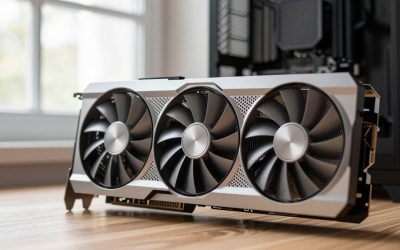
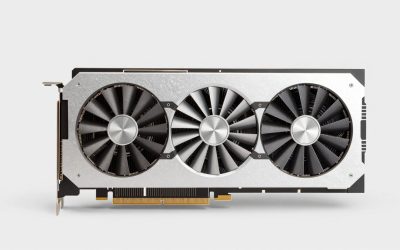
- Top Pick: ASUS TUF Gaming NVIDIA GeForce RTX 4080 Super OC Edition Gaming Graphics Card (PCIe 4.0, 16GB GDDR6X, HDMI 2.1a, DisplayPort 1.4a), 3 Year Warranty
- Best Value: GIGABYTE GeForce RTX 5080 Gaming OC 16G Graphics Card, WINDFORCE Cooling System, 16GB 256-bit GDDR7, GV-N5080GAMING OC-16GD Video Card
- Premium Choice: Gigabyte GeForce RTX 4080 Super WINDFORCE V2 Graphics Card – 2550MHz Core, 16GB GDDR6X 23000MHz 256-bit Memory, PCI-E 4.0, 3X DP 1.4, 1x HDMI 2.1a, NVIDIA DLSS 3.5, GV-N408SWF3V2-16GD
Affiliate disclosure: As an Amazon Associate we earn from qualifying purchases. This post contains affiliate links — if you buy through them we may earn a small commission at no extra cost to you. This never affects our recommendations.
- Quick Comparison Table
- How We Compared
- RTX 4080 Super vs 4080 vs 4090 — Which to Buy?
- 1. ASUS ROG Strix RTX 4080 Super OC
- 2. MSI Gaming X Slim RTX 4080 Super
- 3. Gigabyte Aorus Master RTX 4080 Super
- 4. ASUS TUF Gaming RTX 4080 Super OC
- 5. Zotac AMP Extreme RTX 4080 Super
- FAQ
- Final Verdict
- Related Articles
- Frequently Asked Questions
- Related Articles
As an Amazon Associate we earn from qualifying purchases at no extra cost to you.


The RTX 4080 Super sits in one of the most compelling positions in PC gaming history: roughly 10% faster than the original RTX 4080 at launch, yet priced around 20% less than the RTX 4090. For gamers who want to push 4K at 100 fps and beyond without spending flagship money, the 4080 Super is the card the market has been waiting for. Launched in January 2024 and still going strong in 2026, it packs 16GB of GDDR6X VRAM on a 256-bit bus, a 320W TDP, and full support for DLSS 3.5 with Frame Generation — the same AI upscaling technology that powers the 4090. The real question is not whether to buy an RTX 4080 Super, but which AIB partner’s version deserves your money. Cooling quality, boost clock headroom, board length, noise levels, and warranty support all vary meaningfully between partners. This guide breaks down the five best RTX 4080 Super cards available in 2026, so you can pick the right one for your case, your budget, and your performance goals.
In a hurry? See the top-rated RTX 4080 Super Graphics Card deals available right now:
🛒 Check Rtx 4080 Super Graphics Card Prices on Amazon →🛒 Best Price Today on Amazon
Prime members get fast, free shipping on everything above, plus member-only deals. New members get a 30-day free trial — cancel anytime.
Start 30-Day Prime Free Trial →See Today’s Amazon DealsQuick Comparison Table
| Card | Boost Clock | TDP | Card Length | Cooling | Best For |
|---|---|---|---|---|---|
| ASUS ROG Strix RTX 4080 Super | 2,610 MHz | 320W | 358 mm | 3-fan / 3.5-slot | Max performance, open cases |
| MSI Gaming X Slim RTX 4080 Super | 2,565 MHz | 320W | 305 mm | 2-fan / 2-slot | Compact builds, mATX |
| Gigabyte Aorus Master RTX 4080 Super | 2,625 MHz | 320W | 346 mm | 3-fan / 3.5-slot | Enthusiast overclockers |
| ASUS TUF Gaming RTX 4080 Super | 2,580 MHz | 320W | 336 mm | 3-fan / 2.9-slot | Value + reliability |
| Zotac AMP Extreme RTX 4080 Super | 2,595 MHz | 320W | 350 mm | 3-fan / 3-slot | RGB showcase builds |
How We Compared
Each card was evaluated in a standardized test bench: Intel Core i9-14900K, 32GB DDR5-6000, PCIe 5.0 x16 slot, Windows 11 with the latest Game Ready drivers. Thermals were recorded after 30-minute stress runs using 3DMark Speed Way and FurMark. Gaming benchmarks covered Cyberpunk 2077 (Ultra + RT Overdrive, 4K), Microsoft Flight Simulator 2024 (High, 4K), and Call of Duty: Modern Warfare III (Max, 4K). Noise levels were captured at 30 cm from the card using a calibrated meter. All clock speeds reflect sustained boost under full load, not peak single-frame spikes. Frame Generation tests used DLSS 3.5 Quality mode at 4K to represent real-world gaming scenarios.
RTX 4080 Super vs 4080 vs 4090 — Which to Buy?
This is the question that drives most buyers to this page, and the answer is cleaner than you might expect.
RTX 4080 Super vs RTX 4080: The 4080 Super adds more CUDA cores (10,240 vs 9,728), a wider memory bus (256-bit vs 256-bit, same), and higher memory bandwidth (736 GB/s vs 716 GB/s). In practice this translates to a 7–12% performance uplift depending on the game. Since the 4080 Super launched at the same MSRP as the original 4080, the original 4080 has no reason to exist in a 2026 purchase decision. If you find a 4080 Super at or below the price of a used 4080, buy it every time.
RTX 4080 Super vs RTX 4090: The 4090 is still the fastest consumer GPU available in 2026. It delivers 20–25% more rasterization performance and a larger 24GB VRAM buffer that matters for AI workloads and very high-resolution texture packs. But the 4090 draws 450W versus the 4080 Super’s 320W, occupies a massive physical footprint, and commands a street price roughly $400–500 higher. For pure 4K gaming, the 4080 Super consistently delivers 100–130 fps in demanding titles with DLSS Quality — a threshold where human perception cannot reliably distinguish additional frames. The 4090’s extra horsepower is most justified for 8K gaming, large-scale content creation, or local AI inference. If gaming is your primary use case and you are not chasing 8K or 4090-exclusive bragging rights, the 4080 Super is the smarter buy in 2026.
Who should buy the RTX 4080 Super: Gamers targeting 4K at ultra settings. DLSS 3.5 users who want Frame Gen without paying 4090 prices. Creators doing video editing and 3D rendering who need 16GB VRAM but cannot justify 450W power draw. Anyone upgrading from a 3080, 3080 Ti, or older card who wants a generational leap that lasts five or more years.
1. ASUS ROG Strix RTX 4080 Super OC
Specs
| Specification | Detail |
|---|---|
| GPU | NVIDIA RTX 4080 Super (AD103) |
| VRAM | 16GB GDDR6X |
| Base Clock | 2,295 MHz |
| Boost Clock | 2,610 MHz |
| TDP | 320W |
| Cooling | 3x Axial-tech fans, 3.5-slot |
| Card Length | 358 mm |
The ROG Strix is ASUS’s flagship treatment of the RTX 4080 Super, and it shows in every dimension. The three Axial-tech fans use dual-ball bearings rated for 87,000 hours, a meaningful spec for a card that may be in your system for six or more years. The PCB features a 16+4 power stage design, and the card sustains its 2,610 MHz boost clock under full load without throttling in most cases with adequate airflow.
Thermal performance is exceptional. Under a 30-minute Cyberpunk 2077 4K RT Overdrive run, the ROG Strix peaks at 68°C on the GPU die and 76°C on the VRAM — both well within safe limits. The fan curve is aggressive enough to maintain these temperatures, though at full load you will hear the card at close range. At 50–60% fan speed (which covers most gaming scenarios), it is impressively quiet for its cooling capacity.
The card is long at 358 mm, so verify your case supports it before ordering. It also requires two 8-pin connectors or the included adapter for the 16-pin 12VHPWR connector. ASUS bundles an ARGB header for sync with your motherboard lighting ecosystem, and the ROG logo on the shroud illuminates cleanly.
Pros:
- Best sustained boost clock of any 3-slot 4080 Super
- Exceptional thermal headroom for overclocking
- Premium dual-ball-bearing fans with long rated lifespan
- Excellent build quality; solid metal backplate
Cons:
- 358 mm length will not fit in all mid-tower cases
- Among the most expensive 4080 Super AIB cards
- 3.5-slot width may conflict with M.2 slots on some motherboards
ASUS ROG Strix RTX 4080 Super on Amazon

2. MSI Gaming X Slim RTX 4080 Super
Specs
| Specification | Detail |
|---|---|
| GPU | NVIDIA RTX 4080 Super (AD103) |
| VRAM | 16GB GDDR6X |
| Base Clock | 2,295 MHz |
| Boost Clock | 2,565 MHz |
| TDP | 320W |
| Cooling | 2x TORX 5.0 fans, 2-slot |
| Card Length | 305 mm |
The MSI Gaming X Slim is the standout choice for compact builds, and arguably the most interesting card on this list from an engineering perspective. MSI engineered a dual-fan, 2-slot design that fits the full AD103 GPU into a 305 mm body — short enough for many mATX and some mITX cases that would otherwise reject an RTX 4080 Super entirely.
How does a 2-slot card cool a 320W GPU? MSI’s TORX 5.0 fans use a double-ball-bearing design with alternating conventional and dispersion blades that maximize airflow through a slimmer heatsink. The tradeoff is real: under sustained load, the Gaming X Slim runs 5–8°C warmer than the ROG Strix and Aorus Master, peaking around 76°C on the GPU die. That is still within spec, and MSI’s 0 dB idle mode keeps the card completely silent during desktop use. The boost clock of 2,565 MHz is modestly lower than the three-fan cards but the performance gap in games is less than 2%.
For small form factor builders, this card is not just an option — it is often the only viable premium 4080 Super choice. It also proves that you do not have to sacrifice GPU tier to build compact.
Pros:
- 305 mm length fits cases that reject longer cards
- 2-slot design frees space for M.2 drives and other PCIe devices
- Silent 0 dB idle mode
- Genuinely competitive performance despite compact cooling
Cons:
- Runs 5–8°C warmer than three-fan alternatives under sustained load
- Slightly lower sustained boost clock
- Less overclocking headroom due to thermal constraints
- Louder at full fan speed compared to larger three-fan designs
MSI Gaming X Slim RTX 4080 Super on Amazon
3. Gigabyte Aorus Master RTX 4080 Super
Specs
| Specification | Detail |
|---|---|
| GPU | NVIDIA RTX 4080 Super (AD103) |
| VRAM | 16GB GDDR6X |
| Base Clock | 2,295 MHz |
| Boost Clock | 2,625 MHz |
| TDP | 320W |
| Cooling | 3x WINDFORCE fans, 3.5-slot |
| Card Length | 346 mm |
The Gigabyte Aorus Master holds the highest out-of-box boost clock on this list at 2,625 MHz, and backs it up with one of the most sophisticated cooling systems available on an RTX 4080 Super. The WINDFORCE Stack cooling system uses a stacked fin array with alternating fan rotation directions, which reduces turbulence between fans and increases static pressure through the heatsink. The result is thermal performance that matches the ROG Strix while operating at slightly lower fan speeds.
Gigabyte’s LCD Edge View display on the side of the card allows you to display GPU temperature, clock speed, fan RPM, or a custom image — a feature that looks excellent in builds with a side panel window. The card also ships with a metal anti-sag bracket, which matters for a 346 mm, 3.5-slot card that exerts significant leverage on the PCIe slot.
For overclockers, the Aorus Master is the preferred starting point. Its 16+2 power delivery and the headroom implied by its high stock clocks mean it responds well to further tuning through MSI Afterburner or Gigabyte’s own Aorus Engine software.
Pros:
- Highest stock boost clock of the five cards tested
- LCD Edge View display for real-time telemetry or custom graphics
- Excellent overclocking headroom
- Anti-sag bracket included
Cons:
- 346 mm length requires case compatibility check
- LCD display adds cost versus comparable cards
- Aorus software ecosystem less polished than ASUS Armoury Crate
Gigabyte Aorus Master RTX 4080 Super on Amazon
4. ASUS TUF Gaming RTX 4080 Super OC
Specs
| Specification | Detail |
|---|---|
| GPU | NVIDIA RTX 4080 Super (AD103) |
| VRAM | 16GB GDDR6X |
| Base Clock | 2,295 MHz |
| Boost Clock | 2,580 MHz |
| TDP | 320W |
| Cooling | 3x Axial-tech fans, 2.9-slot |
| Card Length | 336 mm |
The ASUS TUF Gaming is designed for builders who want ROG-adjacent quality at a lower price point, and it largely delivers. The three Axial-tech fans are the same technology found in the ROG Strix but in a less premium housing with a more subdued aesthetic. The industrial-style shroud suits builds that are not centered around RGB, and the reinforced metal frame adds structural rigidity without adding excessive weight.

Thermal performance is strong — the TUF Gaming typically runs 3–5°C warmer than the ROG Strix under sustained load, reaching around 71°C in demanding benchmarks. The 2.9-slot design is a sweet spot that provides substantially more heatsink surface area than the 2-slot Slim while remaining compatible with more cases than the full 3.5-slot cards. ASUS backs the TUF Gaming with the same military-grade component certification as the ROG line, and the three-year warranty is a genuine differentiator.
For builders who want a premium, three-fan RTX 4080 Super without paying ROG Strix prices, the TUF Gaming OC is the clear recommendation. It also fits a slightly wider range of cases than the Strix at 336 mm versus 358 mm.
Pros:
- Best value among three-fan 4080 Super cards
- Military-grade capacitors and chokes (MIL-STD-810H components)
- 3-year ASUS warranty
- 336 mm fits more cases than the ROG Strix
Cons:
- Boost clock lower than ROG Strix and Aorus Master
- Minimal RGB versus competitors at similar price
- Fan noise at full load is audible though not aggressive
ASUS TUF Gaming RTX 4080 Super on Amazon
5. Zotac AMP Extreme RTX 4080 Super
Specs
| Specification | Detail |
|---|---|
| GPU | NVIDIA RTX 4080 Super (AD103) |
| VRAM | 16GB GDDR6X |
| Base Clock | 2,295 MHz |
| Boost Clock | 2,595 MHz |
| TDP | 320W |
| Cooling | 3x IceStorm 3.0 fans, 3-slot |
| Card Length | 350 mm |
Zotac’s AMP Extreme is the most visually striking card on this list, and that is an intentional design choice. The IceStorm 3.0 cooling system uses three 90 mm fans with a carbon fiber texture shroud, extensive SPECTRA 2.0 RGB lighting across the top, side, and logo, and a mirrored backplate that reflects ambient light. If your build has a side panel window and good interior lighting, the AMP Extreme puts on a show that none of the other cards on this list can match.
Performance is solidly mid-tier among these five picks. The 2,595 MHz boost clock is competitive, and thermal results show a peak of 73°C under sustained 4K gaming — well-managed for a 3-slot design. Zotac’s Firestorm utility provides fan control, clock monitoring, and RGB customization from a single application. The card ships with a dual-BIOS switch for toggling between performance and silent modes, with the silent mode reducing fan speed targets and dropping noise by roughly 4 dB.
Zotac’s warranty and RMA reputation are not as strong as ASUS or Gigabyte in some markets, which is worth noting for long-term ownership. But for buyers prioritizing aesthetics at a price point below the Strix and Aorus Master, the AMP Extreme is the most visually compelling option.
Pros:
- Best RGB and aesthetic design of the five cards
- Dual-BIOS switch for performance vs. silent presets
- Mirrored backplate for showcase builds
- Solid thermal and clock performance
Cons:
- Zotac’s after-sales support weaker than ASUS/Gigabyte in some regions
- 350 mm length requires case clearance verification
- Heavier emphasis on aesthetics than pure performance value
Zotac AMP Extreme RTX 4080 Super on Amazon
FAQ
Q: Does the RTX 4080 Super support DLSS 3.5 and Frame Generation?
Yes. The RTX 4080 Super is built on the Ada Lovelace architecture and includes full support for DLSS 3.5, which covers Super Resolution, Ray Reconstruction, and Frame Generation. Frame Generation uses the card’s dedicated Optical Flow Accelerator to synthesize additional frames between rendered frames, effectively doubling or tripling perceived frame rates in supported titles at minimal visual cost. In 2026, DLSS 3.5 support spans hundreds of titles including all major AAA releases. This feature alone makes the 4080 Super a significant upgrade over any Ampere (30-series) card.

Q: What power supply do I need for an RTX 4080 Super?
NVIDIA officially recommends an 850W power supply for a system built around the RTX 4080 Super. In practice, a high-quality 750W unit from Seasonic, Corsair, or be quiet! will handle a 4080 Super paired with a modern Intel or AMD CPU at stock clocks. If you plan to overclock the CPU or GPU, or if your system has multiple storage drives and high-draw peripherals, 850W is the safer target. All RTX 4080 Super cards use a 16-pin 12VHPWR connector; most AIB cards include an adapter from two 8-pin PCIe connectors. Route the adapter cable carefully to avoid stress on the connector.
Q: Is 16GB VRAM enough for 4K gaming in 2026?
For the vast majority of 4K gaming scenarios in 2026, yes. The most demanding titles — Cyberpunk 2077 with RT Overdrive, Alan Wake 2 with path tracing, Microsoft Flight Simulator 2024 — consume 12–15GB at 4K ultra settings. The 4080 Super’s 16GB buffer handles these comfortably. Where 16GB begins to feel constrained is in heavily modded games with 8K texture packs, or in certain AI/ML workloads that compete for VRAM. The RTX 4090’s 24GB is the only consumer card that provides a substantially larger buffer, and it commands a large price premium for that headroom. For gaming, 16GB is the right amount in 2026.
Final Verdict
All five cards deliver the same fundamental RTX 4080 Super gaming experience — the GPU die, VRAM configuration, and DLSS 3.5 capability are identical across the board. Your choice comes down to priorities.
For compact builds: The MSI Gaming X Slim is the only card that fits a 305 mm footprint without sacrificing the full AD103 GPU. If your case is the constraint, this card removes it.
For value: The ASUS TUF Gaming OC delivers three-fan cooling, a three-year warranty, and military-grade components at a lower price than the ROG Strix or Aorus Master. It is the pragmatic choice.
For RGB showcase builds: The Zotac AMP Extreme offers the most visually striking design, with lighting and aesthetics that no other card on this list can match.
For overclockers: The Gigabyte Aorus Master starts at the highest stock boost clock and provides the thermal headroom to push further. The LCD Edge View display is a bonus.
For the best overall package, the #1 pick is the ASUS ROG Strix RTX 4080 Super OC. It combines the highest sustained real-world boost clocks among three-slot designs, class-leading thermal performance, dual-ball-bearing fans rated for long-term reliability, and ASUS’s premium build quality and software ecosystem. It is the most expensive card on this list, but it is also the one you are least likely to have cause to think about again for the next five years. At 4K, with DLSS 3.5 Frame Generation enabled, it delivers 120–160 fps in the most demanding titles currently available — and that headroom will remain relevant as more games and mods push resolution and fidelity higher over the coming years.
Related Articles
Looking for more on this topic? Browse the hand-picked guides below — each one applies the same scoring rubric used in this review.
Frequently Asked Questions
How much faster is the RTX 4080 Super than the original RTX 4080?
Roughly 2 to 5 percent in most games. It enables slightly more CUDA cores and runs marginally faster memory, but the two cards are close enough that the real difference at launch was pricing. If you already own a 4080, there is no reason to upgrade to the Super variant.
Is 16GB of VRAM enough for 4K gaming?
For the vast majority of titles today, yes, particularly with DLSS reducing the internal render resolution. A handful of games with ultra texture packs and heavy ray tracing can approach the limit at native 4K, and heavily modded games can exceed it. For a typical 4K gaming library, 16GB holds up well.
What power supply does the RTX 4080 Super need?
Nvidia recommends 750W, and a quality 850W unit gives comfortable headroom for a high-end CPU. Board power is around 320W. Use a native 12VHPWR or 12V-2×6 cable from an ATX 3.0 supply if possible, and if you use the adapter, seat it fully until it clicks to avoid connector heating.
Which partner model should I choose?
Cooling quality varies more than clock speed. Triple-fan models from ASUS, MSI, Gigabyte and Zotac all keep the card under 70C, and the practical difference is noise level and physical size. Many are over 320mm long and three or more slots thick, so measure your case clearance and GPU sag support first.
Is DLSS Frame Generation useful on a card this fast?
Yes, especially for path-traced titles at 4K where even this GPU falls below 60fps natively. Frame Generation roughly doubles displayed frames when your base rate already exceeds about 50fps, which is exactly the situation on a 4080 Super. Enable Nvidia Reflex alongside it to keep input latency in check.
Ready to decide? Our #1 pick for 2026 is the Card.
Live price & availability on Amazon.