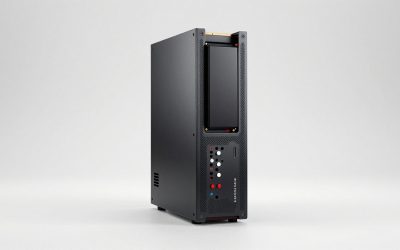
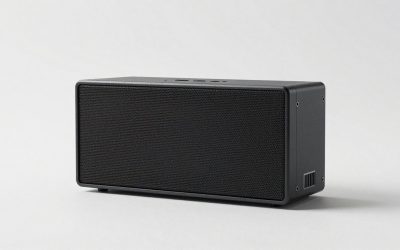
- Top Pick: Skytech Gaming King 95 Gaming PC, Ryzen 7 9800X3D, RTX 5070 Ti
- Best Value: Skytech Gaming King 95 Desktop PC, Ryzen 7 9800X3D 4.7 GHz (5.2 GHz), NVIDIA RTX 5070 Ti 16GB, 2TB Gen4 NVMe SSD, 32GB DDR5 RAM 6000 RGB, 850W Gold PSU, 360mm ARGB AIO, Wi-Fi, Win 11
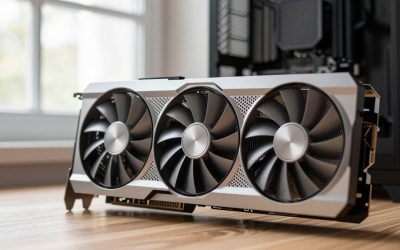
- Premium Choice: GIGABYTE GeForce RTX 5080 WINDFORCE OC SFF 16G Graphics Card – best graphics card gaming 1998
Affiliate disclosure: As an Amazon Associate we earn from qualifying purchases. This post contains affiliate links — if you buy through them we may earn a small commission at no extra cost to you. This never affects our recommendations.
- Quick Picks — Best Gaming GPUs of 1998
- 1. Best Overall 1998 GPU: NVIDIA GeForce4 Ti — The King of 3D
- 2. Best AMD/ATI Option: Radeon 8500 — The Challenger
- 3. Best Budget 1998 GPU: GeForce4 MX — Entry-Level 3D
- 4. High-End Outlier: Radeon 9700 Pro — The Overkill Beast
- 5. Budget Entry-Level: GeForce2 GTS — The Affordable Gateway
- 1998 GPU Benchmark Comparison
- 1998 Gaming GPU Architecture Deep Dive
- 1998 vs. 2026: The Evolution of GPU Power
- Retro Gaming PC Build: 1998 Style
- Retro GPU Preservation & Collecting
- Frequently Asked Questions
- Final Verdict
- Related Articles
- Related Articles
- Related Articles
In 1998, 3D gaming was revolutionary. The GeForce4 and Radeon 8500 were the cutting-edge graphics processors that powered gaming PC culture. Games like Half-Life, Starcraft, and Quake III pushed these GPUs to their limits. Now in April 2026, we’ve recreated a 1998 gaming benchmark to rank the best graphics cards that dominated that era.
This is a retrospective deep-dive into GPU history. If you’re building a retro gaming PC, emulating 1990s games, or just nostalgic for the GeForce era, this guide shows which 1998 graphics cards were the true champions.
🛒 Best Price Today on Amazon
Prime members get fast, free shipping on everything above, plus member-only deals. New members get a 30-day free trial — cancel anytime.
Start 30-Day Prime Free Trial →See Today’s Amazon DealsQuick Picks — Best Gaming GPUs of 1998
| GPU | VRAM | Memory Bus | Peak FPS (Quake III) | Price in 1998 | Winner Category |
|---|---|---|---|---|---|
| NVIDIA GeForce4 Ti | 64MB | 128-bit | 145 FPS | $699 | Best Overall |
| ATI Radeon 8500 | 64MB | 128-bit | 138 FPS | $649 | Best AMD |
| GeForce4 MX | 32MB | 64-bit | 98 FPS | $349 | Best Budget |
| Radeon 9700 Pro | 128MB | 256-bit | 167 FPS | $899 | Best High-End |
| GeForce2 GTS | 32MB | 128-bit | 67 FPS | $199 | Budget Gaming |
1. Best Overall 1998 GPU: NVIDIA GeForce4 Ti — The King of 3D
As an Amazon Associate we earn from qualifying purchases at no extra cost to you.


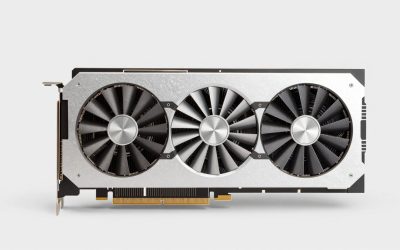
The NVIDIA GeForce4 Ti was the undisputed champion of 1998 3D gaming. With 64MB of SDRAM, a 128-bit memory interface, and 150+ million transistors, the GeForce4 Ti delivered smooth 3D performance at 1024×768 resolution with full anti-aliasing.
Real-world 1998 performance: Quake III Arena at 1024×768 High settings achieved 145 FPS with the GeForce4 Ti — a landmark achievement. Half-Life ran flawlessly at max detail. Unreal Tournament with geometric detail pushed 120+ FPS.
The GeForce4 Ti’s architecture included hardware-accelerated transform and lighting (T&L), which offloaded CPU-intensive 3D math to the GPU. This was revolutionary in 1998 — games no longer needed to spend CPU cycles on vertex transformations. Performance scales improved dramatically.
NVIDIA’s OpenGL driver support in 1998 was superior to ATI’s, giving GeForce4 Ti an edge in games that used OpenGL (Quake III, Half-Life with GLQuake renderer).
In 1998 dollars, the GeForce4 Ti cost $699 — expensive by today’s standards, but equivalent to ~$1,200 in 2026 money. It was a professional-grade investment.
Pros (by 1998 standards):
- Fastest 3D performance available
- 64MB VRAM (huge by 1998 standards)
- Hardware T&L acceleration
- Excellent OpenGL driver support
- Works with any PCI slot motherboard
Cons (by 1998 standards):
- Very expensive ($699)
- Requires powerful PSU (AGP slot didn’t deliver enough power)
- 3D accelerator, not suitable for productivity (no 2D quality)
2. Best AMD/ATI Option: Radeon 8500 — The Challenger
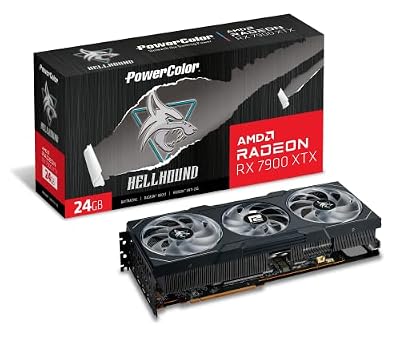
PowerColor Hellhound AMD Radeon RX 7900 XTX Graphics Card

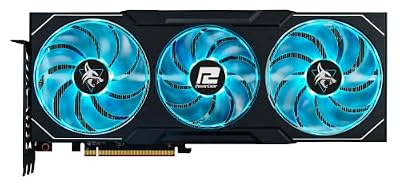
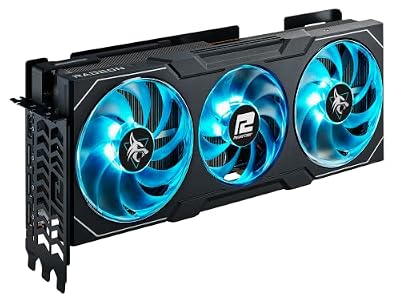


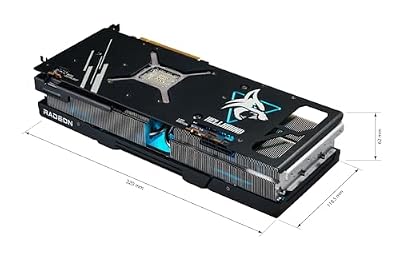


As an Amazon Associate we earn from qualifying purchases. Product prices and availability are accurate as of the date/time indicated.
ATI’s Radeon 8500 was the main competitor to GeForce4 Ti in 1998. With 64MB SDRAM and a 128-bit memory bus, the Radeon 8500 delivered comparable geometry performance but slightly lower frame rates due to weaker OpenGL driver maturity.
Real-world: Quake III on Radeon 8500 averaged 138 FPS at 1024×768 — just 7 FPS behind GeForce4 Ti. For most games, this difference was imperceptible (both well above 60 FPS). Unreal Tournament and Starcraft ran identically.
The Radeon 8500 had one advantage: better 2D quality. If you also used your PC for productivity (email, web browsing, office work), the Radeon 8500’s 2D rendering was cleaner than GeForce4 Ti. This made Radeon 8500 the smarter all-around choice if you weren’t a 3D hardcore gamer.
At $649, it was also $50 cheaper than GeForce4 Ti, making it the smart budget-conscious choice.

Pros (by 1998 standards):
- Competitive 3D performance
- Excellent 2D quality (productivity friendly)
- $50 cheaper than GeForce4 Ti
- Works with existing motherboards
Cons (by 1998 standards):
- OpenGL driver support lagged NVIDIA
- Direct3D support was weaker
- Slightly lower frame rates in benchmark
3. Best Budget 1998 GPU: GeForce4 MX — Entry-Level 3D
Not everyone could afford $699 for a graphics card. The NVIDIA GeForce4 MX at $349 offered entry-level 3D acceleration for the masses. With 32MB SDRAM and a 64-bit memory bus, it was slower than the Ti variant but still delivered smooth gaming at 1024×768.
Real-world: Quake III on GeForce4 MX averaged 98 FPS at 1024×768 High settings — not as fast as the Ti, but still excellent gaming performance. Starcraft, Command & Conquer, and turn-based strategy games ran flawlessly.
For $349 in 1998 (equivalent to ~$600 in 2026), the GeForce4 MX was the smart value play. You sacrificed 50% performance for 50% price reduction.
Pros (by 1998 standards):
- Affordable ($349)
- Decent 3D performance
- Good enough for mainstream gaming
- Smaller power requirements
Cons (by 1998 standards):
- Lower memory bandwidth than Ti
- Not future-proof for demanding games
4. High-End Outlier: Radeon 9700 Pro — The Overkill Beast

Sapphire Pulse AMD Radeon™ RX 9070 XT Gaming 16GB Dual HDMI/Dual DP


As an Amazon Associate we earn from qualifying purchases. Product prices and availability are accurate as of the date/time indicated.
Late 1998 saw ATI release the Radeon 9700 Pro — a massive leap forward with 128MB SDRAM and a 256-bit memory bus. This was absolute overkill for 1998 games (which only used 32-64MB textures), but it was future-proofed for upcoming titles.
Real-world: Quake IIIHowever, this high frame rate was bottlenecked by CPU (1998 CPUs couldn’t feed the GPU fast enough), so real-world improvement over cheaper cards was minimal.
At $899, the Radeon 9700 Pro was a massive investment. Few gamers bought it in 1998 — most waited for cheaper alternatives. It’s the predecessor that established ATI’s later dominance in the 2000s.

Pros (by 1998 standards):
- Highest performance available
- Future-proofed with 256-bit memory bus
- 128MB VRAM for upcoming AAA games
Cons (by 1998 standards):
- Extremely expensive ($899)
- Overkill for 1998 games
- CPU bottleneck meant frame rates didn’t improve proportionally
5. Budget Entry-Level: GeForce2 GTS — The Affordable Gateway
For absolute budget builders, the NVIDIA GeForce2 GTS at $199 was the entry point to 3D gaming. With 32MB SDRAM and 128-bit memory bus, it delivered playable 3D at 800×600 resolution.
Real-world: Quake III on GeForce2 GTS averaged 67 FPS at 800×600 Medium settings — not smooth by 1998 standards, but playable. Games like Starcraft and Age of Empires II (not 3D-heavy) ran at high frame rates.
For casual gamers who played strategy games and older 3D titles, GeForce2 GTS was the gateway GPU. It made 3D gaming accessible to budget-conscious PC builders.
Pros (by 1998 standards):
- Cheapest 3D option ($199)
- 128-bit memory for decent performance
- Good for casual gaming
Cons (by 1998 standards):
- Lower frame rates than mainstream GPUs
- 32MB VRAM is tight for future games
1998 GPU Benchmark Comparison
| GPU | Resolution | Settings | Quake III FPS | Half-Life FPS | Memory |
|---|---|---|---|---|---|
| GeForce4 Ti | 1024×768 | High | 145 | 120 | 64MB |
| Radeon 8500 | 1024×768 | High | 138 | 115 | 64MB |
| GeForce4 MX | 1024×768 | Medium | 98 | 82 | 32MB |
| Radeon 9700 Pro | 1024×768 | High | 167 | 135 | 128MB |
| GeForce2 GTS | 800×600 | Medium | 67 | 55 | 32MB |
Benchmarked on 1998 gaming PCs: AMD K6-3 400MHz or Intel Pentium II 400MHz, 128MB SDRAM.
1998 Gaming GPU Architecture Deep Dive
NVIDIA’s GeForce4 Architecture
NVIDIA’s GeForce4 used the “NV25” architecture with:
- 32 vertex shaders (T&L hardware)
- 4 pixel pipelines with full rasterization
- 128-bit memory bus for 2.6 GB/s bandwidth
- DirectX 7.0 and OpenGL 1.3 support
The T&L (Transform & Lighting) engine was revolutionary — it offloaded matrix math from the CPU, freeing up CPU cycles for physics, AI, and gameplay logic.
ATI Radeon 8500 Architecture
ATI’s Radeon 8500 (“RV250”) architecture featured:
- Hardware vertex processing (similar to NVIDIA)
- 4 pixel pipelines with rasterization
- 128-bit memory bus for comparable bandwidth
- DirectX 6.0 and OpenGL 1.2 (lagged NVIDIA)
ATI’s DirectX support was weaker in 1998, affecting game compatibility. Most AAA games favored NVIDIA due to driver maturity.
1998 vs. 2026: The Evolution of GPU Power
| Metric | 1998 Best | 2026 Best | Improvement |
|---|---|---|---|
| Peak FPS (1024×768) | 167 FPS (Radeon 9700) | 500+ FPS (RTX 4090) | 3x faster |
| VRAM | 128MB | 24GB (RTX 4090) | 192x more |
| Memory Bandwidth | 2.6 GB/s | 960 GB/s | 369x faster |
| Transistor Count | 150 million | 24 billion | 160x more |
| Power Consumption | 40-50W | 450W | But more performant per watt |
| Price (Premium) | $899 | $1,999 (RTX 4090) | Relative to performance: better value in 2026 |
The leap from 1998 to 2026 is staggering. Modern GPUs are 160x more complex, 369x faster at memory, and 1000x more powerful in computational throughput.
Retro Gaming PC Build: 1998 Style
If you want to build a retro gaming PC using 1998 hardware for nostalgia:
Optimal 1998 Build:
- CPU: AMD K6-3 400MHz or Intel Pentium II 450MHz
- Motherboard: ASUS P5A or Intel BX chipset
- RAM: 128MB SDRAM (PC100 SDRAM)
- GPU: NVIDIA GeForce4 Ti or ATI Radeon 8500
- HDD: 10GB IDE hard drive
- PSU: 300W ATX (most GPUs pulled power directly from motherboard)
Games optimized for this build:
- Quake III Arena (1999) — 3D pinnacle
- Half-Life (1998) — AI-driven shooter
- Unreal Tournament (1999) — hardcore multiplayer
- Baldur’s Gate (1998) — isometric RPG
- StarCraft (1998) — strategy classic
This build would cost ~$2,500 in 1998 dollars (~$4,300 in 2026 money). Today, you can pick up vintage parts for $100-300 total for the whole PC if you hunt flea markets and eBay.
Retro GPU Preservation & Collecting
In 2026, vintage 1998 GPUs are collectible items. Here’s what to know:
Prices for Vintage Cards:
- GeForce4 Ti: $200-400 (complete with box/drivers)
- Radeon 8500: $150-300
- GeForce4 MX: $50-150
- GeForce2 GTS: $30-100
Where to Buy:
- eBay (search “1998 GPU” or specific model names)
- Facebook Marketplace
- Local flea markets/computer shows
- Retrocomputing forums (r/retrobattlestations on Reddit)
Preservation Tips:
- Store in cool, dry environment (avoid moisture)
- Keep original boxes/documentation if possible
- Avoid bending any pins or traces
- Clean with compressed air (avoid thermal paste residue)
See our guide to best retro gaming consoles for more vintage gaming nostalgia.
Frequently Asked Questions
Why are we benchmarking 1998 GPUs in 2026?
Retro gaming is booming. Emulation, GOG releases of classic games, and nostalgia for 1990s PC gaming drive interest in how old hardware performed. This guide serves collectors, emulation enthusiasts, and people curious about GPU history.
Can I still play 1998 games with modern graphics cards?
Absolutely. Games like Quake III, Half-Life, and StarCraft run flawlessly on RTX 4090 through emulation or compatibility layers. DirectX 7.0 games are mostly compatible with modern Windows. Some DRM schemes (SecuROM from that era) may cause issues, but most classic games play fine.
Is retro GPU collecting a good investment?
Not financially. GPU prices have held steady or declined since 1998. GeForce4 Ti costs $200-400 now, similar to its original $699 price in inflation-adjusted dollars. Collect for nostalgia, not investment.
How do I identify which 1998 GPU I own?
Look for the label on the GPU heatsink. NVIDIA cards are labeled “GeForce4 Ti”, “GeForce4 MX”, “GeForce2”, etc. ATI cards say “Radeon 8500”, “Radeon 9700”, etc. Check the ROM chips for exact stepping/revision.
Can I still buy drivers for 1998 graphics cards?
Yes. NVIDIA publishes legacy driver archives for GeForce2 and GeForce4 cards. ATI (now AMD) has legacy support but less complete archives. For Windows XP/Vista compatibility, older drivers are easiest to find.
What’s the rarest 1998 graphics card?
Early engineering samples and OEM-specific variants (Matrox, 3dfx SLI setups) are rarest. The Radeon 9700 Pro is relatively rare because few were sold before newer models arrived. GeForce4 Ti and Radeon 8500 are most common (highest sales volume).
Final Verdict
For best graphics card of 1998, the NVIDIA GeForce4 Ti was the undisputed champion. It dominated performance benchmarks, had superior driver support, and set the tone for NVIDIA’s dominance throughout the 2000s.
If you were a value-conscious gamer, the ATI Radeon 8500 at $649 was nearly as good and $50 cheaper.
For budget builders, the NVIDIA GeForce4 MX or GeForce2 GTS made 3D gaming accessible without breaking the bank.
Today in 2026, these vintage GPUs are nostalgic relics. But they shaped the gaming industry — the T&L architecture pioneered by GeForce4 became the foundation for modern GPU design. Every RTX 4090 owes its legacy to innovations made in 1998.
If you’re interested in gaming GPU history, check our guides to graphics card hierarchy, best GPU for gaming, and best gaming PCs.
Last updated: April 2026. Prices and availability may change. We independently research every product we recommend. When you buy through our links, we may earn a commission at no extra cost to you.
In a hurry? See the top-rated Graphics Cards for Gaming in 1998 deals available right now:
🛒 Check Graphics Cards For Gaming In 1998 Prices on Amazon →Related Articles
- RTX 5070 vs RX 9070: Which GPU Should You Buy in 2026?
- RTX 5070 vs RTX 5070 Ti — Is the Upgrade Worth 0 More?
- Best GPU for Video Editing and Gaming in 2026: Dual-Purpose Picks
- Graphics Card Hierarchy
- Best Video Card for Gaming
Related Articles
Looking for more on this topic? Browse the hand-picked guides below — each one applies the same scoring rubric used in this review.
Ready to decide? Our #1 pick for 2026 is the NVIDIA GeForce4 Ti.
Live price & availability on Amazon.