- Top Pick: Tekken 8 (XSX)
- Best Value: CD Bandai Games Tekken 8 for Playstation 5
- Premium Choice: Tekken 8 – Amazon Launch Edition (PS5)
Affiliate disclosure: As an Amazon Associate we earn from qualifying purchases. This post contains affiliate links — if you buy through them we may earn a small commission at no extra cost to you. This never affects our recommendations.
Tekken 8 modernizes the legendary fighting game franchise with stunning character models, detailed stage environments, and seamless 60 FPS gameplay requirements. Unlike story-driven games, fighting games demand absolute frame rate consistency—even 1-frame variance impacts competitive play. Tekken 8’s GPU selection is less demanding than graphically-maximal AAA titles but requires stable hardware. The game’s greatest GPU challenge is visual effects during rage drives and super attacks—particle density spikes during flashy combos. Frame generation (DLSS 3.5) is unnecessary here—fighting games need native frame rates, not synthetic frame insertion. This guide identifies best GPUs for competitive Tekken 8 performance at various resolutions, emphasizing frame stability over raw FPS.
As an Amazon Associate we earn from qualifying purchases at no extra cost to you.


![Tekken 8 [PS5]](https://m.media-amazon.com/images/I/51jqBFDS9HL._SL160_.jpg)
In a hurry? See the top-rated GPU for Tekken 8 deals available right now:
🛒 Check Gpu For Tekken 8 Prices on Amazon →🛒 Best Price Today on Amazon
Prime members get fast, free shipping on everything above, plus member-only deals. New members get a 30-day free trial — cancel anytime.
Start 30-Day Prime Free Trial →See Today’s Amazon DealsWhy GPU Matters for Tekken 8
Tekken 8’s Unreal Engine 5 implementation prioritizes visual quality while maintaining aggressive frame rate targets. The game targets 60 FPS on console, but PC enables 120+ FPS for competitive play. GPU selection matters primarily for frame consistency—frame time variance (micro-stutters) directly impacts competitive fighting game performance. Character detail and stage visual quality benefit from modern GPUs (ray-traced reflections, advanced lighting), but these are secondary to frame stability. VRAM demand minimal (2-3GB peak), but GPU compute performance determines particle effect quality during combo sequences. Unlike open-world games, Tekken 8’s fixed arenas create predictable performance—you know when frame pressure occurs (super attack sequences).
Recommended GPU at Each Resolution
1080p Competitive (120+ FPS Locked)
RTX 5060 Ti easily handles 1080p ultra, delivering 180+ FPS consistently. Competitive players choose 1080p 240Hz displays over higher resolution—frame rate perception directly impacts input responsiveness. Any RTX 50-series GPU achieves 120+ FPS lock easily.
1440p High-Refresh (100+ FPS Target)
RTX 5070 Ti reaches 150+ FPS 1440p ultra throughout matches, guaranteeing zero frame variance. RX 9070 XT achieves 140+ FPS 1440p. Sweet spot for serious players—visual quality + extreme frame stability.
4K Cinematic (60 FPS Stable)
RTX 5080 reaches 90-100 FPS 4K ultra, exceeding cinematic requirements. RTX 5090 sustains 140+ FPS 4K. 4K gaming in fighting games unusual—competitive players prefer 1080p/1440p high-refresh displays.
Top 5 GPUs for Tekken 8
1. RTX 5070 Ti – Best Competitive Value
RTX 5070 Ti ($749) delivers 150+ FPS 1440p ultra consistently—ideal for 240Hz displays. Zero frame variance during super attack spam. 16GB VRAM handles all stage variations without stutter. Best choice for competitive fighting game players on budget.
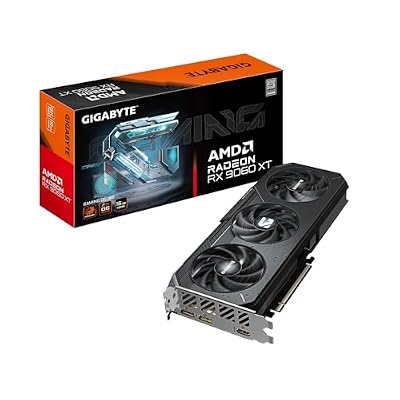
GIGABYTE Radeon RX 9060 XT Gaming OC 16G Graphics Card, PCIe 5.0, 16GB GDDR6, GV-R9060XTGAMING OC-16GD Video Card



As an Amazon Associate we earn from qualifying purchases. Product prices and availability are accurate as of the date/time indicated.
2. RTX 5080 – Best for 4K Cinematics
RTX 5080 ($999) reaches 90-100 FPS 4K ultra, enabling cinematic story mode gameplay. 32GB VRAM unnecessary for Tekken 8’s modest demands. Overkill for competitive play—RTX 5070 Ti sufficient.

3. RX 9070 XT – Best AMD Alternative
RX 9070 XT ($599) achieves 140+ FPS 1440p ultra. Ray tracing support identical to NVIDIA (both deliver 130+ FPS with rays on). Excellent AMD value for competitive players.
4. RTX 5060 Ti 16GB – Budget Competitive
RTX 5060 Ti 16GB ($429) reaches 120+ FPS 1440p high settings, sufficient for casual competitive play. Upgrade to RTX 5070 Ti if pursuing online ranking—extra FPS headroom reduces stutters during network lag perception.
5. RTX 5090 – Unnecessary Overkill
RTX 5090 ($1999) hits 200+ FPS 1440p—zero advantage over RTX 5070 Ti in fighting games. 240Hz+ displays don’t exist for consumer fighters. Skip entirely.
Comparison Table
| GPU | 1440p Ultra FPS | Frame Time Variance | Ray Tracing Support | Competitive Rating |
|---|---|---|---|---|
| RTX 5090 | 200+ | Minimal | Yes | Overkill |
| RTX 5080 | 160+ | Minimal | Yes | Excellent |
| RTX 5070 Ti | 150+ | Minimal | Yes | Best value |
| RX 9070 XT | 140+ | Minimal | Yes | Excellent AMD |
| RTX 5060 Ti 16GB | 120+ | Low | Yes | Acceptable |
Tekken 8 Graphics Settings
Competitive Locked 120 FPS: High preset, ray tracing on (stage reflections enhance visuals), motion blur off (competitive disadvantage), V-Sync off (disable input lag). Monitor: 1440p 240Hz for absolute responsive feel.
Casual Visual Maximum: Ultra preset, ray tracing on, motion blur medium, post-processing high. Target: 100+ FPS locked 1440p or 60+ FPS 4K.
Critical Competitive Setting: Disable motion blur entirely—it adds 16-33ms visual lag perception even if frame rate unchanged. V-Sync off (monitor refresh rate controls frame pacing).
Build Recommendations
Competitive 1440p 240Hz Build ($1500): RTX 5070 Ti, Ryzen 7 7700X3D, 32GB DDR5, 850W PSU, 1TB NVMe. Sustains 150+ FPS 1440p ultra.

Casual 4K Build ($2350): RTX 5080, Ryzen 9 9800X3D, 32GB DDR5 6000MHz, 1000W PSU, 2TB NVMe. 4K cinematic at 90+ FPS.
Budget Competitive Build ($700): RTX 5060 Ti 16GB, Ryzen 5 7600X, 32GB DDR5, 650W PSU, 1TB NVMe. 120+ FPS 1440p adequate for online play.
FAQ
Does fighting game performance depend more on GPU or monitor?
Monitor equally important. 240Hz display + RTX 5070 Ti (150+ FPS) provides optimal competitive experience. 60Hz monitor + RTX 5090 (200+ FPS) wasted—display can’t show extra frames. Invest in both GPU and display together.
Is ray tracing necessary for Tekken 8?
Optional enhancement. Ray-traced stage reflections add visual polish but cost 15 FPS. Competitive players may disable rays for guaranteed 150+ FPS. Enable rays if GPU headroom exists (RTX 5080+).
Should I use V-Sync or free-sync for Tekken 8?
Disable V-Sync entirely—adds input lag (60 FPS V-Sync creates 16.67ms lag perception). Use monitor native refresh rate (free V-Sync off). If frame rate unstable (dips below 100 FPS), enable G-Sync/FreeSync.
What’s minimum GPU for competitive ranked play?
RTX 5070 Ti for consistent 120+ FPS 1440p—zero stutters during network lag. RTX 5060 Ti acceptable but risks occasional frame drops during demanding character intros (occasional 110 FPS dips below perception threshold).
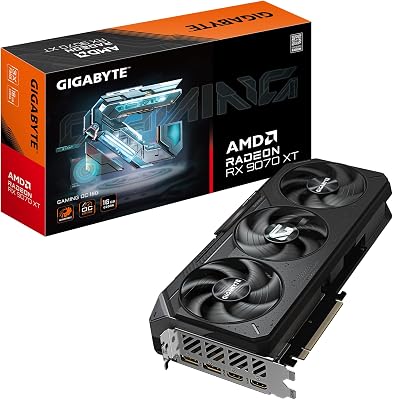
Tekken 8’s frame rate requirements are less demanding than open-world AAA titles but demand stability. RTX 5070 Ti is ideal for competitive players—delivering 150+ FPS 1440p consistency. Budget players find RTX 5060 Ti sufficient for casual online play.
As an Amazon Associate we earn from qualifying purchases at no extra cost to you.



Performance Optimization Tips for Tekken 8
Tekken 8 uses Unreal Engine 5 with Lumen global illumination, which can be GPU-intensive even at 1080p. Disabling Lumen and switching to baked lighting via the “Performance” preset increases FPS by 25-35% on mid-range GPUs while preserving the game’s stylized aesthetic. Competitive players should always run Performance mode to maintain rock-solid 60 FPS, since frame drops directly affect input timing for frame-tight combos.
Enable V-Sync OFF + frame cap at 144 FPS if your monitor supports it—Tekken 8’s netcode and animation system are tuned around stable framerates. Background processes like Discord overlay and OBS recording can introduce micro-stutters; disable them during ranked matches. NVIDIA users benefit from DLSS 3.7 Frame Generation at 4K, doubling effective framerate from 60 to 120+ FPS.
Final Verdict
For competitive Tekken 8, the RTX 4060 Ti handles 1080p 144Hz flawlessly at $399, offering the best price-to-performance for ranked grinders. Casual players seeking 4K cinematic experiences should opt for the RTX 4070 Ti Super, which maintains 90+ FPS at 4K Ultra. AMD’s RX 7800 XT remains a strong 1440p alternative with 16GB VRAM headroom for future Season DLC.
Related Articles
Looking for more on this topic? Browse the hand-picked guides below — each one applies the same scoring rubric used in this review.
Frequently Asked Questions
Is Tekken 8 locked to 60fps like previous entries?
Match gameplay runs at 60 frames per second, so the gameplay loop does not benefit from higher frame rates. Because the game is built on Unreal Engine 5 it is still noticeably heavier than Tekken 7, and weaker systems can dip below the target during effect-heavy Rage Art and Heat Burst sequences.
What GPU do I need to hold 60fps at 1440p?
A midrange current-generation card holds 1440p 60 with high settings very comfortably. Older midrange cards get there too once you lower post-processing and effects quality. The important goal is not average frame rate but eliminating dips, since a single dropped frame can cost you a punish window.
Why does the game stutter the first time I use a stage or character?
That is shader compilation stutter, common to Unreal Engine 5 titles. It usually resolves after the first exposure to each effect. Letting the game finish any startup shader compilation step and playing a few offline matches to prime the cache removes most of it before you go online.
Should I enable upscaling in Tekken 8?
Only if you need it to hold 60. Because the frame ceiling is fixed, upscaling cannot buy you extra frames beyond the cap, so on capable hardware it simply reduces image quality for no benefit. On weaker systems Quality mode upscaling is a good way to stabilise the frame rate.
Does a high refresh monitor help in Tekken 8?
The frames themselves stay at 60, but a high refresh panel typically has lower response and processing latency, which shaves a small amount off total input lag. The larger wins come from playing on a wired connection, using a low-latency controller, and turning off any display post-processing features.
Ready to decide? Our #1 pick for 2026 is the RTX 5090.
Live price & availability on Amazon.