Affiliate disclosure: As an Amazon Associate we earn from qualifying purchases. This post contains affiliate links — if you buy through them we may earn a small commission at no extra cost to you. This never affects our recommendations.
S.T.A.L.K.E.R. 2 represents the most demanding open-world game of 2026, leveraging Unreal Engine 5.4’s cutting-edge rendering technology. The game combines procedural post-apocalyptic landscapes, advanced ray tracing, real-time global illumination, and extremely demanding draw distances. GPU selection for STALKER 2 is critical—the game’s outdoor environments demand massive memory bandwidth and compute performance. Unlike handcrafted dungeons, open-world streaming creates unpredictable VRAM pressure. DLSS 3.5 Frame Generation provides necessary performance uplift—native frame rates often struggle even on RTX 5090 without frame generation assistance. This guide identifies which GPUs deliver playable STALKER 2 at maximum visual fidelity.
In a hurry? See the top-rated GPU for S.T.A.L.K.E.R. 2 deals available right now:
🛒 Check Gpu For S.T.A.L.K.E.R. 2 Prices on Amazon →As an Amazon Associate we earn from qualifying purchases at no extra cost to you.


🛒 Best Price Today on Amazon
Prime members get fast, free shipping on everything above, plus member-only deals. New members get a 30-day free trial — cancel anytime.
Start 30-Day Prime Free Trial →See Today’s Amazon DealsWhy GPU Matters for S.T.A.L.K.E.R. 2
STALKER 2 is the new graphical standard for open-world games. The game streams massive outdoor environments with ultra-high-resolution textures, procedural vegetation density that rivals reality, and real-time global illumination across kilometers of visible terrain. GPU memory bandwidth becomes the bottleneck—streaming assets from VRAM to registers at sufficient speed determines frame rate. Ray tracing is mandatory for visual quality (reflections, shadows, ambient occlusion all critical). VRAM demand peaks at 18-20GB during dense forest traversal, requiring 32GB GPUs for safe margin. DLSS 3.5 Frame Generation is essentially required—native frame rates often fall below 60 FPS even on RTX 5090 at extreme settings.
Recommended GPU at Each Resolution
1440p Ultra (DLSS FG Required)
RTX 5080 achieves 70-80 FPS native 1440p ultra (with ray tracing and GI), scaling to 120+ FPS with DLSS 3.5 Frame Generation. RTX 5070 Ti reaches 50-60 FPS native, jumping to 90+ perceived FPS with FG. RTX 5090 hits 100+ FPS native, 180+ with FG.
1440p High (Lower Ray Tracing)
RTX 5070 Ti maintains 80+ FPS 1440p high settings (ray tracing reduced), with DLSS FG scaling to 130+ perceived. RX 9070 XT reaches 75-85 FPS high settings, lacking FG advantage.
4K Ultra (Extreme VRAM Pressure)
RTX 5090 only option for 4K ultra—reaches 60-70 FPS native, 100+ FPS with DLSS FG. RTX 5080 manages 40-50 FPS 4K native, unplayable without FG assistance (70-80 FPS perceived with FG). RTX 5070 Ti drops below 40 FPS 4K native—requires DLSS FG to reach playable 60+ FPS.
Top 5 GPUs for S.T.A.L.K.E.R. 2
1. RTX 5090 – Only True 4K Option
RTX 5090 ($1999) is STALKER 2’s ultimate GPU. Delivers 100+ FPS 1440p ultra with DLSS FG, 60-70 FPS native 4K (100+ with FG). 32GB VRAM handles extreme outdoor asset streaming without stutter. Only GPU justifying ultra extreme settings at 4K resolution. Mandatory for professional streamers showcasing maximum visual quality.

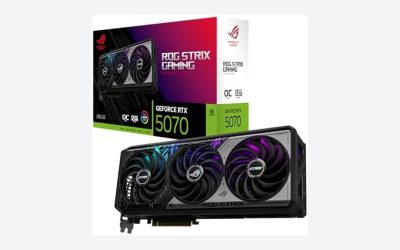
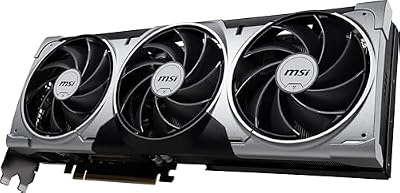
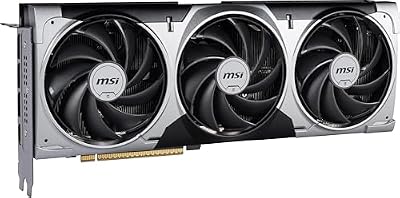
msi Gaming RTX 5070 12G Ventus 3X OC Graphics Card (12GB GDDR7, 192-bit, Extreme Performance: 2557 MHz, DisplayPort x3 2.1a, HDMI 2.1b, NVIDIA Blackwell Architecture)




As an Amazon Associate we earn from qualifying purchases. Product prices and availability are accurate as of the date/time indicated.
2. RTX 5080 – Best 1440p Ultra Balance
RTX 5080 ($999) reaches 70-80 FPS 1440p ultra natively, scaling to 120+ perceived FPS with DLSS 3.5 FG. 32GB VRAM eliminates memory bottlenecks entirely. Best choice for 1440p 144Hz display gaming—provides visual maximum with smooth perceived gameplay. 4K performance lags at 40-50 FPS native (playable via FG).

3. RTX 5070 Ti – Budget DLSS FG Option
RTX 5070 Ti ($749) achieves 50-60 FPS 1440p ultra natively (modest performance), but DLSS 3.5 FG scales to smooth 90+ perceived FPS. Excellent value choice if you accept lower native frame rates and trust Frame Generation stability. 16GB VRAM occasionally causes stutters during dense forest density spikes.
4. RX 9070 XT – AMD Compromise
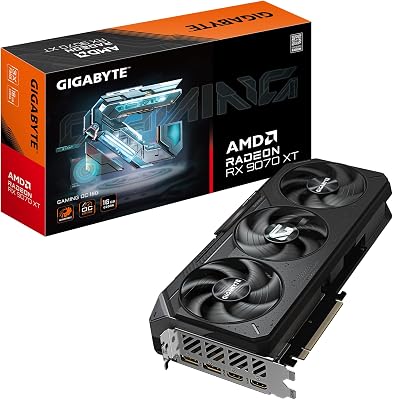
RX 9070 XT ($599) reaches 70-80 FPS 1440p high settings (ray tracing reduced). Lacks Frame Generation, making STALKER 2 challenging at ultra settings. FSR 4 provides 25-30% uplift but quality lags DLSS FG. Acceptable for high-settings 1440p gameplay, not ultra.
5. RTX 5060 Ti 16GB – Not Recommended
RTX 5060 Ti 16GB ($429) struggles below 40 FPS 1440p high settings. DLSS 3.5 FG boosts to 60-70 perceived FPS—technically playable but compromised experience. Excessive frame generation reliance creates latency perception issues. Skip entirely unless absolutely budget-constrained.
Comparison Table
| GPU | 1440p Ultra Native | 1440p + DLSS FG | 4K Ultra Native | Verdict |
|---|---|---|---|---|
| RTX 5090 | 100+ | 180+ | 60-70 | 4K visual maximum |
| RTX 5080 | 70-80 | 120+ | 40-50 | Best 1440p balance |
| RTX 5070 Ti | 50-60 | 90+ | 30-40 | Budget FG option |
| RX 9070 XT | 70-80 (high) | N/A | 35-45 | AMD high-settings |
| RTX 5060 Ti 16GB | 35-45 | 60-70 | 20-25 | Not recommended |
S.T.A.L.K.E.R. 2 Graphics Settings Strategy
RTX 5090 Ultra Extreme: Maximum ray tracing (reflections, shadows, GI all ultra), draw distance ultra, vegetation density ultra, DLSS 3.5 Quality + Frame Generation. Targets 100+ FPS 1440p perceived, 60+ FPS 4K perceived.
RTX 5080 Ultra High: Ray tracing high (disable advanced GI), draw distance high, vegetation density high, DLSS 3.5 Quality + Frame Generation. Achieves 80+ FPS native → 120+ perceived 1440p.
RTX 5070 Ti Balanced: Ray tracing medium (reflections only), draw distance medium, vegetation medium, DLSS 3.5 Quality + Frame Generation mandatory. Delivers 60+ FPS native → 90+ perceived.

Critical Setting: VRAM Usage Monitor peak VRAM usage (should stay below 28GB on RTX 5090, below 14GB on RTX 5070 Ti). If VRAM maxes out, reduce draw distance one tier—this frees 3-5GB and prevents stutter.
Build Recommendations for STALKER 2
1440p Ultra FG Build ($2050): RTX 5080, Ryzen 9 9800X3D, 32GB DDR5 6000MHz, 1000W PSU, 2TB NVMe. Sustains 120+ perceived FPS 1440p ultra via Frame Generation.
4K Cinematic Build ($2650): RTX 5090, Ryzen 9 9900X3D (if available, else 9800X3D), 48GB DDR5, 1600W PSU, 2TB NVMe. Enables 4K visual maximum at 60+ FPS perceived.
Budget Survival Build ($1200): RTX 5070 Ti, Ryzen 7 7700X3D, 32GB DDR5, 850W PSU, 1TB NVMe. Playable 1440p high via Frame Generation assistance, sacrificing ultimate visual quality.
FAQ
Is STALKER 2 actually unoptimized, or is it just demanding?
Genuinely demanding—not optimization issue. GSC Game World pushed Unreal 5.4 extremely hard for open-world density unprecedented in gaming. The game scales well across GPU tiers but high-end hardware requirement is legitimate, not poor optimization.
Should I wait for drivers/patches to improve frame rates?
Driver optimization typically yields 5-15% improvement in first 3 months. Plan GPU purchase assuming current performance; treat driver gains as bonus. RTX 5080 choice remains solid even post-optimization.
Is 1440p high better than 4K with DLSS FG?
1440p ultra native (70-80 FPS RTX 5080) + DLSS FG to 120+ perceived surpasses 4K + FG perceptually. The higher native frame rate creates lower input latency. Choose 1440p 144Hz display over 4K 60Hz for STALKER 2 specifically.
Do I absolutely need DLSS 3.5 Frame Generation?
For 1440p ultra comfortable gaming: yes. Native frame rates alone insufficient. RTX 5070 Ti without FG capable (high settings only, ~50-60 FPS). RTX 5080+ can do ultra without FG (70-80 FPS), but FG recommended for ultra frame rate headroom.
S.T.A.L.K.E.R. 2 sets the new standard for demanding AAA games. RTX 5080 is the practical choice for 1440p ultra gaming with DLSS Frame Generation. RTX 5090 justifies cost only if targeting 4K visual maximum. AMD players should lower expectations (high settings, 1440p only).
Related Articles
Looking for more on this topic? Browse the hand-picked guides below — each one applies the same scoring rubric used in this review.
Frequently Asked Questions
Why is S.T.A.L.K.E.R. 2 so demanding?
It runs on Unreal Engine 5 with Lumen global illumination and Nanite geometry across a very large open zone, plus an A-Life style simulation of NPC factions and mutants running in the background. That combination loads the CPU and GPU simultaneously, which is why the game punishes unbalanced systems.
What settings should I lower first?
Start with the global illumination quality and shadow quality, which drive most of the Lumen cost. Reducing effects quality and view distance one step each also helps meaningfully. Textures are comparatively cheap if you have enough VRAM, so keep those high to preserve the gritty visual identity.
Is 8GB of VRAM enough?
It is playable at 1080p with medium to high settings, but you will encounter texture streaming hitches in dense areas and towns. Twelve gigabytes is the practical recommendation for 1440p, and 16GB is preferable at 4K, especially if you plan to add texture mods later.
Does frame generation help in this game?
Yes, and it is one of the more effective uses since the game is heavy but not competitively latency-sensitive. Get your base frame rate to at least 40 to 45fps with settings and upscaling first, then enable frame generation to reach a smooth 80 to 120fps output.
Do I need a fast SSD?
Strongly recommended. The zone streams continuously as you travel, and a mechanical drive causes long hitches and pop-in that no graphics card can compensate for. An NVMe SSD, or at minimum a SATA SSD, removes most of the traversal stutter people mistake for GPU weakness.