The card people search for as “GT 1650” is the NVIDIA GeForce GTX 1650, a 2019 Turing entry-level graphics card with 4GB of memory that still suits esports, older games and low-power upgrades of office PCs, while the GTX 1650 Super is the clearly better version if you can find one, and anyone building a new gaming PC will be better served by a current card.
As an Amazon Associate we earn from qualifying purchases at no extra cost to you.
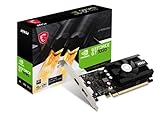

Naming: GTX 1650, “GT 1650” and RTX 1650
NVIDIA’s GTX 16 series page lists the GTX 1660 Ti, 1660 SUPER, 1660, 1650 SUPER, 1650 and 1630 for desktops, with laptop versions of the 1660 Ti, 1650 Ti and 1650. It does not list a “GT 1650”. The “GT” label belongs to NVIDIA’s lowest-end cards, such as the GT 1030, so a listing that says GT 1650 is almost certainly a typo for the GTX 1650, and the seller should be asked to confirm the exact model. In the same way, “RTX 1650” does not exist: the card has no RT cores.
At a Glance: GTX 1650 Family Specs
The figures below come from the GeForce GTX 16 series reference specifications as summarised on Wikipedia, and match the details reported in Tom’s Hardware coverage of the GDDR6 version.
| Model | Release | CUDA cores | Memory | Bus and bandwidth | Board power |
|---|---|---|---|---|---|
| GTX 1650 (GDDR5) | April 2019 | 896 | 4GB GDDR5 | 128-bit, 128 GB/s | 75W |
| GTX 1650 (GDDR6, TU117) | April 2020 | 896 | 4GB GDDR6 | 128-bit, 192 GB/s | about 80W |
| GTX 1650 (GDDR6, TU106) | June 2020 | 896 | 4GB GDDR6 | 128-bit, 192 GB/s | about 90W |
| GTX 1650 Super | November 2019 | 1,280 | 4GB GDDR6 | 128-bit, 192 GB/s | 100W |
The Wikipedia summary lists the 192 GB/s figure for the GDDR6 models, which matches a 128-bit bus running at 12 Gbps. Boost clocks listed there are 1,665 MHz for the GDDR5 card, 1,590 MHz for the GDDR6 versions and 1,725 MHz for the Super. Some sources list a 192-bit bus for GDDR6 variants; the arithmetic behind the bandwidth figure points to 128-bit, and the card’s own spec sheet is the final word.
GDDR5 vs GDDR6: Does It Matter?
NVIDIA moved the GTX 1650 to GDDR6 because the industry was running out of GDDR5, as TechSpot reported at the time. Both versions use the same TU117-class GPU with 896 CUDA cores. The reference GDDR5 card has a 1,485 MHz base and 1,665 MHz boost clock, while the GDDR6 card runs 1,410 MHz base and 1,590 MHz boost, offset by the faster memory.
Reviewers measured a modest gain. Expreview, as reported by Tom’s Hardware and VideoCardz, saw an average of about 6 percent in the GDDR6 version’s favour, with a range from roughly 2 to 12.5 percent depending on the game. Tom’s Hardware’s review of the EVGA GDDR6 card put the improvement closer to 13 percent over a standard GDDR5 card, and noted about 80W under load. The review also reported the card to be about 16 percent slower than the GTX 1650 Super.
| Question | Answer from reviewers |
|---|---|
| Which is faster, GDDR5 or GDDR6? | GDDR6, by a single-digit to low-teens percentage |
| Is the difference visible in play? | Rarely; it shifts frame rates modestly |
| Does GDDR6 change the power connector? | Some boards stay connector-free, others add a 6-pin; read the model’s sheet |
| Is the Super worth finding? | Tom’s Hardware judged it about 20 percent faster at a similar cost when reviewed |
How to tell which version you have
Product listings seldom make it obvious. Look for “GDDR5” or “GDDR6” in the model name or spec line, and compare the memory clock reported by monitoring software against the specification. If a listing does not name the memory type, ask the seller before paying.
Performance Class
A December 2025 overview of the GTX 1650 calls the 4GB buffer the glaring issue in 2026 and notes the absence of RT and Tensor cores, so there is no DLSS. Games that run well are esports titles and older releases at 1080p, typically at medium or low settings in recent releases. Reviewers recommend lowering texture quality in games that use more than 4GB, since exceeding the frame buffer shows up as stutter.
- 1080p: esports and older games; recent releases on low or medium.
- 1440p and above: not the target.
- Upscaling: no DLSS; AMD FSR works in games that support it.
Is It Still Sold and Supported?
The 1650 family is previous-generation hardware, and new stock is mostly leftover or in prebuilt systems, so buyers meet it used or refurbished. The GTX 16 series uses the Turing architecture. NVIDIA’s announced move to security-only updates covers Maxwell, Pascal and Volta, and Turing is not named, so the card should continue on normal Game Ready drivers for now. This could change, and NVIDIA’s release notes are the place to follow it.
Where the GTX 1650 Still Makes Sense
- Office PC upgrades: many GTX 1650 models draw 75W from the slot alone and need no PCIe power lead, so they suit small pre-built PCs with weak power supplies. The Super and some GDDR6 boards do need a lead.
- Low-profile builds: Zotac and other makers sell low-profile versions. Guides note these run at 75W with no connector and use a full x16 link.
- PCIe 3.0 systems: the card uses all 16 lanes, so older boards do not limit it.
Guides comparing low-profile cards report that the GTX 1650 LP sits roughly 15 to 20 percent behind the Radeon RX 6400 LP in rasterization, and that the RX 6400 is the smarter new purchase for lowest power, with the caveat that it uses a PCIe x4 link, which can matter in PCIe 3.0 systems.
Trade-Offs by Budget Tier
| Budget tier | Option | Limit |
|---|---|---|
| Very tight (used) | GTX 1650 or 1650 Super | 4GB memory, no DLSS |
| Budget | RTX 3050 6GB or Radeon RX 6400 for low-power builds | Entry performance |
| Lower mid-range | RTX 5050 class | Needs a 550W supply and an 8-pin lead |
| Mid-range | RTX 5060 and above | Larger and more power hungry |
Pick the GTX 1650 If…
| Situation | Verdict |
|---|---|
| Your PC has no PCIe power lead and you want a basic gaming upgrade | Good fit, choose a no-connector model |
| You play esports titles and older games at 1080p | Good fit |
| You find a GTX 1650 Super for similar money | Prefer the Super |
| You want to play recent AAA games on high settings | Skip |
| You need DLSS or ray tracing | Skip |
Alternatives Worth Considering
GTX 1650 Super
With 1,280 CUDA cores, 4GB of GDDR6 and a 100W rating, it is the clear step up within the family. Tom’s Hardware reported it about 20 percent faster than the standard GDDR6 card when it reviewed the EVGA model.
Radeon RX 6400
Guides rank it first for low-profile and low-power builds at around 53W. The PCIe x4 link and 4GB of memory are its limits.
GeForce RTX 3050 6GB
Described by buying guides as the strongest mainstream card that needs no auxiliary power connector, it adds DLSS and ray tracing support at a higher cost than the 1650.
Buying Checklist for a GTX 1650
- Identify the exact model. Ask for the full name, such as GTX 1650, GTX 1650 Super or a laptop GTX 1650, since laptop chips have lower power limits of roughly 30 to 55W.
- Confirm the memory type. GDDR5 or GDDR6 changes speed by a small amount and sometimes the power rating.
- Look for a power lead. Some boards need none, while others add a 6-pin connector; the power supply must match.
- Match the form factor. Low-profile brackets suit small cases; full-height brackets suit tower cases.
- Look at the condition. Used cards can have worn fans, so prefer sellers that accept returns.
Tuning Games for 4GB
With only 4GB of memory, texture quality is the setting that matters most. Lowering textures one step often removes stutter without a large visual change, while shadows and post-processing are the next settings to reduce if frame rates are short. Resolution scaling or FSR can add headroom in games that support them. Close background applications that use graphics memory, such as browsers with many tabs, before launching a game.
Keep the driver up to date and use the card at stock settings. Overclocking can cause instability and may affect a warranty on a new card, so keep any changes conservative and ensure the case has good airflow.
Frequently Asked Questions
Is there a GT 1650?
NVIDIA’s GTX 16 series page lists no GT 1650. The search term almost always refers to the GTX 1650, so confirm the exact model with the seller.
Is the GTX 1650 GDDR6 faster than GDDR5?
Yes, modestly. Reviewers measured roughly 6 percent on average in one comparison and about 13 percent in Tom’s Hardware’s own review, depending on the card and game.
Does the GTX 1650 need a power connector?
The reference design is rated at 75W and many boards run from the slot alone. GDDR6 and Super versions have higher ratings and some add a 6-pin lead, so read the specific model’s sheet.
Can the GTX 1650 run modern games?
Yes, on lower settings and at 1080p, with the 4GB frame buffer being the main limit. Esports and older titles run comfortably.
What is the difference between the GTX 1650 and the 1650 Super?
The Super has 1,280 CUDA cores against 896, uses GDDR6 and is rated at 100W. Reviewers found it about 20 percent faster at launch pricing.
Is the GTX 1650 still supported by NVIDIA drivers?
It is a Turing card, and the security-only transition announced by NVIDIA applies to Maxwell, Pascal and Volta, not Turing. It continues to receive regular drivers for now.