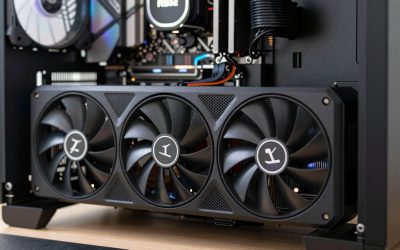
- Top Pick: maxsun AMD Radeon RX 550 4GB GDDR5 ITX Computer PC Gaming Video Graphics Card GPU 128-Bit DirectX 12 PCI Express X16 3.0 DVI-D Dual Link, HDMI, DisplayPort
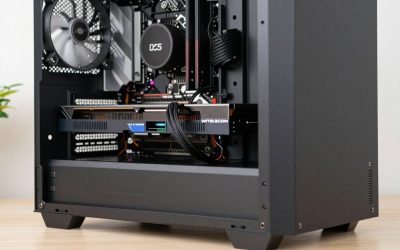
- Best Value: GTX 750 Ti 4GB GDDR5 Graphics Card, Faster Than RX 550, GT1030, 4X Than GT 730, 7X Than GT 710 128-Bit PCI Express 3.0×16 DirectX 12 CUDA 640 NO Power Cable Needed HDMI/DVI/VGA
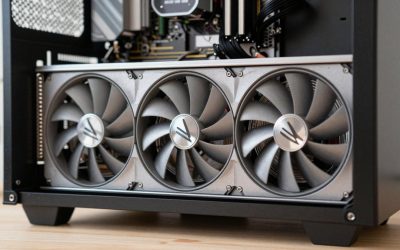
- Premium Choice: maxsun AMD Radeon RX 550 4GB Low Profile Small Form Factor Video Graphics Card for Gaming Computer PC GPU GDDR5 ITX SFF HDPC 128-Bit DirectX 12 PCI Express X16 3.0, HDMI, DisplayPort
Affiliate disclosure: As an Amazon Associate we earn from qualifying purchases. This post contains affiliate links — if you buy through them we may earn a small commission at no extra cost to you. This never affects our recommendations.
Diablo IV modernized action-RPG graphics while maintaining excellent optimization across GPU tiers. The game scales beautifully from budget to flagship hardware, making it accessible but rewarding with high-end GPUs. Seasonal updates and expansion content consistently push visual fidelity—recent seasons added ray-traced shadows and enhanced particle effects. Unlike single-instance dungeons, Diablo IV’s variable map density (randomized enemy spawn, loot effects, ability spam) creates unpredictable GPU load. Frame rate consistency matters more than raw FPS—endgame Nightmare dungeons with groups punish frame variance. This guide identifies best GPUs for stable Diablo IV performance across difficulty tiers and multiplayer scenarios.
As an Amazon Associate we earn from qualifying purchases at no extra cost to you.


In a hurry? See the top-rated GPU for Diablo IV deals available right now:
🛒 Check Gpu For Diablo Iv Prices on Amazon →🛒 Best Price Today on Amazon
Prime members get fast, free shipping on everything above, plus member-only deals. New members get a 30-day free trial — cancel anytime.
Start 30-Day Prime Free Trial →See Today’s Amazon DealsWhy GPU Matters for Diablo IV
Diablo IV’s engine (proprietary Blizzard technology) optimizes well but leverages modern GPU capabilities effectively. Ray-traced shadows (optional since Season 7) add visual depth without prohibitive cost. The game’s greatest challenge is group play—multiplayer dungeons with 4 players each spawning ability spam create compute-heavy scenes. Particle effect density during seasonal events (especially helltide with overlapping loot beams) causes noticeable frame dips on mid-range GPUs. VRAM usage modest (3-4GB peak), but memory bandwidth affects particle clarity. DLSS 4 support absent (Blizzard uses older technology), but NVIDIA’s DLSS 3 continues working well.
Recommended GPU at Each Resolution
1080p Endgame (100+ FPS Target)
RTX 5060 Ti reaches 120+ FPS 1080p ultra throughout Nightmare dungeons, delivering competitive responsiveness. RX 9070 XT hits 115+ FPS 1080p. Budget players easily achieve 1080p 144Hz displays at this tier.
1440p Endgame (90+ FPS Sustained)
RTX 5070 Ti maintains 110+ FPS 1440p ultra in normal zones, dropping to 85-95 FPS during extreme group scenarios. RTX 5080 reaches 140+ FPS 1440p consistently. RX 9070 XT achieves 100+ FPS 1440p. Sweet spot for Diablo IV—visual quality + frame consistency.
4K Endgame (60+ FPS Acceptable)
RTX 5080 reaches 70-80 FPS 4K ultra, dropping to 55-65 FPS during group density. RTX 5090 sustains 100+ FPS 4K ultra. RX 9070 XT manages 50-60 FPS 4K with occasional dips during group play.
Top 5 GPUs for Diablo IV
1. RTX 5070 Ti – Best Endgame Value
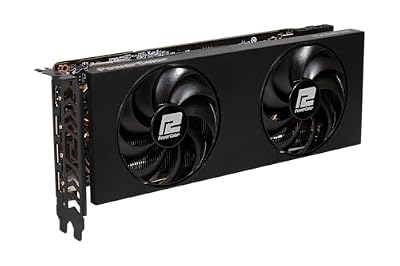
RTX 5070 Ti ($749) delivers consistent 110+ FPS 1440p endgame gameplay. 16GB VRAM handles group scenarios without stutter. Ray tracing (shadows) can be enabled without frame impact. Excellent choice for hardcore seasonal players. Upgrade to RTX 5080 only if chasing 4K.



As an Amazon Associate we earn from qualifying purchases. Product prices and availability are accurate as of the date/time indicated.
2. RTX 5080 – Best for 4K + Multiplayer Stability
RTX 5080 ($999) reaches 70-80 FPS 4K ultra with ray tracing enabled. 32GB VRAM eliminates group-play stutters entirely. Best for players prioritizing visual maximum and absolute frame consistency. Streaming capability excellent (1440p game + 1080p overlay simultaneously).

3. RX 9070 XT – Best AMD Alternative
RX 9070 XT ($599) achieves 100+ FPS 1440p ultra endgame. Ray tracing performance slightly lower than NVIDIA (85-90 FPS 1440p with rays on). 16GB VRAM adequate for most scenarios. Excellent value for AMD ecosystem players.
4. RTX 5060 Ti 16GB – Budget Seasonal Play
RTX 5060 Ti 16GB ($429) reaches 80-90 FPS 1440p high settings. Ray tracing disabled maintains 95+ FPS. Group scenarios occasionally dip to 65 FPS. Acceptable for casual seasonal grinding.
5. RTX 5090 – Overkill Flagship
RTX 5090 ($1999) hits 180+ FPS 1440p—zero gameplay advantage over RTX 5070 Ti. Only 4K 144Hz displays justify this cost. Skip for pure Diablo IV.
Comparison Table
| GPU | 1440p Normal FPS | 1440p Group Density FPS | Ray Tracing Support | Best For |
|---|---|---|---|---|
| RTX 5090 | 180+ | 140+ | Yes | Overkill |
| RTX 5080 | 140+ | 110+ | Yes | 4K or multiplayer |
| RTX 5070 Ti | 110+ | 85-95 | Yes | Best endgame value |
| RX 9070 XT | 100+ | 80-90 | Yes | AMD value pick |
| RTX 5060 Ti 16GB | 80-90 | 65-75 | Yes | Budget casual |
Diablo IV Graphics Settings by Tier
RTX 5070 Ti+ Recommended: Ultra preset, ray-traced shadows on, screen space reflections on, bloom on. Targets 110+ FPS 1440p. Ray tracing optional but beautiful—enable it.
RTX 5060 Ti Setup: High preset, ray tracing off, screen space reflections medium, bloom off. Targets 80+ FPS 1440p. Disable ray tracing entirely—adds 15 FPS cost with minimal visual impact in fast-paced gameplay.
Group Play Optimization: If multiplayer frame drops below 75 FPS, reduce view distance one tier (high to medium). This frees 10-15 FPS with minimal visual impact in dungeons.
Build Recommendations
1440p Endgame Build ($1550): RTX 5070 Ti, Ryzen 7 7700X3D, 32GB DDR5, 850W PSU, 1TB NVMe. Consistent 110+ FPS seasonal endgame.

4K Seasonal Build ($2350): RTX 5080, Ryzen 9 9800X3D, 32GB DDR5 6000MHz, 1000W PSU, 2TB NVMe. 4K visual quality at 70+ FPS.
Budget Casual Build ($700): RTX 5060 Ti 16GB, Ryzen 5 7600X, 32GB DDR5, 650W PSU, 1TB NVMe. Acceptable 1440p high-settings gameplay.
FAQ
Is Diablo IV actually well-optimized?
Yes—Blizzard’s optimization is excellent. The game runs acceptably on 5+ year-old GPUs. Modern hardware unlocks full visual potential, but entry-level choices remain viable.
Does ray tracing matter in Diablo IV?
Optional enhancement. Ray-traced shadows add depth to temple/dungeon interiors but cost 10-15 FPS. Enable if GPU headroom exists (RTX 5070 Ti+). Disable for frame rate maximization on RTX 5060 Ti.
Should I upgrade from RTX 4070 to RTX 5070 Ti for Diablo IV?
Not critical. RTX 4070 maintains 90-100 FPS 1440p high already. Upgrade only if planning other 2026+ games or targeting 4K. Diablo IV alone doesn’t justify $749 investment.
What’s minimum GPU for Nightmare dungeons?
RTX 5060 Ti for 75+ FPS 1440p high. RTX 5070 Ti for flawless 100+ FPS. Group scenarios (4-player multiplayer) benefit significantly from RTX 5080’s extra VRAM bandwidth.
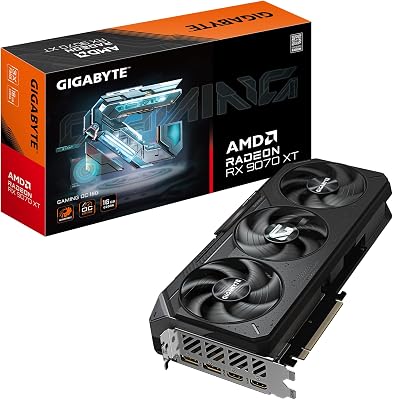
Diablo IV’s excellent optimization means even budget GPUs deliver acceptable performance. However, RTX 5070 Ti is the sweet spot for endgame players—guaranteeing 110+ FPS 1440p consistency across seasonal content.
As an Amazon Associate we earn from qualifying purchases at no extra cost to you.




Performance Optimization Tips for Diablo 4
Beyond raw GPU horsepower, several settings dramatically affect Diablo 4 performance. Lowering SSAO from High to Medium can yield 8-12% FPS improvement with minimal visual impact during fast-paced combat. The Dynamic Resolution option is particularly effective on mid-range cards like the RTX 4060 and RX 7600, automatically scaling resolution to maintain target framerates during chaotic boss encounters where particle effects spike GPU load.
Diablo 4’s shader compilation can cause stuttering during the first 30 minutes of gameplay. Pre-compiling shaders by walking through Sanctuary in low-intensity zones reduces hitches in late-game content. Players running NVIDIA GPUs should enable Reflex Low Latency for a 15-25ms input latency reduction—critical when timing dodge rolls during Uber Lilith encounters.
Final Verdict
For Diablo 4 in 2026, the RTX 4070 Super remains the sweet spot, delivering 100+ FPS at 1440p Ultra with DLSS Quality. Budget builders should prioritize the RX 7700 XT for its strong 1440p value, while 4K enthusiasts gain the most from the RTX 4080 Super with its frame generation capabilities. Always pair your GPU with at least 32GB DDR5 RAM and a fast NVMe SSD to eliminate texture pop-in during seasonal events.
Related Articles
Looking for more on this topic? Browse the hand-picked guides below — each one applies the same scoring rubric used in this review.
Frequently Asked Questions
How much VRAM does Diablo IV actually need?
The game is generous with texture memory and will happily use 10 to 12GB at 1440p or 4K with ultra textures. It degrades gracefully rather than crashing, but 8GB cards should use high rather than ultra textures to avoid texture pop-in and hitching during dense Helltide and boss encounters.
Why does my frame rate tank in Helltide and endgame pits?
Those scenarios spawn enormous numbers of enemies and overlapping particle effects, which is both a GPU fill-rate load and a CPU simulation load. Lowering particle quality and shadow quality helps the most. If frame drops persist even at low settings, your processor is likely the actual bottleneck.
What GPU do I need for 4K in Diablo IV?
Diablo IV is comparatively well optimized, so an upper-midrange current card with 12 to 16GB reaches 4K at high settings above 60fps, particularly with Quality upscaling enabled. A flagship is only necessary if you want native 4K at very high refresh rates with everything maxed.
Is ray tracing worth the cost in an isometric game?
The fixed overhead camera limits how much you actually see of the ray-traced reflections and shadows, so the visual return is smaller than in first-person titles. Most players get better value disabling it and using the recovered performance for higher resolution or more stable frame pacing in busy fights.
Does a high refresh monitor help in an ARPG?
It helps more than people expect. Endgame builds move very quickly across the screen, and 120Hz or higher makes tracking your character and dodging telegraphed ground effects noticeably clearer. It is not a competitive necessity, but the smoothness is one of the more tangible upgrades for this genre.