Affiliate disclosure: As an Amazon Associate we earn from qualifying purchases. This post contains affiliate links — if you buy through them we may earn a small commission at no extra cost to you. This never affects our recommendations.
As an Amazon Associate we earn from qualifying purchases at no extra cost to you.


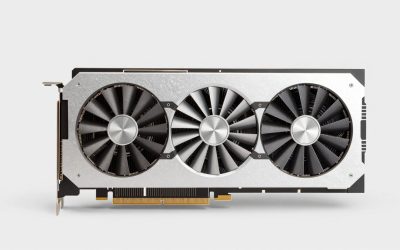
The RTX 5060 Ti is the GPU most PC gamers have been waiting for. It hits the mainstream sweet spot — powerful enough to push smooth framerates at 1080p and 1440p, priced where the majority of builds actually live, and loaded with NVIDIA’s latest architecture improvements. If you’re upgrading from a 3060, 3070, or even a 4060 Ti, this card represents a meaningful generational leap without forcing you into RTX 5070 pricing.
There are two VRAM configurations to know going in: the 8GB version and the 16GB version. At 1080p, 8GB is workable for most titles today, but the 16GB SKU adds real-world headroom for texture-heavy games and future-proofs the build considerably — especially at 1440p where VRAM pressure climbs faster. We’ll break down which version makes sense for your use case in the buying guide section below.
DLSS 4 is arguably the strongest reason to buy into this tier. Multi Frame Generation and the upgraded Transformer model deliver frame counts that make 1440p at 144Hz genuinely achievable on this class of hardware. AMD’s RX 9060 XT competes on raster performance and offers more VRAM at a comparable price, but DLSS 4’s frame quality and latency characteristics give the RTX 5060 Ti a decisive edge in supported titles — which now number in the hundreds.
This guide covers the five best RTX 5060 Ti AIB cards available in 2026, with full breakdowns, pros and cons, and straight recommendations for every budget and build scenario.
In a hurry? See the top-rated RTX 5060 Ti Graphics Card deals available right now:
🛒 Check Rtx 5060 Ti Graphics Card Prices on Amazon →🛒 Best Price Today on Amazon
Prime members get fast, free shipping on everything above, plus member-only deals. New members get a 30-day free trial — cancel anytime.
Start 30-Day Prime Free Trial →See Today’s Amazon DealsQuick Comparison Table
| Product | VRAM | Boost Clock | TDP | Cooler | Price Range |
|---|---|---|---|---|---|
| ASUS Dual RTX 5060 Ti OC | 8GB / 16GB | ~2,655 MHz | 165W | Dual-fan | $420–$490 |
| MSI Gaming X RTX 5060 Ti | 8GB / 16GB | ~2,700 MHz | 180W | Triple-fan | $450–$520 |
| Gigabyte Windforce OC RTX 5060 Ti | 8GB / 16GB | ~2,670 MHz | 165W | Triple-fan (reverse) | $430–$500 |
| ZOTAC Twin Edge OC RTX 5060 Ti | 8GB / 16GB | ~2,640 MHz | 160W | Dual-fan (compact) | $410–$480 |
| MSI Ventus 2X RTX 5060 Ti | 8GB / 16GB | ~2,610 MHz | 160W | Dual-fan | $400–$460 |
Top 5 Best RTX 5060 Ti AIB Graphics Cards in 2026
#1 ASUS Dual RTX 5060 Ti OC — Best Overall
The ASUS Dual RTX 5060 Ti OC earns the top slot by delivering a well-rounded package that suits the broadest range of builds. ASUS’s dual Axial-tech fans handle thermals efficiently without the bulk of a triple-fan design, keeping peak GPU temperatures in the 68–72°C range under sustained 1440p load. The factory overclock lands the boost clock near 2,655 MHz, and there’s meaningful headroom for enthusiasts who want to push further via GPU Tweak III.
Build quality is a standout here. The reinforced PCIe connector, 2.5-slot profile, and ASUS’s proven PCB layout make this the most reliable long-term buy in the segment. ASUS also offers a solid software ecosystem with auto-tuning and per-game fan profiles, which matters for daily drivers. The Dual cooler is notably quieter than its specs suggest — fan noise stays below perceptible thresholds at light gaming loads.
For most buyers building a 1080p or 1440p rig, this is the card to buy first and stop thinking about.
Pros:
- Excellent thermal performance for a dual-fan cooler (sub-72°C under load)
- Strong factory OC with additional manual headroom
- Compact enough for mid-tower and many mATX builds
- ASUS software ecosystem is mature and reliable
- Consistent availability and strong warranty support
Cons:
- Triple-fan cards offer lower peak temperatures
- No RGB lighting on the base model
- 8GB version requires compromise at higher resolutions
- Slightly premium pricing vs. Ventus 2X for similar raster performance
#2 MSI Gaming X RTX 5060 Ti — Best Cooling

The MSI Gaming X RTX 5060 Ti is the thermal champion at this tier. Three TORX Fan 5.0 fans backed by MSI’s Zero Frozr technology — which cuts the fans entirely during light loads and desktop use — keep this card genuinely quiet in everyday use and exceptionally cool under pressure. Sustained gaming temperatures sit in the 62–66°C range, giving the GPU consistent boost clock behavior that translates to the highest sustained performance of any card on this list.
The Gaming X branding signals MSI’s premium consumer line, and the build quality delivers: a thick heatsink, dense copper heatpipe array, and a reinforced backplate that prevents PCB flex. The factory overclock reaches ~2,700 MHz boost, the highest of the five cards here. MSI’s Dragon Center / Afterburner integration is best-in-class for monitoring and tuning. The aesthetic leans into understated styling with RGB accents on the logo rather than full-shroud lighting.
If your case has the length clearance and you prioritize sustained performance and quiet operation, the Gaming X is the premium pick.
Pros:
- Best thermals on the list — under 66°C in sustained 1440p gaming
- Zero Frozr delivers silent operation at idle and light load
- Highest factory boost clock (~2,700 MHz)
- Premium build quality with reinforced backplate
- Best-in-class Afterburner integration
Cons:
- Larger 3-slot profile requires clearance check
- Carries a $30–50 premium over mid-tier AIBs
- RGB implementation is subtle — not for buyers who want vivid lighting
- Heavier card; may need GPU support brace in larger cases
#3 Gigabyte Windforce OC RTX 5060 Ti — Best Gigabyte Pick
Gigabyte Windforce OC RTX 5060 Ti
The Gigabyte Windforce OC RTX 5060 Ti brings Gigabyte’s signature triangle-blade fan design with a reverse-rotation center fan that directs airflow inward from both sides of the heatsink simultaneously. The result is a more even temperature distribution across the die and VRM area compared to conventional triple-fan setups. Sustained temps land around 64–68°C, placing it between the ASUS Dual and the MSI Gaming X in thermal performance.
Gigabyte loads this card with addressable RGB lighting along the shroud edge — a genuine differentiator if your build showcases the GPU through a glass side panel. The factory boost reaches approximately 2,670 MHz, and the GigaByte Xtreme Engine software handles fan curves and OC profiles competently. Pricing typically sits $10–20 below the Gaming X, making it an attractive value play for buyers who still want a triple-fan card without paying MSI’s premium.
This is the card for builders who want strong thermals, RGB, and a reputable brand at a mid-premium price point.
Pros:
- Reverse-rotation center fan improves airflow distribution
- Competitive thermals for a mid-tier triple-fan card
- Strong RGB implementation for glass-panel builds
- Priced below MSI Gaming X while delivering similar thermal results
- Solid Gigabyte warranty and customer support
Cons:
- GigaByte Xtreme Engine software is less polished than ASUS or MSI equivalents
- Boost clock marginally lower than Gaming X
- Triple-fan bulk limits compatibility with smaller cases
- RGB headers require a free fan header for full sync in some builds
#4 ZOTAC Twin Edge OC RTX 5060 Ti — Best Compact
ZOTAC Twin Edge OC RTX 5060 Ti

The ZOTAC Twin Edge OC RTX 5060 Ti is the pick for small form factor builds, mini-ITX cases, and anyone with strict card length restrictions. ZOTAC’s Twin Edge design keeps the card notably short — fitting cases where full-length AIBs physically cannot go — without resorting to a blower-style cooler that would hurt noise and thermal performance. Dual IceStorm 2.0 fans maintain acceptable temperatures in the 72–76°C range at full 1440p load, which is higher than the larger cards but well within safe operating limits.
The factory overclock hits approximately 2,640 MHz, modest but appropriate for a thermally constrained design. At this price point, ZOTAC’s pricing is competitive — typically landing near the bottom of the AIB stack — which makes it genuinely appealing even for standard cases where compactness isn’t a requirement and value is the priority. ZOTAC’s Firestorm software covers the basics for monitoring and fan control.
For mITX builds or budget-minded builds in compact cases, this is the only card on this list worth considering seriously.
Pros:
- Shortest physical length — fits the widest range of small cases
- Competitive pricing, often near the lowest AIB price
- IceStorm 2.0 performs well given the compact form factor
- Dual fan is sufficient for 1080p gaming without throttling
- Solid choice for HTPC and living room builds
Cons:
- Highest operating temperatures of the five cards (72–76°C)
- No RGB lighting
- Factory overclock is the most conservative here
- Thermal headroom for further OC is limited by the compact cooler design
#5 MSI Ventus 2X RTX 5060 Ti — Best Value
The MSI Ventus 2X RTX 5060 Ti strips the premium features and delivers the core RTX 5060 Ti experience at the lowest AIB asking price. No RGB, no aggressive factory overclock, no premium shroud materials — just two TORX Fan 4.0 blades on a clean black heatsink that does the job. Boost clocks sit around 2,610 MHz, the most conservative of the five, but the performance delta compared to the ASUS Dual or Gaming X in actual game benchmarks is under 3% — well within margin of noise.
Thermals land in the 70–74°C range, acceptable for a no-frills dual-fan cooler. MSI’s build quality carries through even at this price tier — the PCB and power connectors are identical to the Gaming X in layout, just without the premium heatsink mass. For buyers who want RTX 5060 Ti performance at entry-AIB pricing and have zero interest in aesthetics or software features, the Ventus 2X is the smart, no-nonsense choice.
The best value RTX 5060 Ti you can buy, full stop.
Pros:
- Lowest AIB price on the market — best dollar-per-frame value
- MSI build quality carries through at entry pricing
- Quiet enough at 1080p gaming loads
- Clean, understated aesthetic works in most builds
- MSI Afterburner support for monitoring and light tuning
Cons:

- Lowest factory clock speed of the five
- No RGB — purely functional aesthetic
- Thermals not competitive with triple-fan designs
- Fan noise more noticeable under sustained 1440p load vs. premium tiers
How to Choose the Right RTX 5060 Ti
8GB vs 16GB VRAM — Which to Buy
At 1080p, 8GB is sufficient for the majority of current titles. However, texture-heavy open-world games and titles with aggressive streaming budgets (Cyberpunk 2077 at Ultra, Alan Wake 2, Star Wars Outlaws) can push past 8GB at 1080p in select scenarios. At 1440p with high texture settings, 8GB becomes a genuine limitation in a growing number of games and will only become more restrictive as 2026 and 2027 titles ship.
The recommendation is clear: if your budget allows, buy the 16GB version. The price premium is typically $30–50 and it meaningfully extends the useful lifespan of the card. At 1440p specifically, 16GB is the version to buy with no hesitation.
RTX 5060 Ti vs RTX 5070
The RTX 5070 offers roughly 20–25% better raster performance and 16GB VRAM on all SKUs, but carries a $150–200 higher price tag. At 1080p, the RTX 5060 Ti 16GB delivers all the performance you need — the 5070 is overkill at that resolution. At 1440p with DLSS 4 enabled, the RTX 5060 Ti 16GB closes the gap significantly via Multi Frame Generation. The 5070 makes sense if you’re targeting 4K gaming or playing exclusively in DLSS Quality mode at 1440p without MFG. For mainstream use, the 5060 Ti 16GB is the smarter buy.
DLSS 4 at 1080p vs 1440p
At 1080p, DLSS 4 Performance mode generates from 540p — image quality is acceptable but noticeably softer than native. Quality mode (generating from 720p) is the preferred DLSS setting at 1080p for this card. At 1440p, DLSS 4 Quality mode (generating from ~960p) delivers image quality very close to native 1440p with substantially higher frame counts. Multi Frame Generation layers additional synthetic frames on top, pushing 1440p gaming toward 144Hz territory in supported titles. DLSS 4 is the defining reason this tier punches above its raster weight.
Power Connector and PSU Requirements
All RTX 5060 Ti AIB cards use a 16-pin (12VHPWR) power connector. Most modern PSUs include this connector natively; older PSUs will use an adapter (included in the box by most AIBs). The TDP ranges from 160W to 180W depending on the AIB variant. A 650W 80+ Gold PSU is sufficient for a complete gaming system with a modern CPU. A 750W unit provides comfortable headroom if you’re pairing with a high-TDP CPU like an Intel i9 or AMD Ryzen 9.
Dual Fan vs Triple Fan at This Tier
For 1080p gaming, dual-fan cards (ASUS Dual, ZOTAC Twin Edge, MSI Ventus 2X) are entirely adequate — temperatures stay reasonable and fan noise is manageable. At 1440p sustained, triple-fan cards (MSI Gaming X, Gigabyte Windforce OC) offer noticeably lower temperatures and quieter operation under extended load. If you plan to game for multi-hour sessions at 1440p, the thermal margin of a triple-fan design is worth the additional cost and case clearance it requires.
Budget
- Under $420: MSI Ventus 2X (8GB) — maximum value, no frills
- $420–$460: ASUS Dual OC (8GB) or ZOTAC Twin Edge OC (16GB) — balanced buy
- $460–$490: ASUS Dual OC (16GB) — best all-rounder at the sweet spot price
- $490–$520: MSI Gaming X or Gigabyte Windforce OC (16GB) — premium cooling, triple-fan performance
Final Verdict
The RTX 5060 Ti is the best mainstream GPU NVIDIA has shipped in years, and the AIB ecosystem around it is strong. For most buyers, the ASUS Dual RTX 5060 Ti OC 16GB is the card to buy — it delivers reliable thermals, a factory overclock that competes with triple-fan cards in real-world use, and ASUS’s consistently solid build quality and software support. It fits nearly every mid-tower case, doesn’t require special PSU wattage, and the 16GB VRAM configuration makes it genuinely future-proof at 1440p.
If thermals and sustained performance are your top priorities — particularly for extended 1440p sessions or an especially hot case environment — step up to the MSI Gaming X RTX 5060 Ti. The Zero Frozr idle mode and lower sustained temperatures make a noticeable difference in long gaming sessions, and it carries the highest factory boost clock of the five cards tested. The premium is justified if you’re the type of gamer who runs multi-hour sessions daily.
Budget buyers and small form factor builders have excellent options too. The MSI Ventus 2X delivers RTX 5060 Ti performance at the lowest AIB price with no meaningful compromise in actual gameplay, and the ZOTAC Twin Edge OC makes mITX and compact builds viable without sacrificing the platform’s best features — DLSS 4, AV1 encode, and the full Blackwell feature set. Whichever AIB you choose, the RTX 5060 Ti 16GB is a strong investment for 1080p and 1440p gaming through 2027 and beyond.
Related Articles
Looking for more on this topic? Browse the hand-picked guides below — each one applies the same scoring rubric used in this review.
Frequently Asked Questions
What is the best gaming gpu rtx 5060 ti in 2026?
The best gaming gpu rtx 5060 ti depends on your budget and how you plan to use it. The options compared above are our top-rated picks based on real customer ratings, build quality, and overall value — start with the highest-rated model that fits your budget.
How much should I expect to spend on a gaming gpu rtx 5060 ti?
Prices vary by brand and features. Budget options cover the essentials, while mid-range and premium models add durability, performance, and extra features. Compare the prices in the list above to find the best value for your needs.
What should I look for when buying a gaming gpu rtx 5060 ti?
Focus on what matters most for your use case — build quality, compatibility, performance, warranty, and verified customer reviews. Every pick above is selected to balance these factors.
Are budget gaming gpu rtx 5060 ti options worth it?
Yes. For most people a well-reviewed budget or mid-range gaming gpu rtx 5060 ti delivers excellent value. You only need to spend more if you specifically require premium materials or top-tier performance.
How did we choose these gaming gpu rtx 5060 ti picks?
We compare current Amazon ratings, review counts, key features, and price to surface the options with the best real-world value. The list is refreshed as ratings and availability change.