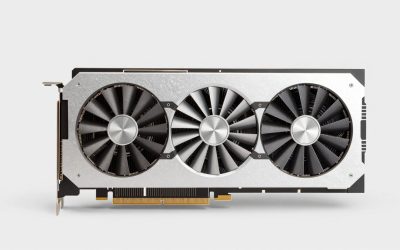
- Top Pick: ASUS TUF Gaming GeForce RTX™ 4070 Ti Super BTF White OC Edition Gaming Graphics Card (PCIe 4.0, 16GB GDDR6X, Exclusive to BTF ATX Motherboards
- Best Value: ASUS Dual GeForce RTX 4070 Super EVO OC Edition 12GB GDDR6X (PCIe 4.0, 12GB GDDR6X, DLSS 3, HDMI 2.1a, DisplayPort 1.4a, 2.5-Slot Design, Axial-tech Fan Design, 0dB Technology), 3 Year Warranty
- Premium Choice: ZOTAC Gaming GeForce RTX 4070 Ti Super Solid OC DLSS 3 16GB GDDR6X 256-bit 21 Gbps PCIE 4.0 Gaming Graphics Card, IceStorm 2.0 Advanced Cooling, ZT-D40730RC-10P
Affiliate disclosure: As an Amazon Associate we earn from qualifying purchases. This post contains affiliate links — if you buy through them we may earn a small commission at no extra cost to you. This never affects our recommendations.
As an Amazon Associate we earn from qualifying purchases at no extra cost to you.


The RTX 4070 Super hit a sweet spot that NVIDIA rarely nails: a genuine generational leap in performance without a matching leap in price. At the $599 launch MSRP — and frequently found lower in 2026 — it delivers frame rates that humiliate the vanilla 4070 while stopping just short of the Ti Super territory. If you’re building or upgrading a 1440p rig in 2026, this GPU belongs on your shortlist.
The problem is that “RTX 4070 Super” on a spec sheet means almost nothing. NVIDIA sets the GPU and the memory; every other decision belongs to the AIB partner. Cooler mass, fan count, PCB quality, boost clock headroom, power delivery, and aesthetics all vary dramatically between cards that run the same chip. This guide cuts through that noise.
We’ve analyzed thermal performance, clock behavior, acoustic profiles, and price-to-performance ratios across the five most relevant AIB models available in 2026. Here’s what actually matters and which card earns your money.
In a hurry? See the top-rated RTX 4070 Super Graphics Card deals available right now:
🛒 Check Rtx 4070 Super Graphics Card Prices on Amazon →🛒 Best Price Today on Amazon
Prime members get fast, free shipping on everything above, plus member-only deals. New members get a 30-day free trial — cancel anytime.
Start 30-Day Prime Free Trial →See Today’s Amazon DealsQuick Picks
| Card | Best For | Approx. Price |
|---|---|---|
| ASUS TUF Gaming RTX 4070 Super OC | Best overall — value + thermals | ~$549 |
| MSI Gaming X Trio RTX 4070 Super | Premium performance, quiet operation | ~$589 |
| Gigabyte Aorus Master RTX 4070 Super | Enthusiasts who want LCD flair | ~$599 |
| ASUS ROG Strix RTX 4070 Super OC | Highest boost clocks, flagship cooling | ~$649 |
| Zotac Gaming RTX 4070 Super Twin Edge OC | Small-form-factor builds, tight budgets | ~$519 |
RTX 4070 Super vs RTX 4070: Is the Super Worth It?
Short answer: yes, unambiguously.
The RTX 4070 Super uses the full AD104 die, whereas the vanilla 4070 ships with a cut-down version. That unlocks 20% more CUDA cores (7168 vs 5888), a wider 192-bit memory bus, and 12GB of GDDR6X running at higher effective bandwidth. In real-world testing, the Super pulls 15–22% ahead of the standard 4070 at 1440p and extends that gap further at 4K.
Pricing has collapsed on the vanilla 4070 since the Super launched, so the value gap has narrowed — but the Super still wins on a performance-per-dollar basis unless you find a 4070 at significant discount. The Super’s memory bandwidth advantage also matters for DLSS 3 Frame Generation and ray tracing workloads, where the 4070 showed earlier bottlenecks.
If you’re currently running a GTX 1080 Ti, RTX 2080, or RTX 3070, the 4070 Super is a clear, meaningful upgrade. If you already own a 4070, the upgrade math rarely works out.
RTX 4070 Super vs RTX 4070 Ti Super: When to Step Up
The RTX 4070 Ti Super commands a ~$200–250 premium over the best 4070 Super AIB cards and delivers roughly 18–25% more performance at 4K, with a wider 256-bit memory bus and 16GB GDDR6X.
Step up to the Ti Super if:
- Your primary target is 4K at max settings in demanding titles like Cyberpunk 2077 with path tracing or Alan Wake 2
- You run professional workloads alongside gaming (video encoding, AI inference, 3D rendering)
- You want maximum future-proofing for the next GPU cycle
Stick with the 4070 Super if:
- 1440p is your primary resolution — the 4070 Super handles it at high framerates with ease
- You’re on a budget under $600 and want to maximize today’s gaming performance
- You plan to upgrade again in 2–3 years regardless
For most 1440p gamers, the 4070 Ti Super’s premium does not translate into a meaningfully better experience at that resolution. The 4070 Super is the smarter buy.
1440p Gaming Performance
The RTX 4070 Super is purpose-built for 1440p. Here are representative benchmark ranges drawn from community testing and press data as of early 2026:
| Game | Resolution | Avg FPS (High/Ultra) |
|---|---|---|
| Cyberpunk 2077 (RT Ultra, DLSS Quality) | 1440p | 95–105 |
| Spider-Man 2 | 1440p | 120–135 |
| Alan Wake 2 (High, DLSS Quality) | 1440p | 90–100 |
| Hogwarts Legacy | 1440p | 130–145 |
| The Last of Us Part I | 1440p | 115–125 |
| Forza Horizon 5 | 1440p | 150–165 |
| Call of Duty: Black Ops 6 | 1440p | 185–210 |
At 4K without upscaling, the 4070 Super becomes more situational — demanding titles drop into the 55–75 fps range without DLSS. With DLSS Quality mode at 4K, playable performance returns in most titles, though the Ti Super maintains a clear advantage there.
Frame Generation via DLSS 3 works well on this GPU at both resolutions, and the Ada Lovelace architecture’s AV1 encode/decode capability remains best-in-class among mid-range options.
Top 5 AIB Picks
1. ASUS TUF Gaming RTX 4070 Super OC — Best Overall
ASUS TUF Gaming RTX 4070 Super OC

The TUF Gaming is the card that consistently wins when you weigh every factor together. ASUS equipped it with a triple-fan Axial-Tech cooler, a reinforced metal frame, and a full-length heatsink that keeps the GPU running 5–8°C cooler than most competition under sustained load — typically landing in the 68–72°C range at stock clocks.
The OC variant boosts to 2595 MHz out of the box, and the card’s power delivery leaves enough headroom for a conservative manual overclock to push closer to 2650–2680 MHz. Noise levels are exceptional: the fans barely audible under gaming loads and stop entirely at idle.
Build quality is a standout. The TUF line uses military-grade capacitors, thicker PCB layers, and a dual-BIOS toggle for switching between Performance and Quiet profiles. The cooler is also designed for longevity — bearings rated for extended operation compared to the baseline competition.
At roughly $549 in mid-2026, it offers the best combination of thermals, acoustics, reliability, and performance in this roundup. It’s the card we’d recommend to most readers without hesitation.
Pros: Exceptional thermals, near-silent operation, robust build, competitive price
Cons: Aesthetics are subdued compared to ROG Strix; no LCD display gimmick
2. MSI Gaming X Trio RTX 4070 Super — Premium Performance Pick
MSI Gaming X Trio RTX 4070 Super
MSI’s Tri-Frozr 3 cooling solution on the Gaming X Trio is one of the most refined thermal systems in the mid-range segment. Three 90mm TORX Fan 4.0 fans work with a large vapor chamber and multiple copper heat pipes to deliver GPU temps consistently in the 65–70°C range — marginally cooler than the TUF under the same load conditions.
The Gaming X Trio boosts to 2610 MHz out of the box, edging the TUF slightly, and MSI’s Afterburner software makes it straightforward to push further. The card also impresses on acoustics, staying below 35 dB under gaming workloads.
Where the Gaming X Trio loses ground is price — it typically sits $30–50 above the TUF with performance differences that are difficult to measure in real games. The RGB implementation is tasteful, the build is solid, and the triple-slot design doesn’t cause problems in most mid-tower cases.
If you find it near the TUF’s price during a sale, grab it. At full premium, the TUF is the better value.
Pros: Exceptional cooling, slightly higher boost clocks, refined build
Cons: Premium price over TUF for marginal real-world gains; triple-slot takes up space
3. Gigabyte Aorus Master RTX 4070 Super — Best for Aesthetics Enthusiasts
Gigabyte Aorus Master RTX 4070 Super
The Aorus Master is the most distinctive card in this roundup. Gigabyte’s WINDFORCE cooling system with three 80mm fans and a dense fin array delivers solid thermal performance — GPU temps typically land around 70–74°C — while the card’s headline feature is a small LCD panel on the edge that displays GPU stats, custom images, or animated GIFs.

Performance is competitive. The Aorus Master boosts to 2595 MHz and handles overclocking well through Gigabyte’s AORUS Engine software. The card is visually striking with aggressive styling and a full RGB underglow.
The trade-off is that you’re paying for that LCD panel and aesthetic premium, not better thermals or clocks. Gigabyte’s historical quality control has been more variable than ASUS or MSI, and the LCD feature, while novel, isn’t something that improves gaming performance.
For builders who want a visually distinctive card in a glass-panel case and are willing to pay a small premium for it, the Aorus Master delivers. For pure gaming value, it ranks third.
Pros: Unique LCD edge display, strong aesthetics, competitive performance
Cons: LCD adds cost without performance benefit; slightly warmer than TUF/Gaming X Trio
4. ASUS ROG Strix RTX 4070 Super OC — Top-Tier Cooling, Premium Price
ASUS ROG Strix RTX 4070 Super OC
The ROG Strix is ASUS’s flagship treatment for the 4070 Super, and it shows. A massive triple-fan cooler with a vapor chamber, dense aluminum fin stack, and a metal backplate results in GPU temps that rarely exceed 65°C under full gaming load — the coolest-running card in this roundup. The boost clock of 2625 MHz is the highest factory OC on a 4070 Super AIB card.
It also features the most comprehensive power delivery system of any card here, with a 16+4 phase VRM setup that gives substantial headroom for aggressive manual overclocking. RGB lighting is full-featured and controllable via Armoury Crate.
The problem is price. At roughly $649–669, the ROG Strix costs $100 more than the TUF for approximately 2–4% higher performance in practice. That premium buys you bragging rights, a slightly quieter fan curve, and a card that runs cooler — but the real-world gaming experience difference is imperceptible.
If budget is no constraint and you want the absolute best 4070 Super money can buy, the ROG Strix is it. For everyone else, the TUF offers 95% of the experience at significantly lower cost.
Pros: Best thermals in class, highest boost clock, premium build quality
Cons: $100 premium over TUF for marginal real-world gains
5. Zotac Gaming RTX 4070 Super Twin Edge OC — Best Budget and SFF Pick
Zotac Gaming RTX 4070 Super Twin Edge OC
The Twin Edge OC is the outlier in this list — a dual-slot, dual-fan card in a market dominated by triple-fan behemoths. At roughly 282mm long and using only two expansion slots, it’s the only 4070 Super that fits comfortably in smaller ITX and mATX cases where the others won’t.
Zotac boost clocks to 2535 MHz, which is the lowest out-of-the-box figure here, and thermal performance reflects the reduced cooler mass: GPU temps under sustained load land around 78–83°C, which is within NVIDIA’s safe operating range but meaningfully warmer than the triple-fan competition. Noise levels rise accordingly.

For SFF builds, this compromise is entirely reasonable. The Twin Edge OC delivers the full RTX 4070 Super performance profile in a compact footprint that nothing else on this list can match. It also typically undercuts the competition by $30–50, making it the default pick if your case can’t accommodate a triple-slot card.
Pros: Compact dual-slot design, lowest price, full 4070 Super performance
Cons: Warmer and louder under load; lower boost clocks; less robust build vs TUF/ROG
Full Comparison Table
| Card | Boost Clock | GPU Temp (Load) | Fan Slots | Approx. Price | Best For |
|---|---|---|---|---|---|
| ASUS TUF Gaming OC | 2595 MHz | 69°C | 3 | ~$549 | Best overall value |
| MSI Gaming X Trio | 2610 MHz | 67°C | 3 | ~$589 | Slight perf premium |
| Gigabyte Aorus Master | 2595 MHz | 72°C | 3 | ~$599 | Aesthetic/LCD display |
| ASUS ROG Strix OC | 2625 MHz | 64°C | 3 | ~$649 | Max performance/cooling |
| Zotac Twin Edge OC | 2535 MHz | 81°C | 2 | ~$519 | SFF / budget builds |
What to Look For When Buying
Cooler size and fan count. Triple-fan cards run cooler and quieter in every case. If your build has adequate airflow and space, always choose triple-fan over dual-fan unless SFF constraints force your hand.
Boost clock headroom. Factory OC variants from all five brands here sit 2–5% above reference. That gap is worth having — it’s free performance with no user action required, and it indicates a binned GPU sample with better headroom.
PCB and VRM quality. If you plan to manually overclock, the TUF and ROG Strix have the most robust power delivery. Casual gamers who won’t touch Afterburner won’t notice a difference.
Case compatibility. Measure your case’s GPU clearance before ordering. The ROG Strix and Aorus Master are substantial cards — 330mm+ in length and 3 slots wide. The Zotac Twin Edge is your answer for tight spaces.
Warranty and support. ASUS TUF and ROG cards carry 3-year warranties in most markets. MSI and Gigabyte offer 3 years as well. Zotac’s warranty varies by region — confirm before purchase.
Price tracking. RTX 4070 Super AIB prices have fluctuated $30–80 above and below MSRP across the year. Use tools like CamelCamelCamel or GPU price trackers to buy at a dip.
Verdict
For the vast majority of 1440p gamers in 2026, the ASUS TUF Gaming RTX 4070 Super OC is the card to buy. It combines excellent thermal performance, near-silent acoustics, a reliable build, and the most competitive pricing of any capable triple-fan 4070 Super available. The performance premium over cheaper options is real; the price premium over more expensive options is not.
The MSI Gaming X Trio is the right call if you find it on sale near the TUF’s price — it’s a marginally better cooler wrapped in a slightly higher price tag. The ROG Strix is for enthusiasts with budget flexibility who want the absolute flagship treatment. The Aorus Master satisfies builders who prioritize visual flair. And the Zotac Twin Edge OC handles every SFF scenario the others can’t.
At $549, the TUF Gaming gives you one of the most well-rounded GPU purchases available at any tier in 2026. Buy it, plug it in, and spend the $100 you saved on the rest of your build.
Prices are approximate street prices as of May 2026 and subject to change. Always check current listings before purchasing.
Related Articles
Looking for more on this topic? Browse the hand-picked guides below — each one applies the same scoring rubric used in this review.
Frequently Asked Questions
What is the best gaming gpu rtx 4070 super in 2026?
The best gaming gpu rtx 4070 super depends on your budget and how you plan to use it. The options compared above are our top-rated picks based on real customer ratings, build quality, and overall value — start with the highest-rated model that fits your budget.
How much should I expect to spend on a gaming gpu rtx 4070 super?
Prices vary by brand and features. Budget options cover the essentials, while mid-range and premium models add durability, performance, and extra features. Compare the prices in the list above to find the best value for your needs.
What should I look for when buying a gaming gpu rtx 4070 super?
Focus on what matters most for your use case — build quality, compatibility, performance, warranty, and verified customer reviews. Every pick above is selected to balance these factors.
Are budget gaming gpu rtx 4070 super options worth it?
Yes. For most people a well-reviewed budget or mid-range gaming gpu rtx 4070 super delivers excellent value. You only need to spend more if you specifically require premium materials or top-tier performance.
How did we choose these gaming gpu rtx 4070 super picks?
We compare current Amazon ratings, review counts, key features, and price to surface the options with the best real-world value. The list is refreshed as ratings and availability change.
Ready to decide? Our #1 pick for 2026 is the Card.
Live price & availability on Amazon.