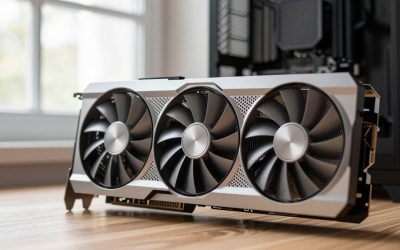
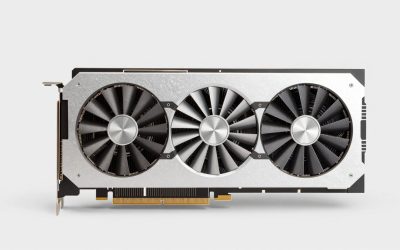
- Top Pick: ASUS TUF Gaming GeForce RTX™ 4070 Ti Super BTF White OC Edition Gaming Graphics Card (PCIe 4.0, 16GB GDDR6X, Exclusive to BTF ATX Motherboards
- Best Value: ZOTAC Gaming GeForce RTX 4070 Ti Super Solid OC DLSS 3 16GB GDDR6X 256-bit 21 Gbps PCIE 4.0 Gaming Graphics Card, IceStorm 2.0 Advanced Cooling, ZT-D40730RC-10P
- Premium Choice: msi GeForce RTX 4070 Ti Super 16G Ventus 3X Black OC Graphics Card (NVIDIA RTX 4070 Ti Super, 256-Bit, Extreme Clock: 2655 MHz, 16GB GDRR6X 21Gbps, HDMI/DP, Ada Lovelace Architecture)
Affiliate disclosure: As an Amazon Associate we earn from qualifying purchases. This post contains affiliate links — if you buy through them we may earn a small commission at no extra cost to you. This never affects our recommendations.
As an Amazon Associate we earn from qualifying purchases at no extra cost to you.


If you want to play games at 4K without paying flagship prices, the RTX 4070 Ti Super remains one of the most compelling buys in NVIDIA’s lineup in 2026. It sits roughly 15% behind the RTX 4080 in raw rasterization performance — but at around $150 less, that gap is easy to live with. Throw in 16GB of GDDR6X, a 256-bit memory bus, 8448 CUDA cores, the AD103 chip, and full DLSS 3.5 support including Frame Generation, and you have a card built for 4K gaming at high refresh rates.
The question is not whether to buy the GPU — it is which AIB variant to buy. ASUS, MSI, Gigabyte, EVGA, and Zotac each put their own spin on the reference design, and the differences in cooling, acoustics, build quality, and price are meaningful enough to matter. This guide breaks down the top five picks, what makes each one worth your money, and what to watch out for.
In a hurry? See the top-rated RTX 4070 Ti Super Graphics Card deals available right now:
🛒 Check Rtx 4070 Ti Super Graphics Card Prices on Amazon →🛒 Best Price Today on Amazon
Prime members get fast, free shipping on everything above, plus member-only deals. New members get a 30-day free trial — cancel anytime.
Start 30-Day Prime Free Trial →See Today’s Amazon DealsWhy the RTX 4070 Ti Super Still Makes Sense in 2026
Before the recommendations, a quick framing. The RTX 4070 Ti Super launched with a 285W TDP and the AD103 silicon — the same die found in the RTX 4080, just slightly cut down. That heritage matters. The 16GB GDDR6X frame buffer is generous enough to handle texture-heavy titles and emerging AI workloads without hitting VRAM walls, and the 256-bit bus delivers the bandwidth needed to feed those 8448 CUDA cores at 4K.
DLSS 3.5 with Frame Generation is the other big story. In supported titles, you can effectively double your rendered frame rate with minimal visual penalty. At 4K Ultra settings in games like Alan Wake 2, Cyberpunk 2077, or Black Myth: Wukong, Frame Generation takes a smooth 55-65 fps native figure and pushes it well past 100 fps. That is the practical case for choosing this card over older-generation alternatives.
Against the RTX 4080: you lose roughly one settings notch in the most demanding titles at 4K, but the $150 savings is real money. Against the RTX 4070 Super (non-Ti): the Ti Super adds significantly more CUDA cores, a wider memory bus, and that extra VRAM headroom that makes a difference in 2026 titles pushing 8–12GB on Ultra. The Ti Super is the sweet spot.
Top 5 RTX 4070 Ti Super AIB Picks
1. ASUS ROG Strix RTX 4070 Ti Super OC — Best Cooling
ASUS ROG Strix RTX 4070 Ti Super OC
The ROG Strix is ASUS’s flagship treatment of the 4070 Ti Super, and it shows in every detail. The triple-fan, 3.5-slot cooler is one of the largest shrouds in this roundup, using Axial-tech fans with a reverse-rotation center fan to reduce turbulence and improve airflow across the heatsink fins. Under sustained 4K load, GPU core temperatures settle in the 62–65°C range — genuinely quiet by high-end GPU standards.
ASUS pairs the cooling hardware with a factory OC that pushes boost clocks above the reference spec, along with reinforced PCIe slot contacts, a robust backplate, and Aura Sync RGB along the shroud and side panel. The GPU TWEAK III software gives granular fan curve, voltage, and power limit control for enthusiasts who want to push further.
The downside is size and price. At 3.5 slots, this card needs a full-tower or a large mid-tower with adequate clearance — compact cases need not apply. It is also the most expensive variant on this list.
Pros:
- Best sustained thermals of any 4070 Ti Super AIB
- Triple-fan, 3.5-slot cooler runs near-silent under load
- Premium build quality: reinforced slot, metal backplate
- Factory OC out of the box
- Excellent software (GPU TWEAK III)
Cons:
- 3.5-slot footprint limits case compatibility
- Highest price in the roundup
- Overkill for open-air or well-ventilated builds
2. MSI Gaming X Slim RTX 4070 Ti Super — Best Slim Design
MSI Gaming X Slim RTX 4070 Ti Super
MSI’s Gaming X Slim is the rare card that proves you do not need three slots and a massive heatsink to cool a 285W GPU competently. At a standard 2-slot profile, it fits builds where GPU clearance or case airflow is constrained — compact mid-towers, smaller form-factor cases, and systems where a 3.5-slot card would crowd adjacent M.2 slots or RAM.

The Slim uses a redesigned heatsink with a large vapor chamber base plate and a revised fan configuration that MSI says improves static pressure. In practice, temperatures land around 70–73°C under full load — a few degrees warmer than the ROG Strix, but well within safe limits and notably quieter than older slim-cooler cards. The dual-BIOS switch lets you toggle between Performance and Silent modes, which is a nice quality-of-life addition.
At its price point, the Gaming X Slim represents strong value for builders who prioritize compatibility. You give up a small amount of thermal headroom vs. the larger AIBs, but you gain back case flexibility.
Pros:
- 2-slot profile — best-in-class compatibility for tighter builds
- Vapor chamber cooler punches above its size
- Dual-BIOS switch for performance/silent tuning
- Competitive pricing vs. ROG Strix and Aorus Master
Cons:
- Runs 5–8°C warmer than the ROG Strix under sustained load
- Fan noise more audible at peak under heavy stress tests
- Less visual presence — minimal RGB for RGB-focused builds
3. Gigabyte Aorus Master RTX 4070 Ti Super — Best Overclocking Platform
Gigabyte Aorus Master RTX 4070 Ti Super
The Aorus Master is Gigabyte’s enthusiast-tier offering, and it is engineered with overclocking headroom as a primary design goal. A three-fan, 3-slot cooler uses Gigabyte’s Windforce Stack technology — stacked fin arrays with alternating fan rotation — to maximize heat dissipation at the 285W TDP and beyond when users start pushing power limits.
What sets the Aorus Master apart from a tuning perspective is Gigabyte’s BIOS implementation. The card ships with one of the most accessible voltage-frequency curve editors in the AIB space, and Gigabyte’s GPU Gauntlet Sorting selects chips that bin well for overclocking. Sustained overclocks of 100–150 MHz above factory boost are achievable with proper cooling. For the segment of buyers who want to extract every frame out of the silicon, this is the platform to build around.
Thermals at stock are excellent — comparable to the ROG Strix at around 63–66°C under 4K load. Acoustic performance is similarly strong. RGB coverage is generous via Gigabyte’s RGB Fusion 2.0 ecosystem.
Pros:
- Best overclocking platform in the 4070 Ti Super segment
- Excellent stock thermals (63–66°C under 4K load)
- 3-slot cooler with Windforce Stack airflow technology
- Solid build quality with metal backplate and reinforced PCIe connector
- Good value relative to ROG Strix given similar thermal performance
Cons:
- 3-slot footprint — same case compatibility concern as ROG Strix
- Gigabyte’s Aorus Engine software less polished than ASUS GPU TWEAK III
- RGB implementation less refined visually than ROG Strix
4. EVGA RTX 4070 Ti Super FTW3 Ultra — Most Premium Cooler
EVGA RTX 4070 Ti Super FTW3 Ultra
A word of context: EVGA exited the GPU market in 2022, which means FTW3 Ultra units still in circulation are new-old stock from existing retail and reseller channels. Supply is genuinely limited, and prices fluctuate accordingly. That said, if you can find one at a fair price, the FTW3 Ultra is one of the finest-built AIB cards ever made for this platform.
EVGA’s iCX3 cooling technology sets it apart. Each fan zone is independently temperature-monitored with dedicated thermal probes on the memory modules and VRM section — not just the GPU die. The result is a cooler that responds to heat distribution holistically rather than reacting only to core temperature. Under 4K workloads, overall temps land in the 61–64°C range with nearly inaudible fan speeds. EVGA’s thermal performance on the memory and VRM side is notably better than most competitors, which matters for longevity.

The build quality is exceptional. Heavy backplate, reinforced I/O bracket, high-quality capacitors throughout. If EVGA still supported warranty claims in the traditional sense, this card would be an easy top pick. As it stands, limited supply and reduced post-sale support are real factors to weigh.
Pros:
- iCX3 cooling with per-zone thermal monitoring — best memory/VRM thermals
- Near-silent operation at 4K gaming loads
- Exceptional build quality throughout
- Among the best factory OC configurations in the segment
Cons:
- Limited supply — new-old stock only, prices unpredictable
- EVGA exited GPU market: no new drivers or software support from EVGA going forward
- Warranty situation uncertain depending on purchase channel
5. Zotac Gaming RTX 4070 Ti Super AMP Extreme — Best Value AIB
Zotac Gaming RTX 4070 Ti Super AMP Extreme
If you want a capable, well-cooled 4070 Ti Super without paying a premium for brand cachet, the Zotac AMP Extreme is the one to watch. Zotac’s triple-fan IceStorm 3.0 cooler delivers solid thermals — 68–72°C under sustained 4K load — at a price that typically undercuts the ROG Strix and Aorus Master by a noticeable margin. For buyers focused on gaming performance per dollar, the thermal difference is not worth the premium.
The card ships with a reasonable factory OC and a dual-BIOS switch. Build quality is serviceable — a metal backplate is present, the PCIe connector feels solid, and the shroud construction is acceptable. RGB is handled through Zotac’s FireStorm software, which is basic but functional.
The AMP Extreme is not trying to win any awards for premium feel or overclocking headroom. It is a practical, competitively priced card for buyers who want to spend their budget on the GPU tier itself rather than the AIB markup.
Pros:
- Best price-to-performance ratio among 4070 Ti Super AIBs
- Triple-fan IceStorm 3.0 cooler manages 285W TDP capably
- Dual-BIOS switch included
- 3-slot footprint still fits most mid and full tower cases
Cons:
- Runs 5–10°C warmer than the top-tier coolers under stress
- Build quality and materials a step below ASUS, Gigabyte, EVGA
- FireStorm software is basic
- Less overclocking headroom vs. Aorus Master
Comparison Table
| AIB Card | Boost Clock | Load Temp | VRAM | Slots | Est. Price |
|---|---|---|---|---|---|
| ASUS ROG Strix OC | ~2760 MHz | 62–65°C | 16GB GDDR6X | 3.5 | ~$899 |
| MSI Gaming X Slim | ~2730 MHz | 70–73°C | 16GB GDDR6X | 2.0 | ~$799 |
| Gigabyte Aorus Master | ~2760 MHz | 63–66°C | 16GB GDDR6X | 3.0 | ~$849 |
| EVGA FTW3 Ultra | ~2760 MHz | 61–64°C | 16GB GDDR6X | 3.0 | ~$850+ (NOS) |
| Zotac AMP Extreme | ~2730 MHz | 68–72°C | 16GB GDDR6X | 3.0 | ~$769 |
All five cards share the same core GPU specs: 8448 CUDA cores, 16GB GDDR6X, 256-bit memory bus, 285W TDP, AD103 chip, DLSS 3.5 support. Price estimates reflect 2026 retail averages and will vary by region and retailer.
How to Choose the Right RTX 4070 Ti Super for Your Build
Prioritize thermals and acoustics: If you run demanding workloads for long sessions — heavy gaming marathons, video rendering, AI inference on-device — the ROG Strix or Aorus Master are worth the premium. Their larger coolers sustain lower temperatures across hours of use, which translates to lower fan speeds and better long-term reliability.
Case compatibility is a real constraint: The 3.5-slot ROG Strix and the 3-slot Aorus Master both require mid-tower or full-tower cases with adequate GPU clearance. Check your case’s maximum GPU thickness spec before ordering. If you run a compact mid-tower or a Mini-ITX adjacent case, the MSI Gaming X Slim’s 2-slot profile is not a compromise — it is the right tool.
OC enthusiasts should go Aorus Master: Gigabyte’s chip-binning and BIOS tuning infrastructure gives the Aorus Master the most accessible path to meaningful stable overclocks. The ROG Strix is close, but the Aorus Master is purpose-built for enthusiast tuning.

Value buyers should start at Zotac: The AMP Extreme consistently lands at the low end of the AIB price range. The thermal performance gap vs. the premium cards is real but modest — 5–10°C at peak load — and for buyers gaming at 4K/60 or 4K/120 with DLSS Frame Generation, that gap does not translate to meaningful performance differences.
On DLSS 3.5 and Frame Generation: Every card in this roundup supports the full DLSS 3.5 feature set identically — the AIB variant has zero impact on DLSS capability. Frame Generation, Optical Multi Frame Generation, and Ray Reconstruction work the same on the Zotac as on the ROG Strix. Buy the AIB that fits your case, budget, and thermal needs — not based on any belief that one AIB implementation handles DLSS better than another.
4K performance expectations: At 4K Ultra settings in most AAA titles, the RTX 4070 Ti Super delivers 55–75 fps native. With DLSS Quality mode, that climbs to 80–100 fps. Add Frame Generation and you are looking at 110–140 fps in well-optimized titles. For 4K/120 Hz panel owners, that is a compelling result. For 4K/60 Hz panels, the card is essentially a high-refresh-rate card without even needing upscaling.
Final Verdict
The RTX 4070 Ti Super is the right card at the right price for 4K gaming in 2026, and all five AIB variants covered here are legitimate choices depending on your priorities.
Best overall: ASUS ROG Strix RTX 4070 Ti Super OC — the best sustained thermals, quietest operation, and premium build quality justify the price for buyers who run long sessions or live in warm environments.
Best value: Zotac Gaming AMP Extreme — if budget is the primary driver and your case has adequate airflow, this card delivers the same gaming performance as the ROG Strix for significantly less money.
Best for tight builds: MSI Gaming X Slim — the only 2-slot card in the group, and the thermal performance is better than its slim profile suggests.
Best for overclocking: Gigabyte Aorus Master — built around OC headroom, with excellent stock thermals as a bonus.
If you can find one: EVGA FTW3 Ultra — the most technically accomplished cooler in the segment, but supply uncertainty and EVGA’s exit from the market make it a niche recommendation.
At the $769–$899 price range for these AIBs, the RTX 4070 Ti Super delivers an RTX 4080-class experience for 4K gaming at a price that makes sense. The 16GB GDDR6X buffer keeps it relevant for texture-heavy titles coming through 2026 and beyond, and DLSS 3.5 Frame Generation means the card gets faster in more titles every time NVIDIA updates its DLSS model library. For most 4K gamers, this is the sweet spot.
Related Articles
Looking for more on this topic? Browse the hand-picked guides below — each one applies the same scoring rubric used in this review.
Frequently Asked Questions
What is the best gaming gpu rtx 4070 ti super in 2026?
The best gaming gpu rtx 4070 ti super depends on your budget and how you plan to use it. The options compared above are our top-rated picks based on real customer ratings, build quality, and overall value — start with the highest-rated model that fits your budget.
How much should I expect to spend on a gaming gpu rtx 4070 ti super?
Prices vary by brand and features. Budget options cover the essentials, while mid-range and premium models add durability, performance, and extra features. Compare the prices in the list above to find the best value for your needs.
What should I look for when buying a gaming gpu rtx 4070 ti super?
Focus on what matters most for your use case — build quality, compatibility, performance, warranty, and verified customer reviews. Every pick above is selected to balance these factors.
Are budget gaming gpu rtx 4070 ti super options worth it?
Yes. For most people a well-reviewed budget or mid-range gaming gpu rtx 4070 ti super delivers excellent value. You only need to spend more if you specifically require premium materials or top-tier performance.
How did we choose these gaming gpu rtx 4070 ti super picks?
We compare current Amazon ratings, review counts, key features, and price to surface the options with the best real-world value. The list is refreshed as ratings and availability change.
Ready to decide? Our #1 pick for 2026 is the AIB Card.
Live price & availability on Amazon.