🛒 Best Price Today on Amazon
Prime members get fast, free shipping on everything above, plus member-only deals. New members get a 30-day free trial — cancel anytime.
Top Nvidia Geforce Amd Radeon Gpus Picks for 2026
Here are our current top nvidia geforce amd radeon gpus picks, compared on real Amazon owner reviews, price, and features. Live prices update below.
As an Amazon Associate we earn from qualifying purchases at no extra cost to you.

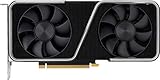



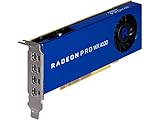


The GPU brand war never really sleeps, but 2026 is the most fascinating chapter in years. Nvidia’s RTX 50 series is fully deployed across the stack, AMD’s RX 9000 family has matured into a legitimately compelling mid-tier value play, and the once-sleepy upscaling battle has turned into a full-blown AI arms race with DLSS 4 facing FSR 4 in nearly every modern title. This is our authoritative head-to-head for enthusiast PC builders trying to figure out which team to commit to in 2026.
The short version: this is a less close fight than the comment sections will admit. AMD has genuinely impressive mid-range silicon and the RX 9070 XT is the price-per-frame champion at its tier. But the moment you start caring about ray tracing, path-traced games, AI upscaling, AI productivity workloads, NVENC AV1 encoding for streaming, or future-proofing in a world where every new engine and every new feature ships Nvidia-first, the gap reopens. For enthusiasts who buy GPUs for the long haul and want every box checked, GeForce is still the safer bet in 2026. AMD wins specific battles. Nvidia wins the war, especially at the high end.
That’s not a popular opinion in some corners of the internet, and we’ll walk through every round to back it up. We’re not going to fake benchmark numbers down to the decimal point, because every game patch and driver update shifts the picture. What we will do is frame the relative performance, the architectural advantages, the feature gaps, and the lived experience of using these cards as your daily driver, because that’s what enthusiasts actually need to know. Let’s settle this.
TL;DR At-A-Glance Comparison Table
| Spec / Category | Nvidia GeForce RTX 50 Series | AMD Radeon RX 9000 Series | Winner |
|---|---|---|---|
| Flagship Price Tier | RTX 5090 ~$2000 / RTX 5080 ~$1000 | RX 9070 XT ~$600 (no $1000+ entry) | AMD (cheaper ceiling) |
| Mid-Tier Price-per-Frame Raster | RTX 5070 / 5070 Ti competitive | RX 9070 XT excellent value | AMD |
| Ray Tracing (heavy / path-traced) | 30-50% faster in PT workloads | Closing gap but still trails | Nvidia |
| Upscaling Quality | DLSS 4 with multi-frame gen | FSR 4 (AI-based, much improved) | Nvidia |
| AI Workloads (Stable Diffusion / LLM) | CUDA ecosystem dominant | ROCm improving, still narrower | Nvidia |
| AV1 Encoding (Streaming) | NVENC AV1 (excellent) | VCN 5 AV1 (excellent) | Tie |
| Driver Day-One Maturity | Generally smoother launches | FineWine: ages well over years | Nvidia (short-term), AMD (long-term) |
| Power Efficiency | Strong perf/watt at high end | Strong perf/watt at mid tier | Tie (by tier) |
| Future-Proofing (RT + AI) | Better positioned for next-gen | Better positioned for raster longevity | Nvidia |
| Overall Enthusiast Winner | Yes | No (but excellent mid-tier value) | Nvidia |
Round-By-Round Breakdown
Round 1: Raster Performance
Pure rasterization is where the gap is narrowest in 2026, and that’s where AMD has invested most heavily this generation. At the top of the stack, the RTX 5090 still sits alone on a throne nobody else can touch, with rasterization performance roughly 30 to 40 percent ahead of anything else on the market depending on the title and resolution. That’s a flagship-versus-no-flagship situation though, because AMD didn’t bring a true high-end card to this fight. The RX 9070 XT tops out as a halo product priced and positioned to compete with the RTX 5070 Ti, not the 5080 or 5090.
At that mid-to-upper tier, things get interesting. In pure rasterization across a basket of modern AAA titles at 1440p and 4K, the RX 9070 XT trades blows with the RTX 5070 Ti, sometimes pulling ahead by single-digit percentages in titles that favor AMD architectures, sometimes falling behind by similar margins where Nvidia’s drivers and developer relationships shine. Call it a draw, with AMD genuinely competitive for the first time in years at this tier. The RX 9070 (non-XT) and RX 9060 XT continue the story downward, offering raster performance that consistently impresses for the dollar.
The RTX 5080 sits in awkward territory, faster than anything AMD makes but priced almost double the 9070 XT, asking buyers to value features beyond raster to justify the gap. For pure framerate per dollar in rasterized games, AMD wins this round at the mid tier and Nvidia wins by default at the high end. Round winner: AMD (at the volume tier where most enthusiasts actually shop).
Round 2: Ray Tracing Performance
Here is where the conversation flips hard. Heavy ray tracing, and particularly path tracing, remains a Nvidia stronghold and the gap is not subtle in 2026. In titles like Cyberpunk 2077 with path tracing enabled, Alan Wake 2 with full RT, Black Myth Wukong with RT effects maxed, and the latest Unreal Engine 5 path-traced demos, the RTX 50 series outpaces equivalent-tier RX 9000 cards by anywhere from 30 to 50 percent at the same settings.
AMD’s RDNA 4 architecture made real generational progress in RT throughput, and the RX 9070 XT does ray tracing acceptably for the first time at this price point. But acceptable is not the same as excellent, and in the heaviest RT workloads it still falls noticeably behind the RTX 5070 Ti, never mind the 5080 or 5090. Light and moderate RT (reflections only, simple shadows, basic GI) is fine on Radeon. Heavy or path-traced RT is a Nvidia event.
If you’re an enthusiast who turned ray tracing off three years ago because it tanked your frames and never turned it back on, this may not matter to you and AMD remains in play. If you’re someone who actually wants to play Cyberpunk path traced at 4K with motion clarity intact, you’re buying a GeForce. Round winner: Nvidia, decisively.
Worth flagging the upcoming title roadmap too. The slate of 2026 and 2027 AAA releases that have already announced path-tracing modes or RT-only rendering paths skews heavily toward titles that will benefit from Nvidia’s hardware lead. New Witcher, new Mass Effect, the next Doom, the new Battlefield, and at least a half-dozen Unreal Engine 5 single-player AAAs are all expected to ship with aggressive RT defaults. If your enthusiast itch is for cutting-edge visuals, the Nvidia lead in this round translates directly into the visual experience you actually wanted to buy a $700-$2000 GPU for in the first place.
Round 3: Upscaling (DLSS 4 vs FSR 4)
The upscaling war has been the most dramatic shift of the last two years. FSR 4 finally adopted an AI-based model, and the jump in quality from FSR 3 to FSR 4 is enormous. Ghosting is dramatically reduced, particle effects look cleaner, fine-detail stability has improved, and the upscaler is now usable at performance presets where FSR 3 was a disaster. AMD deserves credit for closing the gap so quickly.
The gap is closed, not eliminated. DLSS 4 still has the edge in motion clarity, in fine-detail reconstruction, in handling of foliage and chain-link fencing patterns that historically wreck temporal upscalers, and most importantly in its multi-frame generation capability. DLSS Frame Generation in its multi-frame variant lets RTX 50 cards effectively triple or quadruple framerates in supported titles with motion that holds up better than FSR’s equivalent. For high-refresh 4K gaming, this is a game-changer that doesn’t have a direct AMD answer.
FSR 4 is finally good. DLSS 4 is still better, and the ecosystem support is wider with more day-one DLSS implementations than FSR. Round winner: Nvidia, by a meaningful margin even as FSR 4 narrows it. Check our trending GPUs roundup to see how upscaling support breaks down across actual cards.
One more consideration worth raising for the enthusiast audience. DLSS 4’s deep integration with Nvidia Reflex provides meaningfully lower system latency even when frame generation is active, which preserves the competitive feel of high-refresh play. AMD has Anti-Lag 2 and it works, but the integrated Nvidia stack still feels more polished when you stitch upscaling, frame generation, and latency reduction together into a single experience. If you specifically play fast-paced single-player or hybrid PvP titles where input feel matters, the integrated Nvidia tooling wins more comfortably than the raw upscaler comparison alone suggests. Our deep-dive on this is in the graphics cards comparison linked above.
Round 4: AI Workloads and Productivity
If you only game, you can probably skip this round. If you use your GPU for anything else (Stable Diffusion image generation, local LLM inference, video upscaling with Topaz, AI-assisted creative work in DaVinci Resolve or Premiere), this round matters enormously and it isn’t close. Nvidia’s CUDA ecosystem is still the universal default for AI work. Every popular framework, every major model, every tutorial, every Discord support channel assumes you’re running an Nvidia card.
AMD’s ROCm has made real strides on Linux and is making careful progress on Windows, but the support matrix is narrower, more fragile, and frequently requires workarounds for things that just work on Nvidia. The RTX 5090’s enormous VRAM pool also makes it genuinely useful for running 70B-class language models locally, something no consumer AMD card can match.
If you’re an enthusiast who tinkers with AI on the side, or who runs a creative pipeline that benefits from GPU acceleration outside games, Nvidia is the only sensible choice in 2026. AMD’s story here is improving but is still years behind. Round winner: Nvidia, in a rout.
For a concrete example: getting Stable Diffusion XL running well on a fresh Windows install with an Nvidia card is typically a 15-minute affair using one of several mature one-click installers, with full ControlNet and LoRA support functional out of the box. The equivalent on AMD requires picking the right ROCm release for your specific card, working through PyTorch compatibility quirks, accepting limited Windows support depending on the model, and frequently dropping to WSL or native Linux for the best experience. None of that is impossible. All of it is friction that Nvidia users simply do not encounter. For an enthusiast who values their evenings being spent creating instead of debugging GPU drivers, the Nvidia tax pays for itself.
Round 5: Power Efficiency and Thermals
Power draw and thermals are a tier-dependent story rather than a brand-dependent one in 2026. At the very top, the RTX 5090 is a power-hungry monster pulling well north of 500W under load and demanding a serious PSU, robust cabling, and excellent case airflow. The RTX 5080 is more reasonable. The RX 9070 XT is genuinely efficient for its performance class, often delivering competitive perf-per-watt against the RTX 5070 Ti at lower total board power.
AMD’s mid-tier cards (RX 9060 XT and 9060) also tend to run cool and quiet on most partner designs, with reference and AIB models alike landing acceptable acoustics. Nvidia’s mid-tier cards are similarly well-behaved. There’s no clean winner here. If you’re shopping for a small form factor build or want the lowest possible PSU, AMD’s mid-tier is appealing. If you’re going halo and don’t care about a 1000W PSU, the 5090 still rules its weight class.
Round winner: Tie, with tier-dependent nuance. AMD slightly preferred for SFF mid-tier builds. See our AIO coolers comparison if you’re sizing thermals for either of these cards.
Round 6: Driver Maturity and FineWine
This is the round where AMD fans get to make their argument and they aren’t wrong about everything. AMD’s drivers have historically aged extraordinarily well, with cards from the RX 580 era still picking up performance gains years after launch. The FineWine theory is real and has played out repeatedly. Buy an AMD card today, get measurably more performance in three years through driver work.
Nvidia’s drivers historically launch smoother, with day-one support for new games more reliable and fewer broken-on-launch nightmare scenarios. Both vendors have had recent stumbles (Nvidia with HDMI handshake issues and AMD with occasional crash cycles in particular game engines), but on average Nvidia’s launch-day experience is calmer.
The honest verdict: if you’re going to upgrade your GPU every 18-24 months, Nvidia’s smoother day-one experience matters more. If you’re planning to keep this card for 4-5 years, AMD’s FineWine maturation makes the long-term ownership story better. Round winner: Tie, split by ownership timeline.
Round 7: Price-per-Frame Analysis
Strip out features for a moment and just look at frames per dollar in rasterized workloads. AMD wins this round at the mid tier, full stop. The RX 9070 XT at its price point delivers more raster performance per dollar than the RTX 5070 Ti, and the RX 9060 XT continues that pattern further down. AMD has clearly priced for value this generation, and it shows.
The math changes once you bring features back into the equation. Add in DLSS 4 multi-frame gen, add in path tracing capability, add in CUDA for productivity, add in better day-one driver experience, and the price gap starts looking justified for the Nvidia card. The question is whether you’ll use those features. If you’re a pure-raster gamer who turns off RT and doesn’t care about upscaling quality differences, AMD wins. If you actually plan to use the full feature stack, Nvidia’s premium becomes defensible.
Compare this to our $2000 prebuilt PC roundup to see how vendors are pricing GPUs in actual systems right now. Round winner: AMD on pure raster math, Nvidia on feature-adjusted value.
Round 8: Future-Proofing for 2027 and Beyond
Where is the industry heading? Every signal points to more ray tracing, more AI upscaling, more frame generation, more AI-assisted rendering techniques, more path tracing as it becomes viable on more hardware, and an increasing proportion of new games shipping with these features as defaults rather than options. If that’s the direction the industry is going, the card better positioned to handle it is the one with stronger RT hardware, stronger AI tensor throughput, and a mature AI upscaling pipeline.
That description fits the RTX 50 series more cleanly than the RX 9000 series. AMD is improving in all these areas, and FSR 4 is genuinely competitive now, but the architectural lead Nvidia has in RT and AI workloads is not closing fast enough to flip the future-proofing argument. If you’re buying a GPU today and expecting to keep it through 2028 or beyond, Nvidia gives you a longer runway on the features the industry is moving toward. Round winner: Nvidia.
Use-Case Recommendations
Pick Nvidia GeForce if you…
- Want path tracing and heavy ray tracing performance at usable framerates
- Care about upscaling quality and want the best motion clarity in DLSS 4 multi-frame gen
- Use your GPU for AI work, Stable Diffusion, local LLMs, video upscaling, or creative pipelines
- Stream and want best-in-class NVENC AV1 encoding paired with broad OBS plugin support
- Are building a halo system at any cost and want the absolute fastest card on the planet (RTX 5090)
- Plan to upgrade every 1-2 generations and want smooth day-one driver experiences
Pick AMD Radeon if you…
- Are building a mid-tier rig (think $1500-2000 total budget) and want the best raster frames per dollar
- Don’t care about ray tracing or only use light RT effects
- Are building small form factor and want competitive performance at lower board power
- Plan to keep this GPU for 4-5+ years and want to benefit from FineWine driver maturation
- Are philosophically committed to AMD or want to avoid the Nvidia premium on principle
- Run Linux and prefer open-source driver stacks (Mesa support is excellent)
For most enthusiast builders cross-shopping the upper-mid tier right now, the realistic decision is between an RTX 5070 Ti and an RX 9070 XT. If you mostly play raster-heavy esports and AAA titles without RT, the 9070 XT is the smarter buy and saves you a meaningful chunk of cash. If you play newer single-player AAA titles with RT enabled or you do anything AI-adjacent on the side, the 5070 Ti is worth the upcharge. Cross-reference against our CPU roundup to make sure you’re pairing either card with a balanced platform.
FAQ
Q: Is the RX 9070 XT really competitive with the RTX 5070 Ti?
In raster, yes, surprisingly so. In ray tracing and upscaling features, no. If you weight pure rasterization heavily, the 9070 XT is the better value. If you weight RT and features, the 5070 Ti justifies its premium.
Q: Does AMD have anything that competes with the RTX 5080 or 5090?
Not in 2026. AMD chose not to launch a true high-end card this generation, so the $1000-$2000 GPU tier is uncontested Nvidia territory.
Q: How big is the DLSS 4 vs FSR 4 quality gap in real games?
Smaller than it has ever been. FSR 4 is finally good. DLSS 4 is still better, particularly in fine-detail motion clarity and the multi-frame generation feature, but FSR 4 is no longer a deal-breaker if you’re buying AMD.
Q: Should I wait for refreshed cards later in 2026 or buy now?
If you need a GPU now, buy now. Refreshes typically bring 5-10% gains, not generational leaps. The RX 9070 XT and RTX 5070 Ti are both excellent today and will remain so for years. Don’t paralysis-shop yourself out of a year of good gaming.
Final Verdict: Nvidia for Enthusiasts
For enthusiast PC gamers in 2026, our verdict is Nvidia, conditionally. If you’re building anywhere from mid-high to halo tier, planning to keep the GPU for several years, and want every feature box checked (path tracing, best-in-class upscaling, AI productivity, AV1 streaming, smooth driver experience), GeForce is the answer. The premium is real but the feature gap justifies it for the use cases enthusiasts actually have.
If you’re shopping the volume mid-tier and you primarily care about raster frames per dollar, AMD’s RX 9070 XT is genuinely excellent and we’d never tell you that you made a mistake by choosing it. It’s the best value Radeon in years. But for an enthusiast audience optimizing across the full feature matrix, Nvidia wins the head-to-head in 2026. Round things out by checking our monitors roundup to make sure the rest of the build supports whatever GPU you choose, and our RAM roundup for memory pairing. For peripheral choices alongside your new GPU, see our keyboards comparison and wireless mice comparison.
Frequently Asked Questions
Which brand is better for ray tracing?
Nvidia retains the lead in heavy ray tracing and especially path-traced titles, where its dedicated RT hardware and denoising pipeline hold higher frame rates. AMD has closed much of the gap in lighter ray-traced workloads such as reflections and shadows, where the difference is often small enough not to change your settings.
How do the upscaling technologies compare?
Nvidia’s DLSS uses dedicated tensor hardware and generally produces the most stable image at aggressive scaling factors. AMD’s FSR is hardware-agnostic and works on any GPU including competitors’ and consoles, which gives it much wider game and platform support. At the quality preset at 1440p or above, both are close.
Does AMD offer more video memory for the money?
Historically yes, and it still tends to at each price tier. Extra video memory matters most at 4K, with high-resolution texture packs, and in creative workloads, where running out causes hard stutter. If you plan to keep the card four or more years, the larger memory buffer is a real hedge.
Which is better for streaming and content creation?
Nvidia’s NVENC encoder remains the stronger option for streaming and recording quality at a given bitrate, and many creative applications have CUDA-optimized paths. AMD’s encoder has improved substantially and is fine for standard 1080p streaming, but CUDA support in rendering and AI tools is still broader than the ROCm equivalent.
Which has better Linux driver support?
AMD, clearly. Its open-source kernel driver is included in the mainline Linux tree, so cards work out of the box with no external installer and Wayland behaves properly. Nvidia’s proprietary driver has improved and now offers open kernel modules, but installation and desktop compositor issues remain more common.
Ready to decide? Our #1 pick for 2026 is the Flagship Price Tier.
Live price & availability on Amazon.