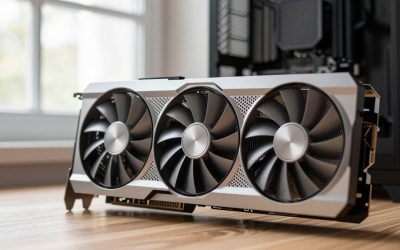
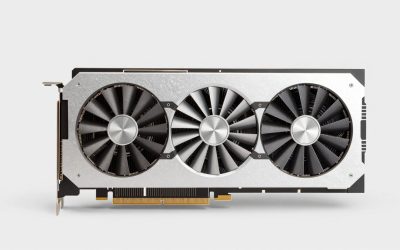
- Top Pick: GIGABYTE Radeon RX 9070 XT Gaming OC 16G Graphics Card, PCIe 5.0, 16GB GDDR6, GV-R9070XTGAMING OC-16GD Video Card
- Best Value: ASRock Radeon RX 9060 XT Challenger 16GB OC, RDNA 4, 3290MHz Boost, 16GB GDDR6 128-bit, PCIe 5.0, Dual Fans, 0dB Silent, LED Indicator, DisplayPort 2.1a, HDMI 2.1b
- Premium Choice: KOTIN Prebuilt Gaming PC RTX 5070 12GB, Ryzen 7 9700X, 32GB DDR5, 1TB SSD
Affiliate disclosure: As an Amazon Associate we earn from qualifying purchases. This post contains affiliate links — if you buy through them we may earn a small commission at no extra cost to you. This never affects our recommendations.
True 4K gaming — 3840×2160 at high frame rates — demands serious GPU horsepower. In 2025, the RTX 5070 and RX 9070 XT represent the most sensible entry points into 4K territory, offering the performance to hit 60fps natively at max settings and 120fps+ with upscaling in most AAA titles.
NVIDIA’s Blackwell architecture brings DLSS 4 Multi Frame Generation, which is particularly impactful at 4K — the higher resolution means each upscaled frame is still pixel-dense enough to look native. AMD’s RDNA 4 in the RX 9070 XT counters with 16GB GDDR6 and strong raster performance that sometimes challenges NVIDIA’s mid-range flagships at 4K.
We’ve selected cards across the $459–$769 range to give you options at different budgets. All are capable of 4K gaming — the differences are in frame rates, VRAM, and whether you prioritize native raster or AI-upscaled performance.
In a hurry? See the top-rated Graphics Cards for 4K Gaming deals available right now:
🛒 Check Graphics Cards For 4K Gaming Prices on Amazon →🛒 Best Price Today on Amazon
Prime members get fast, free shipping on everything above, plus member-only deals. New members get a 30-day free trial — cancel anytime.
Start 30-Day Prime Free Trial →See Today’s Amazon DealsTop Picks at a Glance
| Product | Best For |
|---|---|
| GIGABYTE RTX 5070 WINDFORCE OC SFF | Best value RTX 5070 |
| PNY RTX 5070 Epic-X ARGB | Best RGB / aesthetics |
| ASUS TUF RTX 5070 OC | Best cooling and build quality |
| Sapphire Pulse RX 9070 XT 16GB | Best AMD 4K card |
| GIGABYTE RX 9060 XT Gaming OC 16G | Best budget 4K entry |
As an Amazon Associate we earn from qualifying purchases at no extra cost to you.


GIGABYTE RTX 5070 WINDFORCE OC SFF — Best Value 4K NVIDIA Card
The GIGABYTE RTX 5070 WINDFORCE OC SFF at around $640 is the most affordable way to get RTX 5070 performance in 2025. The SFF (Small Form Factor) design fits compact and mid-tower cases without sacrificing performance. WINDFORCE cooling with dual fans keeps temps manageable, and the factory OC gives you a head start. At 4K, with DLSS 4 Quality enabled, this card delivers 60–100fps in demanding AAA titles. A strong pick for builders who want flagship-adjacent 4K gaming without the flagship price.
- Pros: Best value RTX 5070, SFF-friendly design, DLSS 4 MFG, 12GB GDDR7
- Cons: Dual-fan SFF runs warmer than full-size triple-fan designs
PNY RTX 5070 Epic-X ARGB — Best for Aesthetics and Lighting
At around $640, the PNY RTX 5070 Epic-X ARGB is essentially the same price as the GIGABYTE SFF but offers a full-size triple-fan design with extensive ARGB lighting. For windowed case builds where aesthetics matter, the Epic-X stands out. The triple-fan cooling is quieter under sustained 4K load, and PNY’s XLR8 software manages both overclocking and RGB synchronization. Performance is identical to other RTX 5070 SKUs — the difference is form factor and lighting.
- Pros: Triple-fan cooling, ARGB lighting, full RTX 5070 performance, good value
- Cons: Larger form factor, ARGB adds minor power overhead
ASUS TUF RTX 5070 OC — Best Premium 4K NVIDIA Card
The ASUS TUF RTX 5070 OC at around $750 is the premium RTX 5070 option with ASUS’s triple-fan TUF cooling, military-grade components, and a robust factory overclock. It runs cooler and quieter than most RTX 5070 cards under sustained 4K load, making it ideal for long gaming sessions. The TUF design prioritizes durability — reinforced PCIe slot, dual BIOS, and comprehensive VRM design. For buyers who want the best RTX 5070 implementation money can buy, this is it.

- Pros: Best RTX 5070 cooling, military-grade build, quiet under load, strong OC
- Cons: $115 more than base RTX 5070 models — significant premium
Sapphire Pulse RX 9070 XT 16GB — Best AMD 4K Card
The Sapphire Pulse RX 9070 XT 16GB at around $770 is AMD’s most capable card for 4K gaming in 2025. Its 16GB GDDR6 provides headroom that the 12GB RTX 5070 lacks at 4K max settings — particularly in texture-heavy open-world titles. Sapphire’s Pulse cooler is known for efficient thermal performance and quiet operation. In raster-heavy scenarios without upscaling, the RX 9070 XT sometimes trades blows with the RTX 5070. For FSR 4 users and those who value VRAM, this is a serious competitor.
- Pros: 16GB GDDR6, strong 4K raster, Sapphire reliability, FSR 4 support
- Cons: No DLSS (FSR 4 is excellent but DLSS 4 MFG has no AMD equivalent)
GIGABYTE RX 9060 XT Gaming OC 16G — Best Budget 4K Entry
At around $460, the GIGABYTE RX 9060 XT Gaming OC 16G is the entry point for 4K gaming in 2025. It won’t hit 60fps natively at 4K ultra in demanding titles — but with FSR 4 Quality mode enabled, it achieves smooth 4K gaming in most games. The 16GB GDDR6 is a standout advantage at this price. Best suited for gamers who primarily play less demanding titles at 4K or are willing to use FSR 4 to boost performance. A smart budget choice for a first 4K gaming setup.
- Pros: 16GB GDDR6, best price for 4K-capable RDNA 4, solid GIGABYTE cooling
- Cons: Needs FSR 4 for smooth 4K in demanding AAA titles
Buying Guide
What Frame Rate Should You Target at 4K?
For 4K gaming, targets depend heavily on your monitor and game genre. A 4K 60Hz OLED or IPS display — the most common 4K gaming monitor — simply needs 60fps for smooth play. All cards in this list achieve this in most titles with upscaling. If you own or plan to buy a 4K 120Hz or 144Hz display, you’ll need the RTX 5070 with DLSS 4 MFG to realistically target 120fps in demanding games. Competitive esports at 4K on any of these cards easily exceeds 120fps natively.

VRAM at 4K — How Much Is Enough?
4K gaming pushes VRAM requirements significantly higher than 1440p. At 4K ultra settings in 2025, some titles exceed 12GB — making the 16GB cards (RX 9070 XT, RX 9060 XT) appealing. The RTX 5070’s 12GB GDDR7 handles most 4K scenarios, as GDDR7’s high bandwidth helps with compression and streaming. However, for maximum longevity through 2027–2028, 16GB provides a comfortable buffer. If you primarily play competitive games or titles with DLSS 4 support (which uses less VRAM than native rendering), 12GB is sufficient.
DLSS 4 vs. FSR 4 at 4K — The Upscaling Math
4K upscaling from 1440p (DLSS/FSR Quality mode) produces output quality that’s extremely close to native — much closer than 1080p upscaled to 1440p. This means DLSS 4 and FSR 4 are both highly effective at 4K, making upscaling a genuinely viable approach rather than a compromise. DLSS 4 Multi Frame Generation (exclusive to RTX 5000+) is particularly impactful at 4K — it can turn a 45fps native render into 180fps output. FSR 4 doesn’t offer frame generation equivalent, but delivers excellent image quality for upscaling alone.

Monitor Compatibility — HDR, VRR, and Refresh Rate
All cards in this list support HDMI 2.1 (48Gbps) and DisplayPort 2.1 — both can drive 4K 144Hz with HDR enabled. For a 4K gaming monitor, look for VESA DisplayHDR 600 or higher certification, a panel with IPS or OLED technology, and G-Sync Compatible or FreeSync Premium Pro support. The RTX 5070 supports NVIDIA G-Sync natively; the RX 9070 XT and RX 9060 XT support FreeSync and work with G-Sync Compatible displays. VRR (Variable Refresh Rate) is essential for smooth 4K gaming across varying frame rates.
Power Supply for 4K Gaming Cards
RTX 5070 cards draw around 200–250W depending on the model and overclock. Pair with a quality 750W PSU minimum, 850W recommended for systems with high-end CPUs. The RX 9070 XT draws approximately 300W — plan for an 850W PSU. The RX 9060 XT at 175W is more modest. For 4K gaming systems, investing in an 80+ Gold or Platinum PSU from a Tier-A manufacturer (Corsair RM, EVGA SuperNOVA, Seasonic Focus) is strongly recommended.
Frequently Asked Questions
Can the RTX 5070 run 4K 60fps without upscaling?
In most games, yes. The RTX 5070 achieves 60fps+ natively at 4K high settings in titles like Cyberpunk 2077, Horizon Forbidden West, and Microsoft Flight Simulator. At ultra/max settings with ray tracing, some demanding titles drop below 60fps natively — that’s where DLSS 4 Quality mode brings it back above 60fps. For consistently native 4K 60fps in every game at max settings, you’d need to step up to the RTX 5080 or above.
Is the RX 9070 XT better than the RTX 5070 at 4K?
In pure raster performance without upscaling, the RX 9070 XT and RTX 5070 are closely matched at 4K — AMD wins in some titles, NVIDIA in others. The RTX 5070 pulls ahead when DLSS 4 is available (better image quality, Multi Frame Generation). The RX 9070 XT counters with 16GB VRAM. Your choice depends on upscaling preference (DLSS vs. FSR) and VRAM priority (12GB vs. 16GB).
What’s the minimum GPU for 4K 60fps gaming in 2026?
The minimum viable 4K 60fps card in 2025 is the RX 9060 XT with FSR 4 Quality mode enabled. Without upscaling, you’d need at least the RTX 5070 or RX 9070 XT for reliable 4K 60fps in demanding titles. The RX 9060 XT is a budget entry point — great for less demanding games or those willing to use upscaling, not ideal for max-settings AAA titles at 4K.
Do I need a 4K monitor for these GPUs to be worthwhile?
Not necessarily. These GPUs also excel at 1440p 165Hz+ gaming and offer tremendous headroom for high refresh rates at 1440p. If you currently own a 1440p monitor but plan to upgrade to 4K within 1–2 years, buying an RTX 5070 now gives you excellent 1440p performance today and 4K capability when you’re ready. The RTX 5070 at 1440p easily pushes 165Hz+ in most titles.
Verdict
For 4K gaming in 2025, the GIGABYTE RTX 5070 WINDFORCE OC SFF at around $640 offers the best price-to-performance ratio with full DLSS 4 support. Step up to the ASUS TUF RTX 5070 OC for best-in-class cooling and durability. AMD buyers should look at the Sapphire Pulse RX 9070 XT for 16GB VRAM and strong raster 4K performance. Budget-conscious 4K gamers can start with the GIGABYTE RX 9060 XT Gaming OC 16G using FSR 4. Any of these cards will deliver an excellent 4K gaming experience in 2025.
Related Articles
Looking for more on this topic? Browse the hand-picked guides below — each one applies the same scoring rubric used in this review.
Ready to decide? Our #1 pick for 2026 is the GIGABYTE RTX 5070 WINDFORCE OC SFF.
Live price & availability on Amazon.