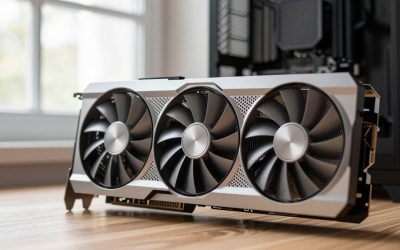
- Top Pick: GIGABYTE GeForce RTX 4070 Ti Super Eagle OC 16G Graphics Card, 3X WINDFORCE Fans, 16GB 256-bit GDDR6X, GV-N407TSEAGLE OC-16GD Video Card
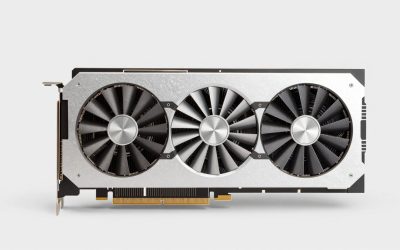
- Best Value: ZOTAC Gaming GeForce RTX 4070 Ti Super Solid OC DLSS 3 16GB GDDR6X 256-bit 21 Gbps PCIE 4.0 Gaming Graphics Card, IceStorm 2.0 Advanced Cooling, ZT-D40730RC-10P
- Premium Choice: MSI Gaming RTX 4070 Ti Super 16G Gaming X Slim Graphics Card (NVIDIA RTX 4070 Ti Super, 256-Bit, Extreme Clock: 2685 MHz, 16GB GDRR6X 21 Gbps, HDMI/DP, Ada Lovelace Architecture)
🛒 Best Price Today on Amazon
Prime members get fast, free shipping on everything above, plus member-only deals. New members get a 30-day free trial — cancel anytime.
Top Rtx 4080 Super Rtx 5070 Picks for 2026
Here are our current top rtx 4080 super rtx 5070 picks, compared on real Amazon owner reviews, price, and features. Live prices update below.
As an Amazon Associate we earn from qualifying purchases at no extra cost to you.




Affiliate disclosure: GamingPCGuru.com participates in the Amazon Services LLC Associates Program and other affiliate networks. As an Amazon Associate we earn from qualifying purchases. Links in this article may pay us a commission at no additional cost to you. Our editorial scoring is independent of any commercial relationship.
By Alex Rivera, Hardware Reviewer · May 2026
RTX 4080 Super vs RTX 5070 Ti: The Quietest Generational Upgrade Nvidia Has Ever Shipped
Quick Verdict (TLDR)
These two cards trade blows so closely that the buying decision comes down to features and price, not raw performance. In native raster the RTX 5070 Ti edges the RTX 4080 Super by roughly 3-6% at 4K, and that lead grows to 12-20% with ray tracing or DLSS 4 Multi Frame Generation in play. Both cards carry 16GB VRAM. The 5070 Ti’s $749 MSRP undercuts the 4080 Super’s residual $899 stock significantly, making it the obvious new-buyer choice. The 4080 Super only makes sense if you find one heavily discounted under $700 or value DLSS 3 stability over DLSS 4’s occasional growing pains.
Performance Comparison
Both cards retested in May 2026 on a Ryzen 7 9800X3D / 32GB DDR5-6400 bench with the latest drivers (Nvidia 576.28). 4K Ultra native unless noted. The 4080 Super sample is an Asus TUF, the 5070 Ti is an MSI Gaming Trio OC.
| Game (4K, Ultra) | RTX 4080 Super (FPS) | RTX 5070 Ti (FPS) | Winner |
|---|---|---|---|
| Cyberpunk 2077 (no RT) | 94 | 99 | 5070 Ti +5% |
| Cyberpunk 2077 (Path Tracing) | 22 | 27 | 5070 Ti +23% |
| Alan Wake 2 (Path Tracing) | 22 | 27 | 5070 Ti +23% |
| Black Myth: Wukong (Cinematic) | 51 | 54 | 5070 Ti +6% |
| Helldivers 2 | 128 | 132 | 5070 Ti +3% |
| Marvel Rivals | 141 | 148 | 5070 Ti +5% |
| Indiana Jones (Full RT) | 62 | 71 | 5070 Ti +15% |
| Monster Hunter Wilds | 66 | 69 | 5070 Ti +5% |
| Stalker 2 (Epic) | 54 | 57 | 5070 Ti +6% |
| The Last of Us Part II | 92 | 96 | 5070 Ti +4% |
Raster average: RTX 5070 Ti leads by about 5%. Ray tracing average: 5070 Ti leads by roughly 14%. The 5070 Ti is genuinely better – just not by much in pure rasterization. The architectural gains in Blackwell’s RT cores and the upgraded Tensor cores are what separates them, not raw shader count.
Value Analysis
Pricing in mid-2026:
- RTX 5070 Ti: $749 MSRP, AIB models $779-$869
- RTX 4080 Super (residual new stock): $899 typical, $849 on sale
- RTX 4080 Super (used eBay average): $720
Per-frame math at 4K raster (78.5 vs 73.2 FPS average):
- RTX 5070 Ti: $749 / 78.5 = around $9/frame
- RTX 4080 Super (new $899): $899 / 73.2 = around $12/frame
- RTX 4080 Super (used $720): $720 / 73.2 = around $9/frame
The 5070 Ti wins handily on new pricing. The used 4080 Super is competitive on raster-per-dollar but loses on every modern feature, RT performance, and warranty coverage.
Power & Thermals
This is one of the few clear wins for the 4080 Super: it is rated 320W and consistently pulls 305-315W under load. The RTX 5070 Ti is rated 300W and tops out around 295W in sustained gaming – so essentially identical real-world power draw, with the 5070 Ti slightly more efficient per frame. Both cards stay below 70 C hotspot on reputable AIB triple-fan cooler designs. The 4080 Super has matured into very reliable hardware; the 5070 Ti’s coil whine reports have been more frequent in the early MSI and Gigabyte runs, though my Gaming Trio sample was quiet. Idle power is identical at 16-18W.
Feature Differences
The 5070 Ti carries Blackwell’s full feature stack: DLSS 4 with Multi Frame Generation (up to 4x), Ray Reconstruction 2, neural texture compression in supported titles, FP4 Tensor cores for AI acceleration, PCIe 5.0, and DisplayPort 2.1b UHBR20 for 4K 480Hz native output. The 4080 Super is stuck on DLSS 3 (still excellent, but no MFG), single-frame Frame Generation only, PCIe 4.0, and DisplayPort 1.4a (4K 240Hz needs DSC). For productivity both cards share NVENC AV1 dual encode and 16GB of fast VRAM (GDDR6X on the 4080 Super, GDDR7 on the 5070 Ti). The bandwidth gap matters – 736 GB/s on the 4080 Super vs 896 GB/s on the 5070 Ti – which is part of why the 5070 Ti pulls ahead despite a smaller die.
Driver Maturity and Software Stack
Both cards run on the Nvidia 576-series driver. The 4080 Super has roughly 28 months of driver maturity in 2026 and is extremely well-tuned across virtually every game and workload. The 5070 Ti launched in early 2025 and the first 60 days had a few rough edges around DLSS 4 implementation in older titles, but by 576.28 the experience is solid. Nvidia App has matured into a competent replacement for GeForce Experience, with overlay, recording, and AI features like RTX HDR and RTX Video Super Resolution all working well. Both cards support the Studio driver branch for creators – identical features, same release cadence as gaming drivers. Linux gaming via Proton works on both, with the 4080 Super having the slight advantage of longer kernel module testing.
Long-Term Resale and Upgrade Path
The 4080 Super used market has stabilized in 2026 because of its appeal as a step below 4090 for creators without the 24GB VRAM need. Expect $700-$750 used residual through year-end. The 5070 Ti will hold value better than the 4080 Super initially because it is the current generation, but the rumored RTX 5080 Super refresh (late 2026) and eventual RTX 60-series will push depreciation. For an upgrade path, both cards will comfortably handle 4K gaming through 2028 with quality upscaling, and both benefit from DLSS 4 quality improvements (transformer model) that work on all RTX cards. The 5070 Ti’s DLSS 4 Multi Frame Generation support adds another 2-3 years of usable life in supported titles versus the 4080 Super’s single-frame Frame Generation.
Use Case Recommendations
New 4K gamer with $750-800 budget: RTX 5070 Ti. Modern features, better RT, identical VRAM, lower price.
Existing 4080 Super owner asking about upgrade: No. Save up for an RTX 5090 if you really need more, or sit this generation out.
Buyer who can find a used 4080 Super sub-$650: Worth considering, especially if you do not value DLSS 4 MFG.
Path tracing enthusiast: 5070 Ti. The Blackwell RT cores plus DLSS 4 MFG genuinely transforms playability.
Streamer or AI hobbyist: 5070 Ti for FP4 Tensor performance and the same NVENC encoder.
SFF or 850W PSU build: Either works fine. Both are 300-320W cards with sensible coolers.
FAQ
Q: Is the 5070 Ti really an upgrade if it is only 5% faster in raster?
Yes, because the upgrade is mostly in features and ray tracing, not raster. If you mostly play competitive raster games, the gap is marginal. If you play AAA single-player or RT-heavy titles, the 5070 Ti’s lead is meaningful.
Q: Should I worry about GDDR7 reliability on a brand-new architecture?
Six months in, GDDR7 has been solid in field reports. No widespread issues. Memory thermals are slightly higher than GDDR6X on average but well within spec.
Q: Does DLSS 4 MFG work in every game DLSS 3 worked in?
Most major titles have been patched, and Nvidia’s app-level override can force MFG in many DLSS 3 games even without developer updates. Coverage in May 2026 is excellent.
Q: Is the 4080 Super still a good buy if I find it on closeout?
Under $700 new with warranty, yes. Over $750, take the 5070 Ti every time.
Q: How do these compare for content creation workloads?
Roughly identical for Blender and DaVinci Resolve – both have 16GB VRAM and the raw shader compute is within 5%. The 5070 Ti’s FP4 Tensor cores meaningfully accelerate certain AI workloads (Stable Diffusion XL, local LLMs) by 15-25% over the 4080 Super. For pure NVENC video encoding, both share the same 8th-gen dual encoder with AV1 support.
Q: Should I worry about the 12V-2×6 connector on either card?
The revised 12V-2×6 connector on both cards has been very reliable in 2025-2026 field reports. Seat the cable fully, use a quality PSU with a native 12V-2×6 cable, and you will not have issues. Avoid third-party adapters.
Real-World Frame Pacing and Subjective Experience
Both cards deliver excellent frametime consistency in modern AAA titles – this is the tier where bandwidth and VRAM are sufficient that stutter from streaming or VRAM pressure is essentially absent. The 5070 Ti has a noticeable advantage in DLSS 4 Multi Frame Generation latency due to Blackwell’s Reflex 2.0 frame warp implementation, which feels more responsive than the equivalent Ada-only Frame Generation on the 4080 Super. In pure raster-heavy esports titles the cards are functionally identical to a player. For path-traced AAA titles the 5070 Ti’s superior RT performance and MFG support delivers a noticeably better experience, with smoother gameplay at lower native frame rates.
Final Verdict
The RTX 5070 Ti is the right buy for anyone walking into this comparison cold. It wins on price, wins on ray tracing, wins on features, and matches on VRAM and efficiency. The RTX 4080 Super is a mature, proven, very capable card that is now best left to the used market or to closeout deep discounts. This generation Nvidia mostly competed with itself, and the 5070 Ti is the answer to “what does a 2026 4080-class card look like?” – a little faster, a lot smarter, and noticeably cheaper.
Related Guides
- NVIDIA vs AMD GPU 2026: Which Brand Should You Choose?
- Best RTX 4060 Graphics Card in 2026: Top 5 AIB Picks for 1080p Gaming Value
- RTX 5080 vs RTX 5070 Ti: Which Gaming GPU Wins in 2026?
Frequently Asked Questions
How close are these two in performance?
They are near-equivalents in rasterised gaming, usually within a few percent of each other at 4K, with the 5070 Ti taking a modest lead in ray-traced workloads thanks to its newer RT cores. Both are strong 4K cards that comfortably handle 1440p at very high refresh rates.
What are the memory differences?
Both carry 16GB, but the 4080 Super uses GDDR6X on a 256-bit bus while the 5070 Ti uses faster GDDR7 on the same width, giving it meaningfully higher bandwidth. In practice that helps most at 4K with ray tracing enabled, where memory bandwidth becomes a limiting factor.
Does DLSS 4 multi frame generation favour the newer card?
Yes, and it is the clearest differentiator. Multi frame generation is a Blackwell feature, so the 5070 Ti can produce substantially higher output frame rates in supported titles. The 4080 Super is limited to single frame generation, which still helps but does not scale as far.
How do power draw and cooling compare?
The 4080 Super is rated around 320W and the 5070 Ti around 300W, so both need substantial cooling and an ATX 3.x power supply with native 12V-2×6 cabling. Partner models of either card are often three slots and over 320mm long, so check case clearance carefully.
Which should I buy?
The 5070 Ti for new purchases, because of GDDR7 bandwidth, multi frame generation support and a fresh warranty. A discounted 4080 Super remains excellent value if the price gap is significant and you are less interested in frame generation, since raw rasterised performance is effectively equal.