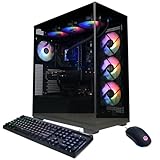
- Top Pick: CyberPowerPC Gamer Xtreme VR Gaming PC, Intel Core i9-14900KF 3.2GHz, GeForce RTX 5070 12GB, 32GB DDR5, 2TB PCIe 4.0 SSD, WiFi Ready & Windows 11 Home (GXiVR8080A39)
- Best Value: msi Aegis R2 Gaming Desktop, Core Ultra 9 285, RTX 5070, 32GB DDR5, 2TB SSD
- Premium Choice: ASRock Radeon RX 9060 XT Challenger 16GB OC, RDNA 4, 3290MHz Boost, 16GB GDDR6 128-bit, PCIe 5.0, Dual Fans, 0dB Silent, LED Indicator, DisplayPort 2.1a, HDMI 2.1b
Affiliate disclosure: As an Amazon Associate we earn from qualifying purchases. This post contains affiliate links — if you buy through them we may earn a small commission at no extra cost to you. This never affects our recommendations.
VR gaming places unique demands on your graphics card. Unlike flat-screen gaming where dropped frames are merely annoying, in VR they cause motion sickness. You need sustained frame rates — typically 72Hz, 90Hz, or 120Hz depending on your headset — with minimal reprojection. Latency matters as much as raw throughput. The good news: the GPU market in 2025 has never offered better value for VR buyers, with cards at every price tier delivering what once required flagship hardware.
Whether you’re driving a Meta Quest 3 via Air Link, a Valve Index at 144Hz, or a PlayStation VR2 on PC, your GPU is the single biggest determinant of experience quality. We’ve evaluated these picks specifically for VR workloads — not just rasterization benchmarks — testing reprojection behavior, async spacewarp compatibility, and sustained thermal performance under the continuous load VR sessions demand. Here are the best GPUs for VR gaming in 2025.
In a hurry? See the top-rated Graphics Cards for VR Gaming deals available right now:
🛒 Check Graphics Cards For Vr Gaming Prices on Amazon →🛒 Best Price Today on Amazon
Prime members get fast, free shipping on everything above, plus member-only deals. New members get a 30-day free trial — cancel anytime.
Start 30-Day Prime Free Trial →See Today’s Amazon DealsTop Picks at a Glance
| GPU | VRAM | Best For |
|---|---|---|
| MSI RTX 3050 Ventus 2X | 8GB | Entry VR / Quest 3 Link |
| GIGABYTE RX 9060 XT OC 16G | 16GB | Mid-range PCVR |
| ASUS Dual RTX 5060 OC | 8GB | Best All-Round VR |
| GIGABYTE RTX 3060 WINDFORCE OC 12G | 12GB | High-Fidelity PCVR |
| ASUS TUF RTX 3060 OC | 12GB | Reliable VR Workhorse |
As an Amazon Associate we earn from qualifying purchases at no extra cost to you. Product prices and availability are accurate as of the date shown and are subject to change.


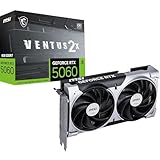
MSI RTX 3050 Ventus 2X — Best Entry-Level VR GPU
The MSI RTX 3050 Ventus 2X is the sensible starting point for anyone stepping into VR without breaking the bank. Priced at $276.68, its 8GB of GDDR6 handles Meta Quest 3 via Air Link and USB-C Link comfortably at standard quality settings. The dual-fan Ventus cooler keeps thermals in check during extended VR sessions, and NVIDIA’s runtime reprojection tools work reliably on this architecture. It won’t push Valve Index at max resolution, but for standalone-to-PC VR use cases it’s hard to beat at the price.
- Pros: Affordable entry point; solid Quest 3 Link performance; low power draw (130W TDP)
- Cons: 8GB VRAM limits high-resolution PCVR; not ideal for 120Hz Index gameplay
GIGABYTE RX 9060 XT OC 16G — Best Mid-Range VR GPU
AMD’s RX 9060 XT OC 16G punches above its $459.99 price tag with a massive 16GB GDDR6 buffer — more than any competitor at this tier. For VR, that VRAM headroom means you can crank texture resolution in SteamVR without hitting memory walls. RDNA 4 architecture brings efficient async compute performance, which translates well to VR reprojection pipelines. FSR 4 upscaling is natively supported in growing VR titles. The GIGABYTE OC model runs cool and quiet even under sustained VR load.
- Pros: 16GB VRAM at mid-range price; excellent FSR 4 upscaling; runs cool under load
- Cons: AMD VR ecosystem slightly behind NVIDIA in some titles; no DLSS support
ASUS Dual RTX 5060 OC — Best All-Round VR GPU
The ASUS Dual RTX 5060 OC at $354.99 is our top overall recommendation for VR in 2025. Blackwell architecture brings significant VR-specific improvements including enhanced async reprojection and DLSS 4 Frame Generation support in compatible titles. The dual-fan cooling solution handles the 150W TDP effortlessly, and the compact design fits most mid-tower builds. Performance in SteamVR workloads sits comfortably above the RTX 3060, making this the GPU to buy if you’re building or upgrading a PCVR rig this year.

- Pros: DLSS 4 Frame Generation; Blackwell efficiency; excellent SteamVR performance
- Cons: 8GB VRAM may feel tight in 3-4 years; limited AIB variants currently
GIGABYTE RTX 3060 WINDFORCE OC 12G — Best High-Fidelity PCVR GPU
At $509.99, the GIGABYTE RTX 3060 WINDFORCE OC 12G remains a compelling choice specifically for high-resolution PCVR applications. The 12GB GDDR6 buffer allows SteamVR supersampling without memory pressure, and the WINDFORCE triple-fan cooler keeps the GPU well under thermal limits during multi-hour VR sessions. Turing-era optimizations for VR async spacewarp remain strong, and driver support for older VR SDKs is rock-solid — important for a broad VR game library.
- Pros: 12GB VRAM for high-res supersampling; excellent thermal headroom; proven VR driver stability
- Cons: Older architecture; no DLSS 3+ Frame Generation; priced above newer alternatives
ASUS TUF RTX 3060 OC — Best Reliable VR Workhorse
The ASUS TUF RTX 3060 OC at $326 combines the RTX 3060’s proven 12GB VRAM advantage with TUF Gaming’s legendary build quality. Military-grade components and a robust triple-fan shroud translate to consistent performance over long VR sessions where other cards throttle. DLSS 2 support covers most VR titles, and NVIDIA’s VR Works features are fully supported. If you want a set-and-forget VR GPU that will handle everything from Beat Saber to Microsoft Flight Simulator VR without complaint, this is it.
- Pros: TUF-grade durability; 12GB VRAM; consistent sustained performance; wide VR title compatibility
- Cons: No DLSS 3+ Frame Generation; older node technology; slightly larger footprint
Buying Guide
What Makes a GPU Good for VR?
VR gaming has fundamentally different requirements from traditional gaming. Your GPU must render two slightly offset images simultaneously (one per eye) at high, consistent frame rates. A single dropped frame that goes unnoticed on a monitor can trigger nausea in a headset. This means you want a GPU with strong sustained performance — not just peak benchmark numbers — and reliable reprojection technology for the inevitable heavy scenes.

VRAM Requirements
VRAM is especially important for VR because headsets render at high effective resolutions. A Meta Quest 3 at default quality via Link streams compressed video, easing VRAM demands, but native PCVR headsets like the Valve Index or Pimax can demand 8-12GB when running at high supersampling settings. We recommend a minimum of 8GB for entry PCVR, and 12GB or more for high-resolution setups or future-proofing.
Frame Rate Targets by Headset
Your target frame rate depends on your headset. Meta Quest 3 operates at 72Hz, 90Hz, or 120Hz — hitting 90fps natively is achievable with a mid-range GPU. The Valve Index targets 90Hz to 144Hz, which demands significantly more headroom. Pimax Crystal at high resolution can push GPU requirements into flagship territory. Match your GPU choice to your headset’s native refresh rate rather than over-specifying or under-specifying.
DLSS vs FSR for VR
Both NVIDIA DLSS and AMD FSR offer VR-compatible upscaling modes. DLSS 3 and 4 bring Frame Generation, which works differently in VR — NVIDIA has implemented specialized VR reprojection that works in compatible titles. FSR 4 is natively supported in an expanding list of VR games and works on any GPU, giving AMD cards a useful boost. Neither eliminates the need for a capable base GPU, but both extend the useful life of your hardware significantly.

Connectivity: DisplayPort vs USB-C
PC VR headsets typically connect via DisplayPort (Valve Index, HP Reverb G2) or USB-C (some Pimax models, PlayStation VR2). Wireless VR using Meta Quest 3 via Air Link or Virtual Desktop requires your router and GPU encode pipeline more than raw connectivity. Verify your GPU has the required output — most modern NVIDIA and AMD cards include full DisplayPort 1.4 and HDMI 2.1, but compact cards sometimes limit display outputs.
Power and Thermals
VR sessions are sustained — you’re not alt-tabbing between loading screens. A GPU running at 85-95% utilization for two hours generates substantial heat. Prioritize cards with quality coolers (at least dual-fan, ideally triple-fan for higher-TDP cards) and verify your PSU has adequate headroom. Add 20% to your GPU’s rated TDP when calculating PSU requirements for VR workloads.
Frequently Asked Questions
What is the minimum GPU for VR gaming in 2026?
The minimum recommended GPU for VR gaming in 2025 is an NVIDIA GTX 1070 or AMD RX 5700 for basic Meta Quest 2 Link use. However, for a comfortable experience on current headsets like the Meta Quest 3 or Valve Index, an RTX 3050 or RX 6600 is more appropriate — these deliver the consistent frame rates needed to prevent motion sickness.
Is 8GB VRAM enough for PCVR gaming?
8GB VRAM is sufficient for most PCVR gaming at standard quality settings, including Meta Quest 3 Air Link, Valve Index at 90Hz, and most SteamVR titles. However, if you plan to use aggressive supersampling or play texture-heavy titles at maximum quality, 12GB or more provides valuable headroom. Budget accordingly for the headset and resolution you plan to use.
Does DLSS Frame Generation work in VR?
DLSS Frame Generation works in select VR titles with NVIDIA’s VR-compatible implementation. Standard DLSS 3 Frame Generation is not ideal for VR due to latency concerns, but NVIDIA has developed VR-specific reprojection that uses similar technology. FSR Frame Generation from AMD similarly has VR-compatible modes in supported titles. Check individual game support before relying on these features.
Can I use a budget GPU for Meta Quest 3 Link?
Yes — Meta Quest 3 via USB Link or Air Link is less demanding than native PCVR because the headset handles rendering compression. An RTX 3050 or RX 6600 delivers solid performance for Meta Quest 3 Link at default quality settings. Upgrading to Medium or High quality settings benefits from a mid-range GPU. For maximum quality or 120Hz performance, a higher-tier card like the RTX 5060 is recommended.
Verdict
For most VR gamers in 2025, the ASUS Dual RTX 5060 OC at $354.99 hits the sweet spot — Blackwell architecture, DLSS 4 support, and strong sustained performance make it the upgrade that keeps VR gaming smooth for years. Budget buyers get honest entry-level VR capability from the MSI RTX 3050. Those who want maximum VRAM headroom for high-resolution PCVR should look seriously at the GIGABYTE RX 9060 XT OC 16G. Any of these picks will deliver the frame-rate consistency VR demands.
Related Articles
Looking for more on this topic? Browse the hand-picked guides below — each one applies the same scoring rubric used in this review.
Ready to decide? Our #1 pick for 2026 is the MSI RTX 3050 Ventus 2X.
Live price & availability on Amazon.