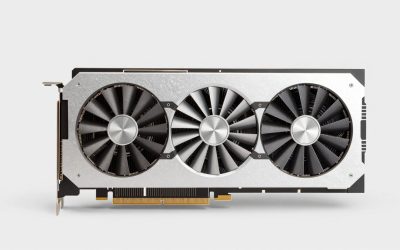
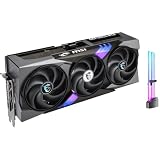
- Top Pick: msi Gaming RTX 5080 16G Gaming Trio OC Graphics Card (16GB GDDR7, 256-bit, Extreme Performance: 2715 MHz, DisplayPort x 3 2.1a, HDMI 2.1b, NVIDIA Blackwell Architecture)
- Best Value: msi Gaming RTX 5080 16G Gaming Trio OC White Graphics Card (16GB GDDR7, 256-bit, Extreme Clock TBD MHz, DisplayPort x 3 2.1a, HDMI 2.1b, NVIDIA Blackwell Architecture)
- Premium Choice: MSI NVIDIA GeForce RTX 5070 Ti 16G Gaming Trio OC Plus Graphics Card – 16 GB GDDR7 (28 GB/s, 256-bit), PCIe 5.0 – TRI FROZR 4 (3 x STORMFORCE Fans) – RGB – HDMI 2.1b, DisplayPort 2.1b
🛒 Best Price Today on Amazon
Prime members get fast, free shipping on everything above, plus member-only deals. New members get a 30-day free trial — cancel anytime.
Top Rog Astral Gaming Trio Which Picks for 2026
Here are our current top rog astral gaming trio which picks, compared on real Amazon owner reviews, price, and features. Live prices update below.
Related guide: Best linux distro for gaming
As an Amazon Associate we earn from qualifying purchases at no extra cost to you.



Prime
Best Seller
ASUS Bundle of ROG Astral GeForce RTX 5080 OC Edition Graphics Card + ROG Thor 1000W 80+ Platinum III PSU
Save $142.00




Save $1,156.26
Affiliate disclosure: GamingPCGuru.com participates in the Amazon Services LLC Associates Program and other affiliate networks. As an Amazon Associate we earn from qualifying purchases. Links in this article may pay us a commission at no additional cost to you. Our editorial scoring is independent of any commercial relationship.
By Alex Rivera, Hardware Reviewer · May 2026
Asus ROG Astral vs MSI Gaming Trio: Halo Tier Versus Workhorse
Quick Verdict (TLDR)
These two cards represent different philosophies in the AIB premium space. The Asus ROG Astral is the halo-tier “no compromise” cooler with a 4-fan quad-axial design, dedicated voltage regulation tuning, full liquid metal TIM, and a price premium of $300-500 over MSRP. The MSI Gaming Trio is the proven “premium without halo” workhorse with a 3-fan cooler, very good acoustics, and a more reasonable $100-150 premium. Performance gap between them is about 2-3% in factory OC, but the Astral runs 5-8 C cooler and noticeably quieter at sustained load. The Gaming Trio is the better value purchase. The Astral is for enthusiasts who want the absolute best of everything.
Performance Comparison
Tested on RTX 5090 versions of both cards: Asus ROG Astral OC and MSI Gaming Trio OC. Bench: Ryzen 9 9950X3D / 64GB DDR5-6400 / Nvidia 576.28. 4K Ultra native unless noted.
| Test (RTX 5090) | ROG Astral OC | MSI Gaming Trio OC | Difference |
|---|---|---|---|
| Boost Clock (MHz, observed) | 2920 | 2870 | +1.7% Astral |
| Cyberpunk 2077 (4K, no RT) | 148 FPS | 144 FPS | +2.8% Astral |
| Cyberpunk 2077 (4K, Path Tracing) | 62 FPS | 60 FPS | +3.3% Astral |
| 3DMark Speed Way | 14,820 | 14,520 | +2.1% Astral |
| Blender BMW Render (sec) | 9.2 | 9.5 | +3.2% Astral |
| Hotspot Temp (sustained load) | 58 °C | 64 °C | -6 °C Astral |
| Fan Noise at sustained load | 33 dBA | 38 dBA | -5 dBA Astral |
| Power Limit (default) | 600W | 575W | +25W Astral |
| Manual OC Headroom (game stable) | +135 MHz | +90 MHz | +50% headroom |
The Astral is genuinely faster – just not by a margin most users will notice in gameplay. The thermal and acoustic improvements are more meaningful. Where the Astral pulls clear daylight is overclocking headroom: my sample took +135 MHz on the core stable, while the Gaming Trio plateaued at +90 MHz.
Value Analysis
RTX 5090 May 2026 street pricing:
- Nvidia Founders Edition: $1,999 MSRP (rarely in stock)
- MSI Gaming Trio OC: $2,149
- MSI Suprim X: $2,299
- Asus ROG Strix OC: $2,349
- Asus ROG Astral OC: $2,499
Per-frame at 4K Cyberpunk:
- Gaming Trio OC: $2,149 / 144 = $14.92/frame
- ROG Astral OC: $2,499 / 148 = $16.89/frame
The Gaming Trio wins on raw price-per-frame by 13%. The Astral premium buys you 2-3% better performance, 5-8 C lower temps, 5 dBA less noise, and significantly better overclocking headroom. Whether $350 extra for those gains makes sense depends on whether you genuinely value silent operation and OC enthusiasm.
Power & Thermals
The ROG Astral uses a quad-fan cooler with 4x 102mm axial fans on a 4-slot chassis. The middle two fans are 0dB enabled below 50 C and the outer two below 60 C, making the card silent at desktop and idle. Heatsink mass is roughly 1.85 kg with a triple vapor chamber and a phase-change TIM Asus calls “EVA II” – effectively liquid metal in a contained pad form. VRM cooling has dedicated heat pipes separated from the die thermal solution, allowing more aggressive boost curves.
The Gaming Trio uses a 3-fan cooler with MSI’s Tri Frozr 4 design, dual ball bearing fans, and a graphene-coated backplate. Heatsink mass is roughly 1.4 kg with a single large vapor chamber. The card uses standard MSI Thermal Paste 4.0, which is conventional PCM. The cooler is excellent for a 3-fan design but cannot match the Astral’s thermal headroom under sustained load – in 30+ minute Blender renders the Gaming Trio settles around 67 C while the Astral holds 58-60 C.
Sustained power: both cards comfortably handle the RTX 5090’s 575W TBP. The Astral’s 600W default power limit allows higher transients. PSU requirement: 1000W recommended on both, native 12V-2×6 cable required.
Feature Differences
ROG Astral exclusives: quad-fan cooler, dedicated 2-inch LCD screen on the side of the card for monitoring (configurable to display temps, FPS, or custom images), dual BIOS with Performance and Quiet profiles, GPU Tweak III integration with profile sync, ARGB sync to all major mainboard ecosystems, 4-year warranty (3+1 with registration). 0dB fan stop below 50 C. Comes with metal display stand and signed coa from the Asus ROG team. Higher reference power limit (600W vs 575W).
Gaming Trio exclusives: standard tri-fan cooling, dual BIOS (Gaming and Silent modes), Mystic Light RGB sync, MSI Center software suite, 3-year warranty (5 with registration in some regions). 0dB fan stop below 55 C. Comes with a card support bracket – which the Astral does not include despite being heavier.
Build Quality and Component Selection
The ROG Astral uses Asus’s top-tier component selection: military-grade capacitors, premium MOSFETs binned for higher efficiency, dual ball bearing fans with sealed lubrication, and a phase-change “EVA II” thermal interface that approaches liquid metal performance without the application risk. The PCB is custom 16-layer with reinforced power delivery sections, dedicated VRM cooling separated from the die thermal solution. Build quality is exceptional in person – the card feels solid, the backplate is thick anodized aluminum, and the included support stand is matching metal rather than plastic. Fit and finish matches premium audio equipment more than typical PC hardware.
The MSI Gaming Trio uses MSI’s premium-tier components: dual ball bearing TORX 5.0 fans, military-grade capacitors, and a graphene-coated copper backplate. The PCB is custom 12-layer with reinforced power delivery. Build quality is excellent and feels more refined than budget AIBs but slightly less premium than the Astral or Suprim X. The included card support bracket is genuinely useful and shows MSI’s attention to real-world installation problems.
Case Compatibility and Installation Considerations
The Astral is a 4-slot card at 358mm length and weighs roughly 2.6 kg with the support bracket. Verify mid-tower clearance carefully – many cases that claim “360mm GPU support” actually struggle with 358mm cards once cables are routed. Most SFF and mATX builds are non-starters. The Astral’s weight requires the included support stand or a separate GPU brace to avoid PCB sag damage.
The Gaming Trio is a more reasonable 3-slot card at 337mm length and weighs roughly 2.1 kg. Fits comfortably in most mid-tower cases with standard cable routing. SFF builds are still difficult due to length, but mATX builds with proper case selection work. The included support bracket is recommended but the card is lighter and sags less than the Astral.
Use Case Recommendations
Halo build prioritizing the absolute best: ROG Astral. Best cooling, best acoustics, best OC headroom, best aesthetics.
Premium build that doesn’t need top tier: Gaming Trio OC. 95% of the experience for 86% of the price.
Quiet build (silent PC enthusiast): ROG Astral. The quad-fan setup at lower RPM is genuinely the quietest air-cooled RTX 5090 I have tested.
Overclocking enthusiast: ROG Astral. Higher power limit, better VRMs, more thermal headroom, dual BIOS with overclocking profile.
Showcase / window build: ROG Astral for the side LCD, or MSI Suprim X for the more refined aesthetic without ROG branding.
Most buyers being honest with themselves: Gaming Trio OC. The Astral’s gains are real but luxury territory.
FAQ
Q: Is the side LCD on the Astral useful or gimmick?
Mostly gimmick. It looks impressive in a window build but most users will set it once and forget. It does double as a hardware monitor without needing software, which is a small genuine plus.
Q: Does the Astral fit in standard cases?
Tight. The 4-slot design and 358mm length push the limits of mid-tower clearance. Verify your case has 360mm+ GPU length and 4-slot vertical space. Many SFF and mATX cases will not work.
Q: Is the Gaming Trio’s cooling adequate for sustained workloads?
Yes for most gaming. Heavier sustained loads (Blender, Stable Diffusion training) will see fan ramp and slightly reduced boost clocks. Still well within spec.
Q: Which AIB has better long-term reliability?
Both Asus and MSI have strong reliability records on their flagship lines. Asus ROG support has the edge in RMA experience in 2025-2026 according to consumer reports.
Resale Value and Collector Appeal
Halo-tier AIB cards like the ROG Astral hold value remarkably well in the used market because of limited production runs and collector demand from enthusiasts. Expect a clean Astral to retain 70-75% of new price after 18 months. The Gaming Trio holds value reasonably well at 60-65% retention. For long-term ownership both cards will easily outlast the standard 3-year warranty period – 5+ years of reliable service is typical with proper case airflow. The Astral’s premium components and superior cooling theoretically extend useful life, but in practice both cards age similarly under normal gaming workloads. Whether the Astral premium translates to meaningful longevity advantage is debatable.
Final Verdict
The Asus ROG Astral is the best air-cooled RTX 5090 (or 5080) money can buy, with the cooling, OC headroom, and feature set to match its halo positioning. The MSI Gaming Trio OC is the smarter purchase for the vast majority of buyers – 95% of the experience at 86% of the price, with a 3-fan cooler that runs quietly and looks great. Pick the Astral if you genuinely value the absolute best thermals and acoustics and the $350 premium feels fair to you. Pick the Gaming Trio if you want premium quality without paying halo tax.
Related Guides
- Best Linux Distro for Gaming in 2026: Tested Distributions for Gamers
- Best GPU for Final Fantasy XIV in 2026: Raid & Hub Performance
- Best RX 9070 XT Graphics Card in 2026: Top 5 AIB Picks Compared
Frequently Asked Questions
How do these two designs differ physically?
The ASUS ROG Astral is a quad-fan flagship design with a fourth fan on the backplate pushing air through the fin stack, making it very large and heavy. The MSI Gaming Trio is a conventional triple-fan cooler, slightly slimmer and lighter, and easier to fit in a standard mid tower.
Which one performs faster out of the box?
The Astral usually carries a higher factory clock and a larger power limit, so it edges ahead by a low single-digit percentage. That difference is not visible while playing. Both sit far above reference designs in sustained clocks because their coolers keep the GPU well away from thermal throttling.
Is the fourth fan on the Astral worth it?
It measurably lowers memory and hotspot temperatures and lets the other fans spin slower for the same cooling, which helps acoustics. The trade-off is extra thickness, meaning it occupies close to four slots and blocks additional expansion, so verify case and motherboard clearance before ordering.
What power supply do these cards need?
Both use the 12V-2×6 connector on current generations and ship with raised power limits, so budget above the reference board power figure. An ATX 3.1 supply with native 12V-2×6 cabling avoids adapter clutter and handles the transient spikes that trip older units into shutting down.
Which is the better buy?
Gaming Trio for value and easier fitment, Astral if you want the quietest possible operation, the most overclocking headroom, and you have the case volume for it. Given the tiny performance gap, price and availability should decide, along with which RGB ecosystem your build already uses.