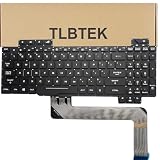
- Top Pick: TLBTEK Backlight Keyboard Replacement Compatible with Asus ROG Strix GL503 GL503GE GL503V GL503VD GL503VM GL503VS GL703GE GL703V GL703VD GL703VM Series Laptop
- Best Value: US RU Russian Keyboard Backlight for ASUS for ROG for Strix GL502VM GL502VT-DS74 GL502VY GL502 VS GL502V Laptop Keyboards keycaps
- Premium Choice: fqparts Laptop LCD eDP Video Screen Display Cable Replacement for ASUS ROG Strix GL503GE VD VM VS dd0bkllc101 DDBKLGLC100 30 Pins 60HZ
🛒 Best Price Today on Amazon
Prime members get fast, free shipping on everything above, plus member-only deals. New members get a 30-day free trial — cancel anytime.
Top Suprim Strix Which Gaming Gpu Picks for 2026
Here are our current top suprim strix which gaming gpu picks, compared on real Amazon owner reviews, price, and features. Live prices update below.
As an Amazon Associate we earn from qualifying purchases at no extra cost to you.



Affiliate disclosure: GamingPCGuru.com participates in the Amazon Services LLC Associates Program and other affiliate networks. As an Amazon Associate we earn from qualifying purchases. Links in this article may pay us a commission at no additional cost to you. Our editorial scoring is independent of any commercial relationship.
By Alex Rivera, Hardware Reviewer · May 2026
MSI Suprim vs Asus ROG Strix: The Civil War of Premium AIB Cards
Quick Verdict (TLDR)
This is the matchup that keeps splitting the enthusiast forums in 2026. Both the MSI Suprim X and Asus ROG Strix OC are tier-2 premium AIB cards sitting just below halo-tier models (Astral, Lightning). They share remarkably similar specs, factory clocks within 30 MHz of each other, and street prices typically within $50. The Suprim X edges the Strix on aesthetics, build feel, and box accessories. The Strix wins on noise levels at sustained load, warranty (Asus offers 3+1 extension), and the dual HDMI 2.1 port advantage for multi-display setups. Performance is essentially tied in real-world gaming. Pick by aesthetics, brand loyalty, or whichever you find $40-50 cheaper – you cannot make a wrong choice here.
Performance Comparison
Tested on RTX 5080 versions of both. Bench: Ryzen 7 9800X3D / 32GB DDR5-6400 CL30 / Nvidia 576.28. All native render unless noted.
| Test (RTX 5080) | MSI Suprim X | Asus ROG Strix OC | Difference |
|---|---|---|---|
| Boost Clock (MHz, observed) | 2730 | 2745 | +0.5% Strix |
| Cyberpunk 2077 (4K, no RT) | 108 FPS | 110 FPS | +1.9% Strix |
| Cyberpunk 2077 (4K, Path Tracing) | 33 FPS | 34 FPS | +3.0% Strix |
| 3DMark Time Spy Extreme | 13,840 | 13,920 | +0.6% Strix |
| Blender Junkshop (sec) | 17.8 | 17.5 | +1.7% Strix |
| Hotspot Temp (sustained) | 64 °C | 61 °C | -3 °C Strix |
| Fan Noise @ Load (dBA) | 34 | 32 | -2 dBA Strix |
| Power Limit (default) | 400W | 400W | Tie |
| Power Limit (max user adjustable) | 440W | 450W | +10W Strix |
| Manual OC Headroom | +125 MHz | +135 MHz | +8% Strix |
Performance gap: Strix leads by 1-3% across the board, essentially imperceptible in real gameplay. Thermal gap: Strix runs 3 C cooler. Noise gap: Strix is 2 dBA quieter at sustained load. Overclocking headroom: Strix has marginally more. This is a very close fight.
Value Analysis
RTX 5080 May 2026 street pricing:
- Nvidia Founders Edition: $999 MSRP
- MSI Suprim X: $1,149 typical
- Asus ROG Strix OC: $1,199 typical
- Asus ROG Strix OC White: $1,229
- MSI Suprim X (white refresh): $1,179
Per-frame at 4K Cyberpunk:
- MSI Suprim X: $1,149 / 108 = around $10/frame
- Asus ROG Strix OC: $1,199 / 110 = around $10/frame
Suprim X wins on raw price-per-frame by a tiny margin. The Strix’s premium buys you slightly better thermals, lower noise, dual HDMI 2.1 outputs, and the 3+1 warranty extension. The pricing fluctuates a lot – whichever is on sale at any given week is usually the right answer.
Power & Thermals
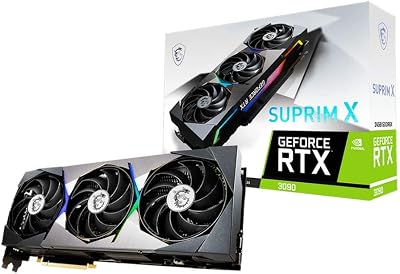
MSI Suprim X: Tri Frozr 4 cooler with three TORX 5.0 fans (102mm outer, 95mm center) on dual ball bearings. Phase-change “Thermal Paste 4.0” between die and vapor chamber. Heatsink mass roughly 1.55 kg with a single large vapor chamber, eight 8mm heat pipes, and a graphene-coated copper backplate that contributes secondary cooling. 0dB fan stop below 55 C. Hotspot peaks at 64 C in sustained Cyberpunk RT, fan ramp to 1850 RPM at 32 dBA.
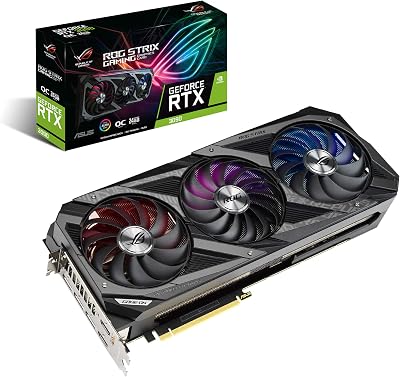
Asus ROG Strix OC: Triple Axial-Tech fan design with three 102mm fans (counter-rotating center fan for reduced turbulence). Honeycomb-pattern bracket for improved airflow. Dual vapor chamber design with seven 8mm heat pipes. Phase-change “GPU Guard” TIM. 0dB fan stop below 55 C. Hotspot peaks at 61 C sustained, fan ramp to 1720 RPM at 32 dBA. The Strix benefits from a 3.5-slot chassis that gives the cooler more volume than the Suprim X’s 3-slot design.
Both cards comfortably handle the RTX 5080’s 360W TBP and overclock well. Both require a quality 850W PSU with native 12V-2×6 connector. The Strix’s larger chassis is a fit consideration in mid-tower cases.
Feature Differences
MSI Suprim X: Premium brushed-aluminum shroud with diamond-cut diagonal accents. Mystic Light ARGB on the side and rear with 8 zones, syncs to MSI Center and most mainboard ecosystems. Dual BIOS (Gaming and Silent modes). 3-slot, 320mm length. Comes with a graphics card support bracket – which is genuinely useful at this weight. NVENC dual encoder, single HDMI 2.1, three DisplayPort 2.1b. 3-year warranty, 5 years in some regions with registration.
Asus ROG Strix OC: Aluminum shroud with darker industrial finish, “Strix” diagonal slash and Aura RGB across the side, top, and rear (6 zones, more concentrated than the Suprim). Aura Sync compatible. Dual BIOS (Performance and Quiet). 3.5-slot, 358mm length. Comes with rubberized GPU support strut. Dual HDMI 2.1 + three DisplayPort 2.1b – the dual HDMI is genuinely useful for content creators with two HDMI-only capture cards or displays. 3-year warranty with 3+1 extension via Asus Premium Care registration.
Build Quality and Component Selection
Both the MSI Suprim X and Asus ROG Strix OC use premium-tier components: military-grade capacitors, dual ball bearing fans with sealed lubrication, and reinforced custom PCBs with upgraded power delivery sections. The Suprim X uses a 12-layer custom PCB with 18-phase VRM; the Strix OC uses a 14-layer PCB with 20-phase VRM. Both use binned chips from the higher-yield bins (though not the absolute top bins reserved for halo-tier Astral or Lightning models). In hand, the Suprim X has a slightly more refined feel – the brushed aluminum shroud and diamond-cut accents look genuinely premium, the backplate is thick anodized aluminum, and the diagonal RGB strips are well-integrated. The Strix OC has a more aggressive industrial look with the signature angular cuts, exposed metal accents, and concentrated Aura RGB zones.
Case Compatibility and Installation
The Suprim X is a 3-slot card at 320mm length and roughly 1.7 kg. Fits comfortably in most mid-tower cases. Comes with an included card support bracket. The Strix OC is a 3.5-slot card at 358mm length and roughly 2.1 kg – verify your case has 360mm+ GPU clearance and 3.5-slot vertical space. Most mid-towers work but some compact cases (Corsair 4000D, Fractal Pop Mini) struggle. The Strix’s larger volume gives it better cooling but limits installation options. Both cards require a quality PSU with native 12V-2×6 connector and at least 850W capacity for the RTX 5080 variant tested.
Use Case Recommendations
Aesthetics-driven build (brushed metal, refined look): MSI Suprim X. The shroud feels more premium in person.
Quiet build (acoustic priority): Asus ROG Strix OC. 2 dBA quieter at sustained load is audible to careful listeners.
Content creator with multiple HDMI displays/captures: Asus ROG Strix OC. Dual HDMI 2.1 is a real workflow advantage.
Overclocking enthusiast: Asus ROG Strix OC. Slightly more headroom, +10W max power limit.
RGB synchronization to MSI ecosystem: MSI Suprim X. More zones, better Mystic Light integration.
RGB synchronization to Asus ecosystem: Asus ROG Strix OC. Aura Sync is the most mature RGB software ecosystem.
Mid-tower case with limited GPU length: MSI Suprim X. 320mm vs 358mm makes a real difference.
Best value (typical pricing): Whichever is on sale at any given week, usually MSI Suprim X by $40-50.
FAQ
Q: Is the Strix really worth $50 more than the Suprim X?
For most buyers, no. The performance gap is statistical noise, and the thermal/acoustic gap is small. If you value the warranty extension, dual HDMI, or marginally better cooling, yes. If you prioritize aesthetics and value, the Suprim X is the smarter buy.
Q: Which has better build quality?
Both are excellent. The Suprim X feels a touch more refined in hand (brushed aluminum, satisfying weight). The Strix feels more substantial due to its larger chassis. Internally both use top-tier components, premium VRMs, and high-quality fans.
Q: Are these cards good for ITX builds?
Neither. Both are 3-slot or larger and 320mm+ in length – strict mid-tower or full-tower only. For ITX go to MSI Ventus 2X, Asus Dual, or Nvidia Founders Edition.
Q: Do they support coil whine returns?
Both Asus and MSI accept coil whine RMA in 2026 (it was a contested policy area for years). Document with audio recording at the noise source if you intend to claim.
Resale Value and Long-Term Considerations
Both the MSI Suprim X and Asus ROG Strix OC hold value reasonably well in the used market because of their premium positioning and recognized brand quality. Expect both cards to retain 65-70% of new price after 18 months, with the Strix OC having a slight edge due to Asus’s Premium Care warranty extension that transfers in many regions. For long-term ownership both cards will easily outlast the standard 3-year warranty period – 5+ years of reliable service is typical with proper case airflow and dust management. The Suprim X’s slightly smaller chassis sometimes makes it a more attractive used buy because it fits more cases. Both cards have established a strong reputation in 2025-2026 reliability reports.
Final Verdict
The MSI Suprim X and Asus ROG Strix OC are functionally tied premium AIB cards with different personalities. The Strix is marginally better in every measurable category but the Suprim X is typically $40-50 cheaper and arguably more refined in aesthetics. There is no objectively wrong choice here – pick the one whose styling matches your build, whose RGB ecosystem you already use, or whichever is on sale when you click buy. Both will deliver a premium gaming experience and outlast the warranty period.
Related Guides
- RTX 4070 vs RTX 4080 — Which NVIDIA GPU Should You Buy in 2026?
- Best RX 7600 XT Gaming GPU in 2026: Top 5 Picks for 1080p and 1440p Gaming
- Best RTX 4070 Ti Graphics Card in 2026: Top 5 AIB Picks for High-End 1440p and 4K
Frequently Asked Questions
What is the actual performance difference between these two?
Very little. Both MSI Suprim and ASUS ROG Strix are top-tier partner designs with generous factory overclocks, and the gap between them is typically one to three percent, which is imperceptible in play. Both will comfortably beat a reference or blower design because of their far higher sustained boost clocks.
Which cooler runs quieter?
Both use large triple-fan coolers with vapour chambers on high-end SKUs and stay well below thermal limits. Strix cards tend to run slightly larger and have historically favoured lower fan speeds, while Suprim leans on a dense fin stack. In practice, both are quiet enough that case airflow matters more than the brand.
How much space do they need in a case?
A lot. Both families run 320 to 360mm long and occupy three to three and a half slots on flagship models, and they are heavy enough that an anti-sag bracket is a good idea. Check case GPU clearance and whether front radiator fans intrude before committing to either card.
Do they differ in power connectors and headroom?
Both use the 12V-2×6 connector on current NVIDIA generations and ship with generous power limits that allow more manual headroom than reference cards. That extra ceiling produces small gains at the cost of significantly higher draw, so plan for a power supply with 150W or more of headroom.
Which should I buy?
Whichever is cheaper or in stock, unless you care about RGB software ecosystems. If you already use ASUS Aura across your build, Strix integrates cleanly; MSI Mystic Light users should pick Suprim. Warranty terms and local RMA turnaround are more meaningful differentiators than the raw specifications.