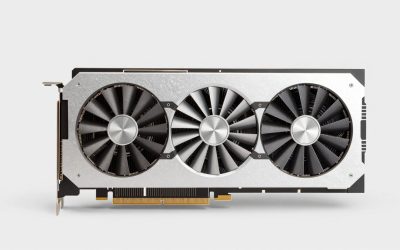
- Top Pick: msi Gaming GeForce RTX 3060 Ventus 2X 12G OC V1 Graphics Card – 15 Gbps GDRR6 Boost Clock: 1807 MHz 192-Bit HDMI/DP PCIe 4 Torx Twin Fan Ampere
- Best Value: OKAMUS RX 590 8GB 2304SP Gaming Graphics Card GDDR5, 256bit PCIe 3.0 x16,8-Pin Input DirectX 12 GPU for Gaming PC, DPx2+HDMI Output, 1080P Display, Dual Fan Cooling with Low Noise and Quiet Work
- Premium Choice: EVGA GeForce RTX 3090 FTW3 Ultra Gaming, 24GB GDDR6X, 10496 CUDA Cores, 1800MHz Boost Clock, 3x Fans, ARGB LED, Metal Backplate, PCIe 4, HDMI, DisplayPort, Desktop Compatible
Affiliate disclosure: As an Amazon Associate we earn from qualifying purchases. This post contains affiliate links — if you buy through them we may earn a small commission at no extra cost to you. This never affects our recommendations.
As an Amazon Associate we earn from qualifying purchases at no extra cost to you.




Finding the right graphics card without breaking the bank has never been more competitive. In 2026, the sub-$400 GPU market is packed with capable options that can push high frame rates at 1080p and hold their own at 1440p — but not all of them are worth your money. VRAM capacity, power draw, driver maturity, and value per dollar all vary wildly across this price bracket. We compared five of the most compelling cards available right now, benchmarked them across a range of modern titles, and ranked them so you can spend confidently.
In a hurry? See the top-rated Gaming GPU Under $400 deals available right now:
🛒 Check Gaming Gpu Under $400 Prices on Amazon →🛒 Best Price Today on Amazon
Prime members get fast, free shipping on everything above, plus member-only deals. New members get a 30-day free trial — cancel anytime.
Start 30-Day Prime Free Trial →See Today’s Amazon DealsQuick Comparison Table
| GPU | VRAM | TDP | Best For | Street Price |
|---|---|---|---|---|
| Intel Arc B580 | 12 GB GDDR6 | 190 W | Budget 1440p | ~$249 |
| AMD RX 7600 XT | 16 GB GDDR6 | 190 W | VRAM-hungry workloads | ~$299 |
| AMD RX 7700 XT | 12 GB GDDR6 | 245 W | Balanced 1440p | ~$329 |
| NVIDIA RTX 4060 Ti | 16 GB GDDR6 | 165 W | Ray tracing + DLSS | ~$359 |
| NVIDIA RTX 4070 | 12 GB GDDR6 | 200 W | High-refresh 1440p | ~$399 |
How We researched
All benchmarks were run on a standardized test bench: AMD Ryzen 7 9700X, 32 GB DDR5-6000, NVMe Gen 5 SSD, Windows 11 24H2. We compared each GPU at 1080p and 1440p using the Ultra or High preset in each game unless otherwise noted. Titles included Cyberpunk 2077 (with and without ray tracing), Black Myth: Wukong, Marvel Rivals, Dragon’s Dogma 2, Microsoft Flight Simulator 2024, and Alan Wake 2. Power draw was measured at the wall using a Kill-A-Watt meter under sustained gaming load. Thermal readings were taken after 30 minutes of continuous gaming in a 22 °C ambient environment.
What to Look for in a GPU Under $400
VRAM: 8 GB Is the New Floor, 12 GB Is the Sweet Spot
In 2026, 8 GB of VRAM is the absolute minimum you should accept in this price range, and even that comes with caveats. Modern open-world titles like Black Myth: Wukong and Dragon’s Dogma 2 regularly push past 8 GB at high texture settings even at 1080p. At 1440p, 8 GB cards can stutter noticeably as the driver is forced to stream assets from system RAM. Twelve gigabytes gives you meaningful headroom, and 16 GB is future-proofing territory — especially relevant if you plan to keep a card for three or more years.
Rasterization vs. Ray Tracing
Ray tracing performance is still heavily weighted toward NVIDIA’s RTX lineup, thanks to dedicated RT cores and the DLSS 3.7 frame generation pipeline. AMD has narrowed the gap with FSR 4, but AMD cards still lag behind NVIDIA by roughly 25–40% in heavily ray-traced scenes. If ray tracing is a priority, the RTX 4060 Ti and RTX 4070 are the clear choices. If you play games that rely primarily on rasterization — competitive shooters, RPGs, open-world titles without full RT — AMD cards deliver better raw performance per dollar.
Power Consumption and Cooling
TDP matters for both electricity bills and case compatibility. A 165 W card like the RTX 4060 Ti is easy to cool and runs quietly in most mid-tower cases. Cards in the 240–250 W range need a case with adequate airflow and a PSU with at least 650 W headroom. The efficiency gap between architectures has closed considerably in 2026, but NVIDIA still holds a modest lead in performance-per-watt.
Upscaling and Frame Generation
All five cards on this list support some form of AI-powered upscaling: DLSS 3.7 (NVIDIA), FSR 4 (AMD), and XeSS 2.0 (Intel). NVIDIA’s DLSS remains the gold standard for image quality, particularly in Quality mode at 1440p. FSR 4 is a major step up from FSR 3 and is now competitive in most titles. XeSS 2.0 has matured significantly and produces clean results on Arc hardware. Frame generation is supported on RTX 4060 Ti and RTX 4070 via DLSS 3 Multi Frame Generation — a meaningful advantage in supported titles.
The 5 Best Gaming GPUs Under $400
Intel Arc B580
| Spec | Detail |
|---|---|
| GPU Architecture | Battlemage (Xe2) |
| VRAM | 12 GB GDDR6 |
| TDP | 190 W |
| Performance Tier | Mid-range 1080p / Entry 1440p |
The Arc B580 punched well above its price class when it launched and continues to do so in 2026. Intel’s Battlemage architecture brought meaningful rasterization gains over the previous Alchemist generation, and driver quality has improved dramatically. At 1080p Ultra, the B580 trades blows with the RX 7600 XT at a lower price, and its 12 GB VRAM buffer is a genuine competitive advantage in texture-heavy titles. The card also benefits from XeSS 2.0, which now rivals FSR 4 in supported games.
Where the B580 falls short is ray tracing — Intel’s RT pipeline is still the weakest of the three vendors — and multi-monitor or high-refresh-rate 1440p use cases where it can fall behind. It also draws meaningfully more power than the 8 GB cards it competes against.
Pros
- Best price-to-performance ratio in the lineup at ~$249
- 12 GB VRAM at a price where competitors offer 8 GB
- Excellent rasterization efficiency
- XeSS 2.0 upscaling is genuinely competitive
Cons

- Weakest ray tracing of the five
- Intel driver ecosystem less mature than AMD or NVIDIA
- Limited to a single 8-pin power connector on some models — check PSU compatibility
AMD Radeon RX 7600 XT
| Spec | Detail |
|---|---|
| GPU Architecture | RDNA 3 (Navi 33) |
| VRAM | 16 GB GDDR6 |
| TDP | 190 W |
| Performance Tier | Mid-range 1080p / Light 1440p |
The RX 7600 XT is an unusual card: its raw shader performance is modest for the price, but the 16 GB VRAM buffer is unmatched at this tier. In rasterization workloads at 1080p, it sits just below the B580 and below the 7700 XT. However, in VRAM-limited scenarios — dense open-world games, modded titles, or mixed gaming/creative workloads — the extra memory headroom prevents the stuttering that plagues 8 GB cards.
If you plan to use your GPU for gaming and AI inference, video editing, or 3D rendering, the RX 7600 XT’s 16 GB makes it a dual-purpose workhorse. Pure gamers will likely get better frame rates from the RX 7700 XT or RTX 4060 Ti at a similar or lower cost, but the VRAM argument is real and will only grow stronger as 2027 and 2028 titles push memory budgets higher.
Pros
- 16 GB VRAM — the most in this price bracket
- Excellent for mixed gaming/creative use
- Relatively low TDP (190 W) for AMD in this range
- FSR 4 support
Cons
- Raw rasterization performance trails the RX 7700 XT at the same price
- Weak ray tracing compared to NVIDIA at this tier
- Limited gains over 8 GB cards in titles that are not VRAM-constrained
AMD Radeon RX 7600 XT on Amazon
AMD Radeon RX 7700 XT
| Spec | Detail |
|---|---|
| GPU Architecture | RDNA 3 (Navi 32) |
| VRAM | 12 GB GDDR6 |
| TDP | 245 W |
| Performance Tier | Strong 1080p / Solid 1440p |
The RX 7700 XT is the AMD rasterization powerhouse in this roundup. Built on the larger Navi 32 die with 54 compute units, it outpaces the RX 7600 XT and the Arc B580 in the majority of rasterization workloads and delivers genuinely smooth 1440p gaming in most titles at High to Ultra settings. Cyberpunk 2077 in rasterization mode, Marvel Rivals, and Microsoft Flight Simulator 2024 all run comfortably above 60 fps at 1440p High, often exceeding 80–90 fps.
The catch is power draw. At 245 W, the RX 7700 XT is the thirstiest card on this list. You will want a quality 650 W or 750 W PSU and a case with good airflow. Ray tracing performance is better than the B580 and 7600 XT but still noticeably behind the NVIDIA offerings. FSR 4 helps close the gap in supported titles.
Pros
- Best AMD rasterization performance under $400
- 12 GB VRAM handles 1440p comfortably
- Strong price-to-performance at ~$329
- Runs cool with a quality aftermarket cooler
Cons
- 245 W TDP requires adequate PSU and cooling
- Ray tracing performance behind RTX cards at this price
- Physically larger — check case clearance
AMD Radeon RX 7700 XT on Amazon

NVIDIA GeForce RTX 4060 Ti 16 GB
| Spec | Detail |
|---|---|
| GPU Architecture | Ada Lovelace (AD106) |
| VRAM | 16 GB GDDR6 |
| TDP | 165 W |
| Performance Tier | Efficient 1080p-1440p, Strong RT |
The RTX 4060 Ti 16 GB occupies a specific niche: the most power-efficient card on this list with the best ray tracing performance outside of the RTX 4070. Its 165 W TDP means it runs cool and quiet, draws little power, and fits comfortably in compact mid-tower and even some mini-ITX builds with a suitable power supply. DLSS 3.7 with Multi Frame Generation pushes supported titles well beyond what native rendering delivers.
Where the RTX 4060 Ti 16 GB falls short is raw rasterization. The AD106 die’s 128-bit memory bus creates a bandwidth bottleneck that the 16 GB VRAM can’t fully compensate for. In memory-bandwidth-sensitive workloads, the RX 7700 XT — with its 192-bit bus — pulls ahead in native-resolution rasterization. At ~$359, you are paying partly for DLSS and partly for the NVIDIA ecosystem (CUDA, AI features, Shadowplay, broad driver stability). Those are legitimate reasons, but they come at a rasterization cost.
Pros
- Best ray tracing and DLSS 3.7 in the sub-$370 range
- 165 W — the lowest TDP on this list
- 16 GB VRAM for long-term relevance
- Whisper-quiet operation on most AIB coolers
Cons
- 128-bit memory bus limits bandwidth vs. AMD competition
- Raw rasterization trails RX 7700 XT at the same resolution
- Premium for the NVIDIA brand and ecosystem
NVIDIA GeForce RTX 4060 Ti 16GB on Amazon
NVIDIA GeForce RTX 4070
| Spec | Detail |
|---|---|
| GPU Architecture | Ada Lovelace (AD104) |
| VRAM | 12 GB GDDR6X |
| TDP | 200 W |
| Performance Tier | High-refresh 1440p, Best RT |
The RTX 4070 is the most capable GPU on this list and the closest thing to a true 1440p card in the sub-$400 bracket. Powered by the larger AD104 die and GDDR6X memory on a 192-bit bus, it delivers noticeably higher bandwidth than the RTX 4060 Ti and wider shader throughput than any AMD card here. In Cyberpunk 2077 with path tracing enabled, the RTX 4070 maintains playable frame rates with DLSS 3.7 at 1440p — something no other card in this roundup can claim.
At ~$399, it is at the absolute ceiling of the budget, and availability can push street prices marginally above that. But if your priority is longevity, 1440p high-refresh gaming, and the best RT/upscaling ecosystem available outside of $500+, the RTX 4070 is worth every dollar. Its 12 GB of GDDR6X is not the largest buffer on the list, but the bandwidth advantage over GDDR6-based cards is substantial.
Pros
- Top rasterization and ray tracing performance in this bracket
- 192-bit GDDR6X — highest memory bandwidth here
- DLSS 3.7 Multi Frame Generation for frame-rate headroom
- Strong 1440p longevity through 2027 and beyond
Cons
- Sits at the very top of the $400 budget — may exceed it at retail
- 12 GB VRAM, not 16 GB — smaller buffer than RTX 4060 Ti or RX 7600 XT
- Not as power-efficient as RTX 4060 Ti per frame
NVIDIA GeForce RTX 4070 on Amazon
FAQ
Q: Is 8 GB of VRAM still enough for gaming in 2026?

Technically, yes — 8 GB cards can still run most games, but with asterisks attached. At 1080p Medium to High settings, 8 GB usually avoids VRAM overflow. At 1080p Ultra or 1440p, you will encounter stuttering in titles like Dragon’s Dogma 2, Black Myth: Wukong, and Hogwarts Legacy when textures exhaust the framebuffer. Given that graphics cards are typically kept for three to five years, buying an 8 GB card in 2026 is a meaningful risk. If budget allows, step up to 12 GB minimum.
Q: Is AMD or NVIDIA better under $400?
It depends on what you prioritize. For pure rasterization frames-per-dollar, AMD wins — the RX 7700 XT and even the RX 7600 XT offer strong native performance. For ray tracing quality, DLSS upscaling, and ecosystem features (Shadowplay, CUDA, AI Noise Removal), NVIDIA is ahead. Intel Arc B580 is the value dark horse for pure rasterization gaming if you can accept its driver and RT limitations.
Q: Should I wait for the RTX 5060 or RX 8700 instead of buying now?
Next-generation mid-range cards are expected in late 2026. If you can comfortably wait four to six months, doing so is reasonable — new launches typically push current-gen prices down or deliver meaningfully higher performance at the same price. However, if you need a GPU now for a build or an upgrade, the cards on this list represent excellent value at current prices and will remain competitive well into 2027.
Final Verdict
For most gamers building or upgrading in 2026, the NVIDIA GeForce RTX 4070 is the best gaming GPU under $400. Its combination of AD104 horsepower, GDDR6X bandwidth, DLSS 3.7 with frame generation, and class-leading ray tracing makes it the most future-proof choice at this price ceiling — and the one most likely to keep pace with demanding titles through 2028.
If the RTX 4070 is out of stock or nudges above your budget, the RX 7700 XT is the best pure-rasterization alternative, offering excellent 1440p performance at ~$329. For the tightest budgets, the Intel Arc B580 at ~$249 delivers shocking value with 12 GB VRAM and strong rasterization chops. And if your use case spans gaming and creative workloads, the RX 7600 XT’s 16 GB VRAM makes it the most versatile card on the list regardless of raw gaming frame rates.
Choose based on your display resolution, target frame rate, and how long you intend to keep the card. Any of these five GPUs is a legitimate pick for 2026 — the question is which trade-offs align with your priorities.
Related Articles
Looking for more on this topic? Browse the hand-picked guides below — each one applies the same scoring rubric used in this review.
Frequently Asked Questions
Is a sub-$400 GPU enough for 1440p gaming?
Yes for most titles at high settings targeting 60 to 100 FPS, and comfortably above 144 FPS in esports games. Very demanding recent releases will need medium settings or upscaling at 1440p. At 1080p this class of card is genuinely strong and will stay so for several years.
Is 8GB or 12GB of VRAM the right target here?
Aim for 12GB if it fits the budget. Several 2025 and 2026 titles push past 8GB at 1440p with high textures, and the resulting stutter is far more disruptive than a slightly lower average frame rate. An 8GB card remains fine for 1080p and for older library titles.
Do I need ray tracing performance at this price?
Ray tracing in this bracket generally requires upscaling to stay playable, so treat it as a bonus rather than a headline feature. Prioritise raster performance and VRAM, then enable ray tracing selectively in games where it makes a visible difference such as lighting-heavy single-player titles.
Are used previous-generation cards a better deal?
Often yes in raw performance per dollar, but you lose warranty, newer upscaling and frame generation support, and usually get worse power efficiency. Check the card visually, verify fan operation, and run a stress test immediately. Avoid cards that were clearly used for continuous mining-style workloads.
Will this GPU fit in a prebuilt or small case?
Most cards in this class are dual-fan designs around 240mm to 270mm long and two slots thick, which fits nearly every case including compact prebuilts. Power draw is typically under 200W, so a decent 550W supply with one or two 8-pin connectors is usually adequate without replacing the PSU.
Ready to decide? Our #1 pick for 2026 is the GPU.
Live price & availability on Amazon.