Affiliate disclosure: As an Amazon Associate we earn from qualifying purchases. This post contains affiliate links — if you buy through them we may earn a small commission at no extra cost to you. This never affects our recommendations.
- Watch: Best Gaming Mouse Under $50 in 2026: Top 5 Picks for Every Grip Style — Video Review
- Introduction
- Quick Comparison: All 5 Mice at a Glance
- 1. Logitech G305 LIGHTSPEED — Best Overall Gaming Mouse Under $50
- 2. Razer DeathAdder Essential — Best for Palm Grip
- 3. SteelSeries Rival 3 — Best Budget Gaming Mouse
- 4. Glorious Model O Minus — Best Lightweight Gaming Mouse Under $50
- 5. Corsair Harpoon RGB Wireless — Best Wireless Gaming Mouse Under $50
- Palm vs Claw vs Fingertip Grip: Which Mouse Shape Do You Need?
- FAQ
- Full Comparison Table
- Related Articles
- Frequently Asked Questions
- Related Articles
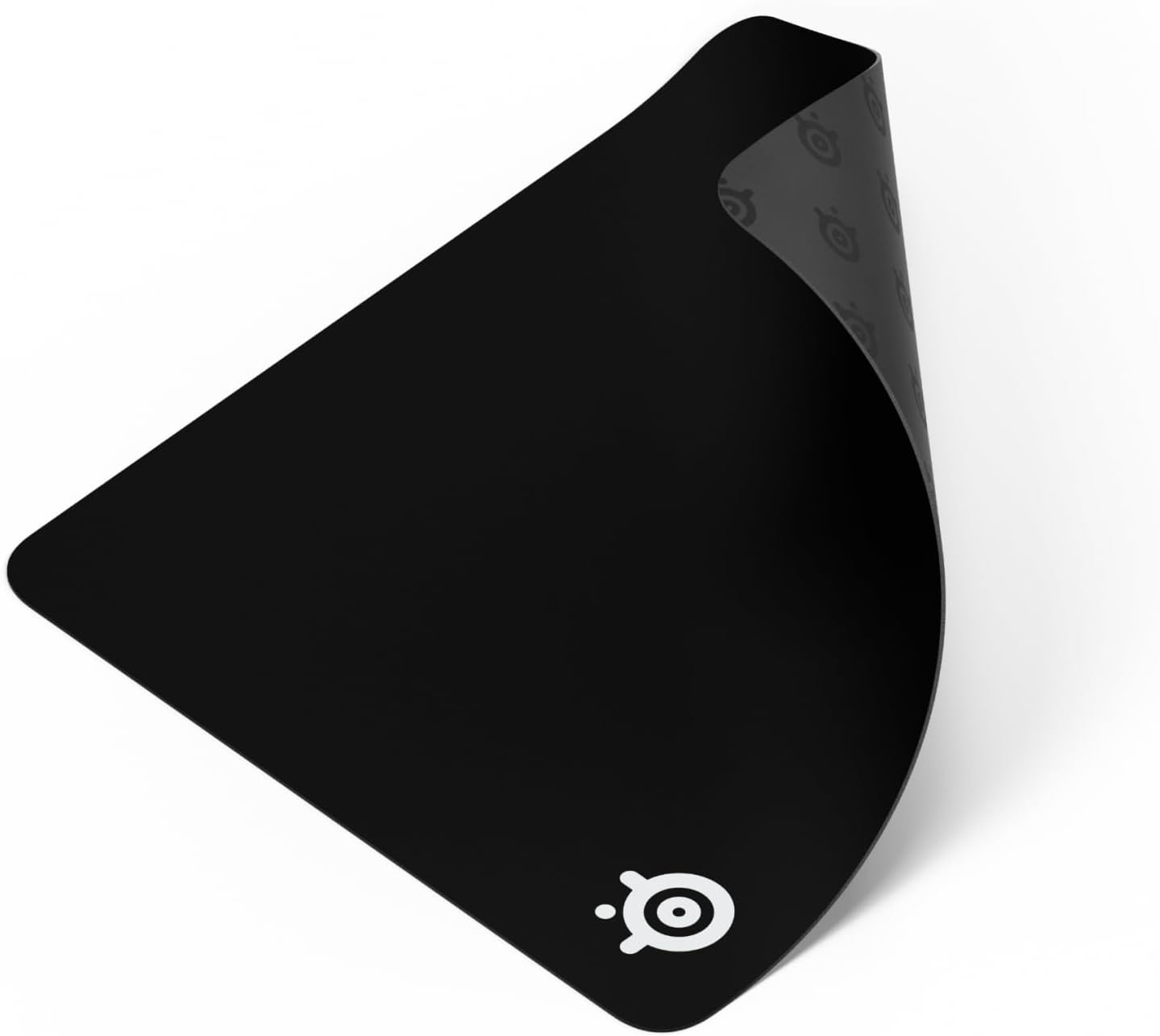
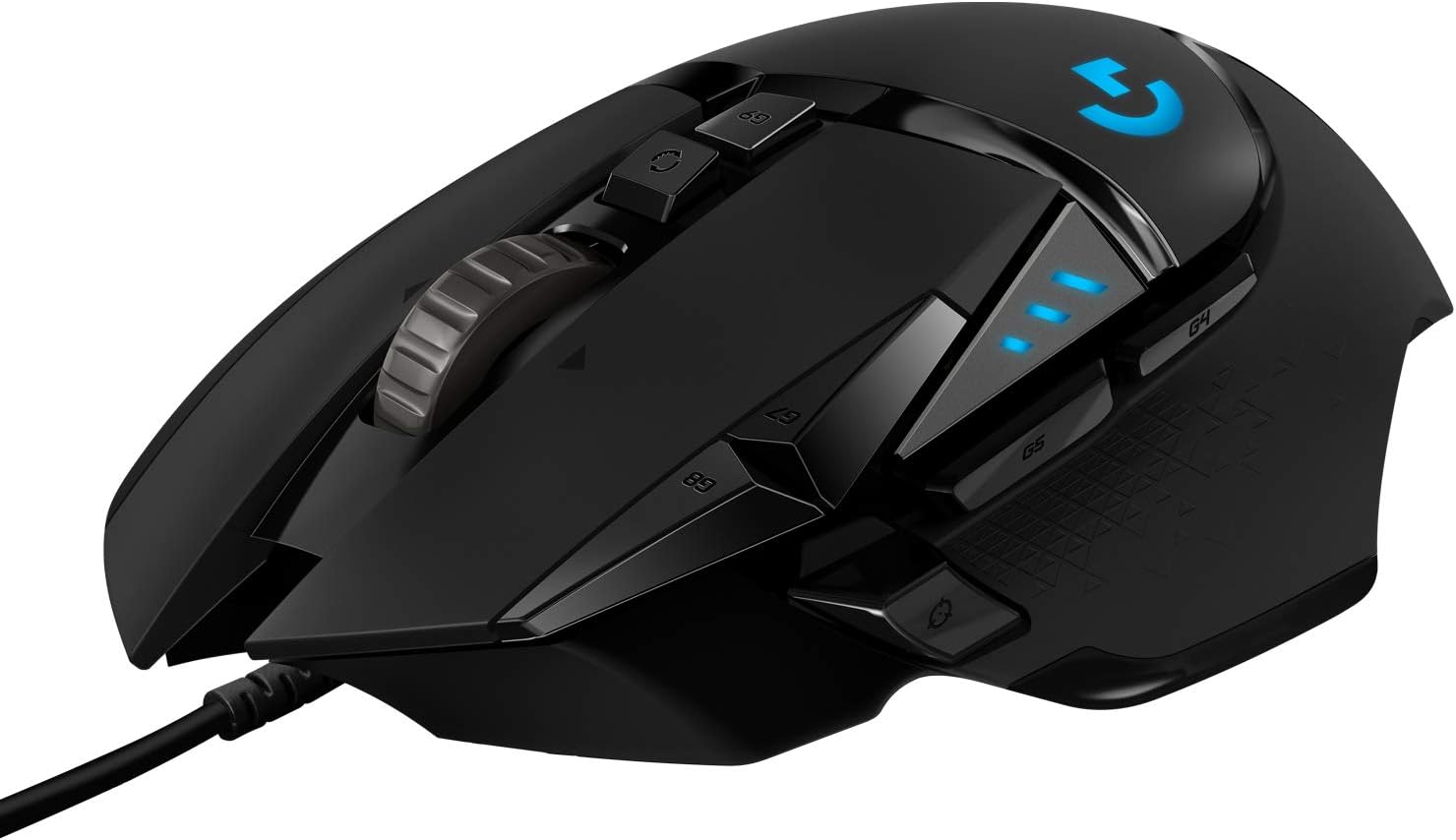
Prime
Editor's Pick
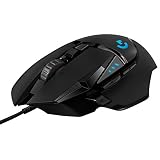
Logitech G502 Hero Wired Gaming Mouse – Black | High performance, 25,600 DPI, RGB, adjustable weights, 11 programmable buttons, on-board memory, PC/Mac

Save $25.00
![Redragon M602 Gaming Mouse, Ergonomic RGB Gaming Mouse Wired with 7200 Adjustable DPI, 9 Programmable Buttons, Professional Software for Gamer Office [White]](https://m.media-amazon.com/images/I/61-UQRjjXYL._AC_SL1500_.jpg)
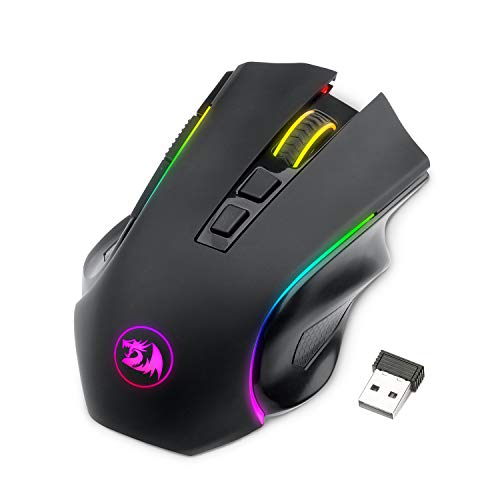
Save $3.00
Dropped $2.60
In a hurry? See the top-rated Gaming Mouse Under $50 deals available right now:
⚡ Save on Your Next PC — Amazon Prime
Prime members get fast free shipping on the systems above, plus early access to Prime Day & Black Friday PC deals. New members get a 30-day free trial.
Quick answer: For most people in 2026, the best gaming mouse under $50 is the Mouse — our #1 rated choice. See the full ranked comparison, alternatives and buying advice below.
Watch: Best Gaming Mouse Under $50 in 2026: Top 5 Picks for Every Grip Style — Video Review
Introduction
Finding the best gaming mouse under $50 used to mean settling for mediocre sensors, stiff cables, and cheap build quality. That’s no longer true in 2026. Budget gaming peripherals have caught up fast — you can get a HERO sensor, a 200+ IPS tracking speed, or a wireless connection that rivals $100+ flagship mice, all under fifty dollars.
But not every cheap gaming mouse is worth your money. The difference between a $20 impulse buy and a $45 precision tool comes down to a handful of specs that actually matter in gameplay: the optical sensor, maximum DPI range, polling rate, total weight, and how well the shape fits your grip style. Get those right, and you’ll outperform players using mice that cost twice as much.
This guide covers the five best gaming mice under $50 right now, selected for real-world gaming performance across FPS, MOBA, and MMO genres. Each pick is matched to a specific grip style and use case so you can zero in on the right choice without wading through noise.
Quick Comparison: All 5 Mice at a Glance
| Mouse | Sensor | Max DPI | Weight | Connection | Best Grip |
|---|---|---|---|---|---|
| Logitech G305 LIGHTSPEED | HERO 12K | 12,000 | 99g | Wireless | Claw / Palm |
| Razer DeathAdder Essential | Razer 6400 DPI Optical | 6,400 | 96g | Wired | Palm |
| SteelSeries Rival 3 | TrueMove Core | 8,500 | 77g | Wired | Fingertip / Claw |
| Glorious Model O Minus | Glorious Optical (PixArt 3360) | 12,000 | 58g | Wired | Fingertip / Claw |
| Corsair Harpoon RGB Wireless | PixArt PAW3335 | 10,000 | 99g | Wireless / Wired | Palm |
1. Logitech G305 LIGHTSPEED — Best Overall Gaming Mouse Under $50
The G305 is the benchmark for budget wireless gaming mice. It runs Logitech’s HERO 12K sensor — the same optical engine found in mice costing three times as much — over a 2.4GHz LIGHTSPEED wireless connection that delivers consistent sub-1ms response. Battery life is exceptional: a single AA battery lasts up to 250 hours. The compact, ambidextrous-leaning shape works best for claw and palm grip users with small to medium hands.
If you want wireless performance without wireless pricing, the G305 is the answer. It’s dominated esports communities and budget recommendation lists for years, and the 2026 price point keeps it firmly in the under-$50 category.
Pros:
- HERO 12K sensor: zero hardware acceleration, 1:1 tracking, virtually no jitter
- LIGHTSPEED wireless at 2.4GHz — imperceptible latency in competitive play
- 250-hour battery life on a single AA
- Compact shape suits claw and relaxed palm grip
- Compatible with Logitech G HUB software for full DPI and RGB customization
Cons:
- AA battery adds weight vs. rechargeable competitors (99g total)
- No RGB lighting
- Shape is less comfortable for fingertip grip or large hands
- No side buttons beyond the standard two
| Spec | Detail |
|---|---|
| Sensor | Logitech HERO 12K Optical |
| Max DPI | 12,000 |
| Polling Rate | 1,000 Hz |
| Weight | 99g (with battery) |
| Connection | Wireless (LIGHTSPEED 2.4GHz) |
| Buttons | 6 |
| Battery Life | ~250 hours |
| Grip Style | Claw, Palm |
Buy the Logitech G305 on Amazon
2. Razer DeathAdder Essential — Best for Palm Grip
The DeathAdder shape is one of the most studied ergonomic designs in gaming peripherals. The Essential variant strips out the luxury features of the V3 line and delivers the same iconic right-hand contour at a price that undercuts nearly everything in its class. If you palm grip and you have medium to large hands, the DeathAdder Essential is shaped exactly for you — the high arch and pronounced right-side thumb rest eliminate wrist fatigue across long sessions.
The 6,400 DPI optical sensor isn’t the most impressive number on paper, but it’s accurate and consistent across all DPI settings. For the vast majority of gaming use cases — 400 to 1600 DPI for FPS, up to 3200 for general use — it performs without complaint.
Pros:
- Iconic ergonomic right-hand shape, ideal for palm grip medium-to-large hands
- Tactile, satisfying Razer mechanical switches rated for 10 million clicks
- 6,400 DPI optical sensor with zero smoothing at standard gaming DPI ranges
- Lightweight rubber cable with minimal drag
- Synapse 3 software for full button remapping and DPI configuration
Cons:
- Right-hand only (not usable by left-handed players)
- 6,400 DPI ceiling is lower than competitors at this price
- No wireless option
- Synapse software is resource-heavy and requires account creation
| Spec | Detail |
|---|---|
| Sensor | Razer 6400 DPI Optical |
| Max DPI | 6,400 |
| Polling Rate | 1,000 Hz |
| Weight | 96g |
| Connection | Wired (USB) |
| Buttons | 7 |
| Battery Life | N/A |
| Grip Style | Palm (right-hand only) |
Buy the Razer DeathAdder Essential on Amazon
3. SteelSeries Rival 3 — Best Budget Gaming Mouse
At around $30, the Rival 3 is the most cost-efficient gaming mouse you can buy that doesn’t compromise on sensor integrity. The TrueMove Core optical sensor tracks at up to 8,500 DPI with reliable 1:1 movement — there’s no prediction or hardware smoothing at play. It’s a lightweight, symmetrical mouse that fits fingertip and claw grip users well, and the six-button layout covers everything most gamers need without excess bulk.
The Rival 3 doesn’t have wireless, onboard memory, or premium switches — but at $30, those omissions are expected. What it does have is a dependable sensor in a comfortable shell, which is the only spec that matters in a firefight.
Pros:
- TrueMove Core sensor: 8,500 DPI, no hardware acceleration or angle snapping by default
- Symmetrical shape works for both right and left-handed players
- Lightweight 77g body — low fatigue in extended sessions
- RGB zones are surprisingly good for the price point
- SteelSeries GG software is lightweight and free
Cons:
- Symmetrical shape provides less palm support than ergonomic designs
- Build quality feels noticeably plasticky compared to G305 or Model O
- Cable is stiff — consider a cable bungee for competitive play
- No dedicated side buttons on left side for left-handed use
| Spec | Detail |
|---|---|
| Sensor | TrueMove Core (SteelSeries/PixArt) |
| Max DPI | 8,500 |
| Polling Rate | 1,000 Hz |
| Weight | 77g |
| Connection | Wired (USB) |
| Buttons | 6 |
| Battery Life | N/A |
| Grip Style | Fingertip, Claw |
Buy the SteelSeries Rival 3 on Amazon
4. Glorious Model O Minus — Best Lightweight Gaming Mouse Under $50
The Model O Minus was one of the mice that launched the ultralight gaming peripheral trend, and it still holds its ground in 2026. At 58g, it’s the lightest mouse on this list by a significant margin. The honeycomb shell cuts weight without cutting structural rigidity — the chassis doesn’t flex under grip pressure, which matters when your hand tension shifts mid-game. It pairs that frame with a PixArt 3360 sensor (or equivalent Glorious optical), one of the most trusted optical engines in competitive gaming.
This is the mouse for fingertip grip players and anyone who has experienced wrist or forearm fatigue with heavier peripherals. The smaller form factor of the Minus variant targets users with small to medium hands specifically.
Pros:
- 58g ultralight chassis — among the lightest wired mice at this price
- PixArt 3360-equivalent sensor with true 1:1 tracking to 12,000 DPI
- Ascended braided cable (paracord-style) has very low drag — nearly cable-free feel
- Glorious switches rated 20 million click lifespan
- BAMF software supports up to 5 onboard DPI profiles
Cons:
- Honeycomb shell collects dust and skin debris — requires more frequent cleaning
- Small form factor is unsuitable for large hands
- RGB is edge-lit rather than full diffused — less visually impressive
- No wireless variant at this price point
| Spec | Detail |
|---|---|
| Sensor | Glorious Optical (PixArt 3360-equivalent) |
| Max DPI | 12,000 |
| Polling Rate | 1,000 Hz |
| Weight | 58g |
| Connection | Wired (USB) |
| Buttons | 6 |
| Battery Life | N/A |
| Grip Style | Fingertip, Claw |
Buy the Glorious Model O Minus on Amazon
5. Corsair Harpoon RGB Wireless — Best Wireless Gaming Mouse Under $50
The Corsair Harpoon RGB Wireless sits right at the $50 ceiling and justifies every cent. It operates over Corsair’s SLIPSTREAM 2.4GHz wireless technology — a low-latency connection that competes directly with Logitech’s LIGHTSPEED in real-world use — and also supports Bluetooth mode for office/casual use, plus a wired fallback via USB-C. The PixArt PAW3335 sensor is accurate and consistent across the full DPI range.
Where the G305 is compact, the Harpoon leans toward a traditional right-handed ergonomic shape that palm grip users with medium hands will find natural. It’s heavier than the ultralight entries on this list, but at 99g it’s not fatiguing for typical session lengths. Battery life reaches up to 60 hours on wireless — shorter than the G305 but rechargeable, which many users prefer.
Pros:
- SLIPSTREAM 2.4GHz wireless: sub-1ms effective latency in competitive use
- Dual wireless modes (2.4GHz + Bluetooth) plus USB-C wired option
- Rechargeable battery — no AA dependency
- PixArt PAW3335 sensor performs cleanly across all DPI settings
- iCUE software integration for lighting, DPI profiles, and macro programming
Cons:
- 60-hour wireless battery life is shorter than G305’s 250 hours
- Right-hand ergonomic shape only — not ambidextrous
- iCUE software is resource-intensive (similar to Razer Synapse)
- At ~$50 it’s the priciest entry on this list; may fluctuate above $50 briefly
| Spec | Detail |
|---|---|
| Sensor | PixArt PAW3335 |
| Max DPI | 10,000 |
| Polling Rate | 1,000 Hz |
| Weight | 99g |
| Connection | Wireless (SLIPSTREAM 2.4GHz) / Bluetooth / USB-C Wired |
| Buttons | 6 |
| Battery Life | ~60 hours (wireless) |
| Grip Style | Palm |
Buy the Corsair Harpoon RGB Wireless on Amazon
Palm vs Claw vs Fingertip Grip: Which Mouse Shape Do You Need?
Your grip style determines which mouse shape will be comfortable and accurate for you over long sessions. Getting this wrong is the most common reason gamers switch mice within a month of buying one.
Palm Grip
Your entire palm rests flat on the mouse body, with all fingers extended along the surface. This is the most natural resting position for most people and produces the least fatigue. Palm grip favors larger, higher-arched mice with pronounced ergonomic contours. Best picks from this list: Razer DeathAdder Essential, Corsair Harpoon RGB Wireless.
Claw Grip
Your palm touches the rear of the mouse, but your fingers arch upward so only the fingertips contact the buttons. This allows faster click actuation and more wrist-based aiming movement. Claw grip works with a wide range of mouse sizes but benefits from a mouse with a defined rear hump. Best picks: Logitech G305, SteelSeries Rival 3.
Fingertip Grip
Only your fingertips contact the mouse — the palm is completely lifted. This gives maximum wrist and finger mobility at the cost of stability. Fingertip grip requires a light, compact mouse that won’t resist rapid repositioning. Best picks: Glorious Model O Minus, SteelSeries Rival 3.
Hand size quick reference:
- Small hands (under 17cm length): Model O Minus, Rival 3
- Medium hands (17–19cm): G305, DeathAdder Essential, Harpoon Wireless
- Large hands (19cm+): DeathAdder Essential, Harpoon Wireless
FAQ
What DPI should I use for gaming?
DPI (dots per inch) controls how far your cursor moves per inch of physical mouse movement. Higher DPI is not better — it’s preference. Most competitive FPS players use 400–800 DPI with a high in-game sensitivity to keep crosshair movement precise and deliberate. MOBA and strategy players often run 1,600–3,200 DPI for faster cursor traversal across large screens. Use the lowest DPI that lets you aim comfortably without over-correcting — that’s your optimal setting.
Does a gaming mouse really make a difference?
Yes, in specific and measurable ways. A gaming mouse with a quality optical sensor eliminates cursor jitter, hardware smoothing, and acceleration that desktop office mice introduce. The difference is most noticeable in FPS games where 1:1 tracking accuracy directly affects aim consistency. The polling rate (how often the mouse reports its position to the PC) also matters — 1,000 Hz polling means 1ms update intervals vs. 125 Hz office mice at 8ms. For casual or non-competitive play, the gains are real but modest. For competitive gaming, accurate sensors and consistent polling rates are genuine advantages.
Is wireless or wired better for gaming mice?
Modern wireless gaming mice at 2.4GHz (Logitech LIGHTSPEED, Corsair SLIPSTREAM) are functionally equivalent to wired mice in latency tests. The era of “wireless adds lag” is over for quality implementations. The practical difference for most users comes down to: wireless means no cable drag (slight mobility advantage), wired means no battery management. Bluetooth wireless is slower and unsuitable for competitive gaming — stick to 2.4GHz wireless or wired for low-latency play. Cable stiffness is a real downside of cheap wired mice — the Glorious Model O Minus and its paracord cable largely solve this.
What polling rate do I need for gaming?
1,000 Hz (1ms report rate) is the standard for gaming mice and is sufficient for all gaming scenarios including professional esports. Polling rates above 1,000 Hz (4,000 Hz or 8,000 Hz mice) exist in high-end peripherals but require a capable PC and have diminishing real-world returns for most players. Every mouse on this list runs at 1,000 Hz polling — that’s the correct spec for gaming and you don’t need to pay more to exceed it at the sub-$50 price point.
Full Comparison Table
| Mouse | Best For | Sensor | Max DPI | Weight | Connection | Grip Style |
|---|---|---|---|---|---|---|
| Logitech G305 LIGHTSPEED | Best Overall | HERO 12K | 12,000 | 99g | Wireless 2.4GHz | Claw / Palm |
| Razer DeathAdder Essential | Palm Grip | Razer 6400 Optical | 6,400 | 96g | Wired | Palm |
| SteelSeries Rival 3 | Best Budget | TrueMove Core | 8,500 | 77g | Wired | Fingertip / Claw |
| Glorious Model O Minus | Best Lightweight | Glorious Optical | 12,000 | 58g | Wired | Fingertip / Claw |
| Corsair Harpoon RGB Wireless | Best Wireless | PixArt PAW3335 | 10,000 | 99g | Wireless / BT / Wired | Palm |
Prices are approximate and subject to change. Always verify current pricing on Amazon before purchasing. Affiliate disclosure: links on this page use the gamingpcrev04-20 Amazon affiliate tag. We may earn a commission at no extra cost to you.
Related Articles
Looking for more on this topic? Browse the hand-picked guides below — each one applies the same scoring rubric used in this review.
Frequently Asked Questions
Do I need a high DPI sensor?
No. Most competitive players use between 400 and 1600 DPI, so sensors advertising 26000 DPI offer headline numbers you will never use. What matters is tracking accuracy: a modern sensor with no smoothing, no acceleration and a high maximum speed of at least 300 inches per second. Several sub-$50 mice now use flagship-grade sensors.
How much does mouse weight matter?
Weight strongly affects how quickly you can flick and how tired your wrist gets. Under 70 grams feels agile and suits fast shooters, 70 to 90 grams is a comfortable all-round range, and above 100 grams feels sluggish for tracking but stable for slow, deliberate aim. Honeycomb shells achieve low weight cheaply but let in dust.
Which shape suits my grip style?
Palm grippers should choose a longer, high-humped shape that fills the hand, typically 125mm or more. Claw grippers want a medium body with a defined hump and a shorter length. Fingertip users do best with a small, flat, lightweight mouse. Measure your hand from wrist crease to middle fingertip and compare against the mouse length.
Is 1000Hz polling enough, or should I look for 8000Hz?
1000Hz sends a position update every millisecond and is more than adequate for virtually every player. Higher polling rates of 4000 or 8000Hz shave fractions of a millisecond but raise CPU usage and require a high frame rate to show any benefit. Do not pay a premium for it in this price bracket.
Can I get a good wireless mouse under $50?
Yes. Budget 2.4GHz wireless mice are now genuinely competitive, with latency within a millisecond or two of wired and battery life measured in weeks. Avoid Bluetooth-only models for gaming, as they poll less frequently and add lag. Check that the receiver is a proper 2.4GHz dongle and that the mouse charges over USB-C.
Ready to decide? Our #1 pick for 2026 is the Mouse.
Live price & availability on Amazon.