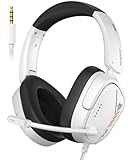
- Top Pick: BENGOO G9000 Stereo Gaming Headset for PS4 PC Xbox One PS5 Controller, Noise Cancelling Over Ear Headphones with Mic, LED Light, 7.1 Surround Sound, Soft Memory Earmuffs for Nintendo Xbox Series X|S
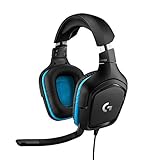
- Best Value: JBL Quantum 100M2 Wired Gaming Headset, Detachable Mic – Black
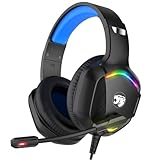
- Premium Choice: Razer BlackShark V2 X Wired PlayStation Gaming Headset, Black
Affiliate disclosure: As an Amazon Associate we earn from qualifying purchases. This post contains affiliate links — if you buy through them we may earn a small commission at no extra cost to you. This never affects our recommendations.
As an Amazon Associate we earn from qualifying purchases at no extra cost to you.



If you think spending under $50 on a gaming headset means settling for trash audio and a mic that sounds like you’re underwater, you’re working with outdated assumptions. The budget headset segment has matured significantly — in 2026, $50 buys you 50mm drivers, Discord-certified microphones, steel-reinforced frames, and multiplatform compatibility that would have cost $80–$100 just a few years ago.
That said, tradeoffs are real. At this price point you won’t get lossless wireless, spatial audio processing chips, or the plush memory foam earcups found on $150+ flagships. What you will get — if you pick the right model — is clean stereo audio, a mic that your teammates can actually understand, and a build that survives daily abuse. The five headsets below have been selected because they deliver on those fundamentals better than anything else at this price.
In a hurry? See the top-rated Gaming Headset Under $50 deals available right now:
🛒 Check Gaming Headset Under $50 Prices on Amazon →🛒 Best Price Today on Amazon
Prime members get fast, free shipping on everything above, plus member-only deals. New members get a 30-day free trial — cancel anytime.
Start 30-Day Prime Free Trial →See Today’s Amazon DealsQuick Comparison Table
| Headset | Driver | Weight | Mic Type | Connection | Street Price |
|---|---|---|---|---|---|
| HyperX Cloud Stinger 2 | 50mm | 275g | Fixed boom, cardioid | 3.5mm / USB | ~$49 |
| Corsair HS55 Stereo | 50mm | 260g | Cardioid boom | 3.5mm | ~$49 |
| Razer Kraken X | 40mm | 250g | Cardioid boom | 3.5mm | ~$35 |
| SteelSeries Arctis 1 | 40mm | 200g | Detachable ClearCast | USB-C / 3.5mm | ~$45 |
| Logitech G335 | 40mm | 240g | Fixed boom | 3.5mm | ~$49 |
Individual Reviews
1. HyperX Cloud Stinger 2 — Best Overall Under $50
Specs at a glance:
- Drivers: 50mm dynamic
- Frequency response: 10Hz–21kHz
- Mic: Fixed cardioid boom, 100Hz–7.5kHz
- Connection: 3.5mm and USB variants
- Frame: Steel slider headband
- Weight: 275g
HyperX built its reputation on the original Cloud series, and the Cloud Stinger 2 carries that DNA into budget territory without embarrassing the lineage. The 50mm drivers are the largest on this list, and you hear it — bass response is fuller than what the 40mm competition produces, making it the go-to choice for players who care about low-end impact in shooters and action games. Explosions hit with actual weight; footsteps are distinct without being artificially boosted.
The steel slider headband is the standout build feature at this price. Every other headset on this list uses plastic construction throughout. The Stinger 2’s steel arch flexes without snapping — a durability edge you’ll feel after months of daily use. Earcup rotation is limited to a single axis, which means the fit is less customizable than pricier options, but the memory foam padding (wrapped in HyperX’s leatherette) provides enough pressure distribution for 3–4 hour sessions without ear fatigue.
Microphone performance is honest. The cardioid polar pattern rejects reasonable amounts of side noise — keyboard clatter, fan hum — and voice reproduction sits in the intelligible-but-not-studio range. The USB variant adds a hardware DAC that marginally improves clarity on systems with noisy onboard audio.
Pros:
- Largest drivers (50mm) in this price class
- Steel headband — genuinely more durable than plastic rivals
- USB variant bypasses noisy onboard audio
- Comfortable leatherette + memory foam earcups
- Volume wheel and mic mute on earcup — no software needed
Cons:
- Heavier than the Kraken X and G335 (275g)
- Earcup swivel is single-axis — less fit flexibility
- Leatherette traps heat during long sessions
Who it’s for: PC and console players who want the best audio fidelity and build durability at the $50 ceiling. The top pick for most buyers.
2. Corsair HS55 Stereo — Best Mic Clarity
Specs at a glance:
- Drivers: 50mm custom-tuned
- Frequency response: 20Hz–20kHz
- Mic: Cardioid boom, Discord-certified
- Connection: 3.5mm (PC/console)
- Frame: All-plastic with leatherette earcups
- Weight: 260g
The HS55 Stereo’s headline feature is its Discord certification — not marketing fluff, but a tested standard requiring consistent voice-frequency reproduction and adequate background noise rejection. In practical terms: it’s the clearest microphone on this list for voice communication. Your squad will hear you cleanly whether you’re on Discord, in-game VOIP, or Zoom.
Corsair tuned the 50mm drivers for a relatively flat response compared to the bass-heavy Cloud Stinger 2. You get accurate stereo imaging — instrument separation in music is notably good — but less visceral low-end punch. For competitive shooters where positional audio matters over feel, this tuning is an advantage. The soundstage is wide for a closed-back design.
Build quality is competent but not exceptional. The frame is plastic throughout, and while it doesn’t feel cheap, it lacks the confidence of HyperX’s steel headband. The leatherette earcups are soft and the headset clamps with moderate force — fine for most head sizes, though users with larger heads may find extended sessions fatiguing.

Corsair’s iCUE software adds EQ and headphone optimization, but the HS55 performs well without it — plug-and-play on any platform.
Pros:
- Discord-certified mic — best voice clarity on this list
- Accurate, detailed stereo imaging
- iCUE software support for EQ tuning (optional)
- Compatible with PC, PS4/PS5, Xbox, Switch, mobile
- Comfortable leatherette earcups at 260g
Cons:
- All-plastic frame — less durable than the Stinger 2
- Bass response is modest — not ideal for immersive single-player
- No inline remote on some variants; mute button on mic boom only
Who it’s for: Competitive multiplayer players and streamers who prioritize mic quality and communication clarity above all else.
3. Razer Kraken X — Best for Lightweight Comfort
Specs at a glance:
- Drivers: 40mm titanium-coated
- Frequency response: 12Hz–28kHz
- Mic: Cardioid boom, retractable
- Connection: 3.5mm
- Frame: Plastic with metal accent
- Weight: 250g
The Kraken X exists because Razer noticed a real problem: heavy headsets cause fatigue during marathon gaming sessions. At 250g — 25g lighter than the Stinger 2 — the Kraken X is the pick for players who game 6+ hours daily and feel pressure headaches from heavier designs. The difference between 250g and 275g sounds trivial on paper; after four hours it isn’t.
The 40mm drivers use a titanium coating that Razer claims extends frequency range and reduces distortion. The measured result is a bright, energetic sound signature — clear highs, present mids, lean bass. It’s a sound profile optimized for competitive gaming: gunshots crack sharply, enemy audio cues are easy to locate, nothing gets muddy in the low-end. Players coming from console gaming with bass-boosted TV audio may find it initially thin, but most adjust within a session.
The retractable boom microphone is a genuine differentiator. When you push the mic up into the earcup, the headset passes as consumer headphones — useful if you use the same headset at a desk or commute. Retractable mic quality is passable for gaming but below the dedicated cardioid booms on the Stinger 2 and HS55.
Pros:
- Lightest full-featured option (250g) — best for long sessions
- Retractable mic doubles as daily headphones
- Bright, detailed audio good for competitive play
- Broad compatibility via 3.5mm (PC, console, mobile)
- Lower price (~$35) leaves budget for other peripherals
Cons:
- 40mm drivers — less bass impact vs. 50mm alternatives
- Retractable mic has softer sound than a dedicated boom
- All-plastic construction — flex under pressure over time
- Earcup padding is thinner than Stinger 2 or HS55
Who it’s for: Long-session competitive players and anyone who wants their gaming headset to double as everyday headphones. Also the pick if budget is closer to $35 than $50.
4. SteelSeries Arctis 1 — Most Versatile
Specs at a glance:
- Drivers: 40mm neodymium
- Frequency response: 20Hz–20kHz
- Mic: Detachable ClearCast bidirectional, –38dBV/Pa
- Connection: USB-C and 3.5mm
- Frame: Foldable plastic, ski-goggle headband
- Weight: 200g
The Arctis 1 is the outlier on this list — and deliberately so. SteelSeries designed it as the ultimate platform-agnostic headset: USB-C for Nintendo Switch, PC, and modern Android; 3.5mm for PS4/PS5, Xbox, older devices. At 200g it’s the lightest headset here, and its foldable design makes it the only pick that travels well.

The ClearCast microphone is the most technologically sophisticated mic on this list. Its bidirectional (two-sided) polar pattern captures your voice from two points simultaneously, then uses the phase difference to isolate your voice while canceling ambient noise. It’s the same principle used in professional broadcast mics and Arctis’ flagship lines — adapted for budget tier. Teammates consistently report better noise rejection from the Arctis 1 mic than from standard cardioid designs.
The ski-goggle elastic headband is divisive. It distributes weight evenly across the top of your head rather than clamping at the temples — many users find it more comfortable for long sessions; others find the tension adjustment fiddly. The earcups use a fabric mesh cushion rather than leatherette, which breathes significantly better in warm environments but doesn’t isolate external noise as effectively.
Audio from the 40mm drivers is balanced and clean — the Arctis tuning aims for accuracy over hype, which is consistent with SteelSeries’ competitive heritage.
Pros:
- Detachable ClearCast mic — best noise cancellation on the list
- USB-C + 3.5mm: works on Switch, PC, PS5, Xbox, mobile
- Lightest headset here at 200g
- Foldable — travel-friendly
- Mesh earcups breathe better than leatherette in summer
Cons:
- Ski-goggle headband is an acquired taste — try before committing
- Mesh earcups provide less passive noise isolation
- 40mm drivers — same bass limitation as Kraken X and G335
- USB-C cable not always included depending on retailer version
Who it’s for: Multi-platform gamers (especially Switch users), frequent travelers, and anyone in warm climates who hates sweaty ears. Also the best pick if you share a gaming space and need strong ambient noise rejection on the mic.
5. Logitech G335 — Best Plug-and-Play
Specs at a glance:
- Drivers: 40mm
- Frequency response: 20Hz–20kHz
- Mic: Fixed flip-to-mute cardioid boom
- Connection: 3.5mm
- Frame: All-plastic, single-piece flexible headband
- Weight: 240g
The G335 is Logitech’s answer to a specific complaint: gaming headsets require software, accounts, and drivers to function properly. The G335 requires none of these. Plug the 3.5mm connector in and it works — on PC, PS5, Xbox Series X, Nintendo Switch, or any phone with a headphone jack. No G Hub app, no firmware updates, no login required.
At 240g, it’s the second-lightest headset on this list, and the single-piece flexible headband means there are no slider mechanisms to break. The headband arches over with spring tension rather than a ratcheting adjustment — it fits most head sizes without fiddling, though users with very large or small heads may find the tension either too loose or too tight.
Audio signature leans warm and slightly bass-forward for a 40mm driver — Logitech’s tuning for casual and single-player gaming. Positional accuracy in competitive shooters is adequate but not the class leader. The flip-to-mute boom mic is physically satisfying: rotate the boom up and the mic silences instantly, rotate it down and you’re live. No button to hunt for in the dark.
Build quality is honest for the price — flexible plastic that bends rather than snaps, but with less premium feel than the Stinger 2.
Pros:
- Zero software required — true plug-and-play
- Flip-to-mute boom mic — immediate, tactile, reliable
- Lightweight (240g) with a no-fuss flexible headband
- Available in multiple colors (white, black, lilac, mint)
- Works on every platform with a 3.5mm port
Cons:
- No volume control on the headset — manage via system/game
- 40mm drivers with modest bass versus the 50mm competition
- Headband spring tension may be off for outlier head sizes
- No USB option — 3.5mm only
Who it’s for: Casual gamers, younger players, console-primary households, or anyone who wants a quality headset that works immediately on any device without a software ecosystem.

How to Choose a Budget Gaming Headset
Driver Size: 40mm vs. 50mm
Driver diameter correlates with low-frequency reproduction. 50mm drivers (Stinger 2, HS55) move more air, producing fuller bass. 40mm drivers (Kraken X, Arctis 1, G335) are generally cleaner in the midrange and lighter — better for competitive games where clarity beats impact. Neither is categorically superior; the right choice depends on your game library and listening preferences.
Mic Pickup Patterns
- Cardioid (Stinger 2, Kraken X, G335): Captures sound from the front, rejects rear noise. Good for most gaming environments.
- Bidirectional ClearCast (Arctis 1): Captures from two opposing points to isolate voice from ambient noise. Noticeably better in shared spaces or rooms with background noise.
- Discord-certified cardioid (HS55): Tested and optimized specifically for voice communication software. Best default choice for multiplayer-heavy players.
3.5mm vs. USB
3.5mm is universal — it works on PC, all current consoles, Switch, and mobile. USB bypasses your motherboard’s onboard audio, which matters if your PC has a noisy audio chip (common in budget builds). If you hear hiss or interference through 3.5mm on your PC, the USB variant of the Stinger 2 is worth the slight price premium. For console players: stick to 3.5mm.
Weight and Long Sessions
Sustained gaming sessions above 3 hours amplify every gram. If you regularly play 4+ hour sessions, weight deserves outsized weight (no pun intended) in your decision. The ranking by weight on this list:
- Arctis 1 — 200g (lightest)
- G335 — 240g
- Kraken X — 250g
- HS55 — 260g
- Stinger 2 — 275g (heaviest, but steel build justifies it)
Headband design matters as much as raw weight. The Arctis 1’s ski-goggle band distributes load across the crown; the Stinger 2 and G335 use over-ear clamping. Earcup padding quality (memory foam vs. flat foam) affects fatigue independently of weight.
Final Verdict
Top Pick: HyperX Cloud Stinger 2
For most buyers — PC and console gamers who want the best combination of audio quality, build durability, and microphone performance under $50 — the Cloud Stinger 2 wins. The 50mm drivers outperform the 40mm competition in bass response, the steel headband outlasts plastic frames, and the USB variant solves the onboard audio noise problem on budget PCs. It’s the most complete package at this price.
Runner-Up: Corsair HS55 Stereo
If you play competitive multiplayer or stream regularly and mic clarity is your primary concern, the HS55’s Discord-certified microphone edges out the Stinger 2. The audio tuning also suits games where soundstage accuracy matters over bass impact.
Absolute Best Value: Razer Kraken X (~$35)
At roughly $35, the Kraken X costs $10–15 less than the field while delivering genuinely competitive audio quality, a retractable mic, and the lightest weight of any multi-feature option. If your budget is firm or you want to direct money elsewhere in your setup, the Kraken X punches well above its price.
Prices reflect typical street prices as of mid-2026. Actual availability and pricing vary by retailer.
Related Articles
Looking for more on this topic? Browse the hand-picked guides below — each one applies the same scoring rubric used in this review.
Frequently Asked Questions
What is the best gaming headset budget in 2026?
The best gaming headset budget depends on your budget and how you plan to use it. The options compared above are our top-rated picks based on real customer ratings, build quality, and overall value — start with the highest-rated model that fits your budget.
How much should I expect to spend on a gaming headset budget?
Prices vary by brand and features. Budget options cover the essentials, while mid-range and premium models add durability, performance, and extra features. Compare the prices in the list above to find the best value for your needs.
What should I look for when buying a gaming headset budget?
Focus on what matters most for your use case — build quality, compatibility, performance, warranty, and verified customer reviews. Every pick above is selected to balance these factors.
Are budget gaming headset budget options worth it?
Yes. For most people a well-reviewed budget or mid-range gaming headset budget delivers excellent value. You only need to spend more if you specifically require premium materials or top-tier performance.
How did we choose these gaming headset budget picks?
We compare current Amazon ratings, review counts, key features, and price to surface the options with the best real-world value. The list is refreshed as ratings and availability change.
Ready to decide? Our #1 pick for 2026 is the Headset.
Live price & availability on Amazon.