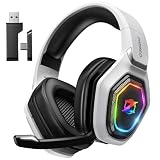
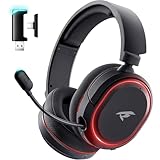
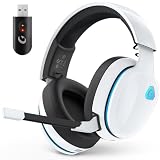
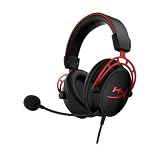
- Top Pick: Wireless Gaming Headset for PC PS5 PS4 Mac Switch 7.1 Surround Sound 100-Hr
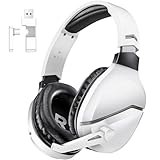
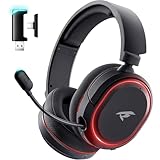
- Best Value: AOC Wireless Gaming Headset for PS5, PS4, Nintendo Switch, PC- Black
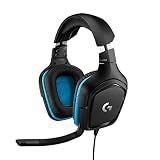
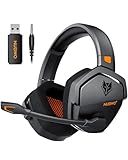
- Premium Choice: NUBWO Wireless Gaming Headset with Mic for Ps5 Ps4 PC, Zero Interference, 100-Hour Battery All-Day Play, 23ms Sync for Fortnite & Call of Duty/FPS Gamers, Triple Mode All Devices Compatible – Orange
Affiliate disclosure: As an Amazon Associate we earn from qualifying purchases. This post contains affiliate links — if you buy through them we may earn a small commission at no extra cost to you. This never affects our recommendations.
As an Amazon Associate we earn from qualifying purchases at no extra cost to you. Product prices and availability are accurate as of the date shown and are subject to change.



If you’ve been told that wireless gaming audio requires a $150+ investment, let us respectfully push back. The budget wireless headset market has quietly matured, and 2026’s best picks under $100 deliver genuine 2.4GHz low-latency performance, all-day battery life, and microphone quality that won’t embarrass you in a squad lobby. That said, there are real trade-offs you need to understand before buying — and knowing them up front will save you from a frustrating return.
2.4GHz vs. Bluetooth latency is the first conversation to have at this price tier. Bluetooth 5.x has improved dramatically, but for competitive gaming, 2.4GHz USB dongles remain the gold standard — typically delivering sub-20ms latency versus Bluetooth’s 40–100ms range depending on codec. At under $100, the best headsets prioritize 2.4GHz for gaming and layer in Bluetooth as a secondary convenience connection for phones and tablets. If a headset only offers Bluetooth, treat it as a lifestyle headset that happens to work for casual gaming, not a serious competitive tool.
Battery life under $100 lands in the 18–30 hour range across the picks in this guide. That’s genuinely competitive with $150+ options — budget headsets sacrifice features like active noise cancellation, premium drivers, and onboard EQ memory rather than battery capacity. Expect USB-C charging on any headset released in 2024 or later (micro-USB is a red flag at this point), and look for fast-charge support that delivers a few hours of play from a 15-minute charge window.
Audio quality trade-offs are real but manageable. Sub-$100 wireless headsets use 40mm drivers that deliver competent, enjoyable sound — you will notice the difference compared to $200+ headsets in soundstage width and instrument separation, but for gaming, positional cues, dialogue clarity, and bass impact are all solidly covered. The bigger compromise is often in mic quality: many picks use boom microphones that are fine for Discord and team chat but won’t satisfy content creators.
Multi-platform compatibility matters more now than ever. With players splitting time across PC, PlayStation, Xbox, Nintendo Switch, and mobile, a headset that works everywhere via USB-C dongle or Bluetooth is genuinely more useful than a platform-locked option — unless Xbox is your primary gaming platform, in which case native Xbox Wireless protocol offers a plug-and-play experience worth considering.
What’s realistic under $100 vs. $150+: At this price you’re getting reliable 2.4GHz wireless, solid build quality, and functional mics. Stepping to $150+ buys you better driver tuning, noise-cancelling mics, premium materials, and often companion apps with more robust EQ. Under $100 is legitimately excellent for most gamers — the gap is narrower than it used to be.
In a hurry? See the top-rated Wireless Gaming Headset Under $100 deals available right now:
🛒 Check Wireless Gaming Headset Under $100 Prices on Amazon →🛒 Best Price Today on Amazon
Prime members get fast, free shipping on everything above, plus member-only deals. New members get a 30-day free trial — cancel anytime.
Start 30-Day Prime Free Trial →See Today’s Amazon DealsQuick Comparison Table
| Model | Wireless | Battery | Mic | Platforms |
|---|---|---|---|---|
| HyperX Cloud Flight S | 2.4GHz + Qi charging | 30 hrs | Detachable boom | PC, PS4/PS5 |
| Corsair HS55 Wireless | 2.4GHz + Bluetooth | 24 hrs | Omni mic w/ SoundID | PC, PS, Mac, Mobile |
| Logitech G435 Lightspeed | 2.4GHz + Bluetooth | 18 hrs | Built-in dual beam | PC, PS, Mobile |
| Razer Kaira X for Xbox | Xbox Wireless (2.4GHz) | 24 hrs | HyperClear cardioid | Xbox, PC |
| SteelSeries Arctis 1 Wireless | 2.4GHz USB-C dongle | 20 hrs | Detachable ClearCast | PC, PS4, Switch, Mobile |
Top 5 Best Wireless Gaming Headsets Under $100
1. HyperX Cloud Flight S — Best Overall Under $100
The HyperX Cloud Flight S is the benchmark that every other sub-$100 wireless headset gets measured against. It combines 2.4GHz wireless with an industry-rare Qi wireless charging base, meaning you can drop it on any Qi pad at the end of a session without hunting for cables. The 30-hour battery life is class-leading at this price — you’re genuinely getting one week of heavy play on a single charge.
Audio performance is driven by 50mm neodymium drivers that produce a warm, punchy sound signature well-suited to shooters and RPGs alike. Virtual 7.1 surround sound is toggled via a dedicated button, and the implementation is among the better software surround options at this price — footstep and directional cues are noticeably improved in titles that support it. The build is solid aluminum-reinforced plastic with leatherette earcups, and the retractable boom mic delivers clean, intelligible voice quality for team comms.
The main compromise: PC and PlayStation only via the 2.4GHz dongle. Xbox and Nintendo Switch users need not apply unless they’re connecting via 3.5mm.
Pros:
- 30-hour battery is best-in-class at this price point
- Qi wireless charging — drop-and-charge convenience
- 50mm drivers with genuinely good soundstage for gaming
- Solid, premium-feeling build quality
- Virtual 7.1 surround via HyperX NGenuity app
Cons:
- No Bluetooth for secondary device connection
- Platform limited to PC and PlayStation (2.4GHz)
- Leatherette earcups retain heat during long sessions
- Companion app required to unlock full EQ and surround features

2. Corsair HS55 Wireless — Best Multi-Platform Pick
The Corsair HS55 Wireless earns its place on this list by doing everything competently and adding dual 2.4GHz + Bluetooth 5.2 connectivity — a feature usually reserved for $120+ headsets. That dual-wireless setup means you can simultaneously connect to your gaming PC via dongle and your phone via Bluetooth, letting you take calls without removing the headset. SoundID integration via the iCUE app allows personalized EQ calibration, which meaningfully improves audio performance over the flat default tuning.
The 24-hour battery is strong, and the USB-C charging is fast enough to recover meaningful playtime in a short window. The 50mm custom-tuned drivers deliver Corsair’s signature balanced-warm profile — slightly elevated bass and clear mids make this a good all-rounder for gaming, music, and movies. The omni-directional microphone (no boom arm) is the clearest compromise at this price: it works fine for Discord but captures more ambient noise than a dedicated cardioid boom.
At ~$79, this represents exceptional value for multi-platform households.
Pros:
- Dual 2.4GHz + Bluetooth 5.2 — two devices simultaneously
- SoundID personalized EQ calibration in iCUE app
- 24-hour battery with USB-C charging
- Broad platform support: PC, PS4/PS5, Mac, Mobile
- Lightweight at 275g for extended wear comfort
Cons:
- Omni-directional mic captures more room noise than boom mics
- iCUE app required for best audio performance
- Build feels less premium than HyperX at similar price
- No virtual surround sound option
- Bluetooth connection priority can occasionally interrupt during gaming
3. Logitech G435 Lightspeed — Best Lightweight Option
At just 165 grams, the Logitech G435 Lightspeed is almost startlingly light — it’s the headset you forget you’re wearing during six-hour sessions. Logitech’s Lightspeed 2.4GHz protocol has long been one of the best implementations of low-latency wireless in gaming peripherals, and it shows here: response is snappy and dropout-free in normal use. Bluetooth 5.1 adds secondary device support, making this genuinely versatile.
The G435 takes a design risk by ditching the boom microphone entirely in favor of built-in dual beamforming microphones embedded in the earcups. The result is surprisingly usable — Logitech’s beamforming processing does a reasonable job isolating your voice — but it’s the most limited mic on this list for team gaming. Audio through the 40mm drivers is clear and well-balanced, if not as bass-heavy as some competitors. The 18-hour battery is the shortest on this list, though still enough for most multi-day usage patterns.
This is the pick for gamers who prioritize physical comfort and all-day wearability over maximum mic performance.
Pros:
- 165g — lightest headset on this list by a wide margin
- Logitech Lightspeed 2.4GHz — proven low-latency performance
- Bluetooth 5.1 for simultaneous device connectivity
- Works on PC, PlayStation, and Mobile out of the box
- Sustainable materials — made with post-consumer recycled plastic
- Clean, modern aesthetic without gamer-aggressive styling
Cons:
- 18-hour battery — lowest on this list
- No boom mic — built-in beamforming mics underperform in noisy rooms
- 40mm drivers lack the bass impact of 50mm alternatives
- No onboard EQ or sound customization
- Earcups are on-ear rather than over-ear — comfort varies by user

4. Razer Kaira X for Xbox — Best Xbox Wireless Headset Under $100
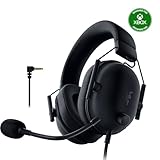
If Xbox is your primary gaming platform, the Razer Kaira X for Xbox offers something the other picks on this list can’t: native Xbox Wireless protocol — the same 2.4GHz implementation built into your Xbox controller. That means zero dongles required; the headset pairs directly to Xbox Series X|S, Xbox One, and Xbox app on PC just like your controller. For an Xbox-first household, this is a genuine quality-of-life upgrade over USB dongle management.
The HyperClear cardioid microphone is the best boom mic on this list for its price — Razer’s HyperClear processing delivers noticeably cleaner voice isolation and warmth compared to the omni-directional alternatives. The 24-hour battery is competitive, and the 50mm TriForce drivers deliver Razer’s signature slightly V-shaped sound profile with enhanced bass and high-end sparkle that works well for action games and shooters. The Kaira X charges via USB-C and includes a 3.5mm port for mobile use.
The single significant limitation: no Bluetooth, so mobile and multi-platform use relies on the 3.5mm cable rather than wireless.
Pros:
- Native Xbox Wireless protocol — no dongle needed on Xbox
- HyperClear cardioid mic — best boom mic on this list
- 24-hour battery with USB-C fast charging
- Works on Xbox Series X|S, Xbox One, and PC (Xbox app)
- 3.5mm port for wired mobile connectivity
- TriForce 50mm drivers with engaging sound signature
Cons:
- Xbox and PC only — no PlayStation or Switch support via Xbox Wireless
- No Bluetooth for wireless mobile connection
- Companion app (Razer Audio) required for EQ customization
- V-shaped sound signature may not appeal to flat-response purists
- Earcup swivel range is limited compared to competitors
5. SteelSeries Arctis 1 Wireless — Best for Multi-Platform Versatility
The SteelSeries Arctis 1 Wireless earns its spot through one quietly brilliant design decision: the USB-C wireless dongle. While most wireless gaming headsets ship with a standard USB-A dongle, the Arctis 1’s USB-C dongle means it connects natively to Nintendo Switch, Android phones, and USB-C equipped laptops without an adapter. For gamers who move between PC, Nintendo Switch, and mobile, this headset is uniquely convenient.
SteelSeries’ ClearCast detachable microphone is well-regarded in the gaming headset world — the bidirectional design provides excellent background noise rejection, and detaching it when not needed keeps the headset looking clean in casual settings. Audio from the 40mm drivers delivers SteelSeries’ characteristically balanced, clear sound with good imaging for competitive play. The 20-hour battery sits mid-pack, and the ski goggle-style headband with an athletic mesh liner makes this one of the more comfortable headsets during extended sessions.
At ~$89, the Arctis 1 Wireless is the right call for true platform agnostics.
Pros:
- USB-C 2.4GHz dongle — native compatibility with Switch, Android, USB-C laptops
- ClearCast detachable bidirectional mic — excellent background noise rejection
- Detachable mic for cleaner look when not gaming
- Ski goggle headband with mesh liner — comfortable for extended wear
- Works on PC, PS4, Nintendo Switch, Android
- Clean, understated design aesthetic
Cons:
- 20-hour battery — competitive but not class-leading
- No Bluetooth secondary connection
- 40mm drivers lack some low-end warmth compared to 50mm headsets
- No companion app EQ — what you hear is what you get
- PS5 USB-C port requires dongle (not native PS5 wireless)

How to Choose a Wireless Gaming Headset Under $100
2.4GHz Dongle Is Non-Negotiable for Competitive Gaming
For any game where timing matters — shooters, battle royales, fighting games — 2.4GHz wireless is essential. Bluetooth latency, even with low-latency codecs like aptX LL, adds enough delay to be perceptible during fast-paced gameplay. Every headset on this list offers 2.4GHz as its primary gaming connection. If you see a “wireless gaming headset” without 2.4GHz, look closer — it’s almost certainly Bluetooth-only and best suited for casual gaming.
Battery Life vs. Features Trade-off
Under $100, manufacturers make clear choices: the HyperX Cloud Flight S puts budget into a 30-hour cell and 50mm drivers, sacrificing Bluetooth and a second wireless protocol. The Corsair HS55 invests in dual wireless and SoundID at the cost of mic quality. Decide what matters most to you: if you game in long sessions and hate charging routines, prioritize battery. If you switch between devices constantly, dual-wireless is worth the trade-off.
Mic Quality at This Tier
Expect functional, not exceptional. Detachable cardioid boom mics (Arctis 1, Kaira X) are your best option at this price for team gaming and Discord clarity. Retractable boom mics (Cloud Flight S) are nearly as good. Built-in beamforming mics (G435) are the weakest option for gaming but the most convenient. Omni-directional mics (HS55) sit in between — fine for casual comms, not ideal for noise-sensitive environments. Content creators and streamers should step up to $150+ for broadcast-grade mic quality.
USB-C Charging Is a Must in 2026
Micro-USB charging cables in 2026 are a red flag — it means you’re looking at older headset stock or a manufacturer cutting costs on fundamentals. Every modern wireless gaming headset should ship with USB-C, and ideally support fast charging. USB-C means one cable for your phone, headset, controller, and laptop. The Arctis 1’s USB-C dongle takes this a step further, making cross-platform use genuinely seamless.
Multi-Platform Support
Consider your full gaming setup, not just your primary platform. A PC gamer with a Nintendo Switch and an Android phone gets the most value from the Arctis 1 Wireless (USB-C dongle) or Corsair HS55 (Bluetooth secondary). A PS5 + PC household benefits from the HyperX Cloud Flight S or HS55. Xbox-first gamers should look hard at the Razer Kaira X for its dongle-free native Xbox Wireless experience. Buying a headset that only works on one platform limits its utility as your gaming setup evolves.
Final Verdict
The HyperX Cloud Flight S takes the overall crown for most gamers: 30-hour battery, Qi wireless charging, and 50mm drivers in a polished package that punches above its ~$99 price. If you’re a PC/PS5 primary and want to forget about cables entirely, it’s the pick.
Multi-platform gamers should seriously look at the Corsair HS55 Wireless — dual 2.4GHz + Bluetooth at ~$79 is genuinely remarkable value, and SoundID EQ makes the audio more competitive than the price suggests.
Xbox-first players get the most purpose-built experience from the Razer Kaira X, with its native Xbox Wireless pairing and best-in-class HyperClear mic. Switch and Android switchers will find the SteelSeries Arctis 1 Wireless uniquely convenient thanks to its USB-C dongle. And if you game in eight-hour-plus marathon sessions and comfort is everything, the Logitech G435’s 165g frame is in a different league physically.
All five picks deliver what matters most: reliable 2.4GHz wireless, honest battery life, and functional gaming audio — without the $150+ price jump that used to be required to get there. The budget wireless gaming headset market has genuinely arrived, and any of these five will serve you well through 2026 and beyond.
Related Articles
Looking for more on this topic? Browse the hand-picked guides below — each one applies the same scoring rubric used in this review.
Frequently Asked Questions
What is the best gaming headset wireless in 2026?
The best gaming headset wireless depends on your budget and how you plan to use it. The options compared above are our top-rated picks based on real customer ratings, build quality, and overall value — start with the highest-rated model that fits your budget.
How much should I expect to spend on a gaming headset wireless?
Prices vary by brand and features. Budget options cover the essentials, while mid-range and premium models add durability, performance, and extra features. Compare the prices in the list above to find the best value for your needs.
What should I look for when buying a gaming headset wireless?
Focus on what matters most for your use case — build quality, compatibility, performance, warranty, and verified customer reviews. Every pick above is selected to balance these factors.
Are budget gaming headset wireless options worth it?
Yes. For most people a well-reviewed budget or mid-range gaming headset wireless delivers excellent value. You only need to spend more if you specifically require premium materials or top-tier performance.
How did we choose these gaming headset wireless picks?
We compare current Amazon ratings, review counts, key features, and price to surface the options with the best real-world value. The list is refreshed as ratings and availability change.