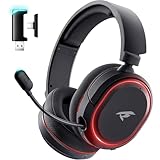
- Top Pick: JBL Quantum 100 – Wired Over-Ear Gaming Headphones – Black, Large
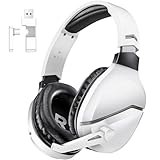
- Best Value: Ozeino Gaming Headset for PC, Ps4, Ps5, Xbox Headset with 7.1 Surround Sound Gaming Headphones with Noise Canceling Mic, LED Light Over Ear Headphones for Switch, Xbox Series X/S, Laptop, Mobile White
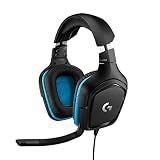
- Premium Choice: JBL Quantum 100 – Wired Over-Ear Gaming Headphones – White, Large
Affiliate disclosure: As an Amazon Associate we earn from qualifying purchases. This post contains affiliate links — if you buy through them we may earn a small commission at no extra cost to you. This never affects our recommendations.
- Quick Comparison Table
- Headphones vs. Gaming Headsets: Why It Matters
- Open-Back vs. Closed-Back for Gaming
- Impedance, Amplification, and Onboard Audio
- Virtual Surround: Dolby Atmos, DTS:X, and Software EQ
- The Top 5 Gaming Headphones Under $100
- Final Comparison Table and Verdict
- FAQ
- Related Articles
- Frequently Asked Questions
- Related Articles
As an Amazon Associate we earn from qualifying purchases at no extra cost to you.



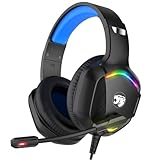


Gaming headsets get all the marketing love — RGB lights, branded booms, built-in virtual surround. What they rarely get is great drivers. A dedicated pair of headphones at the same price point will almost always outperform a gaming headset on sound quality, soundstage, and long-session comfort. You lose the integrated mic, but a $15 clip-on or a standalone desktop mic covers that gap instantly.
This guide covers the five best gaming headphones under $100 in 2026. Every pick has been evaluated for positional audio accuracy (critical for FPS), low-frequency impact for immersive soundtracks, driver tech, impedance, and build quality. We also break down when you need a DAC/amp versus when onboard audio is fine, and how to unlock virtual surround through software.
In a hurry? See the top-rated Gaming Headphones Under $100 deals available right now:
🛒 Check Gaming Headphones Under $100 Prices on Amazon →🛒 Best Price Today on Amazon
Prime members get fast, free shipping on everything above, plus member-only deals. New members get a 30-day free trial — cancel anytime.
Start 30-Day Prime Free Trial →See Today’s Amazon DealsQuick Comparison Table
| Headphone | Type | Impedance | Driver | Best For |
|---|---|---|---|---|
| Audio-Technica ATH-M50x | Closed-back | 38 Ohm | 45mm dynamic | Overall balance |
| Beyerdynamic DT 770 Pro (80 Ohm) | Closed-back | 80 Ohm | 45mm dynamic | Closed-back soundstage |
| Sennheiser HD 560S | Open-back | 120 Ohm | 38mm dynamic | Open-back accuracy |
| HiFiMAN HE400SE | Open-back | 91 Ohm | Planar magnetic | Planar detail at budget |
| AKG K371 | Closed-back | 32 Ohm | 50mm dynamic | Studio-grade neutrality |
Headphones vs. Gaming Headsets: Why It Matters
A gaming headset bundles a microphone into a unit that must hit a retail price ceiling. That tradeoff compresses the driver budget. A $99 gaming headset might spend $30–40 on the microphone assembly, RGB, and chassis, leaving $60 or less for audio hardware.
A $99 pair of audiophile headphones puts the entire budget into the transducer. Better driver materials, tighter tolerances, and more refined tuning are the result. The frequency response is typically flatter, which translates directly to more accurate positional cues — you hear footsteps, reload sounds, and environmental reflections where they actually are in the game’s 3D space.
The mic gap is real but easily solved. A Antlion ModMic Uni (~$40), a Rode NT-USB Mini (~$100), or even a simple Zalman ZM-MIC1 clip-on (~$8) pairs with any headphone and outperforms most headset boom mics on voice clarity.
Open-Back vs. Closed-Back for Gaming
Closed-back headphones seal around the ear, blocking external noise and preventing sound from leaking out. They produce a more intimate, bass-forward response and are better suited to shared spaces or anywhere ambient noise would break immersion.
Open-back headphones have perforated or mesh cups that let air — and sound — pass through. This creates a larger, more natural soundstage that many FPS players prefer for positional audio. The tradeoff is that they leak sound in both directions, making them impractical in noisy environments or shared rooms.
For competitive FPS (CS2, Valorant, Apex): open-back wins on soundstage width and depth — you locate footsteps more precisely because the stereo image is wider and more accurate.
For single-player, RPG, or mixed use: closed-back delivers better bass presence and works across more environments.
Impedance, Amplification, and Onboard Audio
Impedance determines how hard your source device has to work to drive the headphones. Lower impedance (16–50 Ohm) pairs well with onboard motherboard audio, phone jacks, or USB controllers. Higher impedance (80–600 Ohm) requires more voltage to reach comfortable listening levels and benefits significantly from a dedicated DAC/amp.
- 32–38 Ohm (ATH-M50x, AKG K371): plug-and-play with any source
- 80 Ohm (DT 770 Pro): fine from a good motherboard; better with an amp
- 91 Ohm planar (HE400SE): needs a clean source; a budget amp like the FiiO E10K (~$75) is recommended
- 120 Ohm (HD 560S): benefits from amplification but runs acceptably from USB audio
A DAC/amp removes the noise floor introduced by onboard audio, provides cleaner power delivery, and often includes a hardware EQ or bass boost. For competitive gaming, a cleaner signal means subtle spatial cues are not masked by noise.
Virtual Surround: Dolby Atmos, DTS:X, and Software EQ
None of these headphones include virtual surround processing — that is handled by software or an external DSP. Windows 11 supports Dolby Atmos for Headphones (subscription) and Windows Sonic (free) natively. DTS:X Ultra is available via the Microsoft Store.
For most games, Windows Sonic provides a solid free baseline. Dolby Atmos produces the most convincing height channel simulation. SteelSeries Sonar and Razer THX Spatial Audio offer game-specific EQ profiles in addition to virtualization.
Flat-tuned headphones like the HD 560S and AKG K371 respond particularly well to software processing because the virtualization algorithm is not fighting against an already-colored frequency response.

The Top 5 Gaming Headphones Under $100
1. Audio-Technica ATH-M50x — Best Overall
The ATH-M50x has been a benchmark reference headphone since its release and remains the easiest recommendation at this price. Its 45mm large-aperture drivers deliver tight, accurate bass without muddying the midrange, and the treble extension gives clarity to high-frequency directional cues like bullet impacts and surface material changes.
Specs
| Spec | Value |
|---|---|
| Type | Closed-back, circumaural |
| Driver | 45mm dynamic |
| Impedance | 38 Ohm |
| Frequency Response | 15–28,000 Hz |
| Sensitivity | 99 dB/mW |
| Weight | 285g |
| Cable | Detachable (3 included) |
Pros
- Detachable cable system with three cable options included
- Broad compatibility — drives well from any source
- Collapsible design for portability
- Wide sound profile suits both gaming and music
Cons
- Velour or leather pad swap needed for maximum long-session comfort
- V-shaped tuning elevates bass and treble slightly over flat neutral
The M50x’s 38 Ohm impedance means it reaches full output volume from a phone, controller, or basic USB dongle. No amp required. For gaming specifically, the emphasized sub-bass adds physical weight to explosions and soundtracks without overwhelming the critical 1–4 kHz range where footsteps and voice cues live.
2. Beyerdynamic DT 770 Pro (80 Ohm) — Best Closed-Back Soundstage
Beyerdynamic’s DT 770 Pro defies the typical closed-back limitation: it produces a soundstage that rivals some open-back designs. The bass-reflex system vents some low-frequency energy while maintaining isolation, creating a more expansive presentation than most sealed headphones. The 80 Ohm version sits in the sweet spot — noticeably better than the 32 Ohm variant in detail retrieval, and easier to drive than the 250 Ohm version.
Specs
| Spec | Value |
|---|---|
| Type | Closed-back, circumaural |
| Driver | 45mm dynamic |
| Impedance | 80 Ohm |
| Frequency Response | 5–35,000 Hz |
| Sensitivity | 96 dB/mW |
| Weight | 270g |
| Cable | Fixed, single-sided |
Pros
- Exceptional soundstage for a closed-back design
- Robust build quality with replaceable velour pads stock
- Extended treble adds sparkle to FPS audio cues
- Made in Germany
Cons
- Fixed cable is non-replaceable without modification
- Treble can fatigue sensitive listeners over multi-hour sessions
- Benefits from an amp — onboard audio may leave potential on the table
For any gamer who needs isolation (shared room, loud environment) but refuses to sacrifice soundstage, the DT 770 Pro 80 Ohm is the answer. A FiiO E10K or similar budget USB DAC/amp takes it to its full potential and brings the total cost to approximately $170 — still competitive with premium gaming headsets that deliver inferior audio.
3. Sennheiser HD 560S — Best Open-Back
Sennheiser’s HD 560S was designed explicitly with a neutral, accurate frequency response targeting the Harman curve. For gaming, this translates to exceptional positional audio: the wide open-back soundstage combined with a ruler-flat midrange means spatial cues are rendered precisely where the game engine places them, not colored or relocated by a tuned driver.

Specs
| Spec | Value |
|---|---|
| Type | Open-back, circumaural |
| Driver | 38mm dynamic |
| Impedance | 120 Ohm |
| Frequency Response | 6–38,000 Hz |
| Sensitivity | 110 dB/1V |
| Weight | 240g |
| Cable | Detachable, 3m |
Pros
- Widest natural soundstage in this roundup
- Harman-neutral tuning ideal for positional audio
- Lightest build at 240g — exceptional comfort over long sessions
- Detachable cable
Cons
- Open-back design leaks sound; unsuitable for shared spaces
- 120 Ohm impedance benefits from amplification
- Bass is lighter than closed-back alternatives — less impact on soundtracks
The HD 560S is the recommendation for the competitive FPS player gaming in a private space. In titles like CS2 and Valorant, the ability to precisely locate audio sources — left vs. right, near vs. far, above vs. below — directly affects in-game decisions. No headphone under $100 does this better.
4. HiFiMAN HE400SE — Best Planar Magnetic
Planar magnetic drivers use a thin membrane suspended between magnets rather than a traditional voice coil. The result is faster transient response — the membrane moves with less inertia, capturing rapid attack-and-decay events (gunshots, footsteps, UI clicks) with greater precision. The HE400SE brings planar technology to the sub-$80 tier, a price point that was unimaginable for this driver class five years ago.
Specs
| Spec | Value |
|---|---|
| Type | Open-back, circumaural |
| Driver | Planar magnetic |
| Impedance | 91 Ohm |
| Frequency Response | 20–20,000 Hz |
| Sensitivity | 91 dB/mW |
| Weight | 440g |
| Cable | Detachable, dual 3.5mm |
Pros
- Planar magnetic driver detail at a dynamic driver price
- Fast transient response benefits competitive gaming audio
- Spacious open-back soundstage
Cons
- Heaviest at 440g — noticeable in sessions over two hours
- 91 dB sensitivity is low; a DAC/amp is strongly recommended
- Headband comfort is mediocre stock; aftermarket pad/headband upgrades common
The HE400SE’s 91 dB/mW sensitivity means it needs clean, high-voltage output. Running it from integrated motherboard audio produces adequate but not optimal results. A budget amp like the FiiO E10K or Schiit Magni Heresy fully unlocks the planar advantage. If you are already invested in a clean audio chain, the HE400SE represents extraordinary value.
5. AKG K371 — Best Studio-Grade Tuning
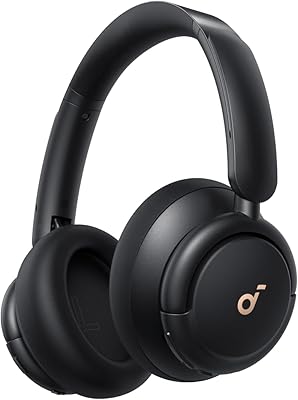
AKG voiced the K371 to the Harman target curve — the same research-derived frequency response profile used by the HD 560S — in a closed-back form factor. This is rare. Most closed-back headphones at this price adopt a V-shaped consumer tuning. The K371’s flat response produces natural, uncolored game audio: environmental sounds are neither boosted nor suppressed, and software EQ or virtual surround algorithms work from an accurate baseline.
Specs
| Spec | Value |
|---|---|
| Type | Closed-back, circumaural |
| Driver | 50mm dynamic |
| Impedance | 32 Ohm |
| Frequency Response | 5–40,000 Hz |
| Sensitivity | 114 dB/mW |
| Weight | 255g |
| Cable | Detachable, foldable |
Pros
- Harman-target tuning in a closed-back design
- 32 Ohm / 114 dB — drives from any source with authority
- Excellent isolation for closed-back positional accuracy
- Foldable, detachable cable — most portable in this list
Cons
- Plastic-dominant build feels less premium than Beyerdynamic or Sennheiser at the same price
- Stock earpads flatten over time; foam density decreases within 12–18 months
- Slightly recessed sub-bass for those who prefer a bass-heavy presentation
The K371 is the pick for the gamer who wants neutral accuracy in a closed-back format — someone gaming in a dorm, bedroom, or office who cannot use open-back but still wants studio-grade positional fidelity. At 32 Ohm, it pairs with a basic USB audio adapter or controller jack without any additional hardware.
Final Comparison Table and Verdict
| Headphone | Soundstage | Bass Impact | Isolation | Amp Needed | Overall Rating |
|---|---|---|---|---|---|
| ATH-M50x | Medium | High | Excellent | No | 9.0/10 |
| DT 770 Pro 80 Ohm | Wide (for closed) | High | Excellent | Recommended | 9.2/10 |
| HD 560S | Very Wide | Low-Medium | None | Recommended | 9.3/10 |
| HE400SE | Wide | Medium | None | Yes | 8.8/10 |
| AKG K371 | Medium-Wide | Medium | Very Good | No | 9.1/10 |
Top pick overall: Sennheiser HD 560S — for private gaming spaces requiring maximum positional accuracy.
Best closed-back: Beyerdynamic DT 770 Pro 80 Ohm — isolation without sacrificing soundstage.
Best plug-and-play: AKG K371 — flat tuning, 32 Ohm, works from anything.
Best value: HiFiMAN HE400SE — planar magnetic detail at $79 is unmatched at the price.
Most versatile: Audio-Technica ATH-M50x — gaming, music, commute, broadcast monitoring.
FAQ
Do I need a DAC/amp to use these headphones for gaming?
For the ATH-M50x and AKG K371 (both 32–38 Ohm), no — onboard audio or a USB audio adapter is sufficient. The DT 770 Pro 80 Ohm and HD 560S benefit from amplification but run acceptably without one. The HE400SE is the only pick where a budget amp (FiiO E10K, ~$75) is a genuine recommendation rather than optional.
Will these work with a PS5 or Xbox controller?
Yes. Any headphone with a 3.5mm output connects directly to a DualSense or Xbox controller via the headphone jack. The ATH-M50x and AKG K371 are the best controller-direct options given their low impedance. The DT 770 Pro 80 Ohm will run at lower volume from a controller but remains usable.
How do I get virtual surround sound without a gaming headset?
On Windows 11, enable Windows Sonic (free, Settings > Sound > Spatial Sound) or purchase Dolby Atmos for Headphones from the Microsoft Store. Steam games that support Steam Audio also apply HRTF-based spatialization automatically. For the most game-specific profiles, Razer THX Spatial Audio and SteelSeries Sonar work with any headphone regardless of brand.
Are open-back headphones actually better for FPS gaming?
Measurably, yes — in controlled environments. Open-back designs produce wider, more accurate stereo imaging because there is no internal cup reflection or pressure buildup distorting the soundfield. Studies on HRTF accuracy consistently show that open-back headphones localize sound sources more precisely. The practical catch: they leak audio, so they are impractical in noisy rooms or for anyone sharing a space.
All prices reflect current Amazon listings and may vary. Amazon affiliate links use tag gamingpcrev04-20.
Related Articles
Looking for more on this topic? Browse the hand-picked guides below — each one applies the same scoring rubric used in this review.
Frequently Asked Questions
Are audiophile headphones better than gaming headsets for competitive play?
Often yes. A well-tuned pair of studio or audiophile headphones usually has flatter frequency response and a wider soundstage than a bass-heavy gaming headset, which makes footstep direction easier to judge. The trade-off is no built-in microphone, so you need a separate clip-on or desk mic.
Should I choose open-back or closed-back?
Open-back gives a wider, more natural soundstage and better positional cues, which suits quiet rooms and competitive gaming. Closed-back isolates outside noise and stops sound leaking to a microphone or nearby people. If you share a space or stream with an open mic, closed-back is the practical choice.
Do I need a DAC or amplifier under $100?
Most headphones in this bracket have low impedance, typically 32 to 80 ohms, and run fine directly from a motherboard or controller jack. High-impedance models above 150 ohms will sound quiet and thin without an amplifier. Check the impedance figure before assuming your onboard audio is sufficient.
How do I add a microphone to regular headphones?
A modular boom microphone such as a V-Moda BoomPro or Antlion ModMic attaches to most headphones and connects through the same 3.5mm path. Alternatively a cheap USB desk microphone gives noticeably better voice quality for the same money, though it picks up more keyboard noise.
Does virtual surround sound help at this price?
Stereo with a good pair of headphones already conveys accurate left-right and front-back cues that your brain interprets naturally. Virtual surround processing such as Windows Sonic can add height information but sometimes muddies precision. Test both in your main game and keep whichever lets you locate footsteps faster.
Ready to decide? Our #1 pick for 2026 is the Headphone.
Live price & availability on Amazon.