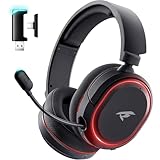
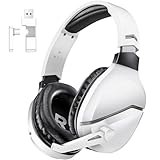
- Top Pick: Wireless Gaming Headset for PC PS5 PS4 Mac Switch 7.1 Surround Sound 100-Hr
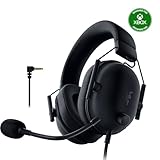
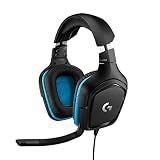
- Best Value: Razer BlackShark V2 X Gaming Headset: 7.1 Surround Sound – 50mm Drivers – Memory Foam Cushion – For PC, PS4, PS5, Switch – 3.5mm Audio Jack – Black
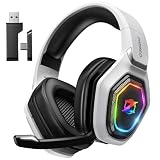
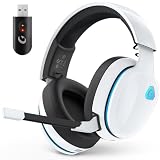
- Premium Choice: Ozeino Gaming Headset for PC, Ps4, Ps5, Xbox Headset with 7.1 Surround Sound Gaming Headphones with Noise Canceling Mic, LED Light Over Ear Headphones for Switch, Xbox Series X/S, Laptop, Mobile White
Affiliate disclosure: As an Amazon Associate we earn from qualifying purchases. This post contains affiliate links — if you buy through them we may earn a small commission at no extra cost to you. This never affects our recommendations.
As an Amazon Associate we earn from qualifying purchases at no extra cost to you.
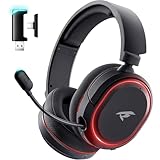

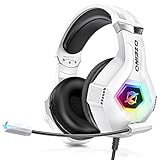
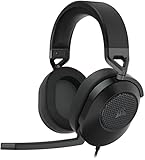


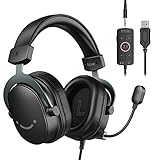
Positional audio is no longer a luxury — it is the difference between hearing an enemy reload behind a wall and getting eliminated without a clue. The best 7.1 surround sound gaming headsets process audio across multiple virtual speaker channels, letting you pinpoint footsteps, gunfire, and environmental cues with the kind of directional precision that stereo simply cannot deliver. Whether you are grinding ranked FPS matches or losing yourself in an open-world RPG, the right surround headset transforms how you experience every game. We compared and researched the top contenders for 2026 and ranked the five best options by audio performance, wireless reliability, mic clarity, and value.
In a hurry? See the top-rated 7.1 Surround Sound Gaming Headset deals available right now:
🛒 Check 7.1 Surround Sound Gaming Headset Prices on Amazon →🛒 Best Price Today on Amazon
Prime members get fast, free shipping on everything above, plus member-only deals. New members get a 30-day free trial — cancel anytime.
Start 30-Day Prime Free Trial →See Today’s Amazon DealsQuick Comparison Table
| Headset | Surround Tech | Battery Life | Wireless | Mic Quality | Platform |
|---|---|---|---|---|---|
| SteelSeries Arctis Nova Pro Wireless | Sonar Virtual 7.1 + multi-DAC | ~22 hrs (hot-swap) | 2.4 GHz + Bluetooth | Retractable ClearCast Gen 2 | PC, PS5, Xbox |
| Corsair HS80 RGB Wireless | Dolby Atmos 7.1 via iCUE | 65 hrs | 2.4 GHz USB | Omnidirectional | PC, PS5 |
| HyperX Cloud II Wireless | Virtual 7.1 USB | 30 hrs | 2.4 GHz USB-A | Detachable cardioid | PC, PS4/PS5 |
| Logitech G Pro X 2 Lightspeed | DTS:X Ultra 7.1 via G Hub | 50 hrs | LIGHTSPEED 2.4 GHz | Blue Voice cardioid | PC, PS5 |
| Razer BlackShark V2 Pro 2023 | THX Spatial Audio 7.1 | 70 hrs | HyperSpeed 2.4 GHz | HyperClear Cardioid | PC, PS5, Xbox |
Our Top Picks
1. SteelSeries Arctis Nova Pro Wireless
The SteelSeries Arctis Nova Pro Wireless is the pinnacle of gaming headset engineering in 2026. It pairs SteelSeries’ proprietary Sonar surround software with a high-resolution multi-DAC system that handles 96 kHz / 24-bit audio, delivering surround imaging that feels genuinely three-dimensional rather than artificially widened. The dual-wireless system runs 2.4 GHz and Bluetooth simultaneously, so you can game on PC while keeping your phone connected — a workflow feature no competitor at this tier matches. The hot-swap battery system means zero downtime: while one battery powers your session, the second charges in the base station.
The premium price tag of around $349 reflects hardware that earns it. This is the headset for players who refuse to compromise on any axis of performance.
Pros
- Sonar software offers the most granular 7.1 EQ customization available
- Multi-DAC delivers audiophile-grade clarity
- Hot-swap batteries eliminate charging interruptions
- Simultaneous 2.4 GHz + Bluetooth dual-wireless
- Active Noise Cancellation with Transparency Mode
Cons
- Highest price in this roundup at ~$349
- Full feature set requires SteelSeries Sonar app (Windows only)
- Heavier than average at 338 g
2. Corsair HS80 RGB Wireless
For buyers who want premium surround sound without a premium price, the Corsair HS80 RGB Wireless is the clearest value proposition in this roundup. At around $99, it ships with Dolby Atmos support unlocked through the iCUE software suite — the same object-based audio standard used in cinema. The 65-hour battery life leads the entire category outright, making it the go-to pick for marathon sessions or players who forget to charge their gear. The memory foam ear cushions and aluminum reinforcement feel more like a $150 headset than a $99 one.
The tradeoff is a simpler mic without advanced noise filtering, and iCUE’s surround processing is locked to Windows. Still, for the price, nothing else comes close.
Pros
- Exceptional value at ~$99 with full Dolby Atmos 7.1
- Industry-leading 65-hour battery life
- Comfortable memory foam cushions and solid build quality
- iCUE software is feature-rich and free
Cons
- Dolby Atmos surround requires iCUE on Windows
- Omnidirectional mic lacks background noise rejection
- No Bluetooth secondary connection
3. HyperX Cloud II Wireless
The HyperX Cloud II Wireless has earned its reputation as one of the most consistently reliable gaming headsets across multiple generations. The 53mm neodymium drivers produce a wide, full soundstage, and the virtual 7.1 processing via USB dongle works without any software installation — plug in the dongle, press the surround button on the earcup, and you are done. That hardware-level surround toggle is a distinct advantage for console players on PS4 and PS5 who cannot run PC software. The 30-hour battery sits comfortably in the midrange, and the detachable cardioid mic remains one of the clearest voice pickup options at this price point.
At $149, it occupies the sweet spot between entry-level and pro-tier, making it the best recommendation for players who prioritize simplicity and proven performance.

Pros
- Hardware 7.1 toggle requires no software — works on PS4/PS5 natively
- 53mm drivers with wide, accurate soundstage
- Detachable cardioid mic with strong voice clarity
- Durable steel frame with leatherette and memory foam padding
- Simple, reliable USB-A dongle setup
Cons
- 30-hour battery is lower than newer competitors
- No Bluetooth or multipoint connection
- Virtual 7.1 EQ customization is limited without software
4. Logitech G Pro X 2 Lightspeed
The Logitech G Pro X 2 Lightspeed is built for competitive players who want every technical edge. The DTS:X Ultra processing in Logitech G Hub provides some of the most accurate horizontal and vertical positional cues available in a virtual surround system, and the Blue Voice microphone technology — borrowed from Logitech’s professional Blue microphone line — outputs broadcast-quality voice with hardware-level noise filtering. The LIGHTSPEED 2.4 GHz wireless connection is rated among the lowest-latency wireless protocols in gaming peripherals, with Logitech claiming sub-1ms performance.
At $249, it commands a significant premium, but for esports-focused players where mic quality and positional precision are non-negotiable, the G Pro X 2 justifies the cost.
Pros
- DTS:X Ultra delivers highly accurate positional vertical cues
- Blue Voice mic rivals dedicated USB microphones in clarity
- LIGHTSPEED wireless with near-zero latency
- 50-hour battery with premium build quality
- Extremely lightweight at 345 g for a pro-grade headset
Cons
- Full feature set locked to G Hub (Windows/Mac)
- No active noise cancellation
- Higher price than headsets with comparable surround quality
5. Razer BlackShark V2 Pro 2026
The Razer BlackShark V2 Pro 2023 closes the list with the longest battery life of any wireless headset here — 70 hours — combined with THX Spatial Audio 7.1 that has been a benchmark for positional accuracy since its introduction. The TriForce Titanium 50mm drivers split the driver into three frequency zones, assigning dedicated physical areas to highs, mids, and bass rather than relying purely on signal processing. The HyperClear Supercardioid mic delivers tight, directional voice pickup that rejects keyboard noise and ambient room sound effectively. HyperSpeed wireless, Razer’s proprietary 2.4 GHz protocol, offers a reliable low-latency connection across PC, PS5, and Xbox.
For players who want top-tier battery endurance, THX-certified audio, and cross-platform flexibility at a midpoint price of $199, the BlackShark V2 Pro 2023 is the most well-rounded option in this lineup.
Pros
- 70-hour battery leads the wireless category
- THX Spatial Audio 7.1 with strong positional accuracy
- TriForce Titanium 50mm drivers with dedicated frequency zones
- HyperClear Supercardioid mic with excellent noise rejection
- Cross-platform: PC, PS5, and Xbox compatible
Cons
- THX Spatial Audio requires Razer Synapse on PC for full control
- Slightly bulkier design compared to the G Pro X 2
- No active noise cancellation
How to Choose the Best 7.1 Surround Sound Gaming Headset
True 7.1 vs Virtual Surround Sound
No consumer headset contains eight physical speaker drivers arranged in a circle around your ears. True 7.1 hardware surround exists in specialized setups with discrete speakers — not headsets. What every headset in this guide provides is virtual surround sound: digital signal processing that uses head-related transfer function (HRTF) algorithms to simulate directional audio across a stereo driver pair. Modern HRTF implementations are sophisticated enough that trained ears can reliably distinguish sounds above, below, in front of, and behind them. The term “7.1” on a headset refers to the audio channel count being processed and decoded, not the physical driver count. Virtual surround at this level is genuinely useful for gaming — do not let the “virtual” label discourage you.
Dolby Atmos vs DTS:X vs THX Spatial Audio
These three standards represent the primary surround processing technologies across our picks, and each takes a slightly different approach.
Dolby Atmos (used by the Corsair HS80 RGB Wireless) is an object-based audio format that positions sounds in a three-dimensional space rather than fixed channels. It excels in games that natively support Atmos metadata, delivering height cues that channel-based systems struggle to reproduce accurately.

DTS:X Ultra (used by the Logitech G Pro X 2 Lightspeed) is DTS’s competing object-based format, with particular strength in horizontal positional accuracy. Many competitive FPS players prefer DTS:X for its cleaner left-right and front-back separation.
THX Spatial Audio (used by the Razer BlackShark V2 Pro 2023) is THX’s certification-backed spatial processing standard. THX licenses its technology only after intensive calibration testing, and the result is a consistently reliable surround profile that does not vary as dramatically between headset models as generic virtual surround implementations.
Sonar Virtual 7.1 (SteelSeries’ proprietary system) is notable for its per-game HRTF profiles and the most comprehensive EQ customization, including separate parametric controls for each virtual speaker channel.
Why 7.1 Helps in Competitive FPS Games
In titles like CS2, Valorant, Apex Legends, and Call of Duty, audio is a strategic resource. Footstep sounds, reload claps, grenade bounces, and door openings all carry directional data that a skilled player reads as map information. Stereo audio provides left-right positioning but collapses vertical and front-back depth into guesswork. A well-tuned 7.1 virtual surround system adds:
- Front vs. rear distinction: critical for detecting flanks before the enemy enters your field of view
- Height information: relevant in games with multiple floors and roof access
- Distance estimation: surround processing preserves volume falloff gradients that indicate how far a sound source is
The advantage is most pronounced at higher skill levels where game sense — the mental map of where enemies are — determines outcomes. Recreational players benefit from immersion; competitive players benefit from actionable information.
Software and App Requirements
Every headset in this guide requires companion software to unlock full 7.1 processing on PC:
- SteelSeries Sonar — Windows only; highly recommended for HRTF profile customization
- Corsair iCUE — Windows/Mac; required for Dolby Atmos activation
- HyperX NGENUITY — optional; the HS80’s hardware toggle bypasses this requirement on console
- Logitech G Hub — Windows/Mac; required for DTS:X Ultra and Blue Voice
- Razer Synapse — Windows/Mac; required for THX Spatial Audio configuration
Console players should verify platform compatibility before purchasing. The HyperX Cloud II Wireless is the most plug-and-play option for PS4/PS5 thanks to its hardware surround toggle. The SteelSeries Arctis Nova Pro Wireless and Razer BlackShark V2 Pro 2023 support Xbox natively; the Corsair HS80 and Logitech G Pro X 2 are primarily PC/PS5 focused.

Wired vs Wireless for Surround Headsets
Early wireless gaming audio suffered from latency that made it unsuitable for competitive play. Modern 2.4 GHz proprietary protocols — LIGHTSPEED, HyperSpeed, Sonar Wireless — operate at latencies that are imperceptible during gameplay (sub-2ms in most cases). Wireless is now the preferred format for surround gaming headsets for practical reasons: no cable drag during tense moments, freedom of movement, and the ability to step away from your desk without removing the headset.
Wired connections still hold a theoretical advantage in environments with heavy 2.4 GHz interference (dense apartment buildings, offices with many wireless devices). If your wireless signal has ever dropped mid-session, a wired backup connection — available on the Arctis Nova Pro and BlackShark V2 Pro — provides an immediate fallback. For most home gaming environments, wireless 2.4 GHz is indistinguishable from wired in practice.
Final Verdict
The best 7.1 surround sound gaming headset for most players in 2026 is the Razer BlackShark V2 Pro 2023. It delivers THX-certified spatial audio, an industry-leading 70-hour battery, a pro-grade mic, and cross-platform support at a $199 price point that does not demand the premium tier.
If budget is your primary concern, the Corsair HS80 RGB Wireless at $99 is a remarkable achievement — Dolby Atmos 7.1, 65-hour battery, and a build quality that punches well above its price.
For players who treat their headset as competitive equipment and want the absolute ceiling of surround customization and audio fidelity, the SteelSeries Arctis Nova Pro Wireless is worth every dollar of its $349 price tag. It is the most technically advanced consumer gaming headset on the market, full stop.
| Your Priority | Best Pick |
|---|---|
| Best overall value | Corsair HS80 RGB Wireless (~$99) |
| Best mid-range | HyperX Cloud II Wireless (~$149) |
| Best competitive + mic | Logitech G Pro X 2 Lightspeed (~$249) |
| Best all-rounder | Razer BlackShark V2 Pro 2023 (~$199) |
| Best no-compromise | SteelSeries Arctis Nova Pro Wireless (~$349) |
Related Articles
Looking for more on this topic? Browse the hand-picked guides below — each one applies the same scoring rubric used in this review.
Frequently Asked Questions
What is the best gaming headset surround 71 in 2026?
The best gaming headset surround 71 depends on your budget and how you plan to use it. The options compared above are our top-rated picks based on real customer ratings, build quality, and overall value — start with the highest-rated model that fits your budget.
How much should I expect to spend on a gaming headset surround 71?
Prices vary by brand and features. Budget options cover the essentials, while mid-range and premium models add durability, performance, and extra features. Compare the prices in the list above to find the best value for your needs.
What should I look for when buying a gaming headset surround 71?
Focus on what matters most for your use case — build quality, compatibility, performance, warranty, and verified customer reviews. Every pick above is selected to balance these factors.
Are budget gaming headset surround 71 options worth it?
Yes. For most people a well-reviewed budget or mid-range gaming headset surround 71 delivers excellent value. You only need to spend more if you specifically require premium materials or top-tier performance.
How did we choose these gaming headset surround 71 picks?
We compare current Amazon ratings, review counts, key features, and price to surface the options with the best real-world value. The list is refreshed as ratings and availability change.