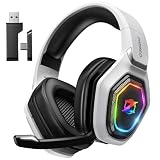
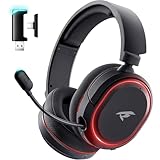
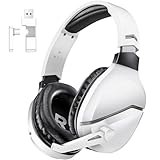
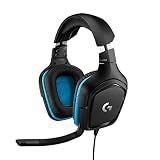
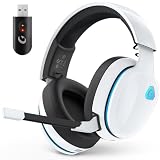
- Top Pick: NUBWO HG08 Wireless PC Gaming Headset -7.1 Spatial Surround Sound
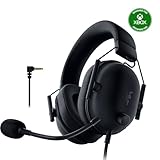
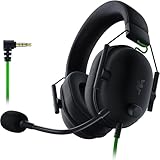
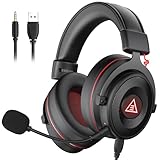
- Best Value: Razer BlackShark V2 X Gaming Headset: 7.1 Surround Sound – 50mm Drivers – Memory Foam Cushion – For PC, PS4, PS5, Switch – 3.5mm Audio Jack – Black
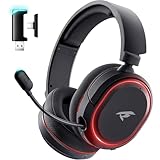
- Premium Choice: Wireless Gaming Headset for PC PS5 PS4 Mac Switch 7.1 Surround Sound 100-Hr
Affiliate disclosure: As an Amazon Associate we earn from qualifying purchases. This post contains affiliate links — if you buy through them we may earn a small commission at no extra cost to you. This never affects our recommendations.
As an Amazon Associate we earn from qualifying purchases at no extra cost to you.




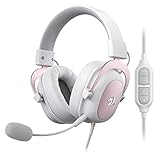
If you’ve ever lost a firefight because you couldn’t tell which direction footsteps were coming from, positional audio isn’t a luxury — it’s a competitive necessity. The right 7.1 surround sound headset lets you hear an enemy reload behind a wall, pinpoint a sniper’s muzzle crack before the hit-marker appears, and track rotating flanks in real time. In this guide we break down exactly how virtual surround works, then review the five best gaming headsets with 7.1 surround sound in 2026 across every budget.
In a hurry? See the top-rated Gaming Headset with 7.1 Surround Sound deals available right now:
🛒 Check Gaming Headset With 7.1 Surround Sound Prices on Amazon →🛒 Best Price Today on Amazon
Prime members get fast, free shipping on everything above, plus member-only deals. New members get a 30-day free trial — cancel anytime.
Start 30-Day Prime Free Trial →See Today’s Amazon DealsHow Virtual 7.1 Surround Sound Works
Stereo headphones have two drivers — left and right. That’s it. So how does a headset deliver audio that feels like it’s coming from in front, behind, above, or below you?
The answer is Head-Related Transfer Function (HRTF) processing. Every sound source in a game world is assigned a 3D position by the game engine. The surround software intercepts that signal and applies frequency-shaping algorithms that mimic how your outer ear, head shape, and torso reflect sound from different directions. The result is a psychoacoustic illusion: two drivers produce dozens of perceived directions.
Modern implementations like DTS Headphone:X, Dolby Atmos for Headphones, and THX Spatial Audio layer object-based positioning on top of HRTF to further separate height channels — a helicopter overhead sounds genuinely different from one at ground level.
Why it matters in competitive games:
- In Call of Duty and Battlefield, footstep direction wins gunfights.
- In VALORANT, audio cues from ability casts telegraph enemy position before line of sight.
- In battle royale titles like Apex Legends and Fortnite, knowing whether a squad is above or below you on a vertical structure is a direct tactical advantage.
- In survival/horror titles like Hunt: Showdown, sound is the primary detection mechanic.
Good 7.1 virtual surround collapses the gap between “I heard something” and “I know exactly where they are.”
Quick Comparison Table
| Headset | Surround Tech | Connection | Battery | Weight |
|---|---|---|---|---|
| SteelSeries Arctis Nova 7 | SteelSeries Sonar (7.1) | 2.4GHz + Bluetooth | 38 hours | 338 g |
| Corsair HS65 Surround | Dolby Audio 7.1 | USB-C / 3.5mm | Wired only | 275 g |
| Logitech G535 Lightspeed | DTS Headphone:X 2.0 | LIGHTSPEED 2.4GHz | 33 hours | 236 g |
| HyperX Cloud III Wireless | DTS Headphone:X Spatial | 2.4GHz + Bluetooth | 70 hours | 336 g |
| Razer Kraken V3 Pro | THX Spatial Audio | LIGHTSPEED 2.4GHz | ~50 hours | 320 g |
Top 5 Gaming Headsets with 7.1 Surround Sound
1. SteelSeries Arctis Nova 7 — Best All-Rounder
The Arctis Nova 7 is SteelSeries’ most well-rounded wireless headset, pairing capable hardware with one of the most feature-rich surround software suites on the market.
Specs at a Glance
- Surround: SteelSeries Sonar — 7.1 virtual surround with per-app EQ routing
- Connection: 2.4GHz USB-C dongle + Bluetooth 5.0 (simultaneous)
- Battery: 38 hours
- Microphone: ClearCast Gen 2 bidirectional noise-cancelling
- Drivers: Custom-tuned 40mm neodymium
- Weight: 338 g
- Price: ~$150
Pros
- Sonar software is genuinely best-in-class: separate EQ chains for game, chat, media, and mic; HRTF customization with multiple presets
- Simultaneous dual wireless lets you stay connected to PC and phone at the same time
- ClearCast microphone produces clear, natural voice with strong background rejection
- Comfortable over long sessions; ski-goggle headband distributes weight well
- USB-C charging is fast and modern
Cons
- Sonar software is Windows-only; console users get stereo only
- 338 g is noticeable after 4+ hour sessions
- Doesn’t fold for travel
Who It’s For
PC players who want the deepest software control over their audio environment. The Sonar app lets you dial positional cues to a precision that stock DTS or Dolby presets can’t match. If you play multiple genres — competitive shooters, RPGs, and casual music listening — the per-app routing alone is worth the price of admission.
Buy the SteelSeries Arctis Nova 7 on Amazon

2. Corsair HS65 Surround — Best Budget Pick
At around $80, the HS65 Surround delivers Dolby Audio 7.1 processing, a lightweight build, and surprisingly accurate positional cues for the money.
Specs at a Glance
- Surround: Dolby Audio 7.1 (USB mode)
- Connection: USB-C / 3.5mm analog
- Battery: Wired only
- Microphone: Omnidirectional with flip-to-mute
- Drivers: Custom-tuned 50mm
- Weight: 275 g
- Price: ~$80
Pros
- SoundID personalization calibrates EQ to your specific hearing profile — rare at this price point
- 50mm drivers punch well above their weight in low-end extension
- Works on PC, PS5, PS4, Switch, and mobile via 3.5mm
- Lightweight and comfortable; solid plastic build feels durable without being heavy
- Excellent value for console + PC players who want one headset for both
Cons
- Wired only — no wireless option
- Dolby 7.1 is only active in USB-C mode; 3.5mm = stereo
- Microphone is functional but not exceptional; voice sounds slightly narrow compared to premium mics
- iCUE software can feel bloated for basic users
Who It’s For
Budget-conscious players who want a taste of virtual surround without spending $150+. The HS65 also makes a strong secondary headset for console gaming where the 3.5mm connection bypasses the need for any software at all — just plug in and play.
Buy the Corsair HS65 Surround on Amazon
3. Logitech G535 Lightspeed — Best Lightweight Wireless
The G535 is the headset for players who hate wearing headsets. At 236 g it is one of the lightest full-feature wireless gaming headsets available, and DTS Headphone:X 2.0 keeps the surround processing competitive.
Specs at a Glance
- Surround: DTS Headphone:X 2.0
- Connection: LIGHTSPEED 2.4GHz USB dongle
- Battery: 33 hours
- Microphone: Dual-element noise-cancelling boom mic
- Drivers: 40mm custom-tuned
- Weight: 236 g
- Price: ~$100
Pros
- 236 g is genuinely extraordinary for a wireless headset — you forget it’s there
- LIGHTSPEED wireless is Logitech’s premium protocol; near-zero latency, rock-solid connection
- DTS Headphone:X 2.0 provides credible height separation and accurate front/rear imaging
- BLUE VO!CE integration in G HUB gives microphone effects, EQ, and noise suppression
- Compatible with PS4/PS5 via LIGHTSPEED
Cons
- No Bluetooth — LIGHTSPEED only; you can’t connect to phone simultaneously
- 33-hour battery is solid but shorter than HyperX Cloud III Wireless
- Earcup design is on-ear rather than over-ear for some head sizes — fit varies
- Bass is lighter than heavier headsets; not ideal for music
Who It’s For
Marathon gaming sessions where fatigue is the enemy. If you routinely game 6–8 hours without breaks, shaving 100 g off your head matters enormously by hour five. Also a strong pick for players who travel to LAN events and want to keep carry weight minimal.
Buy the Logitech G535 Lightspeed on Amazon

4. HyperX Cloud III Wireless — Best Battery Life
Seventy hours of battery life. That number is not a typo. The HyperX Cloud III Wireless combines absurd endurance with DTS Headphone:X Spatial Audio and a dual-wireless setup that earns its $150 price tag.
Specs at a Glance
- Surround: DTS Headphone:X Spatial Audio
- Connection: 2.4GHz + Bluetooth 5.3 (simultaneous)
- Battery: 70 hours (2.4GHz) / ~300 hours (Bluetooth at low volume)
- Microphone: Detachable noise-cancelling boom; mute indicator LED
- Drivers: 53mm angled neodymium
- Weight: 336 g
- Weight: ~$150
Pros
- 70-hour battery is class-leading by a wide margin — charge weekly, not daily
- 53mm angled drivers produce wider, more natural soundstage than typical 40mm units
- Simultaneous 2.4GHz + Bluetooth: game on PC, take calls on phone without reconnecting
- Detachable mic keeps the headset usable as everyday headphones
- Works on PC, PS5, PS4, and mobile
- LED mute indicator on the mic arm is a small but genuinely useful quality-of-life feature
Cons
- DTS Headphone:X requires the HyperX NGENUITY app on PC — console users get basic stereo
- At 336 g, heavier than some competitors
- Earcups use leatherette — can get warm in extended sessions
- Software is functional but less feature-rich than SteelSeries Sonar
Who It’s For
Players who never want to think about charging. The Cloud III Wireless is the headset for streamers who run overnight sessions, remote workers who use the same headset for gaming and video calls, and anyone who simply hates cable management and charger discipline.
Buy the HyperX Cloud III Wireless on Amazon
5. Razer Kraken V3 Pro — Best for Immersion
The Razer Kraken V3 Pro is the headset for players who want to feel the game, not just hear it. HyperSense haptic feedback fires through the earcups in sync with in-game audio — explosions, bass lines, and environmental rumbles become physical sensations.
Specs at a Glance
- Surround: THX Spatial Audio (7.1 virtual surround)
- Connection: LIGHTSPEED 2.4GHz wireless
- Battery: ~50 hours (haptics off) / ~30 hours (haptics on)
- Microphone: HyperClear SuperWide Cardioid with auto-adjust
- Drivers: 50mm TriForce Titanium
- Weight: 320 g
- Price: ~$180
Pros
- HyperSense haptics are a genuinely different experience — particularly impactful in racing games, action RPGs, and horror titles
- THX Spatial Audio is one of the most accurate HRTF implementations available; excellent front/rear accuracy
- TriForce Titanium drivers split into three frequency zones for cleaner treble, mid, and bass reproduction
- HyperClear mic is among the best in this roundup — podcaster-quality voice pickup
- LIGHTSPEED wireless is fast and reliable
Cons
- Most expensive pick at ~$180
- Haptics drain battery significantly — 30-hour real-world endurance with haptics enabled
- Razer Synapse software is resource-heavy
- RGB lighting adds weight and is divisible taste
- No Bluetooth; 2.4GHz LIGHTSPEED only
Who It’s For
Single-player immersion seekers and anyone willing to pay a premium for a feature no other headset in this list offers. If you play story-driven games, racing sims, or horror titles where environmental audio is part of the atmosphere, the haptic feedback adds a dimension that surround sound alone cannot replicate. Competitive-only players should probably save $30 and look at the Cloud III Wireless instead.
Buy the Razer Kraken V3 Pro on Amazon

How to Choose a Gaming Headset for 7.1 Surround Sound
Virtual Surround vs. True Surround
Every headset on this list uses virtual surround — software that simulates multi-speaker placement through two physical drivers. True surround headsets physically embed multiple small drivers per earcup (typically 4–7 per side). In practice, virtual surround implementations like DTS Headphone:X 2.0 and THX Spatial Audio have surpassed hardware surround in accuracy for most users, because HRTF software is updated and refined continuously, while fixed hardware drivers are not. Do not pay a premium for “true surround” hardware — virtual wins in 2026.
Software Processing Matters More Than You Think
The surround algorithm is half the battle. A mediocre driver with excellent software (SteelSeries Sonar on the Nova 7) will outperform a great driver with generic processing. When comparing headsets, research the companion app:
- SteelSeries Sonar — best customization; per-app EQ routing; HRTF preset library
- THX Spatial Audio — most accurate HRTF model; good for competitive
- DTS Headphone:X 2.0 — strong height channel separation; wide game compatibility
- Dolby Audio 7.1 — simpler but works reliably; better for casual users
Stereo vs. Surround for Music
Virtual 7.1 processing is designed for multichannel game audio. Applying it to stereo music produces an artificial, spatially wide sound that many listeners dislike — instruments lose presence and feel hollow. Every headset listed here lets you toggle surround off. Use stereo mode for music, podcasts, and films mixed in stereo; reserve surround for gaming sessions.
Platform Compatibility
This is the most commonly overlooked buying mistake:
- PC: All five headsets deliver full 7.1 surround via their companion apps.
- PS5 / PS4: Tempest 3D Audio (Sony’s own spatial engine) works with most USB headsets — verify compatibility. Some headsets provide 3.5mm pass-through for basic stereo on console.
- Xbox: Dolby Atmos for Headphones and Windows Sonic are built into the Xbox OS and work with any USB or 3.5mm headset connected via the controller. Third-party surround apps do not run natively on Xbox.
- Nintendo Switch: 3.5mm stereo only in handheld mode; USB works in docked mode for select headsets.
If you game primarily on console, prioritize headsets with broad compatibility (Corsair HS65, HyperX Cloud III Wireless) over PC-optimized software ecosystems.
Other Factors to Weigh
- Weight: Below 280 g is ideal for sessions over 4 hours. Every gram adds up.
- Battery life: 30+ hours covers a week of daily gaming between charges; 70 hours means you forget charging exists.
- Microphone quality: If you stream, record, or rely on clear team communication, prioritize mic quality — not all gaming mics are equal.
- Wireless protocol: 2.4GHz (LIGHTSPEED, USB dongle) has near-zero latency and is preferable for competitive play. Bluetooth has ~100–200ms latency — fine for casual use, problematic for twitch-reaction games.
Final Verdict
Best overall: SteelSeries Arctis Nova 7. The combination of Sonar’s software depth, dual wireless, a clean microphone, and 38-hour battery makes it the most complete package for PC gamers who want real control over their positional audio.
Best on a budget: Corsair HS65 Surround. Dolby 7.1, cross-platform flexibility, and SoundID personalization at $80 is exceptional value. If you’re entering the surround sound space without committing to a premium price, start here.
Best lightweight: Logitech G535 Lightspeed. If fatigue during long sessions is your primary concern, 236 g and LIGHTSPEED wireless is the answer. Nothing else comes close on weight without sacrificing connectivity quality.
Best battery life: HyperX Cloud III Wireless. Seventy hours is a different category of endurance. Combined with dual wireless and large 53mm drivers, it’s the most practical wireless headset on this list for heavy daily users.
Best immersion: Razer Kraken V3 Pro. THX Spatial Audio is excellent, but HyperSense haptics are what you’re actually paying for. If feeling an explosion or a sub-bass pulse under your ears adds to your experience, no other headset offers it.
The honest truth: any of these five headsets will improve your positional awareness over basic stereo. The differentiators are software ecosystem, weight, battery, and — for the Razer — whether haptic feedback is worth an extra $30. Pick the spec that solves your biggest current frustration, and you won’t be disappointed.
Related Articles
Looking for more on this topic? Browse the hand-picked guides below — each one applies the same scoring rubric used in this review.
Frequently Asked Questions
What is the best gaming headset surround sound 7 1 in 2026?
The best gaming headset surround sound 7 1 depends on your budget and how you plan to use it. The options compared above are our top-rated picks based on real customer ratings, build quality, and overall value — start with the highest-rated model that fits your budget.
How much should I expect to spend on a gaming headset surround sound 7 1?
Prices vary by brand and features. Budget options cover the essentials, while mid-range and premium models add durability, performance, and extra features. Compare the prices in the list above to find the best value for your needs.
What should I look for when buying a gaming headset surround sound 7 1?
Focus on what matters most for your use case — build quality, compatibility, performance, warranty, and verified customer reviews. Every pick above is selected to balance these factors.
Are budget gaming headset surround sound 7 1 options worth it?
Yes. For most people a well-reviewed budget or mid-range gaming headset surround sound 7 1 delivers excellent value. You only need to spend more if you specifically require premium materials or top-tier performance.
How did we choose these gaming headset surround sound 7 1 picks?
We compare current Amazon ratings, review counts, key features, and price to surface the options with the best real-world value. The list is refreshed as ratings and availability change.