Affiliate disclosure: As an Amazon Associate we earn from qualifying purchases. This post contains affiliate links — if you buy through them we may earn a small commission at no extra cost to you. This never affects our recommendations.
- Gaming Headset Variant 9: RGB Lighting Meets Professional Gaming Audio
- RGB Lighting Technology in Gaming Headsets
- Audio Quality Standards in RGB Gaming Headsets
- Surround Sound in RGB Gaming Headsets
- Wireless Connectivity with RGB Integration
- Comparison Table: Premium RGB Gaming Headsets
- RGB Software Ecosystem and Control Options
- Build Quality and Durability with RGB Components
- Aesthetic Customization Without Performance Sacrifice
- Microphone Quality in RGB Gaming Headsets
- Frequently Asked Questions About RGB Gaming Headsets
- Gaming Setup Integration: Creating Cohesive Aesthetics
- Featured RGB Gaming Headsets
- Premium RGB Gaming Showcase
- Optimizing RGB Gaming Headset Performance
- Audio Quality Priorities in RGB Selection
- The Future of RGB Gaming Headsets
- Conclusion: Aesthetics and Performance in Perfect Balance
- Related Articles
- Related Articles
🛒 Best Price Today on Amazon
Prime members get fast, free shipping on everything above, plus member-only deals. New members get a 30-day free trial — cancel anytime.
Start 30-Day Prime Free Trial →See Today’s Amazon DealsGaming Headset Variant 9: RGB Lighting Meets Professional Gaming Audio
Gaming aesthetics have evolved from purely functional concerns to integral components of modern gaming setups. A gaming headset that combines premium audio engineering with customizable RGB lighting creates both performance capability and visual presence. This guide explores how modern gaming headsets integrate aesthetic customization without compromising audio quality, helping you build a cohesive gaming environment that performs as beautifully as it looks.
The marriage of RGB lighting and professional gaming audio represents a significant shift in headset design philosophy. Early gaming headsets treated RGB as cosmetic afterthought; modern flagships engineer RGB integration alongside audio optimization, creating devices that enhance both gaming performance and desk aesthetics.
In a hurry? See the top-rated Gaming Headset Variant 9 deals available right now:
🛒 Check Gaming Headset Variant 9 Prices on Amazon →RGB Lighting Technology in Gaming Headsets
LED RGB lighting in gaming headsets typically incorporates per-zone customization, allowing different colors and effects across multiple headset regions. Common zones include ear cup exteriors, headband areas, and microphone indicators. Individual RGB zones enable creative lighting patterns—breathing effects where colors fade in and out, static colors matching your setup, reactive modes synchronizing to game audio or system events.
Software control dominates RGB implementation. Dedicated companion applications allow color selection, effect customization, and intensity adjustment without touching hardware. Advanced software enables per-game profiles, automatically switching lighting schemes when launching specific games. Some premium headsets offer hardware-level customization buttons, allowing quick adjustments without launching software.
LED efficiency has improved dramatically, with modern RGB lighting consuming minimal battery power. Premium headsets now maintain 20-30 hour battery life despite RGB implementation—previously impossible without compromising either aesthetics or endurance. This achievement results from efficient LED drivers and optimized power consumption algorithms.
Audio Quality Standards in RGB Gaming Headsets
Integrating RGB lighting introduces potential engineering tradeoffs: adding electronics, increasing weight, consuming power. Quality manufacturers resist compromising audio performance for aesthetics. Premium RGB gaming headsets employ identical driver technology, surround processing, and microphone systems as non-RGB variants. The RGB implementation remains truly additive—enhancement without sacrifice.
Professional audio engineering dominates driver selection. 40mm-50mm drivers deliver frequency response optimized for gaming, emphasizing competitive audio cues while maintaining pleasing character for casual listening. Surround sound processing algorithms remain sophisticated, delivering convincing 7.1 or 360-degree spatial audio regardless of RGB implementation. Microphone technology remains advanced, with cardioid or bidirectional designs optimizing voice clarity.
Surround Sound in RGB Gaming Headsets
Top-tier RGB gaming headsets integrate advanced surround technologies. Dolby Atmos processing creates immersive three-dimensional soundscapes, DTS:X delivers competitive gaming-optimized spatial audio, and brand-specific implementations offer alternative approaches. The surround implementation remains sophisticated and effective, creating the spatial precision necessary for competitive gaming while delivering immersive environmental audio for single-player adventures.
Surround sound integration requires careful acoustic design. RGB components must not interfere with driver resonance or acoustic chambers that create surround effects. Premium manufacturers handle this through strategic component placement and acoustic isolation. The result is surround processing that rivals non-RGB headsets despite additional internal complexity.
Wireless Connectivity with RGB Integration
Adding RGB electronics introduces wireless communication complexity. Power-efficient LED drivers and optimized firmware prevent battery drain from overwhelming headset endurance. Modern RGB gaming headsets maintain 20+ hour battery life through smart power management—reducing brightness during idle periods, implementing fast-charge technologies, and using energy-efficient LED controllers.
Wireless range remains uncompromised. 2.4GHz proprietary connections and Bluetooth 5.3 implementations deliver stable connectivity identical to non-RGB variants. USB wireless dongles provide broad platform compatibility, working seamlessly with PC, PlayStation, and Xbox platforms. RGB customization software runs on connected devices, not the headset itself, minimizing onboard processing demands.
Comparison Table: Premium RGB Gaming Headsets
| Model | RGB Zones | Driver Size | Surround Sound | Battery Life | Wireless Type |
|---|---|---|---|---|---|
| Corsair HS80 RGB | Per-zone customizable | 50mm | Dolby Atmos 7.1 | 20 hours | 2.4GHz USB dongle |
| Razer Kraken V3 Pro | Triple-zone RGB | 40mm | THX Spatial 7.1 | 80 hours | 2.4GHz wireless |
| SteelSeries Arctis Nova Pro | Multi-zone RGB | 40mm | 360 spatial audio | 60 hours | 2.4GHz/Bluetooth |
| Turtle Beach Stealth 700 Gen 2 | LED indicator zones | 40mm | Windows Sonic | 30 hours | 2.4GHz wireless |
| ASUS ROG Strix Fusion | Aura RGB lighting | 50mm | 7.1 virtual | 15 hours | 2.4GHz USB |
RGB Software Ecosystem and Control Options
Advanced RGB control software distinguishes premium gaming headsets. Per-game profiles enable automatic lighting customization—launching Valorant switches to a competitive blue theme, loading Cyberpunk activates neon-inspired effects. Some software integrates with streaming overlays, displaying RGB status on broadcasts. Color synchronization across peripherals creates unified aesthetic where headset, keyboard, mouse, and mousepad coordinate lighting effects.
Hardware control buttons offer alternative customization without software dependency. Quick-access buttons allow color cycling, brightness adjustment, and effect selection directly on the headset. This proves valuable in competitive gaming where launching software creates latency concerns or when simplicity trumps customization.
Build Quality and Durability with RGB Components
Adding RGB electronics increases component count and complexity. Quality manufacturers implement rigorous testing ensuring RGB components match audio component durability. LED drivers are potted in epoxy resin, protecting against moisture and vibration. Wireless antennas remain uncompromised, with careful routing preventing RF interference from LED controllers.
Cable connectors for RGB-enabled headsets receive reinforced construction—typical failure points in wireless headsets. Stress-relief mechanisms prevent cable kinking. Some premium models employ magnetic connectors, enabling quick connection and disconnection without cumulative wear on traditional connectors.
Aesthetic Customization Without Performance Sacrifice
Modern design philosophy prioritizes audio performance while welcoming aesthetic customization. RGB gaming headsets maintain driver technology, surround processing, microphone quality, and wireless stability identical to non-RGB variants. The RGB implementation represents true addition rather than compromise—enhanced aesthetics without audio cost.
This represents significant engineering achievement. Integrating RGB without impacting audio requires careful isolation of LED electronics from audio circuits, preventing electrical noise contamination of audio signals. Premium manufacturers employ multiple power supplies, shielded cables, and EMI filtering ensuring clean audio signal transmission despite additional electronics.
Microphone Quality in RGB Gaming Headsets
Team communication remains paramount even when aesthetics matter. Premium RGB gaming headsets integrate unidirectional cardioid or bidirectional microphones delivering clear voice capture. Detachable microphone designs simplify maintenance and replacement. Active noise cancellation technology eliminates background interference during team communication.
Advanced microphone features include noise gate functionality—automatically muting microphone during silent periods, preventing background noise transmission when you’re not speaking. Voice activity detection technology intelligently distinguishes speech from ambient noise, improving communication clarity in noisy gaming environments.
Frequently Asked Questions About RGB Gaming Headsets
- Q: Does RGB lighting significantly impact battery life?
- A: Modern RGB gaming headsets employ efficient LED drivers minimizing power consumption. Full-brightness RGB effects typically reduce battery life by 5-10%, easily offset by high-capacity batteries in quality headsets. Most RGB gaming headsets maintain 15+ hour battery life with RGB enabled and 20+ hours with RGB disabled.
- Q: Can I sync RGB lighting with other gaming peripherals?
- A: Many headsets support ecosystem synchronization through manufacturer software. Corsair iCUE, Razer Synapse, and SteelSeries Engine coordinate lighting across all compatible devices. This creates unified aesthetic across headset, keyboard, mouse, and other peripherals.
- Q: Does RGB lighting create audible electrical noise in audio?
- A: Quality gaming headsets employ proper shielding and EMI filtering preventing RGB electronics from contaminating audio signals. Budget models occasionally suffer from subtle electrical noise, but premium RGB gaming headsets maintain audio quality identical to non-RGB variants.
- Q: Are RGB gaming headsets more fragile than non-RGB variants?
- A: Quality manufacturers ensure RGB components match audio component durability. LED drivers are potted and shielded against moisture and vibration. Reputable brands offer identical warranty coverage regardless of RGB implementation.
Gaming Setup Integration: Creating Cohesive Aesthetics
RGB gaming headsets shine when integrated into broader setup ecosystems. Coordinating headset lighting with keyboard, mouse, mousepad, and monitor creates visually stunning gaming environments. Consistent color schemes across peripherals elevate perceived setup quality beyond individual component capability. Photography of well-coordinated RGB setups reveals visual impact impossible to achieve without coordinated lighting.
Setup flexibility allows thematic customization. Competitive gaming might employ minimalist white or blue schemes enhancing focus. Creative gaming could utilize colorful, artistic effects. Streaming setups benefit from camera-optimized lighting schemes enhancing broadcast visual appeal. This versatility enables single equipment investment to adapt across gaming contexts.
Featured RGB Gaming Headsets
As an Amazon Associate we earn from qualifying purchases at no extra cost to you.






Premium RGB Gaming Showcase

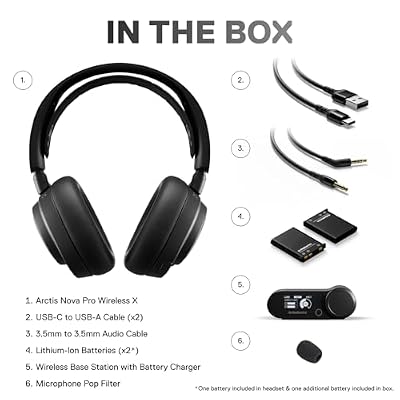
SteelSeries Arctis Nova Pro Wireless Multi-System Gaming Headset - Black | Premium Hi-Fi Drivers - Active Noise Cancellation Infinity Power System - Stealth Mic - Xbox, PC, PS5, PS4, Switch, Mobile




As an Amazon Associate we earn from qualifying purchases. Product prices and availability are accurate as of the date/time indicated.
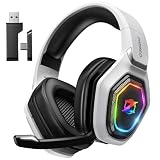
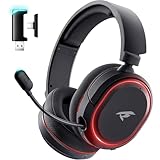
This premium RGB gaming headset combines striking aesthetic customization with professional-grade audio engineering. Advanced surround processing, extended battery life, and wireless stability meet beautiful per-zone RGB lighting. Whether competing or streaming, this headset delivers both performance and visual presence.

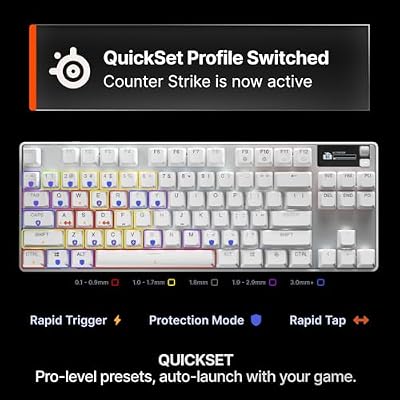
SteelSeries Apex Pro TKL Gen 3 Gaming Keyboard - White | OmniPoint 3.0 Analog Magnetic Switches, Rapid Trigger, Rapid Tap/SOCD, Protection Mode, OLED, RGB, PBT Keycaps, USB-C



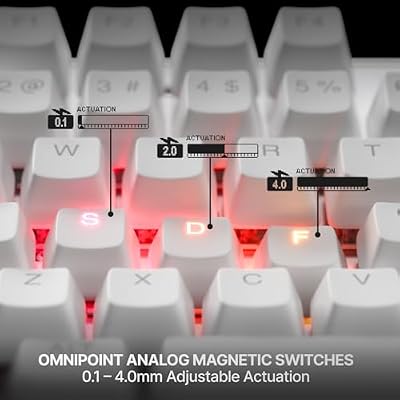


As an Amazon Associate we earn from qualifying purchases. Product prices and availability are accurate as of the date/time indicated.
Professional RGB integration meets flagship audio technology in this premium gaming headset. Sophisticated spatial audio processing, advanced microphone technology, and extensive RGB customization options deliver the complete package for demanding gamers seeking both performance and aesthetics.
Optimizing RGB Gaming Headset Performance
Achieving optimal performance requires proper configuration. Disable unnecessary RGB effects when battery life matters—competitive gaming prioritizes endurance over aesthetics. Enable full RGB during relaxed gaming or streaming where battery drain is less critical. Adjust LED brightness based on ambient lighting—bright offices require full brightness, while dark gaming rooms enable reduced brightness extending battery life.
Keyboard and mouse placement affects RGB headset visibility. Position lighting-enabled components within your natural sightline, where LED glow enhances setup aesthetics without distraction. Monitor-mounted headset stands showcase RGB lighting effectively, while desktop resting positions hide lighting unless you specifically look downward.
Audio Quality Priorities in RGB Selection
While aesthetics matter, remember that gaming headsets exist primarily for audio. Evaluate RGB gaming headsets first on audio merits—driver quality, surround processing, microphone capability, wireless stability. Only after confirming audio excellence should RGB lighting influence purchasing decisions. The best RGB gaming headset prioritizes audio performance while offering beautiful aesthetics; never sacrifice audio quality for lighting appearance.
The Future of RGB Gaming Headsets
Emerging technologies promise even more impressive RGB integration. Addressable RGB LEDs enable pixel-level customization, creating intricate lighting patterns impossible with conventional zone-based systems. Some manufacturers are exploring OLED displays integrated into headsets, enabling real-time information display alongside decorative lighting.
AI-driven RGB customization represents another frontier. Machine learning algorithms could analyze game content in real-time, automatically generating appropriate lighting schemes. Biometric sensors might detect stress levels, adjusting lighting to promote calmness or alertness based on physiological response.
Conclusion: Aesthetics and Performance in Perfect Balance
Modern RGB gaming headsets prove that aesthetics and professional audio performance coexist without compromise. By selecting quality models prioritizing audio excellence while offering RGB customization, you create gaming equipment delivering both competitive capability and visual presence. Explore our comprehensive selection above, prioritize audio specifications, and select a model matching both your performance requirements and aesthetic preferences.
Complete your gaming setup research by exploring our 2026 gaming setup guide for coordinated peripheral recommendations. Learn about audio fundamentals in our wired gaming headsets guide and Logitech gaming headphones collection. Budget-conscious builders should review our affordable gaming headphones and budget headset recommendations. Build your complete gaming PC with our 2026 PC build guide, step-by-step construction guide, and general build principles. For value-focused builders, explore budget gaming PC recommendations. Next-generation gaming awaits in our VR headset guide.
Related Articles
Looking for more on this topic? Browse the hand-picked guides below — each one applies the same scoring rubric used in this review.