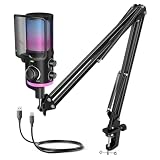
- Top Pick: TONOR Gaming Microphone Set with Boom Arm, Vocal Condenser Microphone for Content Creators, USB Mic for PC with Stand, RGB, Tap Mute, Gain Control, Gaming Equipemnt, Twitch, Streaming, TC310+
- Best Value: FIFINE AmpliGame AM8 USB/XLR Dynamic Microphone for Gaming Streaming
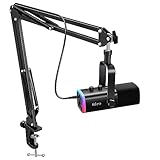
- Premium Choice: FIFINE AmpliGame AM8T XLR/USB Gaming Microphone Set, Dynamic PC Mic
Affiliate disclosure: As an Amazon Associate we earn from qualifying purchases. This post contains affiliate links — if you buy through them we may earn a small commission at no extra cost to you. This never affects our recommendations.
- The Evolution of USB Microphone Design
- Dynamic Microphone Character: Why It Works for Gaming
- USB Audio Processing: How Internal Electronics Work
- Cardioid Polar Pattern: Isolation in Gaming Environments
- Proximity Effect: Broadcasting Authority
- Frequency Response: Voice-Optimized Audio
- USB Audio Quality: Sample Rate and Bit Depth
- Built-In Gain Control: Immediate Adjustments
- Comparison Table: USB vs. Dynamic vs. Condenser
- Complete Setup: Rode PodMic USB
- When to Choose USB Dynamic vs. Pure USB vs. Professional XLR
- Rode PodMic USB FAQ
- Conclusion: USB Dynamic Microphones for Gaming
- Related Articles
- Frequently Asked Questions
- Related Articles
The Rode PodMic USB combines the warm, engaging tone of a dynamic microphone with USB simplicity, making it an excellent bridge between consumer USB mics and professional XLR equipment. Unlike the standard Rode PodMic (XLR-only), the USB variant includes an internal audio interface, eliminating the need for external hardware while retaining dynamic microphone character. This guide explores why hybrid USB/dynamic microphones are ideal for gaming streams, how they compare to pure USB and pure XLR approaches, and why the Rode PodMic USB has become increasingly popular among content creators.
In a hurry? See the top-rated USB Dynamic Microphone for Gaming deals available right now:
🛒 Check Usb Dynamic Microphone For Gaming Prices on Amazon →🛒 Best Price Today on Amazon
Prime members get fast, free shipping on everything above, plus member-only deals. New members get a 30-day free trial — cancel anytime.
Start 30-Day Prime Free Trial →See Today’s Amazon DealsThe Evolution of USB Microphone Design
The microphone industry has undergone a significant shift. Early USB microphones were poor-quality condenser designs with tiny capsules and mediocre audio processing. Modern USB microphones, particularly those from professional audio companies like Rode, use the same capsule designs as professional equipment but include internal audio interface electronics.
The Rode PodMic USB represents this evolution perfectly. It uses the same dynamic capsule and acoustic design as the professional XLR Rode PodMic, but adds USB electronics internally. This means you get professional-grade audio quality with USB simplicity—no external interface required.
Benefits of modern USB dynamic microphones:
- Professional capsule design — Engineered for broadcast, not gaming
- Dynamic warmth — Natural character without condenser harshness
- USB simplicity — Plug into gaming PC, no interface purchase
- Intermediate cost — Between budget USB and professional XLR setups
- Upgrade path clarity — If you eventually want XLR, you understand dynamic design
- Proven design — Rode’s PodMic design has been used professionally for years
The Rode PodMic USB is ideal for gamers who want professional audio quality, dynamic warmth, and USB simplicity without breaking the bank or dealing with audio interface complexity.
Dynamic Microphone Character: Why It Works for Gaming
Dynamic microphones have a distinctive character that’s particularly suited to gaming streams. Understanding this character helps explain why many professional streamers prefer them.
Dynamics provide:
- Proximity effect — Bass boost when close, making your voice sound warmer and more present
- Natural presence peak — Your voice cuts through game audio without sounding processed
- Forgiving of loud voices — Won’t distort when you shout exciting callouts
- Rejection of room noise — Lower sensitivity means ambient sounds aren’t picked up
- Warm, engaging tone — Listeners prefer dynamic microphone character over sterile condenser accuracy
In competitive gaming, your voice must command attention. When you make a critical callout during intense action, your microphone should broadcast that intensity. Dynamic microphones excel at this—they make you sound confident, authoritative, and engaged.
USB Audio Processing: How Internal Electronics Work
The Rode PodMic USB includes a small audio interface inside the microphone body. Here’s what happens:
- Sound enters the dynamic capsule — The moving coil vibrates with acoustic energy
- Analog audio signal is generated — The microphone produces an analog electrical signal
- Internal preamp amplifies — The built-in preamp boosts the signal to line level
- Analog-to-digital conversion — The internal audio interface converts analog to digital
- USB transmission — Digital audio is sent via USB to your gaming PC
- Streaming software receives audio — OBS, Streamlabs, etc. process the digital audio
This internal processing is the key difference between the USB PodMic and the XLR PodMic. The USB version does analog-to-digital conversion inside the microphone; the XLR version sends analog signal to an external interface for conversion. Both approaches deliver professional audio—the USB version just does everything internally.
The advantage: simplicity. You don’t need an external audio interface purchase. The disadvantage: you lose flexibility (can’t easily mix multiple sources, can’t route to hardware monitors). For solo gaming streams, the USB version is superior.
As an Amazon Associate we earn from qualifying purchases at no extra cost to you.




Cardioid Polar Pattern: Isolation in Gaming Environments
The Rode PodMic USB uses a cardioid pattern that rejects side and rear noise. For gamers surrounded by keyboards, mice, monitors, and cooling fans, this rejection is valuable.
Cardioid microphones capture sound primarily from the front while rejecting side/rear sources. In a gaming context:
- Keyboard positioned to your side: Cardioid rejects keystroke noise
- Gaming rig fans behind you: Cardioid rejects rear cooling noise
- Monitor bezel in front: Cardioid captures your voice clearly
- Room reflections from sides/back: Cardioid pattern rejects these
Dynamic microphones have an additional advantage over condensers: their lower sensitivity means they pick up less ambient noise even from the front. So you get both polar pattern rejection (cardioid) plus inherent noise rejection (dynamic insensitivity). The combination is powerful for gaming.
Positioning remains crucial. Keep the microphone 6-8 inches from your mouth, directly in front of your voice source. Don’t position it to the side or behind—maintain a direct line from your mouth to the microphone’s front.
Proximity Effect: Broadcasting Authority
When you speak close to a dynamic microphone (4-6 inches), you get a natural bass boost called proximity effect. This isn’t a defect—it’s a feature that professional broadcasters use intentionally.
Proximity effect makes your voice sound:
- Warmer — More body and presence
- Deeper — More authoritative and commanding
- More engaging — Bass frequencies are emotionally engaging
- Professional — Radio and podcast broadcasters use this intentionally
For gaming, proximity effect is particularly useful. When you make important callouts, the natural bass enhancement makes you sound more commanding and confident. Your teammates trust your callouts because your voice carries authority.
To use proximity effect with the PodMic USB, position it slightly closer than you would a condenser microphone (4-6 inches instead of 8). You’ll immediately notice your voice gains warmth and presence. This isn’t a hack—it’s professional broadcasting technique.
Frequency Response: Voice-Optimized Audio
The Rode PodMic USB’s frequency response is engineered for broadcast speech, not music or general recording. It features:
- Bass rolloff below 50 Hz: Eliminates rumble and subsonic noise
- Slight presence peak 2-4 kHz: Natural, warm vocal presence
- Presence peak 4-5 kHz: Clarity and “air” that makes you sound broadcast-quality
- Gentle rolloff above 12 kHz: Avoids sibilance and harshness
This response curve has been refined by Rode through years of professional use. Podcasters, streamers, and broadcasters have provided feedback, and Rode has tuned the PodMic accordingly. You’re using microphone design that’s been battle-tested in professional environments.
USB Audio Quality: Sample Rate and Bit Depth
The Rode PodMic USB supports 48 kHz / 24-bit recording via USB, which is the professional broadcast standard. This quality is more than sufficient for Twitch streams (which compress audio heavily) and excellent for YouTube VOD archives.
In your streaming software, configure:
- Sample rate: 48 kHz
- Bitrate (stream): 128-192 kbps (Twitch compresses further)
- Bitrate (local recording): 256 kbps or WAV for archival
- Bit depth: 24-bit (when available in recording settings)
The advantage of 48 kHz / 24-bit is that you capture archive-quality audio while streaming. If you later upload VODs to YouTube or create highlight reels, your audio quality will be excellent. USB streaming to Twitch uses lower bitrates anyway, so the investment in 24-bit recording pays dividends in archive quality.
Built-In Gain Control: Immediate Adjustments
The Rode PodMic USB includes a gain knob on the microphone body. This allows immediate level adjustments without opening software settings.
To set gain correctly:
- Speak at your normal stream volume
- Watch your streaming software’s audio meter
- Adjust the gain knob until peaks reach -6dB to -3dB
- Test with a short stream
The advantage of a microphone-level gain knob is responsiveness. If chat says you’re too quiet during a live stream, twist the knob and the change is immediate. You don’t need to open software menus or mess with streaming settings—just adjust and continue broadcasting.
Comparison Table: USB vs. Dynamic vs. Condenser
| Feature | USB Dynamic (PodMic) | USB Condenser | XLR Dynamic |
|---|---|---|---|
| Setup Complexity | Minimal (USB only) | Minimal (USB only) | Moderate (needs interface) |
| Microphone Character | Warm, present, engaging | Natural, transparent | Warm, present, engaging |
| Proximity Effect | Strong (useful for gaming) | Minimal | Strong (useful for gaming) |
| Room Noise Rejection | Excellent (dynamic + cardioid) | Good (cardioid only) | Excellent (dynamic + cardioid) |
| Cost | $170-200 | $100-200 | $200 + $150-300 interface |
| Expandability | Limited (USB only) | Limited (USB only) | High (can add interface) |
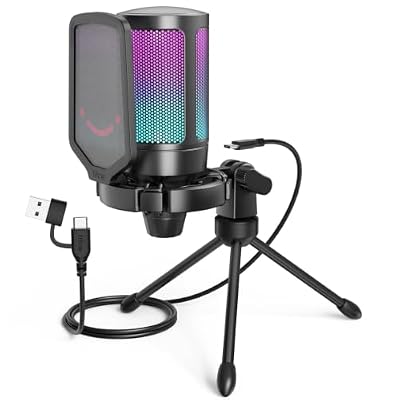
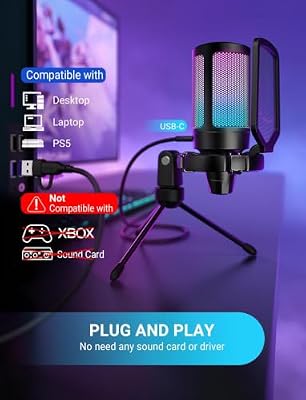
FIFINE AmpliGame A6V USB Gaming Microphone, Condenser RGB Mic for Streaming | Quick Mute, RGB, Gain Control, Tripod Stand, Pop Filter, Shock Mount, for PC/PS5 Discord Twitch Podcasts Videos YouTube




As an Amazon Associate we earn from qualifying purchases. Product prices and availability are accurate as of the date/time indicated.
Complete Setup: Rode PodMic USB
The Rode PodMic USB arrives as a complete microphone package. You’ll add these accessories:
Essential Accessories
- Pop filter ($15-30) — Reduces plosive sounds from aggressive speech
- Shock mount ($20-40) — Isolates microphone from desk vibrations
- Desk stand or boom arm ($30-80) — Positions microphone at mouth height
- USB cable (included with microphone)
Optional Upgrades
- Acoustic foam panels ($50-100) — Treats room reflections
- Cable management clips ($10-20) — Organizes USB and XLR cables
- Isolation shield ($40-80) — Reduces monitor reflections
Total investment: $170-330. Compare this to XLR + interface setups at $350-550, and the USB Dynamic approach offers better value while retaining 90% of the audio quality. For casual to serious gamers, the Rode PodMic USB is the sweet spot.
When to Choose USB Dynamic vs. Pure USB vs. Professional XLR
Choose USB Dynamic (PodMic USB) When
- You want professional dynamic tone without interface complexity
- You’re building your first streaming setup
- You prefer warm, engaging audio over transparent accuracy
- You have a limited budget but want quality
- You don’t plan to interview multiple guests or add instruments
Choose Pure USB (Condenser) When
- You want simplicity and low cost
- You value transparent, accurate audio reproduction
- You have a very small desk (compact USB mics)
- You’re just starting and might quit streaming soon
Choose Professional XLR When
- You’re serious about streaming as a career
- You plan to interview guests or add instruments
- You want maximum flexibility and expandability
- You’re willing to learn audio mixing fundamentals
- You already have some streaming experience
For most gaming streamers, the Rode PodMic USB sits perfectly in the sweet spot. It’s professional-grade, has dynamic character, costs reasonably, and requires no interface learning curve.
To learn more about microphone selection, explore our guides on the best microphone for gaming, gaming microphones, budget gaming mics, cheap microphones, boom microphones, and our complete gaming setup guide.

FIFINE AmpliGame AM8 USB/XLR Dynamic Microphone for Gaming Streaming | Podcast Mic with RGB Light, Mute Button, Headphones Jack, Desktop Stand, for Vocal Recording Singing YouTube


As an Amazon Associate we earn from qualifying purchases. Product prices and availability are accurate as of the date/time indicated.
Rode PodMic USB FAQ
Is the USB PodMic the same quality as the XLR PodMic?
The capsule and acoustic design are identical. The difference is the XLR version sends analog signal to an external interface; the USB version includes internal audio conversion. Audio quality is comparable—you’re trading flexibility for simplicity.
Can I upgrade from USB PodMic to XLR PodMic later?
The microphones are different models, so you can’t swap the electronics. However, if you outgrow USB and want professional flexibility, the standard Rode PodMic XLR is an excellent upgrade path. You’ll understand dynamic microphone character from your USB experience.
Does the PodMic USB require a special driver?
No. It’s a standard USB audio device recognized by Windows, macOS, and Linux without drivers. Plug it in, select it in your streaming software, and it works immediately.
Can I use the PodMic USB with a laptop?
Yes. It’s completely portable—just connect to any computer’s USB port. Gamers and streamers traveling to LAN events often use the PodMic USB for this reason.
Conclusion: USB Dynamic Microphones for Gaming
The Rode PodMic USB represents the evolution of USB microphone technology. By combining professional dynamic capsule design with USB convenience, it delivers professional-grade audio without interface complexity. For gaming streamers who want warm, engaging tone at a reasonable price, the Rode PodMic USB is an excellent choice that punches significantly above its weight class.
Related Articles
Looking for more on this topic? Browse the hand-picked guides below — each one applies the same scoring rubric used in this review.
Frequently Asked Questions
Is the Rode NT-USB good for gaming and streaming?
Yes — the Rode NT-USB is a studio-quality USB condenser mic with clear, warm sound, a pop filter and zero-latency monitoring, making it excellent for streaming, podcasts and voice chat. For noisier rooms, a dynamic mic like the PodMic USB rejects background sound better.