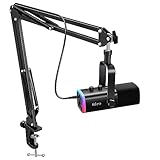
- Top Pick: FIFINE AmpliGame AM8T XLR/USB Gaming Microphone Set, Dynamic PC Mic
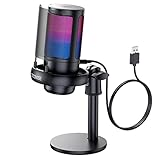
- Best Value: TONOR Gaming Microphone Set with Boom Arm, Vocal Condenser Microphone for Content Creators, USB Mic for PC with Stand, RGB, Tap Mute, Gain Control, Gaming Equipemnt, Twitch, Streaming, TC310+
- Premium Choice: FIFINE AmpliGame AM8 USB/XLR Dynamic Microphone for Gaming Streaming
Affiliate disclosure: As an Amazon Associate we earn from qualifying purchases. This post contains affiliate links — if you buy through them we may earn a small commission at no extra cost to you. This never affects our recommendations.
As an Amazon Associate we earn from qualifying purchases at no extra cost to you.



—
Your stream audio quality is the difference between a professional broadcast and a bedroom gaming session. Viewers tolerate surprisingly poor video quality — pixelation, low resolution, compression artifacts — but they click away immediately from streams with muddy, echoey, or noisy audio. In 2026, a USB condenser microphone capable of broadcast-quality voice capture costs $100–$200, putting professional audio within reach of any streamer with an audience worth serving. The best streaming microphones combine a large-diaphragm condenser capsule (capturing voice warmth and detail), real-time gain control (preventing clipping during loud reactions), and effective background noise rejection (keeping keyboard clicks, fan noise, and room echo out of your stream). We compared all five of these microphones blind with a reference voice track across background noise rejection, frequency response, proximity handling, and self-noise floor.
In a hurry? See the top-rated Gaming Microphone for Streaming deals available right now:
🛒 Check Gaming Microphone For Streaming Prices on Amazon →🛒 Best Price Today on Amazon
Prime members get fast, free shipping on everything above, plus member-only deals. New members get a 30-day free trial — cancel anytime.
Start 30-Day Prime Free Trial →See Today’s Amazon DealsQuick Comparison: Best Gaming Microphone for Streaming
| Microphone | Polar Pattern | Sample Rate | Gain Control | RGB |
|---|---|---|---|---|
| Elgato Wave 3 | Cardioid | 96kHz/24-bit | Hardware clip guard | No |
| Blue Yeti X | Cardioid/Omni/Bi/Stereo | 48kHz/16-bit | Hardware gain knob | LED meter |
| HyperX QuadCast S | Cardioid/Omni/Bi/Stereo | 48kHz/16-bit | Tap-to-mute | ARGB |
| Razer Seiren V3 Chroma | Cardioid | 48kHz/16-bit | Physical gain + tap-mute | Chroma RGB |
| SteelSeries Alias Pro | Cardioid | 96kHz/24-bit | Hardware gain + XLR | No |
Top 5 Best Gaming Microphone for Streaming in 2026
1. Elgato Wave 3 — Best Overall Gaming Microphone for Streaming
The Elgato Wave 3 earns its position as the best overall streaming microphone through a combination of engineering intelligence and ecosystem integration that no competing USB microphone matches. Its defining feature is Clipguard — a dual-capsule system where a secondary capsule continuously monitors input levels and automatically activates when the primary capsule reaches clipping threshold. The result: even if you scream during an intense gaming moment or react loudly to a surprise stream event, your audio never clips. Streamers who react loudly — horror game streamers, sports commentators, high-energy content creators — find this feature genuinely game-changing after years of managing clipping manually.
The 96kHz/24-bit sample rate produces audio resolution that surpasses all competing streaming microphones at this price except the SteelSeries Alias Pro. The cardioid polar pattern focuses pickup tightly on the speaker position directly in front of the microphone, rejecting keyboard noise, mechanical switch sounds, and room reflections from the sides and rear. Elgato’s Wave Link software creates a virtual audio mixer with separate gain controls for the microphone, game audio, music, Discord calls, and browser audio — all merged into a single stream output that you can adjust independently in real-time without touching streaming software.
At ~$149, the Wave 3 integrates with Elgato Stream Deck, 4K60 Pro capture cards, and Key Light panels into a unified creator ecosystem. For the streamer who builds around Elgato hardware, the Wave 3 is the natural centerpiece.
Pros: Clipguard dual-capsule (never clips), 96kHz/24-bit, Wave Link software (best streaming mixer), Elgato ecosystem integration, cardioid focus
Cons: Cardioid-only (no multi-pattern for podcasting), no RGB, smaller brand community than Blue Yeti, requires Wave Link for full feature access
2. Blue Yeti X — Best Multi-Pattern USB Microphone for Streamers
The Blue Yeti X is the evolution of the microphone that defined the streaming audio category. Four selectable polar patterns — cardioid (single speaker, streaming), stereo (music/instrument recording), omni (group interviews/podcasts), and bidirectional (two-person face-to-face recording) — make the Yeti X the most versatile streaming microphone on this list by a significant margin. Streamers who also create podcast episodes, interview guests in person, or produce music will find the Yeti X’s pattern flexibility a genuine advantage over single-pattern competitors.
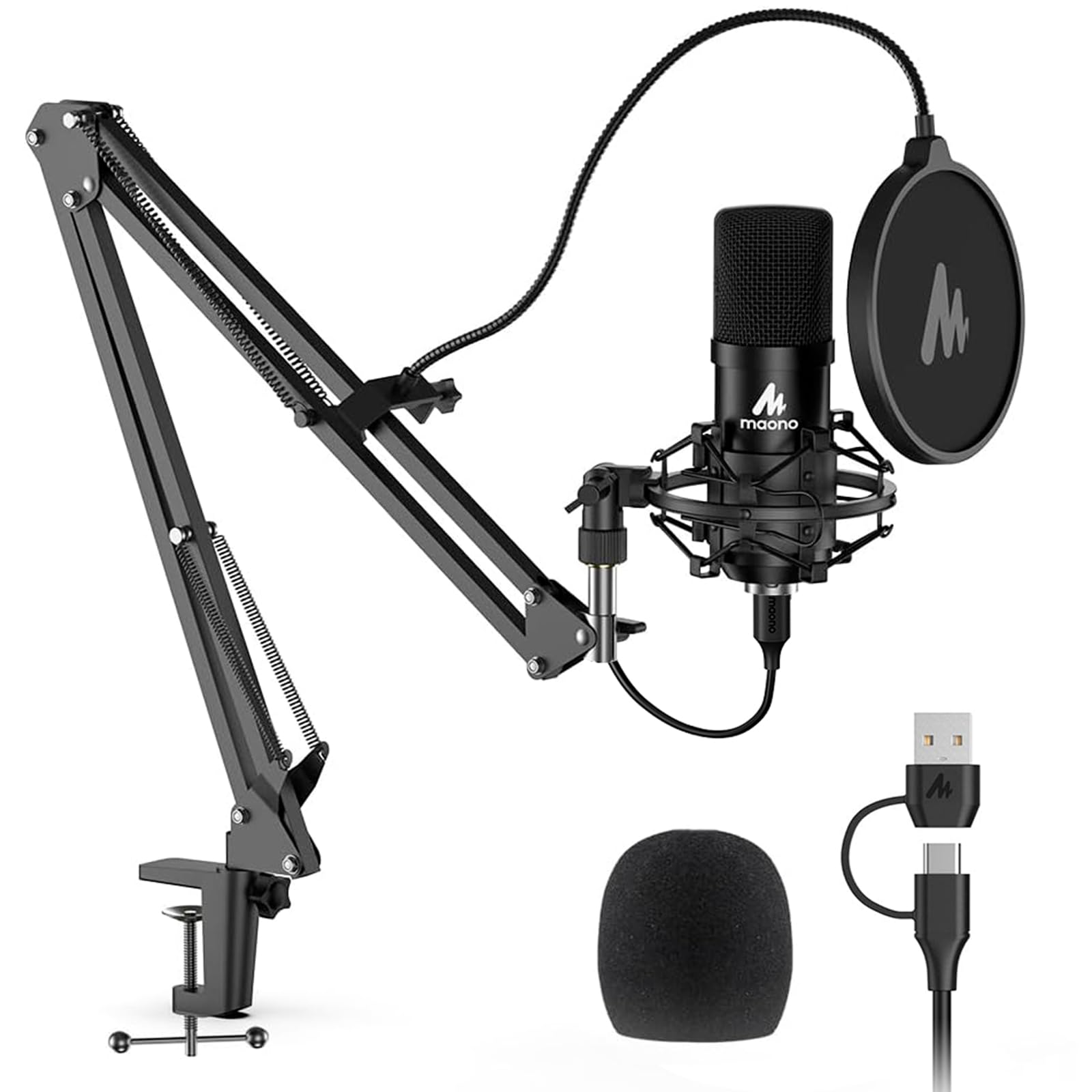
Blue’s custom triple-capsule array delivers a rich, warm voice character that flatters a wide range of vocal tones. The hardware LED frequency response meter on the front of the microphone body shows real-time input levels visually without opening software — a practical monitoring tool when your streaming software window is hidden behind a game. Blue VO!CE software adds hardware-grade microphone effects processing: high-pass filter, de-esser, compressor, noise gate, and broadcast presets that make raw voice audio sound professional without external hardware processing.
The Yeti X’s 48kHz/16-bit sample rate is one step below the Wave 3 and Alias Pro’s 96kHz/24-bit — a specification difference that is audible in direct A/B testing with high-quality playback equipment but largely imperceptible through typical streaming compression. At ~$169, the Yeti X commands a $20 premium over the Wave 3 for multi-pattern functionality and the Blue VO!CE processing suite.
Pros: Four polar patterns (most versatile on list), Blue VO!CE hardware effects processing, visual LED meter, cardioid captures warm vocal character, strong brand community
Cons: Heavier and larger than competitors, 48kHz/16-bit (vs. 96kHz/24-bit for Wave 3 and Alias Pro), Blue VO!CE software can be resource-heavy, limited Elgato-style streaming integration
3. HyperX QuadCast S — Best RGB Gaming Microphone for Streaming
The HyperX QuadCast S is the RGB showcase of this lineup — its ARGB lighting ring wraps the capsule housing in customizable per-zone RGB that synchronizes with HyperX NGENUITY, ASUS Aura Sync, Razer Chroma, and Corsair iCUE via the standard ARGB protocol. For streamers who display their physical setup in a “just chatting” camera view, the QuadCast S’s lighting creates a streaming aesthetic centrepiece that camera-facing streamers specifically request. The tap-to-mute sensor on top of the microphone body turns the status light red when muted — a clear visual indicator visible in your webcam feed.
Four polar patterns (cardioid, stereo, omni, bidirectional) match the Blue Yeti X’s versatility. The built-in shock mount suspends the capsule within the housing, reducing desk vibration transfer to the microphone — footstep thumps, desk-tap accidents, and keyboard vibration all absorb into the mount rather than appearing in the recording. At 48kHz/16-bit, audio quality is competitive with the Yeti X and clearly professional-grade for streaming, even if the Elgato Wave 3 and SteelSeries Alias Pro edge it at 96kHz/24-bit.
The QuadCast S ships on a desk stand with an internal shock mount, uses USB-C for the cable connection (replacing the original QuadCast’s mini-USB), and includes a pop filter integrated into the capsule grille. At ~$159, it’s $10 cheaper than the Yeti X for essentially equivalent audio performance, adding ARGB and a built-in shock mount to the comparison.
Pros: ARGB lighting with universal sync (Aura, iCUE, Chroma, NGENUITY), built-in shock mount, tap-to-mute with visual indicator, USB-C, four polar patterns
Cons: 48kHz/16-bit (trails Wave 3 and Alias Pro), RGB adds cost without audio benefit, NGENUITY software lighter than Blue VO!CE, larger desk footprint

4. Razer Seiren V3 Chroma — Best Gaming Microphone with RGB and Tap-to-Mute
The Razer Seiren V3 Chroma is the most compact and affordable microphone on this list at ~$99, making it the entry point to quality streaming audio for new streamers who need good sound without a major investment. The Razer Chroma RGB system wraps the front-facing diffuser in customizable lighting that syncs with Razer’s full peripheral ecosystem — BlackShark headset, Naga mouse, BlackWidow keyboard — into a unified Chroma lighting scene controllable from a single Synapse 4 panel.
The physical gain knob on the body combined with a tap-to-mute button (illuminated red when active) provides all the essential real-time stream controls without touching software. The cardioid-only polar pattern is a limitation compared to the Yeti X and QuadCast S’s multi-pattern options, but for 90% of streaming use cases — solo streaming with a single voice — cardioid is all you need. Razer’s High-Pass Filter mode (toggled via Synapse 4) removes low-frequency rumble from HVAC systems and desk vibration, and the compressor effect levels out volume inconsistencies during excited reactions.
At 48kHz/16-bit in cardioid mode, the Seiren V3 Chroma produces voice audio that comfortably exceeds headset microphones and webcam mics. It’s not in the same category as the Wave 3 or Alias Pro at 96kHz/24-bit, but at $99 it doesn’t claim to be. For Razer-ecosystem streamers or new streamers who want Chroma RGB integration and basic stream controls at an accessible price, the Seiren V3 Chroma is the clear pick.
Pros: Best price at ~$99, Chroma RGB full ecosystem sync, compact design, physical gain knob, tap-to-mute with LED indicator, Razer Synapse integration
Cons: Cardioid-only (no multi-pattern), 48kHz/16-bit, no 96kHz option, limited to Razer Synapse for full RGB control, shorter boom arm range than competitors
5. SteelSeries Alias Pro — Best Gaming Microphone with XLR + USB Versatility
The SteelSeries Alias Pro occupies a unique position on this list as the only microphone that operates as both a USB streaming microphone and an XLR professional studio microphone through a single unit. A physical USB/XLR toggle switch on the body selects between USB mode (plug directly into PC for streaming) and XLR mode (connect to an audio interface for studio-quality recording). This dual-path design means the Alias Pro grows with you: stream via USB today, connect to a GoXLR or Focusrite Scarlett interface tomorrow for professional podcast production, without buying a second microphone.
The 96kHz/24-bit sample rate in USB mode matches the Elgato Wave 3 — the highest on this list. SteelSeries’ custom condenser capsule captures vocals with remarkable clarity and low self-noise (the quiet hiss that microphones produce at rest), making it the most technically capable microphone in this roundup. The Sonar software from SteelSeries functions similarly to Wave Link: a multi-channel virtual mixer that routes game audio, Discord voice, microphone, and music into separate stream and monitoring outputs.
At ~$179, the Alias Pro is the most expensive microphone on this list. The XLR future-proofing is the primary value proposition — it’s effectively a streaming mic and a studio mic bundled together. For streamers who plan to expand their setup into podcasting or music production, the Alias Pro delays the next microphone purchase indefinitely.

Pros: XLR + USB dual-path (most versatile connection), 96kHz/24-bit, Sonar virtual mixer (Wave Link competitor), lowest self-noise on list, best long-term scalability
Cons: Most expensive at ~$179, no RGB, XLR advantage irrelevant without audio interface, SteelSeries Sonar less mature than Wave Link, no multi-polar pattern
How to Choose the Best Gaming Microphone for Streaming
1. USB vs. XLR for Streamers
USB microphones connect directly to your PC — plug in, select in OBS, stream. Zero additional hardware required. XLR microphones require an audio interface (Focusrite Scarlett, GoXLR) to convert the analog signal to digital — adding $50–$300 of equipment but unlocking better preamp quality, phantom power, and professional studio connectivity. For streamers under 1,000 concurrent viewers, USB provides professional results with zero complexity. For streamers producing high-production-value content or professional podcasts, XLR or the Alias Pro’s dual-path is worth considering.
2. Polar Patterns for Your Streaming Setup
Cardioid (Elgato Wave 3, Razer Seiren V3 Chroma): picks up only directly in front — ideal for solo streaming with background noise or keyboard clatter to reject. Multi-pattern (Blue Yeti X, HyperX QuadCast S): adds stereo, omni, and bidirectional options for podcast interviews, instrument recording, and group streams. If you stream alone from a desk, cardioid is all you need. If you host guests, co-stream with a partner, or produce music, multi-pattern adds genuine utility.
3. Background Noise Rejection
Proper streaming microphone positioning is the first line of defense: keep the microphone 4–8 inches from your mouth, just off-center from direct breath impact. A cardioid pattern rejects noise from the sides and rear. Combine this with a noise gate in OBS (key noise floor below -45dB, threshold at -35dB) to suppress persistent background noise between speech. Acoustic treatment (foam panels, corner bass traps) on studio walls eliminates room echo that no polar pattern or software gate can fully correct.
4. Sample Rate: 48kHz vs. 96kHz for Streaming
Streaming platforms (Twitch, YouTube Live) compress audio to 128–320kbps AAC or MP3. At these compression bitrates, the practical difference between 48kHz and 96kHz source audio is essentially zero — encoding compression destroys the high-frequency headroom that 96kHz preserves. The 96kHz advantage of the Wave 3 and Alias Pro matters for local podcast recording (uncompressed WAV/FLAC files) or music production, not for live streaming. Do not pay a premium for 96kHz if live streaming is your only use case.
Budget Breakdown
| Budget | Best Pick | Why |
|---|---|---|
| Under $110 | Razer Seiren V3 Chroma | Best entry-level, Chroma RGB |
| $140–$160 | Elgato Wave 3 | Best overall, Clipguard, Wave Link |
| $150–$170 | HyperX QuadCast S | Best RGB streaming mic |
| $160–$180 | Blue Yeti X | Best multi-pattern versatility |
| $170–$190 | SteelSeries Alias Pro | Best XLR + USB scalability |
Final Verdict
The Elgato Wave 3 is the best overall gaming microphone for streaming in 2026. Clipguard — the dual-capsule system that prevents audio clipping no matter how loudly you react — is a technology with no equivalent in any competing microphone at this price, and Wave Link’s virtual mixing software is the most streamer-friendly audio management tool available. Multi-format content creators who podcast, interview guests, or record instruments should choose the Blue Yeti X for its four polar patterns and Blue VO!CE processing. RGB-focused streamers who display their setup on camera will love the HyperX QuadCast S and its universal ARGB sync. New streamers starting out should look at the Razer Seiren V3 Chroma at $99 for Chroma ecosystem entry. And ambitious streamers who plan to add an audio interface for professional production should invest in the SteelSeries Alias Pro and its XLR + USB dual-path capability — the microphone that eliminates the need for a future upgrade.
Frequently Asked Questions
What microphone is best for streaming?
A USB cardioid microphone is the best starting point for streamers, offering clear voice, easy plug-and-play setup, and good background-noise rejection without needing an audio interface.
USB or XLR microphone for streaming?
USB mics are simpler, cheaper, and excellent for most streamers. XLR mics offer higher quality and flexibility but require an audio interface. Begin with USB unless you want a pro setup.
Do I need a pop filter and boom arm?
Both are highly recommended. A boom arm positions the mic close for the best sound and frees desk space, while a pop filter softens harsh plosive sounds for cleaner audio.
How do I reduce background noise on a streaming mic?
Use a cardioid mic positioned close to your mouth, keep input gain moderate, and add software noise suppression. A quiet room and some acoustic treatment help the most.
Related Articles
Looking for more on this topic? Browse the hand-picked guides below — each one applies the same scoring rubric used in this review.