

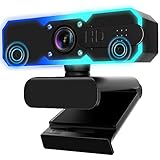
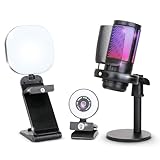
- Top Pick: NBPOWER 1080P 60FPS Streaming Camera Webcam with Microphone and Fill RGB Light,Autofocus,Work with Laptop/Desktop Computer/Winsdows/Mac OS/PC Computer for Camera
- Best Value: Logitech Brio 101 Full HD 1080p Webcam for Streaming and Meetings – Black
- Premium Choice: NIVEOLI Webcam 1080P with Microphone & Privacy Cover for PC/Laptop, USB Computer Camera Plug & Play with Auto Light Correction for Video Calls, Live Streaming Gaming & Online Meetings
Affiliate disclosure: As an Amazon Associate we earn from qualifying purchases. This post contains affiliate links — if you buy through them we may earn a small commission at no extra cost to you. This never affects our recommendations.
As an Amazon Associate we earn from qualifying purchases at no extra cost to you.




Your gameplay might be flawless. Your audio setup might be dialed in. But if your webcam is producing a grainy, washed-out face cam, you’re losing viewers before they hit follow.
In 2026, audience expectations have shifted. Twitch and YouTube are saturated with content, and production quality is a real filter. A sharp, well-lit face cam signals professionalism — it’s the difference between a channel that looks like a hobby and one that looks like a show. Viewers make that judgment in seconds.
The question isn’t whether you need a good webcam. It’s which one is right for your setup.
1080p vs. 4K for streaming: Most Twitch and YouTube streams are delivered at 1080p, so you don’t need 4K to look great. But 4K webcams offer one underrated advantage — downsampling. A 4K sensor rendering a 1080p stream captures far more light data per pixel, resulting in cleaner detail, better color depth, and less noise. If you’re streaming in lower-light rooms or want future-proofing as 4K delivery becomes standard, the upgrade is worth it.
Sensor size matters more than resolution: Resolution is marketing. Sensor size is engineering. A larger sensor captures more light per pixel, which directly affects low-light performance, dynamic range, and color accuracy. This is why a webcam with a Sony STARVIS or IMX415 sensor outperforms a generic 4K camera in nearly every real-world streaming scenario.
This guide covers the five best webcams for gaming and streaming in 2026, compared and ranked for image quality, low-light performance, ease of use, and value.
In a hurry? See the top-rated Webcam for Gaming and Streaming deals available right now:
🛒 Check Webcam For Gaming And Streaming Prices on Amazon →🛒 Best Price Today on Amazon
Prime members get fast, free shipping on everything above, plus member-only deals. New members get a 30-day free trial — cancel anytime.
Start 30-Day Prime Free Trial →See Today’s Amazon DealsQuick Comparison Table
| Webcam | Resolution | FPS | Sensor | Low Light | Est. Price |
|---|---|---|---|---|---|
| Logitech StreamCam | 1080p | 60fps | Unknown (1/2.7″) | Good | ~$100 |
| Elgato Facecam Pro | 4K | 60fps | Sony STARVIS | Excellent | ~$200 |
| Razer Kiyo Pro Ultra | 4K | 30fps | Sony IMX415 | Excellent | ~$200 |
| Logitech Brio 4K | 4K | 30fps | Unknown (1/3″) | Good | ~$150 |
| AVerMedia PW513 | 4K | 60fps | Unknown | Good | ~$150 |
Top 5 Webcams for Gaming and Streaming in 2026
1. Logitech StreamCam — Best for Entry-Level Streamers
Specs at a glance:
- Resolution: 1080p
- Frame rate: 60fps
- Connection: USB-C
- Field of view: 78°
- Autofocus: AI-based face tracking
The StreamCam was built with streamers in mind, and it shows. The 1080p 60fps output is crisp and smooth — 60fps face cam footage looks noticeably more natural than 30fps, and it shows in the final stream. Logitech’s AI-based autofocus tracks your face accurately even when you lean back to reach for a drink or lean in to react to a clutch play.
The vertical mode is a standout feature. Rotate the cam 90 degrees and it locks into portrait orientation — useful for TikTok clips, YouTube Shorts, or streaming setups that incorporate vertical layouts. USB-C connectivity keeps cable management clean.
The Logitech Capture software is capable without being overwhelming: exposure presets, white balance control, and basic framing tools are all accessible without touching OBS settings.
Pros:
- Smooth 60fps at 1080p
- Reliable AI autofocus
- Native USB-C connection
- Vertical streaming mode
- Lightweight and compact
Cons:
- 1080p ceiling — no 4K even as a downsampling option
- Low-light performance trails 4K competitors
- No built-in microphone worth using
Who it’s for: Streamers starting out or on a budget who want a plug-and-play 1080p setup that doesn’t need configuration to look good.
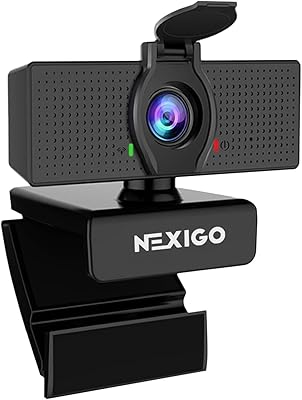
2. Elgato Facecam Pro — Best Overall for Serious Streamers
Specs at a glance:
- Resolution: 4K
- Frame rate: 60fps
- Sensor: Sony STARVIS (1/1.8″)
- Connection: USB-C
- Field of view: 90° (adjustable)
- Compression: None (uncompressed output)
The Facecam Pro is the clearest statement of what a premium streaming webcam looks like. The Sony STARVIS sensor is large — 1/1.8 inches — and it collects light at a level most webcams can’t match. In dim rooms with only monitor glow, the Facecam Pro holds detail and color fidelity where competitors produce muddy noise.
The uncompressed video output is a genuine differentiator. Most webcams apply MJPEG or H.264 compression before the signal even reaches your capture card or PC. Elgato sends raw data, which means OBS or your streaming software receives the cleanest possible input. If you’re doing any post-processing — chroma key, color grading, or recording for YouTube at higher bitrates — the quality gap is visible.
The Camera Hub software is one of the best in the category. Granular control over shutter speed, ISO, white balance, and autofocus behavior gives you DSLR-like control from a webcam. OBS integration is tight — the camera shows up as a clean source with no extra configuration.
Pros:
- Uncompressed 4K 60fps output
- Sony STARVIS sensor with outstanding low-light
- Precise manual camera controls via Camera Hub
- Large 1/1.8″ sensor
- OBS-native integration
Cons:
- Premium price (~$200)
- No built-in microphone
- Heavier than compact options — needs a stable mount
Who it’s for: Streamers who want the best image quality available in a webcam, stream in suboptimal lighting, or record content that goes through post-production.
3. Razer Kiyo Pro Ultra — Best for Low-Light and HDR
Specs at a glance:
- Resolution: 4K
- Frame rate: 30fps (4K), 60fps (1080p)
- Sensor: Sony IMX415 (1/1.8″)
- Connection: USB-C
- Field of view: 82° / 90° / 103° (selectable)
- HDR: Yes
The Kiyo Pro Ultra is built around one mission: look great in bad lighting. The Sony IMX415 sensor is a 1/1.8-inch stacked CMOS chip — the same class of sensor used in high-end security and broadcast cameras. The result is low-light performance that is, in practical terms, the best available in a consumer webcam.
Where most webcams struggle in rooms lit by a desk lamp or monitor glow, the Kiyo Pro Ultra maintains natural skin tones and accurate color. The HDR mode extends the dynamic range further — useful if you’re backlit or have a bright window in frame. The adjustable field of view is a practical addition: 82° for tight shots, 103° if you want to show your desk setup or have a wider rig.
The tradeoff is 4K frame rate. At 4K, the Kiyo Pro Ultra runs at 30fps — acceptable, but noticeably behind the Facecam Pro’s 4K 60fps. Drop to 1080p and you get 60fps, which most streamers will opt for anyway. Razer Synapse software adds customization but is heavier than Elgato’s Camera Hub.
Pros:
- Sony IMX415 sensor — class-leading low-light
- HDR support
- Selectable wide-angle modes
- Excellent color accuracy
- USB-C connection
Cons:
- 4K capped at 30fps
- Razer Synapse can feel bloated
- Larger form factor
Who it’s for: Streamers in darker rooms, those who can’t add lighting to their setup, or anyone who wants the best low-light webcam without compromise.
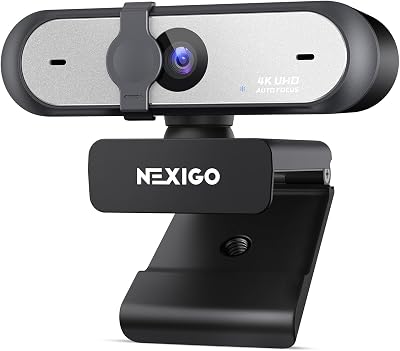
4. Logitech Brio 4K — Best for Gaming and Work Dual Use
Specs at a glance:
- Resolution: 4K
- Frame rate: 30fps (4K), 60fps (1080p)
- Connection: USB-A (USB-C adapter included on newer models)
- Field of view: 65° / 78° / 90° (selectable)
- Windows Hello: Yes
- HDR: Yes
The Brio 4K is Logitech’s flagship, and it earns that designation by being useful in more contexts than any other webcam on this list. The 4K HDR output looks sharp and clean in well-lit environments. Windows Hello facial recognition is built in — the IR sensor lets you unlock your PC hands-free, a genuinely useful feature when you’re transitioning between desktop use and streaming sessions.
The three selectable field-of-view modes give flexibility for different monitor setups — whether you’re on a single 27-inch monitor or a triple ultrawide spread. The image processing is reliable: Logitech’s RightLight technology adjusts automatically to changing ambient light, which works well in mixed-light environments common in gaming setups.
Low-light performance is good but not at the level of the Facecam Pro or Kiyo Pro Ultra — the sensor is smaller (1/3 inch) and it shows in darker environments. This is not a cam you want to run with a single dim lamp behind you.
Pros:
- Versatile — streams, video calls, Windows Hello
- Selectable FOV modes
- RightLight auto-adjustment
- Well-established driver stability
- HDR output
Cons:
- Smaller sensor than Sony-equipped competitors
- 4K capped at 30fps
- Low-light trails Elgato and Razer options
Who it’s for: Streamers who also work from home, content creators who want one camera for everything, or setups where Windows Hello login is a genuine convenience.
5. AVerMedia PW513 — Best Value 4K 60fps Option
Specs at a glance:
- Resolution: 4K
- Frame rate: 60fps
- Connection: USB-C
- Dual microphone: Yes
- AI auto-framing: Yes
- Field of view: 84°
The AVerMedia PW513 punches above its price point. It delivers 4K 60fps — a spec that only the Elgato Facecam Pro matches at this tier — for roughly $150, undercutting the Elgato by $50 and matching the Brio 4K on price while offering a higher frame rate.
The dual built-in microphone array is better than the token mics found on most webcams. It won’t replace a dedicated USB mic or XLR setup, but it’s functional enough for casual streams where you don’t want to add another device to your desk. The AI auto-framing feature keeps you centered in frame automatically — useful during gameplay when you shift around in your chair, though it can produce subtle tracking motion that some streamers find distracting at first.
The tradeoffs compared to the top tier options are real. Sensor quality and low-light performance don’t match the Sony-equipped cameras. AVerMedia’s software is functional but less polished than Elgato’s Camera Hub. In a well-lit environment, the image output is competitive. In low light, the gap opens up.
Pros:
- 4K 60fps at an accessible price
- Dual microphone — usable audio without extra gear
- AI auto-framing
- USB-C connection
- Compact build
Cons:
- Sensor quality trails Sony-equipped cameras
- Low-light performance noticeably weaker
- Software less refined than competitors
- Auto-framing can feel jarring during streams
Who it’s for: Budget-conscious streamers who want 4K 60fps and a built-in microphone without spending $200+.
How to Choose a Webcam for Gaming and Streaming
Resolution vs. Frame Rate
Do not sacrifice frame rate for resolution. A 1080p 60fps stream looks better than a 4K 30fps stream, because motion smoothness is more perceptible to viewers than raw pixel count at typical streaming bitrates. If you’re choosing between a 4K 30fps and a 1080p 60fps option at the same price, choose the 60fps output unless you have specific reasons to prioritize resolution (post-production footage, downsampled image quality).
Sensor Size for Low Light
This is the single most important spec most buyers ignore. A 1/1.8-inch sensor will outperform a 1/3-inch sensor in low light regardless of resolution. If your streaming room has poor natural light or you rely on a single desk lamp, prioritize sensor size above all other specs. The Elgato Facecam Pro and Razer Kiyo Pro Ultra lead here.
Autofocus for Movement
Gaming streamers move — they lean in for intense moments, lean back to relax, stand up to celebrate. A webcam with slow or hunting autofocus will visibly struggle with this. Look for AI-based face tracking autofocus (Logitech StreamCam, Facecam Pro) or sensor-based phase detection. Avoid older continuous autofocus systems that hunt back and forth.
USB-C vs. USB-A
USB-C is the current standard and is preferable for cable management and future compatibility. Most newer builds have USB-C headers on the motherboard. If your setup is older, verify you have the port before buying — though most USB-C webcams ship with a USB-A adapter.
Software Features
The software bundled with a webcam matters more than most buyers expect. Look for:
- Manual exposure and white balance control
- Adjustable field of view
- Background blur or replacement (useful for messy rooms)
- OBS plugin integration for direct scene control
Elgato’s Camera Hub is the benchmark here. Logitech Capture is solid. Razer Synapse is functional but heavier. AVerMedia’s software works but lacks refinement.
Final Verdict
Top Pick: Elgato Facecam Pro
The Facecam Pro delivers the best overall image quality in this category. Uncompressed 4K 60fps output, a large Sony STARVIS sensor, and best-in-class software make it the clear choice for streamers who are serious about production quality. If you’re spending real time on Twitch or YouTube and presentation matters, this is the camera.
Runner-Up: Razer Kiyo Pro Ultra
If your streaming environment is darker than ideal and you can’t add lighting, the Kiyo Pro Ultra’s Sony IMX415 sensor and HDR support produce images that no other webcam in this price range can match in low light. The 4K 30fps ceiling is the only meaningful caveat.
Best Budget Pick: AVerMedia PW513
For streamers who want 4K 60fps without spending $200, the PW513 delivers. The built-in dual microphone reduces desk clutter, and the AI auto-framing is a genuine convenience. Low-light performance is its ceiling — pair it with adequate lighting and it performs well above its price.
Frequently Asked Questions
What webcam resolution is best for streaming?
1080p at 60fps is the standard for gaming and streaming, looking sharp at typical face-cam sizes while keeping CPU and bandwidth use reasonable. 4K is rarely necessary.
What features matter most in a streaming webcam?
Prioritize 1080p60 capture, reliable autofocus, good low-light performance, and accurate exposure. A built-in privacy cover and a flexible mount are useful extras for a streaming setup.
Do I need a 4K webcam for streaming?
Not usually. Most streams display the face cam small, where 1080p looks excellent. 4K mainly helps if you crop heavily, and it demands more CPU and upload bandwidth.
How do I make my webcam look better?
Good lighting matters most. Add a key or ring light, avoid backlighting, and frame yourself at eye level. Even a mid-range webcam looks great with proper lighting.
Related Articles
Looking for more on this topic? Browse the hand-picked guides below — each one applies the same scoring rubric used in this review.






