- Top Pick: Capture Card, 4K HDMI Video Capture Card, Game Capture Card, 1080P 60FPS Video Capture Device, HDMI to USB 3.0 Capture Card for Streaming, Work with Camera/Xbox/PS4/PS5/PC/OBS
- Best Value: Guermok Video Capture Card, 4K USB3.0 HDMI to USB C, 1080P 60FPS & 2K 30FPS
- Premium Choice: Capture Card 4K HDMI Video Streaming to USB 3.0 1080P 60FPS Capture Device
Affiliate disclosure: As an Amazon Associate we earn from qualifying purchases. This post contains affiliate links — if you buy through them we may earn a small commission at no extra cost to you. This never affects our recommendations.
As an Amazon Associate we earn from qualifying purchases at no extra cost to you.




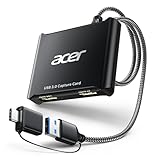


Whether you’re streaming console gameplay to Twitch, recording YouTube videos, or archiving retro sessions, a capture card is the bridge between your game and your audience. The market has matured significantly — 4K HDR capture is no longer a luxury, hardware encoding is standard on mid-range cards, and USB models have closed most of the gap with their PCIe counterparts.
This guide cuts through the noise. We evaluated five capture cards across resolution, encoding pipeline, passthrough latency, standalone recording, and software compatibility to give you a clear pick at every price point.
In a hurry? See the top-rated Gaming Capture Card deals available right now:
🛒 Check Gaming Capture Card Prices on Amazon →🛒 Best Price Today on Amazon
Prime members get fast, free shipping on everything above, plus member-only deals. New members get a 30-day free trial — cancel anytime.
Start 30-Day Prime Free Trial →See Today’s Amazon DealsQuick Comparison Table
| Card | Type | Max Capture | Passthrough | HDR Capture | Encoding |
|---|---|---|---|---|---|
| Elgato 4K60 Pro MK.2 | Internal PCIe | 4K 60fps | 4K 60fps VRR | No | H.264/H.265 (HW) |
| AVerMedia LGP2 Plus | USB / Standalone | 1080p 60fps | 4K 60fps | No | H.264 (SW) |
| Elgato HD60 X | External USB | 4K 30fps / 1080p 60fps | 4K 60fps HDR10 | HDR10 | H.264/H.265 (SW) |
| AVerMedia LGU 2.1 | Internal PCIe | 4K 144fps | 4K 144fps HDR10+ | HDR10+ | H.264/H.265 (HW) |
| Razer Ripsaw HD | External USB | 1080p 60fps | 1080p 60fps | No | H.264 (SW) |
What to Look for in a Gaming Capture Card
Internal PCIe vs. External USB
Internal PCIe cards slot directly into your motherboard and pull power from your system — no USB bandwidth bottleneck, no external power brick. They deliver the most stable throughput for high-bitrate 4K capture and are the right call for dedicated streaming PCs. The trade-off: installation requires opening your case, and they only work with a desktop.
External USB cards are plug-and-play. You connect console to card, card to laptop or PC via USB, and you’re live in minutes. They top out at USB 3.0 bandwidth (around 5 Gbps), which is tight for uncompressed 4K — most external cards capture at 1080p or 4K 30fps while passing through native 4K to your TV. If you move between setups or stream from a laptop, external USB wins on practicality.
4K Passthrough vs. 4K Capture
These are two different things. 4K passthrough means the card forwards a full 4K signal to your display so you play at native resolution with zero added latency. 4K capture means the card actually records or streams at 4K resolution to your PC. Many mid-range cards offer 4K passthrough but only capture at 1080p or 4K 30fps — know which spec matters to you before buying.
HDR10 Capture
HDR passthrough is now near-universal. HDR capture — actually recording the HDR metadata for post-processing or upload — is still limited to premium cards. The AVerMedia Live Gamer Ultra 2.1 leads with HDR10+ capture; the Elgato HD60 X handles HDR10. If you’re uploading HDR content to YouTube, this matters. For standard Twitch streams, HDR capture has minimal impact since platforms still tone-map for SDR viewers.
Hardware vs. Software Encoding
Hardware encoding (H.264/H.265 onboard) offloads compression from your CPU — critical if your streaming PC is also your gaming PC. Software encoding relies on your CPU or GPU via OBS’s NVENC/AMF/x264, giving you more bitrate control but requiring a capable system. Budget USB cards almost always use software encoding; premium PCIe cards typically include hardware encoding.
Standalone Recording (SD Card)
Cards like the AVerMedia Live Gamer Portable 2 Plus include an SD card slot and a hardware button to record without a PC attached. This is invaluable for console-only setups where you want to capture clips without booting a computer.
The 5 Best Gaming Capture Cards in 2026
1. Elgato 4K60 Pro MK.2 — Best Internal PCIe
View on Amazon
The 4K60 Pro MK.2 is the gold standard for dedicated streaming PCs. It slots into a PCIe x4 slot and captures up to 4K 60fps with hardware H.264 and H.265 encoding — your CPU stays free for the game while the card handles compression independently. VRR passthrough (up to 4K 60fps) keeps your monitor’s adaptive sync intact, and the onboard flash memory buffers signal drops without corrupting your recording.
4K HDR capture is the one notable omission — the card passes HDR through to your display but records in SDR. For most streamers, this is a non-issue, but HDR content creators should step up to the AVerMedia LGU 2.1.
Specifications

| Spec | Detail |
|---|---|
| Interface | PCIe x4 (x1 electrical) |
| Max Capture | 4K 60fps |
| Passthrough | 4K 60fps VRR |
| HDR Capture | No (passthrough only) |
| Encoding | H.264 / H.265 hardware |
| Software | 4K Capture Utility, OBS, Streamlabs |
| Console Support | PS5, Xbox Series X/S, Nintendo Switch |
Pros
- Stable PCIe bandwidth — no USB bottleneck
- Hardware H.265 encoding at 4K 60fps
- VRR passthrough preserves monitor sync
- Low CPU overhead during capture
- 4K Capture Utility is clean and reliable
Cons
- No HDR capture (passthrough only)
- Desktop-only — requires PCIe slot
- Installation involves opening your PC
Best for: Streamers with a dedicated streaming PC who want 4K 60fps capture without taxing their CPU.
2. AVerMedia Live Gamer Portable 2 Plus — Best Portable
View on Amazon
The Live Gamer Portable 2 Plus earns its place through sheer versatility. It works as a standard USB capture card when connected to a PC, but flip it to standalone mode, insert a microSD card, and it records independently at 1080p 60fps — no PC required. A single hardware button toggles recording on and off, making it ideal for LAN events, console setups in living rooms, or travel streaming kits.
PC-connected capture tops out at 1080p 60fps (the card passes 4K through to your display). If 1440p or 4K capture is on your list, this isn’t the card. But for anyone who values portability and standalone flexibility at under $100, nothing else at this price comes close.
Specifications
| Spec | Detail |
|---|---|
| Interface | USB 3.0 |
| Max Capture | 1080p 60fps |
| Passthrough | 4K 30fps / 1080p 60fps |
| HDR Capture | No |
| Encoding | H.264 software (PC mode) |
| Standalone Recording | Yes — microSD, H.264 hardware |
| Software | RECentral, OBS, Streamlabs |
| Console Support | PS5, Xbox Series X/S, Nintendo Switch |
Pros
- Standalone recording to microSD without a PC
- Compact and travel-friendly
- 4K passthrough keeps display quality
- Works with virtually every streaming app
- Under $100 with strong feature set
Cons
- Capture limited to 1080p 60fps (no 4K capture)
- Software encoding in PC mode — CPU-dependent
- RECentral software feels dated
Best for: Console streamers who want flexibility between PC-connected and PC-free recording, especially for events or travel.
3. Elgato HD60 X — Best External USB
View on Amazon
The HD60 X is Elgato’s answer to the external USB category done right. It captures at 4K 30fps or 1080p 60fps and is the only external card in this lineup to support HDR10 capture — not just passthrough. Plug your PS5 or Xbox Series X in, enable HDR, and the card records the full HDR10 signal for post-processing in DaVinci Resolve or direct upload to YouTube’s HDR pipeline.
Latency is managed via Elgato’s 4K Capture Utility, which provides a low-latency preview mode so you can monitor your gameplay without the slight delay introduced by software encoding. OBS and Streamlabs pick it up instantly with no driver configuration. The USB 3.0 connection is sufficient at 1080p; 4K 30fps is stable but pushes bandwidth limits — avoid running other USB peripherals on the same controller when capturing 4K.

Specifications
| Spec | Detail |
|---|---|
| Interface | USB 3.0 |
| Max Capture | 4K 30fps / 1080p 60fps |
| Passthrough | 4K 60fps HDR10 |
| HDR Capture | HDR10 |
| Encoding | H.264 / H.265 software |
| Standalone Recording | No |
| Software | 4K Capture Utility, OBS, Streamlabs |
| Console Support | PS5, Xbox Series X/S, Nintendo Switch |
Pros
- HDR10 capture — rare at this price
- 4K 60fps HDR passthrough to display
- Compact, no power adapter needed
- Works on Mac and PC
- Excellent OBS/Streamlabs integration
Cons
- Software encoding — CPU load during streams
- 4K capture capped at 30fps
- No standalone recording
- USB bandwidth can bottleneck at 4K
Best for: Laptop streamers and creators who need HDR10 capture without committing to an internal PCIe card.
4. AVerMedia Live Gamer Ultra 2.1 — Best 4K HDR
View on Amazon
The Live Gamer Ultra 2.1 is the most capable card in this roundup. It captures at 4K 144fps — relevant as monitors and consoles push into higher refresh territory — and it’s the only card here with HDR10+ capture (dynamic metadata, not just static HDR10). Hardware H.265 encoding keeps CPU overhead low even at peak bitrates.
The 4K 144fps capture spec requires HDMI 2.1, which the LGU 2.1 fully supports on both input and passthrough. PS5 at 4K 120fps, Xbox Series X at 4K 120Hz, and PC titles at 4K 120fps+ all route through cleanly. The card sits at the premium end at $249, but it’s the only option that future-proofs you for 4K 120fps+ console content.
Specifications
| Spec | Detail |
|---|---|
| Interface | PCIe x4 |
| Max Capture | 4K 144fps |
| Passthrough | 4K 144fps HDR10+ |
| HDR Capture | HDR10+ |
| Encoding | H.264 / H.265 hardware |
| Standalone Recording | No |
| Software | RECentral, OBS, Streamlabs |
| Console Support | PS5, Xbox Series X/S, Nintendo Switch |
Pros
- 4K 144fps capture — highest in class
- HDR10+ capture with dynamic metadata
- HDMI 2.1 passthrough preserves full signal
- Hardware encoding keeps CPU free
- Future-proof for next-gen console output
Cons
- $249 — premium price
- Requires PCIe slot (desktop only)
- RECentral software has a learning curve
- Overkill for 1080p/1440p streamers
Best for: Power users, professional streamers, and content creators who need the highest fidelity HDR capture available.
5. Razer Ripsaw HD — Best Budget
View on Amazon
The Razer Ripsaw HD doesn’t try to compete on specs — it wins on simplicity and price. Plug it into USB 3.0, connect your console via HDMI, and open OBS. There are no drivers to install, no software to configure, and no settings to fumble with. It shows up as a UVC device and works immediately on Windows, Mac, and Linux.

Capture is capped at 1080p 60fps, passthrough tops out at 1080p 60fps, and there’s no HDR, no standalone recording, and no hardware encoding. What you get is a rock-solid, zero-friction 1080p capture card at $79 that works with every platform — Twitch, YouTube, Facebook Gaming, and any streaming software that accepts a USB capture source.
Specifications
| Spec | Detail |
|---|---|
| Interface | USB 3.0 |
| Max Capture | 1080p 60fps |
| Passthrough | 1080p 60fps |
| HDR Capture | No |
| Encoding | H.264 software |
| Standalone Recording | No |
| Software | OBS, Streamlabs, Xsplit, any UVC app |
| Console Support | PS5, Xbox Series X/S, Nintendo Switch |
Pros
- Zero driver installation — plug and play
- Works on Windows, Mac, Linux
- Lightest weight option in this roundup
- Under $80
- Universal UVC compatibility
Cons
- 1080p only — no 4K capture or passthrough
- Software encoding only
- No HDR support
- No standalone recording
Best for: Beginners, casual streamers, and anyone who wants to get started with capture without spending more than necessary.
Final Comparison & Verdict
| Card | Best For | Capture | HDR | Standalone |
|---|---|---|---|---|
| Elgato 4K60 Pro MK.2 | Dedicated PC streaming | 4K 60fps | No | No |
| AVerMedia LGP2 Plus | Portable / console-first | 1080p 60fps | No | Yes |
| Elgato HD60 X | External HDR capture | 4K 30fps | HDR10 | No |
| AVerMedia LGU 2.1 | Pro 4K HDR streaming | 4K 144fps | HDR10+ | No |
| Razer Ripsaw HD | Budget beginners | 1080p 60fps | No | No |
Our pick for most streamers: Elgato HD60 X. It threads the needle between price, portability, and capability — HDR10 capture, 4K 60fps passthrough, and instant OBS compatibility in a USB dongle that works on any laptop or desktop. If you already have a dedicated streaming PC with a PCIe slot, step up to the Elgato 4K60 Pro MK.2 for the stability and hardware encoding advantage. And if budget is the primary constraint, the Razer Ripsaw HD gets you streaming at 1080p for under $80 with zero friction.
FAQ
What is the difference between capture resolution and passthrough resolution?
Passthrough resolution is what your display receives — the full signal from your console, unmodified. Capture resolution is what actually gets recorded or streamed to your PC. A card like the AVerMedia LGP2 Plus passes 4K to your TV but only captures at 1080p. Always check both specs before buying.
Do capture cards work with PS5 and Xbox Series X?
Yes, all five cards in this guide support PS5 and Xbox Series X via HDMI. One important note: PS5’s HDCP copy protection blocks capture by default. You need to disable HDCP in the PS5 system settings (Settings > System > HDMI > Enable HDCP > Off) before a capture card can intercept the signal. Xbox does not require this step.
Is hardware encoding necessary for streaming?
Not strictly necessary, but highly recommended if your streaming PC doubles as your gaming PC. Hardware encoding (H.264/H.265 on the capture card itself) keeps your CPU free for the game. If you have a separate, powerful streaming PC or are capturing footage for later editing rather than live streaming, software encoding via OBS’s NVENC or x264 is perfectly capable.
Can I use a capture card with Nintendo Switch?
Yes, but only in docked mode. The Switch outputs HDMI signal when docked, which any capture card can intercept. Handheld mode uses the internal screen — no HDMI output is available. Connect the dock’s HDMI out to your capture card’s HDMI in, and you’re set. No additional settings need to be changed on the Switch itself.
Related Articles
Looking for more on this topic? Browse the hand-picked guides below — each one applies the same scoring rubric used in this review.
Frequently Asked Questions
Do I need a capture card if I stream from a single PC?
Not necessarily. Modern NVIDIA NVENC and AMD encoders handle single-PC streaming with minimal performance cost. A capture card becomes worthwhile for a two-PC setup, for capturing consoles, or when you want to record at higher bitrates without touching the gaming machine resources at all.
What is the difference between internal and external capture cards?
Internal PCIe cards generally offer lower latency, higher bandwidth for 4K60 or 1440p120 capture, and no USB bottleneck. External USB cards are portable, work with laptops, and are easier to install, but depend on a solid USB 3.0 or higher connection and can be more prone to driver issues.
Does a capture card add input lag to my gameplay?
Not when using passthrough correctly. The card splits the signal, sending an unaltered feed to your display while capturing a copy, so what you see has no added latency. Lag only appears if you view the game through the capture software preview, which always has a delay of several frames.
What resolution and frame rate should I capture at?
1080p60 remains the practical standard because most platforms cap stream quality there and file sizes stay manageable. Capture 1440p or 4K only if you record locally for editing or upload to platforms supporting higher resolutions. 4K60 capture requires HDMI 2.0 or higher and substantial storage throughput.
Will a capture card work with HDCP-protected consoles?
Game capture works fine, but streaming apps like Netflix on a PlayStation trigger HDCP and produce a black screen. This is intended copyright protection, not a card fault. On PlayStation you can disable HDCP in system settings for gameplay, while Xbox handles game content without the restriction.