- Top Pick: Capture Card, 4K HDMI Video Capture Card, Game Capture Card, 1080P 60FPS Video Capture Device, HDMI to USB 3.0 Capture Card for Streaming, Work with Camera/Xbox/PS4/PS5/PC/OBS
- Best Value: XIIXMASK USB 3.0 HDMI Capture Card, 1080P 60FPS Capture, 4K Pass-Through
- Premium Choice: Capture Card 4K HDMI Video Streaming to USB 3.0 1080P 60FPS Capture Device
Affiliate disclosure: As an Amazon Associate we earn from qualifying purchases. This post contains affiliate links — if you buy through them we may earn a small commission at no extra cost to you. This never affects our recommendations.
As an Amazon Associate we earn from qualifying purchases at no extra cost to you.




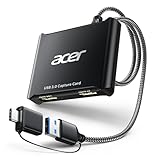


In a hurry? See the top-rated Capture Card for PS5 deals available right now:
🛒 Check Capture Card For Ps5 Prices on Amazon →🛒 Best Price Today on Amazon
Prime members get fast, free shipping on everything above, plus member-only deals. New members get a 30-day free trial — cancel anytime.
Start 30-Day Prime Free Trial →See Today’s Amazon DealsIntroduction
The PS5 is a powerhouse. With native 4K output, 120fps support on select titles, and HDR10 across the board, Sony’s flagship console delivers a visual experience that most streaming setups struggle to keep up with. If you’re routing that signal through a subpar capture card — or worse, relying on the PS5’s built-in Share functionality — you’re leaving resolution, frame data, and production quality on the table. A dedicated capture card is not optional for serious streamers; it is the difference between content that looks console-native and content that looks compressed and washed out.
The challenge in 2026 is that the market has matured significantly. There are genuine 4K60 capture solutions now available at consumer prices, USB-C connectivity is increasingly standard, and software ecosystems have converged around OBS Studio, XSplit, and platform-native tools. That means the buying decision is no longer simply “get the Elgato” — it requires matching your capture card’s bandwidth, passthrough specs, and software overhead to your actual streaming workflow.
This guide covers the five best capture cards for PS5 available right now, ranging from enthusiast-grade PCIe solutions to plug-and-play USB options for creators who want to stream without rebuilding their setup. Whether you’re going live on Twitch at 1080p60 or archiving 4K gameplay for YouTube, there is a card on this list that fits your pipeline.
Quick Comparison Table
| Product | Connection | Max Capture | Passthrough | Software | Price Range |
|---|---|---|---|---|---|
| Elgato 4K X | USB 3.0 / PCIe | 4K60 HDR | 4K144 VRR | 4K Capture Utility, OBS | $149–$199 |
| AVerMedia Live Gamer 4K (GC553) | USB 3.2 Gen 2 | 4K60 HDR | 4K144 HDR | RECentral, OBS | $149–$179 |
| Elgato HD60 X | USB 3.0 | 4K30 / 1080p60 | 4K60 HDR | 4K Capture Utility, OBS | $99–$129 |
| Razer Ripsaw HD | USB 3.0 | 1080p60 | 1080p60 | OBS, XSplit | $59–$89 |
| Magewell USB Capture HDMI Gen 2 | USB 3.0 | 1080p60 / 4K30 | None | UVC (universal) | $299–$349 |
Top 5 Best Capture Cards for PS5 in 2026
Elgato 4K X
The Elgato 4K X is the current benchmark for consumer-grade capture cards, and it earns that position by solving the problem that plagued previous Elgato hardware: passthrough lag. The 4K X supports 4K144 VRR passthrough, meaning your PS5’s output reaches your display with zero processing delay while the card simultaneously captures a separate stream for your PC. Capture quality tops out at 4K60 HDR with 10-bit color depth, which is the ceiling for real-world streaming workflows in 2026. Setup is straightforward via USB 3.0, though a PCIe variant is available for users who want to reduce USB bus contention on capture-heavy rigs.
Pros:
- 4K144 VRR passthrough is the best available at this price point
- True 4K60 HDR capture with 10-bit support
- Excellent OBS integration and driver stability
- Available in both USB and PCIe form factors
Cons:
- PCIe version adds cost; USB version can saturate bandwidth on older USB controllers
- 4K Capture Utility software is capable but less polished than RECentral
- No built-in audio mixing features
AVerMedia Live Gamer 4K (GC553)
The AVerMedia Live Gamer 4K GC553 is the closest competition to the Elgato 4K X, and depending on your software preferences, it may actually be the better buy. AVerMedia’s RECentral software is more feature-rich than Elgato’s capture utility out of the box, offering built-in scene management, multi-track audio recording, and direct streaming integrations that reduce reliance on third-party tools. On the hardware side, the GC553 supports 4K60 HDR capture and 4K144 HDR passthrough — matching the Elgato 4K X spec-for-spec at a street price that is often $20–$30 lower.

Pros:
- RECentral software is one of the best bundled streaming applications available
- USB 3.2 Gen 2 provides more bandwidth stability than USB 3.0 alternatives
- Matches Elgato 4K X specs at a lower street price
- 4K144 HDR passthrough retains HDR signal to your display
Cons:
- Slightly bulkier physical design than the Elgato 4K X
- RECentral has a steeper learning curve for new streamers
- Less ecosystem integration (no equivalent to Stream Deck)
Elgato HD60 X
The Elgato HD60 X occupies the sweet spot for streamers who want reliable 1080p60 streaming with the option to capture in 4K30 for archiving. It supports 4K60 HDR passthrough, meaning your display receives the full PS5 signal while the card encodes a 1080p stream for broadcast. For the majority of live streamers on Twitch or YouTube who are targeting 1080p60 outputs anyway, this card does exactly what is needed without the price premium of the 4K X.
Pros:
- Best value in the Elgato lineup for 1080p60 streaming
- 4K60 HDR passthrough preserves full PS5 visual output to your display
- Lightweight and highly portable for mobile streaming setups
- Excellent driver stability across Windows and macOS
Cons:
- 4K capture is limited to 30fps — not suitable for high-frame-rate 4K archiving
- No PCIe option for users who prefer internal installation
- Less headroom for future-proofing compared to the 4K X
Razer Ripsaw HD
The Razer Ripsaw HD is the entry point for PS5 capture, and it earns its place on this list by being genuinely good at what it promises. This is a 1080p60 USB capture card with no passthrough, which means it is best suited for streamers who have a secondary monitor for gaming or are comfortable using a TV as their primary display while capturing through the card. The trade-off for that limitation is a street price that regularly dips below $60 and a zero-driver installation process that works on virtually every Windows and macOS configuration without conflict.

Pros:
- Lowest price on this list with consistent sub-$70 availability
- Zero-driver UVC compatibility with all major streaming software
- Compact, bus-powered design with no external power required
- Reliable 1080p60 capture with no frame drop issues under normal loads
Cons:
- No HDMI passthrough — requires secondary display or TV for gaming
- 1080p60 is the hard ceiling; no upgrade path within this hardware
- No HDR capture support
- Build quality feels lightweight compared to Elgato and AVerMedia alternatives
Magewell USB Capture HDMI Gen 2
The Magewell USB Capture HDMI Gen 2 is the professional-grade outlier on this list, included specifically for creators whose workflows demand broadcast reliability rather than consumer convenience. Magewell builds hardware for live event production, broadcast studios, and enterprise AV installations, and that pedigree shows in the Gen 2’s driver stability, latency consistency, and cross-platform compatibility. It works as a UVC device on Windows, macOS, and Linux without any proprietary software dependency, making it the only card on this list that integrates cleanly into professional broadcast chains.
Pros:
- Broadcast-grade driver stability with no conflicts across long sessions
- Universal UVC compatibility — works with every major streaming and production platform
- Designed for 24/7 operational environments
- Strong technical support and long product lifecycle
Cons:
- No HDMI passthrough — unsuitable as a standalone PS5 streaming solution without secondary display infrastructure
- Significantly more expensive than all consumer alternatives
- 4K capture limited to 30fps
- Overkill and unnecessary cost for solo streamers or casual content creators
Magewell USB Capture HDMI Gen 2
How to Choose the Best PS5 Capture Card
4K vs 1080p Capture
Most live streaming platforms still impose bitrate limits that make true 4K streaming impractical — Twitch caps partners at 8,000 Kbps, which is insufficient for clean 4K60 content. If your primary output is live streaming, a 1080p60 capture card like the HD60 X or Ripsaw HD is functionally sufficient. If you are recording to local storage for YouTube or archiving gameplay for editing, 4K60 capture from the Elgato 4K X or AVerMedia GC553 produces footage that holds up at full resolution on 4K displays.

USB vs PCIe
USB capture cards dominate this market because they are portable, easy to set up, and capable enough for most workflows. PCIe cards eliminate USB bus contention and offer more reliable throughput on systems with multiple USB devices running simultaneously. If you are running a dedicated streaming PC with a USB hub, microphone interface, and multiple peripherals, a PCIe card reduces the risk of bandwidth conflicts during long sessions.
Passthrough Resolution
Passthrough is the HDMI signal that goes from your capture card to your display. The PS5 outputs 4K120fps and 4K60 HDR in supported titles — your capture card’s passthrough must support those specifications or your display will receive a downgraded signal. The Elgato 4K X and AVerMedia GC553 both support 4K144 VRR passthrough, which fully accommodates the PS5’s output range.
Software Compatibility
Every card on this list works with OBS Studio. Where cards diverge is in their bundled software: RECentral from AVerMedia is the strongest native application. Elgato’s 4K Capture Utility is clean and functional but more limited. Cards with UVC compatibility — including the Razer Ripsaw and the Magewell — work with every streaming application without driver dependencies.
Budget
Under $100: The Razer Ripsaw HD is the only legitimate option and it performs its core function reliably. $100–$150: The Elgato HD60 X delivers the best balance of passthrough quality, software stability, and 1080p capture performance. $150–$200: Both the Elgato 4K X and AVerMedia GC553 are correct choices. $300+: The Magewell is only appropriate for professional production environments.
Final Verdict
For most PS5 streamers in 2026, the Elgato 4K X is the overall winner. It handles the full range of PS5 output including 4K144 VRR passthrough, captures at 4K60 HDR for archiving, integrates cleanly with OBS and Stream Deck, and is available in USB and PCIe configurations to fit different setups. The $149–$199 price point is justified by the hardware capability, and it is the card we would recommend to anyone who wants to buy once and not revisit this decision for several years.
For dedicated 4K streaming and recording workflows where software quality matters as much as hardware specs, the AVerMedia Live Gamer 4K GC553 is the stronger choice. RECentral is a genuinely capable production application, the USB 3.2 Gen 2 interface provides better bandwidth headroom, and the street price undercuts the Elgato 4K X by a meaningful margin.
Budget content creators starting their first streaming setup should buy the Elgato HD60 X before the Razer Ripsaw HD. The passthrough spec alone — 4K60 HDR to your display — is worth the additional $40 over the Ripsaw, and the HD60 X’s 4K30 recording capability gives you an upgrade path for recorded content even if your live stream stays at 1080p60.
Frequently Asked Questions
Do I need a capture card to stream PS5?
You can use the PS5 built-in broadcast, but a capture card gives full control, better quality, overlays, and lets you record gameplay to a PC. Serious streamers use one.
What capture card specs do I need for PS5?
Look for 4K60 HDR passthrough so your TV stays sharp, plus at least 1080p60 or 4K30 capture. Since the PS5 outputs 4K, HDMI 2.0 or newer support matters.
Internal or external capture card for PS5?
External USB cards are simpler and work with laptops, while internal PCIe cards offer the lowest latency for a dedicated streaming PC. Both work well; choose based on your setup.
Will a capture card add lag to my PS5 gameplay?
Capture cards include HDMI passthrough, so you play on your TV with no added lag. Only the captured feed on the streaming PC has slight delay, which does not affect your play.
Related Articles
Looking for more on this topic? Browse the hand-picked guides below — each one applies the same scoring rubric used in this review.